

Metal contamination in production lines is a problem that most consumers never think about, but manufacturers deal with every day. A single bolt, wire fragment, or piece of tramp metal on a conveyor belt can damage processing equipment, contaminate a product batch, or create a safety hazard that shuts down an entire operation.
Industries that handle bulk materials, from mining and food processing to recycling and cement production, rely on magnetic separators to catch unwanted metal before it causes problems. These systems work silently and continuously, pulling ferrous contaminants off moving belts without slowing down production.
Where Metal Contamination Comes From
Metal fragments enter production lines from many sources. Wear and tear on processing equipment sheds small pieces of steel over time. Bolts and nuts vibrate loose from machinery. Bucket teeth break off excavators. Wire from blasting operations ends up mixed in with ore. In recycling operations, metal is deliberately present in the feed and must be separated from non-metallic materials.
The problem is not limited to large pieces. Fine metal particles from grinding, cutting, or drilling operations contaminate bulk materials at a microscopic level. A magnetic separator conveyor belts system catches both visible chunks and fine particles that would otherwise pass through undetected.
How Conveyor-Mounted Magnets Work
The most common approach to metal removal is mounting magnetic equipment directly on or above the conveyor system. As material travels along the belt, it passes through or under a magnetic field that attracts and holds ferrous metal. The captured metal is then removed manually or automatically, depending on the system design.
A magnetic conveyor system can be configured in several ways. Overhead suspended magnets hang above the belt and pull metal upward out of the material stream. Head pulley magnets replace the standard drive pulley at the end of the belt, attracting metal as material discharges over the edge. Each configuration suits different material types and belt speeds.
Suspended Magnets and Overbelt Systems
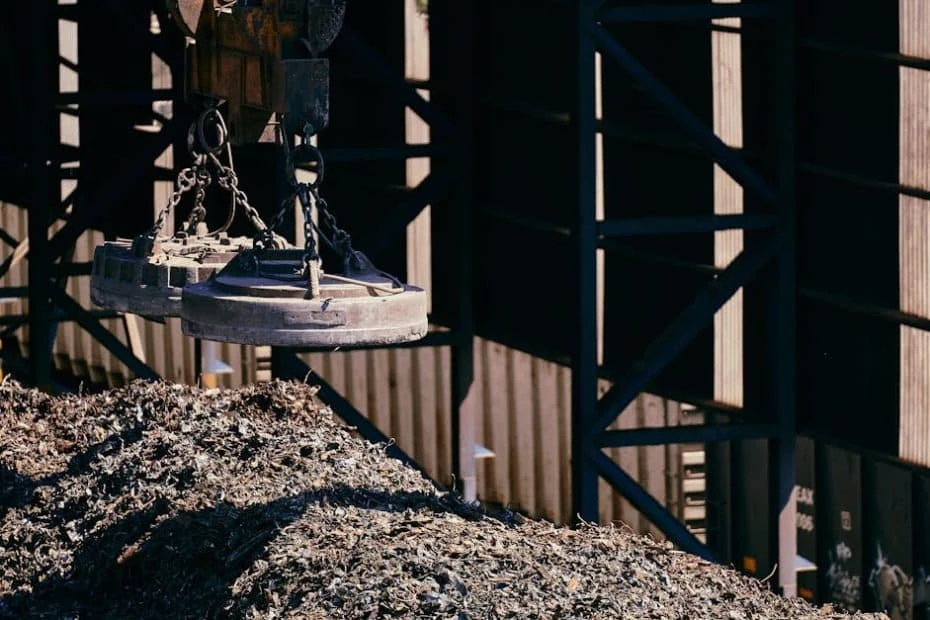
Suspended magnets are positioned above the conveyor belt, either inline (parallel to belt travel) or crossbelt (perpendicular). When tramp metal passes beneath the magnet, the magnetic field lifts it out of the material and holds it against the magnet face.
Self-cleaning models use a secondary belt that continuously carries captured metal away from the magnet face and drops it into a collection bin. Manual-clean versions require periodic stopping to remove accumulated metal by hand. An overbelt magnet is ideal for operations where large or heavy pieces of tramp metal are expected, as the powerful field can lift objects weighing several kilograms.
Electromagnetic vs Permanent Magnet Options
Suspended electromagnet units generate their magnetic field using electrical coils. The field strength can be adjusted, and the magnet can be switched off for cleaning. Oil-cooled electromagnets run at high duty cycles without overheating, making them suitable for continuous operation in hot environments.
Permanent magnets use rare earth or ferrite materials that produce a constant magnetic field without electricity. They require no power supply, have no operating costs, and never overheat. The trade-off is that their field strength is fixed and they must be cleaned manually unless paired with a self-cleaning belt system.
Drum Magnets for High-Volume Separation
Magnetic drum separator units are built into the conveyor system at the discharge point. Material falls over a rotating drum that contains a stationary magnet assembly inside. Ferrous metal sticks to the drum surface and is carried around to a collection point, while clean material falls freely off the drum.
Drums handle high material volumes and work well for continuous duty. They are common in mining, quarrying, and recycling operations where the feed contains a consistent level of ferrous contamination. The drum type magnetic separator design is simple, reliable, and requires minimal maintenance.
Cross Belt and Roller Separators
A cross belt magnetic separator sits across the conveyor and uses a short belt running perpendicular to the main conveyor direction. Metal attracted to the magnet is carried sideways off the main belt and deposited in a separate chute. This design is compact and works well in tight spaces.
Magnetic roller separator units use a magnetised roller at the head of a short conveyor. As material passes over the roller, magnetic particles cling to it and are carried further around before dropping into a separate stream. Non-magnetic material falls away earlier, creating two distinct product streams.
Intensity Matters: Matching Magnets to Materials
Not all ferrous contaminants are equally magnetic. Mild steel and iron are strongly attracted to magnets, but weakly magnetic materials like certain stainless steels or iron-bearing minerals require much stronger fields.
A high intensity magnetic separator generates a concentrated field capable of capturing weakly magnetic particles. These units are used in mineral processing, ceramics, and chemical industries where even trace amounts of iron contamination affect product quality. By contrast, a low intensity magnetic separator handles strongly magnetic materials like magnetite and requires less energy to operate.
Head Pulley Magnets: Built Into the Belt
A magnetic head pulley replaces the standard drive pulley at the discharge end of a conveyor. As material travels over the pulley, ferrous particles are held against the belt while clean material falls freely into the product stream. Once the belt curves away from the magnetic field, the captured metal releases and drops into a separate bin.
This design is popular because it requires no additional space above or below the belt. A magnetic pulley separator is essentially invisible once installed, working continuously without any moving parts beyond the belt itself. It is particularly effective for removing fine tramp metal from thin material beds.
Choosing the Right Separation Equipment
Selecting magnetic separation equipment depends on several factors: the type and size of contamination expected, the belt speed and width, the depth of the material bed, and the required level of metal removal. A shallow bed of dry material over a slow belt is easy to protect. A deep, fast-moving bed of wet ore requires much more powerful equipment.
Industrial magnetic separators come in standard sizes, but most suppliers also build custom units to fit specific conveyor configurations. Working with a magnetic separation equipment suppliers who understands your process ensures the right equipment is specified from the start, rather than discovering after installation that the magnet is too weak or too small.
Supplier Selection and Long-Term Support
Magnetic separation equipment is a long-term investment. The initial purchase price matters, but so do factors like maintenance requirements, spare parts availability, and technical support. A reputable magnetic separator manufacturer provides installation guidance, commissioning support, and ongoing service.
When comparing suppliers, ask about field strength testing, warranty terms, and reference installations in similar applications. The cheapest magnet is rarely the best value if it fails to capture the contamination that matters most to your operation.
The Cost of Getting It Wrong
A piece of tramp metal that passes through an unprotected conveyor system can puncture a screen, jam a crusher, tear a belt, or contaminate a product batch. Any of these outcomes costs far more than the magnetic protection that would have prevented them.
For operations running magnetic conveyor belt price comparisons, the calculation is simple: compare the cost of the equipment against the cost of a single hour of unplanned downtime. In most industrial settings, the magnet pays for itself after preventing just one incident. Protection is not an expense; it is insurance that runs 24 hours a day without a premium.




























Sign in to leave a comment.