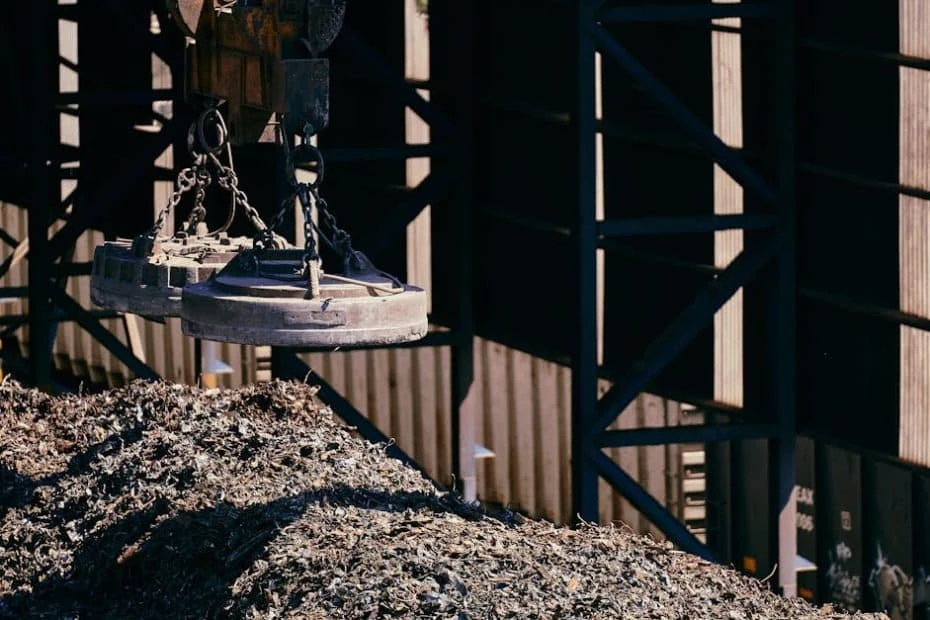

Steel components that have been near strong magnets, welded, or subjected to mechanical stress often become magnetised without anyone intending it. This leftover magnetism, known as residual magnetism, seems harmless at first glance. But in mining, manufacturing, and materials handling, it creates problems that range from annoying to expensive.
Residual magnetism causes fine metal particles to cling to surfaces they should not stick to. It interferes with welding quality. It attracts iron dust to precision components. And in mineral processing, it reduces the accuracy of separation equipment by introducing unwanted magnetic forces into the circuit. Understanding where this magnetism comes from and how to deal with it matters for any operation that handles metal or magnetic materials.
How Steel Becomes Accidentally Magnetised
Steel and iron are ferromagnetic materials, meaning they can be magnetised by exposure to external magnetic fields. When a steel component sits near a strong magnet for an extended period, the magnetic domains inside the steel align with the external field. Remove the external field, and many of those domains stay aligned, leaving the component permanently magnetised.
Welding is another common cause. The electrical current flowing through a weld creates a magnetic field that magnetises the surrounding metal. Mechanical impacts, vibration, and even the earth’s magnetic field can contribute to gradual magnetisation over time. In operations that use mining magnets, every piece of steel equipment near the magnets is a candidate for unwanted residual magnetism.
Problems in Welding and Fabrication
Arc blow is one of the most frustrating effects of residual magnetism in fabrication shops. When the base metal being welded carries a magnetic charge, the welding arc deflects sideways instead of flowing straight into the joint. The result is poor penetration, excessive spatter, and weak welds that may not pass inspection.
Pipe welding is particularly affected because pipes are often stored near magnets or transported on magnetic lifting equipment. The magnetism picked up during handling shows up later in the welding bay. Welders lose time trying to manage the deflected arc, and rework rates increase. Addressing the magnetism before welding begins is far more efficient than fighting it during the process.
Interference with Magnetic Separation
In mineral processing plants, dry magnetic separator units rely on precisely controlled magnetic fields to separate valuable minerals from waste. When the feed material, chutes, or structural steel around the separator carry residual magnetism, it distorts the separation field and reduces accuracy.
Weakly magnetic particles that should be captured may pass through instead, lowering recovery rates. Strongly magnetic particles may be attracted to magnetised chute walls and accumulate, eventually blocking the flow path. Both outcomes reduce plant efficiency and require manual intervention to correct.
Fine Particle Adhesion and Contamination
Residual magnetism in conveyor components, hoppers, and chutes attracts fine iron particles that build up over time. In food processing, pharmaceutical manufacturing, and electronics production, this contamination is a serious quality issue. Even in heavy industry, accumulated metal fines cause wear on seals, bearings, and other precision components.
Material handling magnets are installed specifically to remove tramp metal from material streams. But when the conveyor structure itself is magnetised, it holds onto fine particles that the cleaning magnets cannot reach. The structure becomes part of the contamination problem rather than a neutral transport surface.
Measurement and Testing
The first step in managing residual magnetism is measuring it. A gaussmeter (also called a magnetometer) measures magnetic field strength in gauss or tesla. By scanning a component or surface with a gaussmeter, technicians can identify where magnetism is present and how strong it is.
Acceptable levels vary by application. Welding specifications often require the base metal to measure below 20 gauss before work begins. Precision machining may require levels below 2 gauss. Mining equipment tolerances are less strict, but high levels of residual magnetism still interfere with separator performance and cause handling problems.
How Demagnetisation Works
Demagnetisation, sometimes called degaussing, is the process of reducing or eliminating residual magnetism in a component. The most common method involves passing the magnetised object through a strong alternating magnetic field that gradually decreases in strength. This scrambles the aligned magnetic domains and returns them to a random orientation.
Industrial demagnetising equipment comes in several forms. Tunnel units allow components to pass through on a conveyor. Handheld units let technicians treat individual parts or specific areas of a larger structure. For suspended magnetic separator installations and other equipment in the processing plant, portable demagnetising coils can be brought to the site and applied to the affected components without removing them.
When Demagnetisation Is Required
Regular demagnetisation schedules depend on the operation. Fabrication shops may need to treat every pipe and plate before welding. Processing plants typically demagnetise chutes, screens, and structural steel during scheduled maintenance shutdowns.
The frequency depends on how quickly components re-magnetise. In plants with strong suspended conveyor magnet installations, nearby steelwork can pick up significant magnetism within weeks. Monitoring with a gaussmeter during routine inspections identifies when levels have risen enough to cause problems and demagnetisation is needed.
Preventing Magnetisation in the First Place
While it is not always possible to prevent residual magnetism entirely, some practices reduce the problem. Storing steel components away from strong magnets minimises exposure. Using non-magnetic materials (stainless steel, aluminium, or plastic) for chute liners and guides near magnetic equipment eliminates the issue in those areas.
Proper grounding of welding equipment reduces the magnetic fields generated during the welding process. Lifting magnets and tramp magnet systems should be installed with magnetic shielding on the non-working sides to limit the field’s reach into surrounding steelwork.
Effects on Instrument Accuracy
Residual magnetism affects instruments and sensors that use magnetic principles. Flow meters, level sensors, and speed encoders can all give incorrect readings when nearby steelwork carries a magnetic charge. In automated plants where control systems rely on accurate sensor data, this can lead to process upsets and incorrect control actions.
Calibration drifts caused by residual magnetism are often misdiagnosed as instrument faults. Technicians replace sensors and re-calibrate instruments without realising that the real problem is the magnetised steel structure next to the sensor. A quick check with a gaussmeter before replacing equipment can save time and money.
Managing Magnetism as Part of Maintenance
Residual magnetism should be treated as a maintenance issue, not an unsolvable nuisance. Including gaussmeter checks in routine inspection checklists catches problems early. Scheduling demagnetisation during planned shutdowns prevents unplanned production losses.
For operations that use heavy magnetic equipment such as tramp metal magnets and Ferrochrome Magnet systems, managing residual magnetism in surrounding steelwork is part of getting the best performance from the magnetic installation itself. A magnetised chute upstream of a separator fights against the separator’s own field, reducing its effectiveness.
The Bigger Picture
Residual magnetism is an invisible problem, which is exactly why it gets ignored until it causes a visible failure. Welding defects, contamination incidents, reduced separator performance, and instrument errors all have magnetism as a potential root cause. Once operations start measuring and managing it, they often find that several recurring problems trace back to the same source.
Treating residual magnetism is straightforward and inexpensive compared to the problems it causes. The equipment exists, the methods are proven, and the results are immediate. For any facility that handles ferromagnetic materials or operates near strong magnets, making demagnetisation part of the maintenance routine is a practical step that pays for itself many times over.


































Sign in to leave a comment.