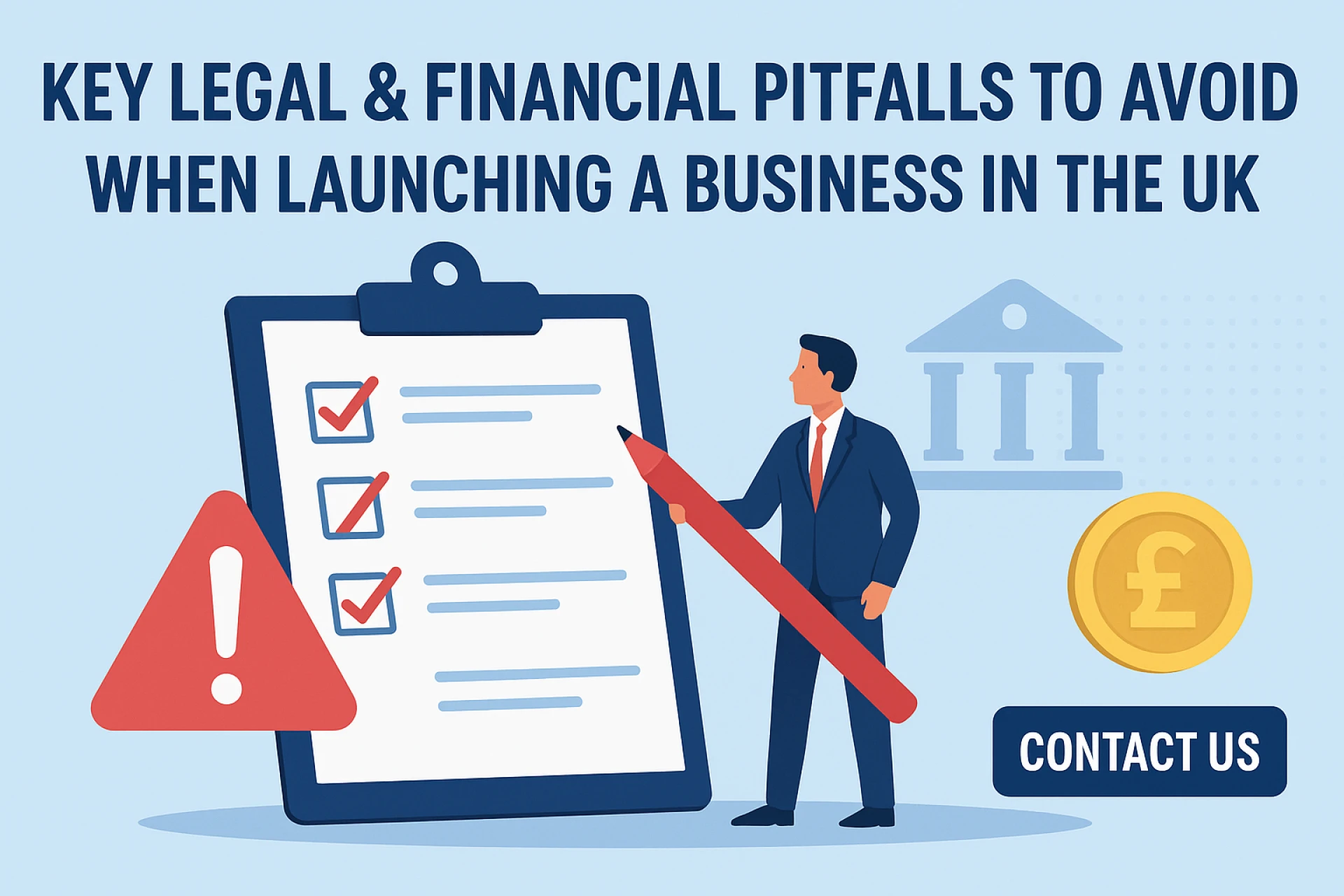

Starting a company in the UK offers attractive benefits a mature legal system, global reputation, access to talent, and a welcoming business ecosystem. Yet, even with a straightforward incorporation process, many entrepreneurs trip up on legal, financial, or compliance missteps. These early missteps can cost time, money, and sometimes even lead to penalties.
If you are planning to launch a business in the UK - especially as a non-resident or first-time founder being aware of these pitfalls can help you avoid major headaches. Below are common pitfalls to avoid, and tips to lay a strong foundation from day one.
1. Choosing the Wrong Business Structure
One of the earliest decisions you’ll make is what legal structure to adopt:
- Sole trader: simple setup, fewer compliance demands, but unlimited personal liability.
- Partnership / Limited Partnership / LLP: better for multiple founding partners, but still demands clarity on roles, profit sharing, liability, etc.
- Limited company (Ltd): gives liability protection, more credibility, easier to raise funds in many cases but has more formal compliance, accounting, reporting obligations.
Many founders underestimate how much structure choice impacts taxes, liability, flexibility, and future growth. Picking the wrong type early can lead to expensive restructuring later.
2. Failing to Register with HMRC Early
After incorporation with Companies House, there are several registrations you need to get right and on time:
- Corporation Tax: must be registered within 3 months of starting to trade. If you miss this, penalties or interest can kick in.
- VAT: if your business turnover exceeds the current threshold (or if you expect to exceed it), you need to register. Sometimes voluntary registration makes sense, but that also brings record-keeping and regular returns.
- PAYE / National Insurance (NI): if you hire employees or pay directors via payroll, you’ll need the correct systems.
Delaying these registrations is a common trap, especially when founders are focused on product, marketing, or operations.
3. Neglecting Ongoing Compliance and Reporting
Even after everything is set up, compliance continues:
- Filing annual accounts and making sure the confirmation statement is submitted to Companies House.
- Maintaining accurate bookkeeping, separating business and personal finances.
- Keeping track of tax deadlines (corporation tax, VAT, PAYE). Late or inaccurate filings attract penalties.
- Ensuring you meet any sector-specific regulations (e.g. licensing, health & safety, environmental or food safety, depending on what you do).
Many businesses treat incorporation as “done” and don’t realize how much effort continuing compliance requires.
4. Underestimating Data Protection and Privacy Laws
The UK enforces robust data protection laws, particularly after Brexit, which largely mirror or build upon GDPR standards. Key obligations include:
- Having clear data gathering, storage, and retention policies.
- Obtaining proper consent where required.
- Security measures (technical and organizational) to protect customer and employee data.
- Being prepared for reporting data breaches within required timeframes.
- Registering with the Information Commissioner’s Office (ICO) where necessary.
Ignoring or under-serving these obligations can lead to considerable fines and reputational harm.
5. Overlooking Licensing, Permissions & Sector-Specific Rules
Depending on the business activity, some things you might need:
- Local council licenses or permits (e.g. food, trades, alcohol, retail).
- Regulatory approvals if your business deals with health, safety, import/export, or is in a heavily regulated sector.
- Adhering to local business rates, planning permissions if you use physical premises.
Assuming “incorporate and go” is enough often leads to unexpected stops.
6. Getting Banking and Finance Wrong
Some common issues here:
- Confusion over opening a UK business bank account, especially if founders are non-UK residents. Banks will ask for proper verification, proof of identity, sometimes proof of address, and business details.
- Mixing personal and business finances: it complicates tax, makes bookkeeping harder, and increases risk.
- Not preparing enough capital or cash flow forecasting to handle delays, initial losses, setup costs, compliance fees.
Good financial planning avoids many early-stage failures.
7. Not Seeking Professional Advice Early
While many founders try to DIY everything, there’s real value in consulting:
- A UK accountant experienced with startup/company formation.
- Legal counsel to help with contracts, IP, shareholder/share-founder agreements.
- Compliance/legal experts to help with data protection, employment law, licensing.
Professional help up front usually costs less than fixing avoidable mistakes later.
8. Ignoring Intellectual Property & Brand Protection
Even for businesses that are service-based, or small, your brand, ideas, products or inventions have value:
- Registering trademarks or protecting designs.
- Ensuring you have clarity over who owns IP (especially if you’re working with partners or contractors).
- Having contracts in place for protections like nondisclosure or non-compete clauses if needed.
Neglecting IP can mean others benefit from your work without your control.
Why It Pays to Follow Best Practices from the Start
Starting with strong legal, financial, and compliance foundations gives you:
- Greater investor confidence (if you ever raise funds).
- Better ability to scale without restructuring or legal redos.
- Reduced risk of penalties, litigation or delays.
- Clearer operations and less confusion internally.
More Resources & Your Next Steps
If you’re planning to start a company in the UK, making sure all the right pieces are in place can dramatically reduce your risk. For a full, step-by-step guide on exactly what to do — from choosing structure to registering, compliance, ongoing obligations, and avoiding pitfalls — check out our detailed guide:
Contact Us
Starting a business is exciting—but also complex. At Ease to Compliance (E2C Assurance Pvt. Ltd.), we help entrepreneurs like you with:
- Company incorporation in the UK
- Tax registrations and compliance
- Accounting, bookkeeping, and ongoing reporting
- Legal, data protection, and licensing support
If you’d like guidance or help making sure everything is done right from the very beginning, Contact Ease to compliance. We’d be happy to assist you in getting your UK company off to the best possible start.
Conclusion
Launching a company in the UK comes with many advantages, but to truly benefit and avoid trouble, you must plan carefully. From structure choice through compliance, finance, and legal protections, laying the groundwork well can make all the difference. With the right help and foresight, you can focus more on growing your business and less on firefighting errors.






























Sign in to leave a comment.