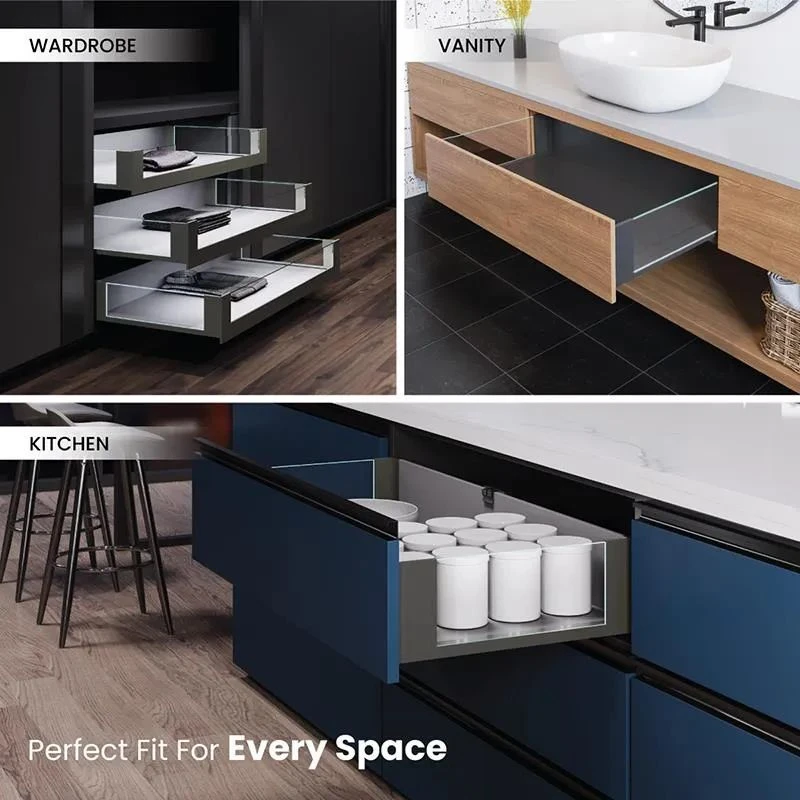

Learn kitchen drawer interior fittings: types, sizes, load, soft-close, and setup tips. Choose smooth, silent drawer fittings for kitchens.
If your kitchen drawer feels rough, noisy, or shaky, the issue is usually the hardware inside. kitchen drawer interior fittings are the parts that help a drawer move in and out smoothly and stay stable. They include drawer slides (also called channels or runners) and complete drawer systems.
Good fittings do three big jobs. First, they keep movement smooth, so the drawer does not jerk or scrape. Second, they carry weight, like heavy steel utensils, plates, spice jars, and grocery packs. Third, they control closing. Soft-close technology helps prevent slamming and gives a quieter finish.
A simple way to think about it: your drawer box is the “vehicle,” and kitchen drawer interior fittings are the “track and suspension.” If the track is weak or misaligned, even a new drawer will feel bad.
Kitchen drawer interior fittings types you’ll see in modular kitchens
Most kitchens use a few common styles. The right one depends on budget, load, and how premium you want the motion to feel.
Common types (quick list):
- Telescopic / ball-bearing slides: Side-mounted channels that glide on ball bearings. Great for daily kitchen use and smoother than basic roller options.
- Soft-close drawer slides: Slides with a damper that gently pulls the drawer shut near the end, reducing slams and wear.
- Full-extension slides: Let the drawer come out almost fully, so you can reach items at the back more easily.
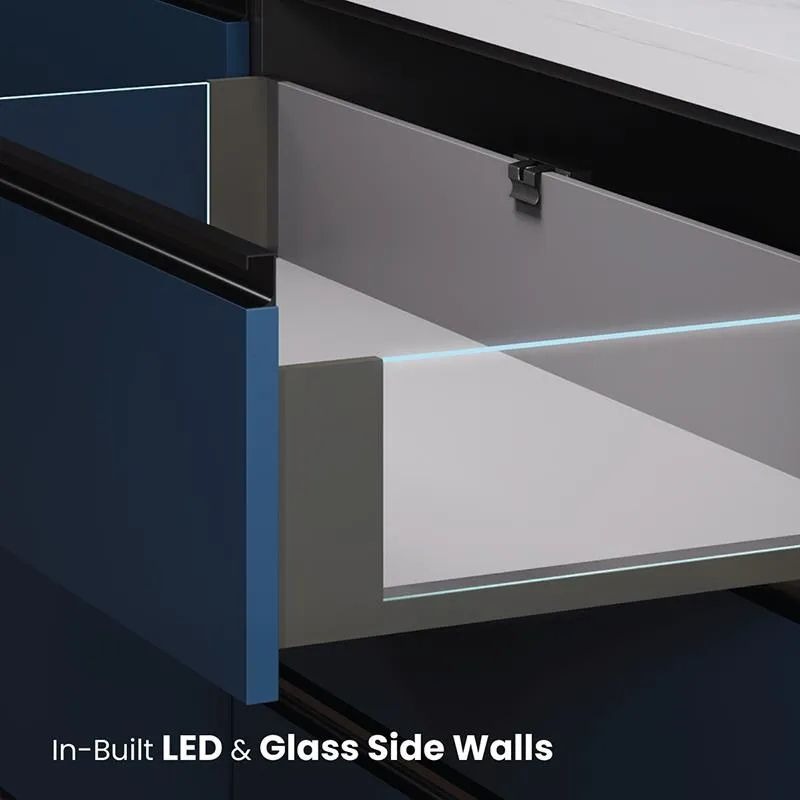
- Drawer systems (tandem / slim box systems): These are more “complete solutions,” often with metal sides and concealed runners for a premium look and feel.
If your drawer is for cutlery or small tools, basic kitchen drawer interior fittings may be enough. If it’s for pots, pans, or big grocery loads, you usually want heavier-duty slides or a drawer system built for load.
How to choose kitchen drawer interior fittings that don’t fail early
Choosing the right fitting is mostly about matching the hardware to real kitchen use. Here’s a simple way to decide without overthinking.
1) Measure the drawer depth and cabinet space
Drawer slides come in different lengths. If the slide is longer than the cabinet depth, it won’t fit. If it’s too short, you lose usable space. Measure the inside depth of the cabinet and the drawer depth before selecting kitchen drawer interior fittings.
2) Pick the right extension for access
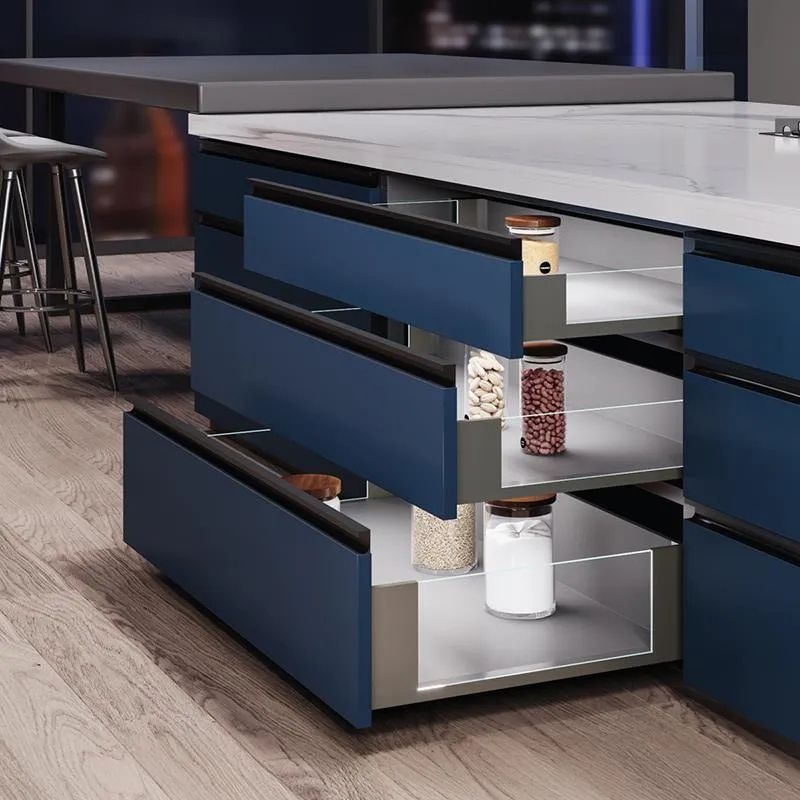
If you hate losing things at the back of the drawer, choose full-extension. It helps especially for spice drawers, plate drawers, and deep pantry-style drawers. Drawer slides and systems are often offered in full extension for better reach.
3) Match load capacity to what you actually store
A “light” drawer with tea bags is very different from a drawer full of cookware. Overloading is one of the fastest ways to ruin kitchen drawer interior fittings. For soft-close slides, capacity varies by model, and many standard options are built for typical cabinet loads, while heavier versions handle more.
Quick kitchen examples (contextual):
- Cutlery + tools drawer: medium load slides usually work well.
- Spice jar drawer: go for smooth slides and full extension so you can see everything.
- Pots and pans drawer: choose heavy-duty slides or a drawer system made for higher loads.
4) Decide if you need soft-close
Soft-close is not only “luxury.” It reduces slamming, noise, and long-term stress on the cabinet box. Many modern drawer fittings highlight soft-close for a smoother and quieter close.
If your kitchen is busy (kids, quick cooking, frequent opening), soft-close kitchen drawer interior fittings are usually worth it.
Installation checks that make kitchen drawer interior fittings feel premium
Even top hardware can feel bad if it’s installed wrong. The key is alignment.
Here’s a simple install checklist you can share with a carpenter:
- Keep both slides perfectly level: If one side is higher, the drawer will rub or tilt.
- Use the right side clearance: Slides need the correct gap between drawer and cabinet. If you are replacing old slides, sticking to the same mounting type often avoids rebuild issues.
- Tighten screws after test movement: First test, then final tighten. Loose screws cause wobble over time.
A common modular kitchen issue is “almost aligned” slides. That tiny error becomes a big problem after a few weeks of use. Good kitchen drawer interior fittings need clean, square mounting to stay smooth.
Fixing common problems with kitchen drawer interior fittings
If a drawer starts acting up, don’t assume everything needs replacement. Many problems are small.
Most common issues and what they usually mean:
- Drawer feels heavy or rough: Dirt in the runners, slight bend, or misalignment.
- Drawer does not close softly anymore: Damper worn, drawer is overloaded, or slides are not level.
- Drawer tilts down when opened: Wrong load rating or loose mounting points.
Basic maintenance also helps: keep runners clean, avoid water exposure inside cabinets, and don’t overload drawers. The goal is to protect your kitchen drawer interior fittings from stress and rust over time.
Frequently Asked Questions
What is the weight capacity of soft close drawer slides?
It depends on the make and model. Many standard soft-close slides handle typical kitchen loads, while heavy-duty versions support higher weights. Always match the rating to what you store.
How long do soft close drawer slides last?
With proper installation and normal use, good slides can last for years. They last longer when the drawer is not overloaded and screws stay tight and aligned.
What materials are soft close drawer slides made of?
Most soft-close slides are steel with protective finishes like zinc plating or darker coated finishes. Material choice affects strength and corrosion resistance.
What type of drawer slides should I use?
For kitchens, side-mount or undermount styles are common. The best type depends on your cabinet clearance, drawer design, and whether you want a hidden look or easy access installation.
How do I know what size drawer slides to buy?
Measure the cabinet inside depth and the drawer depth, then choose a slide length that fits within that depth. Also check the required side clearance for the slide type you select.
What is a kitchen tandem box?
A kitchen tandem box is a drawer system designed to improve storage and access. It often uses a track system for smooth movement and can offer full extension so you can reach items at the back.
Final takeaway: choose for real kitchen use
The best kitchen drawer interior fittings are the ones that match your drawer’s job. Light drawers can use standard slides. Heavy drawers need higher load support. If you want quieter, smoother daily use, soft-close is a practical upgrade, not just a style choice.
When you measure correctly, pick the right extension and load class, and install with level alignment, kitchen drawer interior fittings stop being “hardware” and start feeling like comfort you notice every day.





























Sign in to leave a comment.