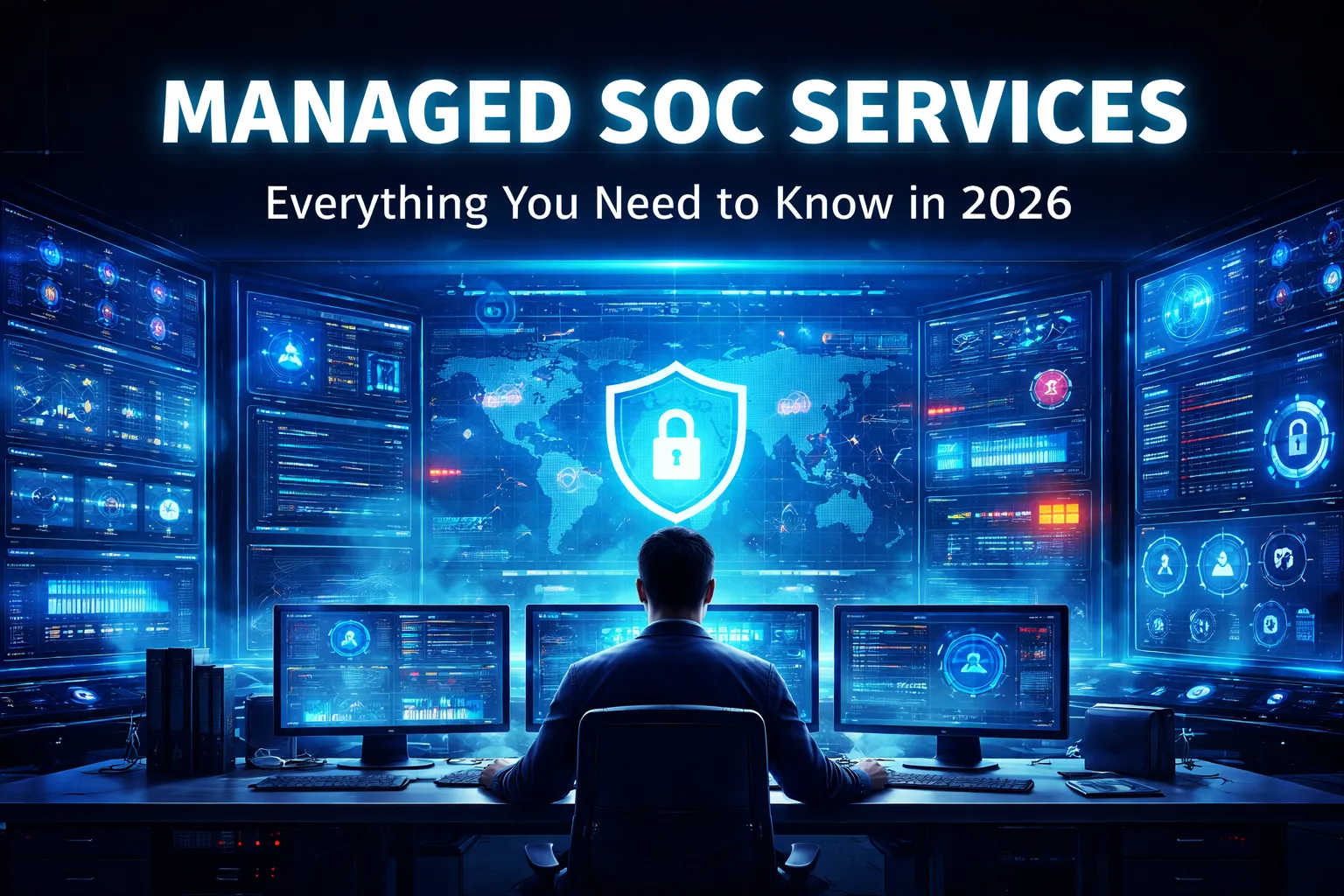

Cybersecurity in 2026 is no longer just about tools. It is about execution, speed, and visibility. From my experience working with modern IT environments, one thing is clear. Traditional security setups cannot keep up with today’s threat landscape. This is where Managed SOC Services come into play.
Organizations are dealing with cloud workloads, remote users, APIs, and growing compliance pressure. At the same time, security teams are overwhelmed with alerts and limited resources. Managed SOC Services solve this gap by delivering continuous monitoring, faster response, and expert driven security operations.
In this blog, I will explain everything you need to know about Managed SOC Services in 2026.
What Are Managed SOC Services
A Security Operations Center is the central function that monitors, detects, and responds to cyber threats. Managed SOC Services take this concept further by outsourcing the entire SOC function to a specialized provider.
Instead of building an internal team, businesses rely on external experts who manage security operations round the clock. These services are usually subscription based and include monitoring, threat detection, incident response, and reporting.
Think of it as having a dedicated cybersecurity command center without the complexity of building one yourself.
Why Managed SOC Services Matter in 2026
Security challenges have increased significantly. Attack surfaces are expanding, and threats are becoming more sophisticated.
In 2026, organizations face issues like alert overload, shortage of skilled professionals, and delayed response times. Many security alerts still go uninvestigated due to lack of capacity.
From what I have seen, companies are no longer asking whether they need a SOC. They are asking how to operate it effectively.
Managed SOC Services are becoming the preferred model because they offer consistency, scalability, and measurable outcomes.
Key Features of Managed SOC Services
1. Continuous Monitoring
Managed SOC Services provide 24 by 7 monitoring of your entire IT environment. This includes networks, endpoints, cloud platforms, and user activity.
This continuous visibility ensures threats are identified as soon as they appear.
2. Threat Detection and Response
The core strength of Managed SOC Services lies in real time detection and rapid response. Security teams analyze alerts, investigate incidents, and take action before damage spreads.
This proactive approach reduces risk and minimizes downtime.
3. Access to Security Experts
Building an in house SOC requires skilled analysts, which are expensive and hard to hire. Managed SOC Services give you access to experienced professionals without recruitment challenges.
4. Advanced Security Technologies
These services integrate tools like SIEM, XDR, and threat intelligence platforms. The real value comes from how these tools are managed and optimized.
5. Compliance and Reporting
Managed SOC providers help align your security with global standards. They also deliver structured reports that support audits and regulatory requirements.
How Managed SOC Services Work
From a practical perspective, Managed SOC Services follow a structured approach.
First, they collect data from across your environment. This includes logs, events, and telemetry from multiple systems.
Next, this data is analyzed using advanced tools and expert review. Alerts are prioritized based on risk and impact.
Finally, incidents are investigated and resolved using predefined response playbooks.
This process runs continuously, ensuring your organization stays protected at all times.
Benefits of Managed SOC Services
Faster Threat Detection
With continuous monitoring and automation, threats are detected much faster compared to traditional setups.
Cost Efficiency
Building an internal SOC requires significant investment in hiring, tools, and training. Managed SOC Services provide a more predictable and often lower cost model.
Scalability
As your business grows, your security needs evolve. Managed SOC Services can scale without requiring additional internal resources.
Reduced Alert Fatigue
Security teams often struggle with too many alerts. Managed SOC providers filter and prioritize alerts, allowing your team to focus on critical issues.
Improved Security Posture
With expert oversight and advanced detection capabilities, organizations achieve stronger and more consistent security outcomes.
Managed SOC vs In House SOC
From my experience, this is one of the most common decisions organizations face.
An in house SOC gives you full control but requires significant investment in people and technology. It is also difficult to maintain round the clock operations.
Managed SOC Services, on the other hand, provide immediate access to expertise, tools, and 24 by 7 coverage. They are faster to deploy and easier to scale.
Many organizations find Managed SOC Services more practical, especially when they want to improve security without increasing operational complexity.
Latest Trends in Managed SOC Services
AI Driven Security Operations
Artificial intelligence is playing a major role in modern SOC environments. It helps in detecting anomalies, reducing false positives, and speeding up investigations.
XDR Integration
Extended detection and response platforms are becoming central to Managed SOC Services. They provide unified visibility across endpoints, networks, and cloud.
Cloud Native Security
As businesses move to the cloud, SOC services are evolving to monitor cloud environments and identity based access.
Industry Specific SOC Models
Providers are now offering tailored solutions based on industry requirements, improving relevance and detection accuracy.
How to Choose the Right Managed SOC Services
Choosing the right provider is critical.
Look for experience, response capabilities, and transparency. Evaluate how they handle incidents, how quickly they respond, and how they communicate with your team.
Also, ensure their services align with your business goals, compliance needs, and security strategy.
From what I have seen, the best outcomes come when Managed SOC Services act as an extension of your internal team, not just a vendor.
Conclusion
Managed SOC Services are no longer optional in 2026. They are a strategic necessity.
With increasing cyber threats and operational complexity, organizations need continuous monitoring, faster response, and expert guidance.
From my experience, businesses that adopt Managed SOC Services gain better visibility, stronger security, and more confidence in handling cyber risks.
If you are planning to strengthen your cybersecurity strategy, Managed SOC Services can be the foundation that supports long term growth and resilience.

























Sign in to leave a comment.