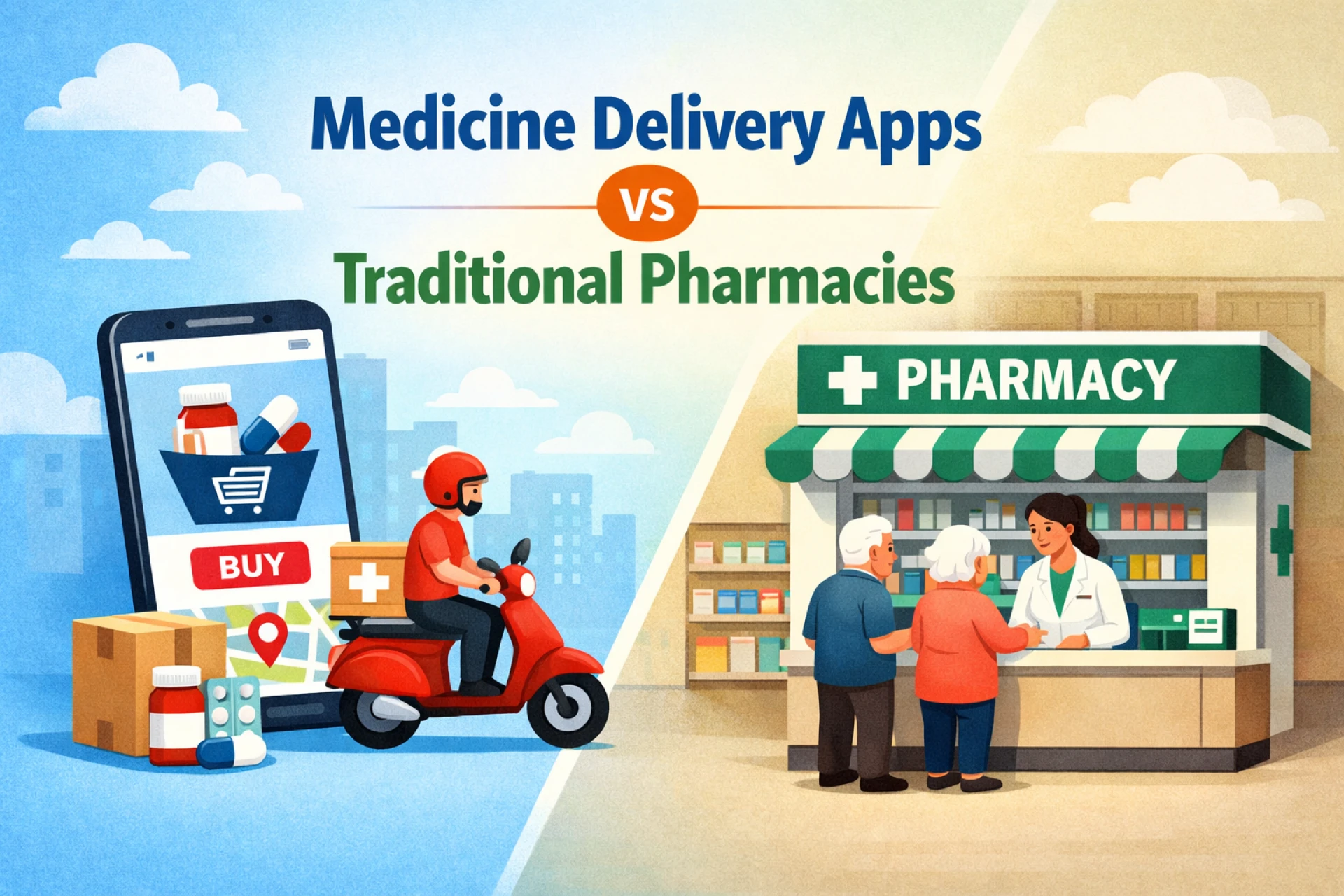

The healthcare and pharmaceutical industry has undergone a major digital transformation in recent years. With the rapid growth of smartphones, internet accessibility, and on-demand services, medicine delivery apps are becoming increasingly popular. These apps allow users to order medicines online and have them delivered directly to their doorstep, often within a few hours.
On the other hand, traditional pharmacies have been the backbone of healthcare for decades, providing medicines, advice, and direct interaction with pharmacists. While both options serve the same purpose providing access to medicines their approaches, benefits, and limitations differ significantly.
In this article, we will explore the key differences between medicine delivery apps and traditional pharmacies, their advantages, and which option may be better suited for modern healthcare needs.
What Are Medicine Delivery Apps?
Medicine delivery apps are digital platforms that allow users to order prescription and over-the-counter medicines online through their smartphones or websites. These apps connect customers with pharmacies, enabling them to upload prescriptions, browse medicines, compare prices, and schedule deliveries.
With the rise of digital healthcare solutions, many pharmaceutical companies and startups are investing in Medicine Delivery App development services to build platforms that provide fast, convenient, and secure medicine delivery to users.
These apps typically include features such as prescription uploads, online consultations, real-time order tracking, digital payments, and automatic refill reminders.
What Are Traditional Pharmacies?
Traditional pharmacies are physical retail stores where customers visit to purchase medicines and healthcare products. These pharmacies are usually located in hospitals, clinics, or neighborhood areas, providing face-to-face interactions between pharmacists and customers.
One of the biggest advantages of traditional pharmacies is the ability to speak directly with pharmacists and receive instant guidance regarding medications, dosage, and side effects.
Despite the rise of online platforms, traditional pharmacies still play a vital role in healthcare, particularly for urgent medication needs and personalized pharmaceutical advice.
Key Differences Between Medicine Delivery Apps and Traditional Pharmacies
1. Convenience and Accessibility
One of the biggest advantages of medicine delivery apps is convenience. Users can order medicines anytime and from anywhere without visiting a physical pharmacy.
With just a few taps on a smartphone, patients can upload prescriptions, choose medicines, and schedule delivery. This is especially beneficial for elderly patients, people with mobility issues, or those living in remote areas.
Traditional pharmacies, however, require customers to travel to the store, wait in line, and sometimes face limited operating hours.
2. Speed and Delivery
Medicine delivery apps often provide same-day or even instant delivery services. Some platforms offer deliveries within 30–60 minutes, particularly in urban areas.
In contrast, traditional pharmacies require customers to physically visit the store, which can be time-consuming, especially during emergencies or busy hours.
However, if a pharmacy is nearby, customers may get medicines immediately without waiting for delivery.
3. Availability of Medicines
Medicine delivery apps often partner with multiple pharmacies and suppliers, allowing them to offer a wider range of medicines and healthcare products.
Users can easily check stock availability, compare prices, and find alternatives if a particular medicine is unavailable.
Traditional pharmacies may have limited stock depending on their size and supplier network. If a medicine is not available, customers may need to visit another pharmacy.
4. Price Comparison and Discounts
Online medicine delivery platforms usually provide competitive pricing, discounts, and promotional offers. Customers can compare prices across different pharmacies and choose the most affordable option.
Many platforms also offer subscription services for regular medicines, helping patients save money over time.
Traditional pharmacies typically have fixed prices and fewer promotional offers, though some may provide loyalty discounts to regular customers.
5. Prescription Management
Medicine delivery apps make prescription management much easier. Users can upload prescriptions digitally, store them in the app, and reorder medicines when needed.
Some apps even provide refill reminders, ensuring that patients never miss their medications.
Traditional pharmacies require customers to bring physical prescriptions every time they purchase prescription medicines, which can sometimes be inconvenient.
6. Interaction with Pharmacists
Traditional pharmacies offer direct interaction with pharmacists, which is valuable for patients who need guidance about medicines, side effects, or dosage.
Pharmacists can also provide immediate recommendations based on a patient’s health condition.
Medicine delivery apps may offer online chat or teleconsultation services, but they cannot always replace the personal interaction and trust built through face-to-face communication.
7. Technology Integration
Medicine delivery apps rely heavily on advanced technology such as GPS tracking, AI-based recommendations, secure payment systems, and data analytics.
Businesses that want to launch such platforms often work with companies offering mobile app development services to create scalable, secure, and user-friendly applications.
Traditional pharmacies, in comparison, rely mostly on manual operations, though many are gradually adopting digital billing systems and inventory management tools.
Benefits of Medicine Delivery Apps
Medicine delivery apps provide several advantages for both customers and healthcare providers:
- 24/7 availability for ordering medicines
- Home delivery convenience
- Easy prescription uploads
- Automated medicine refill reminders
- Access to multiple pharmacies
- Online consultations with healthcare professionals
- Discounts and promotional offers
These features make medicine delivery apps an attractive option for modern consumers who prefer digital solutions.
Benefits of Traditional Pharmacies
Despite the growth of digital platforms, traditional pharmacies continue to offer important advantages:
- Immediate access to medicines
- Face-to-face consultation with pharmacists
- Trusted local healthcare support
- Better understanding of customer health history
- Reliable service without internet dependency
For many people, especially older adults, traditional pharmacies remain a preferred and trusted healthcare option.
Challenges of Medicine Delivery Apps
Although medicine delivery apps provide many benefits, they also face several challenges:
- Regulatory compliance for prescription medicines
- Ensuring medicine authenticity and quality
- Managing cold-chain logistics for certain drugs
- Data privacy and cybersecurity risks
- Delivery delays during peak demand
To overcome these challenges, businesses must invest in secure and scalable technology solutions.
Challenges of Traditional Pharmacies
Traditional pharmacies also face certain limitations in the modern digital age:
- Limited reach compared to online platforms
- Fixed operating hours
- Smaller inventory compared to large online networks
- Increasing competition from digital healthcare platforms
To stay competitive, many pharmacies are adopting hybrid models that combine physical stores with online ordering and delivery services.
The Future: Hybrid Pharmacy Models
The future of pharmaceutical services may not be about choosing between online apps and traditional pharmacies. Instead, many businesses are adopting hybrid models that combine both approaches.
In this model, customers can order medicines through an app while local pharmacies handle fulfillment and delivery. This approach benefits both pharmacies and customers by combining digital convenience with local expertise.
Healthcare startups and pharmacy chains are increasingly investing in digital platforms to improve service efficiency and customer experience.
Conclusion
Medicine delivery apps and traditional pharmacies both play important roles in modern healthcare. While medicine delivery apps offer unmatched convenience, wider availability, and digital features, traditional pharmacies provide trusted personal interaction and immediate access to medicines.
As technology continues to evolve, the pharmaceutical industry is likely to see a blend of both models working together to deliver better healthcare services.
Businesses looking to enter this growing market are increasingly investing in Medicine Delivery App development services to build scalable digital platforms. With the support of reliable mobile app development services, companies can create innovative healthcare solutions that make medicine access faster, easier, and more efficient for patients worldwide.


























Sign in to leave a comment.