

From bustling highways to quiet pedestrian crossings, the marks we see on roads are more than just lines, they’re engineered layers of safety, direction, and order. Behind these visible cues lies a world of materials science, where granular thermoplastic and preform thermoplastic technologies are setting new standards for durability, visibility, and application efficiency.
Let’s delve into how these modern materials are transforming the landscape of road marking, blending innovation with functionality.
What Makes Road Markings So Important?
Road markings serve as the silent guardians of traffic flow. They define lanes, signal pedestrian crossings, indicate stop lines, and help maintain overall traffic discipline. Traditional paint has long been used, but with increasing demand for high performance in diverse weather conditions and heavy traffic zones, thermoplastics have emerged as a better alternative.
This shift is not just about longevity but also about safety, reflectivity, and efficiency in application.
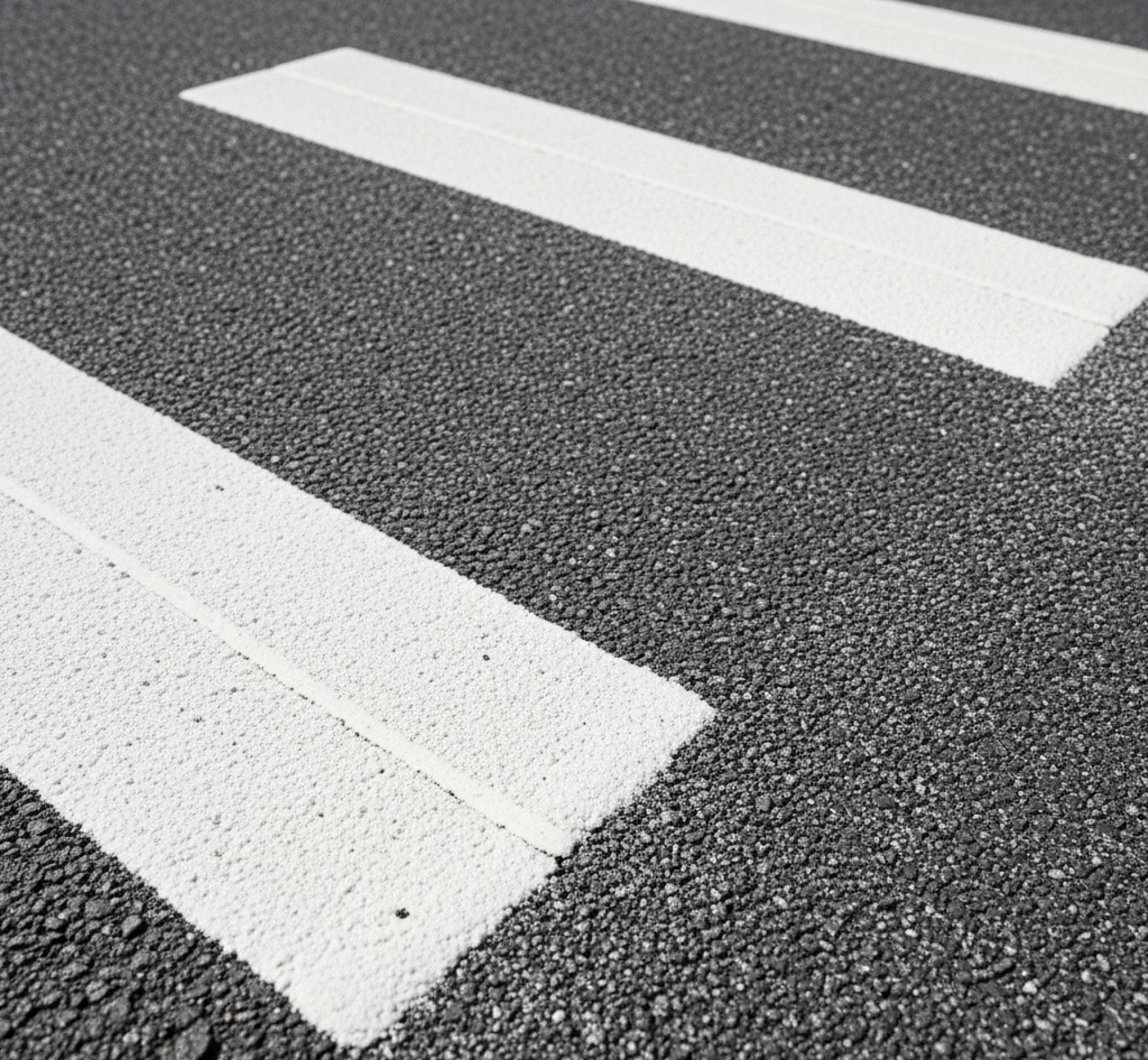
Understanding Thermoplastic Road Markings
Thermoplastics are polymer-based materials that become soft when heated and harden upon cooling. This property makes them ideal for road applications where durability and resistance to wear and tear are paramount. Among the most impactful thermoplastic products in the road safety industry are granular thermoplastic and preform thermoplastic.
What is Granular Thermoplastic?
Granular thermoplastic is a loose, granular material composed of resins, pigments, glass beads, and fillers. It is heated at high temperatures and applied using specialized road-marking equipment. Once it cools, it forms a tough, reflective, and skid-resistant surface.
Key Benefits:
- Durability: Ideal for high-traffic areas due to its long lifespan.
- Reflectivity: Embedded glass beads enhance night-time visibility.
- Customization: Can be modified for various applications like cycle lanes, arrows, and text.
Example: Think of a busy intersection in an urban city that sees thousands of vehicles daily. Traditional paint would wear off quickly. In contrast, granular thermoplastic remains bright and intact for years, even under intense traffic loads.
What is Preform Thermoplastic?
Unlike the loose format of granular material, preform thermoplastic comes as pre-cut, ready-to-use sheets or shapes. These are factory-manufactured and applied on the road surface by simply placing them in position and heating them with a torch or infrared heater.
Key Benefits:
- Ease of Application: No specialized vehicles required; even small crews can install them.
- Precision: Since shapes are pre-cut, markings like logos, symbols, and complex text are accurately rendered.
- Speed: Roads can be reopened shortly after installation, minimizing disruptions.
Example: A school installing a new pedestrian crossing can use preform thermoplastic to create precise, colorful markings without halting traffic for long hours. It’s quick, clean, and requires minimal setup.
Granular vs. Preform: Choosing the Right Material
While both serve the purpose of road marking, the decision between granular thermoplastic and preform thermoplastic depends on factors such as project size, application complexity, labor resources, and urgency.
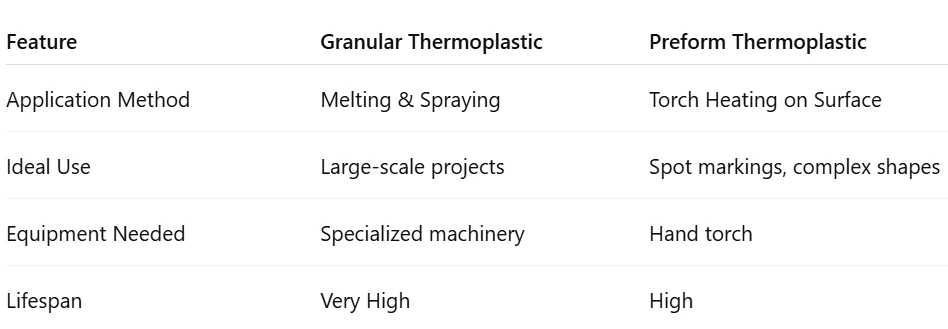
In city-wide infrastructure projects where continuous lanes and uniform lines are essential, granular thermoplastic is often preferred. On the other hand, for short-term work zones or specific logos and signs, preforms offer unmatched convenience.
Environmental and Safety Considerations
Both forms of thermoplastics are designed with sustainability and user safety in mind. Low-VOC emissions during installation, non-toxic components, and enhanced skid resistance make these products safer for workers and road users alike.
Moreover, because granular thermoplastic and preform thermoplastic are longer-lasting than traditional paints, they reduce the frequency of reapplication, cutting down on labor, equipment use, and material waste.
Installation Best Practices
Proper installation ensures performance and longevity. Here are key tips:
- Surface Preparation: Clean and dry surfaces allow for strong adhesion.
- Correct Heating: Overheating can damage reflective elements; underheating can affect bonding.
- Weather Conditions: Ideal application temperatures lie between 10°C and 40°C. Avoid rainy or dusty environments.
Using the correct method ensures that the thermoplastic integrates seamlessly with the road surface, providing optimal visibility and wear resistance.
Maintenance and Inspection
Though both thermoplastic types are highly durable, periodic inspections help catch early signs of wear. Common checks include:
- Glass Bead Loss: Reduced reflectivity at night may indicate worn-out beads.
- Cracking or Peeling: Often due to improper installation or harsh weather.
- Fading Colors: Especially critical for colored markings like bus lanes or cycle paths.
Regular maintenance ensures that even in high-traffic areas, road safety standards remain uncompromised.
Innovations in Thermoplastic Technology
Technology continues to push the boundaries of what's possible with thermoplastics. Smart road markings using embedded sensors, solar-powered reflectivity enhancements, and eco-friendly formulations are just a few of the trends shaping the future.
New-generation granular thermoplastic now includes retroreflective beads that respond better to LED headlights, while some preform thermoplastic sheets incorporate anti-slip additives to make pedestrian crossings safer in wet conditions.
Real-World Applications Around the Globe
Many global cities are turning to thermoplastics for their long-term benefits.
- London, UK: Cycle Superhighways use colored granular thermoplastic for high-visibility lanes.
- Melbourne, Australia: School zones widely adopt preform thermoplastic to ensure quick and clear pedestrian symbols.
- Mumbai, India: Highways leading out of the city feature thick granular markings to endure monsoon wear and tear.
Such examples highlight how strategic use of these materials can tackle unique regional challenges while improving road safety.
In conclusion, as infrastructure demands evolve and cities strive to improve traffic management and pedestrian safety, the materials we use must rise to meet those challenges. Granular thermoplastic and preform thermoplastic are not just solutions, they are innovations born from the need for better, more sustainable, and long-lasting road markings.
Whether you're a municipal planner, a civil engineer, or simply a driver appreciating a well-marked road, understanding these materials provides insight into the layers of safety built into every street.
Frequently Asked Questions
Q1. Can granular thermoplastic be used for symbols and logos?
Not efficiently. It’s best for linear markings. For detailed shapes, preform thermoplastic is more precise.
Q2. How long does preform thermoplastic last?
Typically 3–5 years depending on traffic and weather conditions. With proper installation, it can last longer.
Q3. Is thermoplastic eco-friendly?
Yes. Both forms are low in VOCs, contain non-toxic materials, and reduce maintenance frequency, contributing to lower environmental impact.
Q4. Can thermoplastics be used in cold climates?
Yes, but care must be taken during application. Preheating surfaces and choosing weather-appropriate products are essential for adhesion.
Q5. Are there color options in thermoplastic markings?
Absolutely. Both granular thermoplastic and preform thermoplastic come in a range of colors including white, yellow, red, blue, and green, depending on the application.
If you’ve ever crossed a pedestrian line or driven down a well-marked lane at night, you’ve experienced the benefits of this technology. As cities grow smarter, safer, and more connected, thermoplastics will continue to lead the way, quietly but powerfully.





























Sign in to leave a comment.