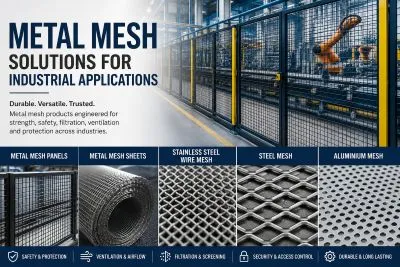

Quick Answer
Metal mesh is a versatile material used across industrial, commercial and architectural applications. It can provide strength, ventilation, filtration, protection and controlled access while allowing air and light to pass through. The right type depends on factors such as material, opening size, wire thickness, load requirements, corrosion exposure and installation conditions.
Metal Mesh for Industrial Application
Choosing the right material is important for industrial projects where safety, durability and performance matter. Metal mesh offers a practical solution for many demanding environments. It is available in different materials, patterns, thicknesses and opening sizes, allowing it to meet specific project requirements.
From machinery guarding and filtration to ventilation and security, metal mesh can support a wide range of applications. Its open structure can also help improve airflow and visibility without sacrificing protection.
For industrial buyers, selecting the correct specification is essential. Factors such as the operating environment, required strength, corrosion exposure and intended use should be assessed before ordering.
Metal Mesh Types and Materials
Different products are designed to perform specific functions. Understanding the available options can help businesses choose a suitable solution for their project.
Metal Mesh Panels
Metal mesh panels are commonly used where larger sections are needed for installation. They can be manufactured in various dimensions and opening patterns to suit industrial requirements.
Panels may be used for machine guards, partitions, safety barriers and equipment protection. Their rigid construction can make them suitable for areas where stability is important.
Metal Mesh Sheets
Metal mesh sheets provide a flexible option for fabrication and industrial installations. They can be cut, formed or incorporated into larger assemblies, depending on the material and product specification.
They are often selected for screening, protection, ventilation and general fabrication work.
Stainless Steel Wire Mesh
Stainless steel wire mesh is well suited to environments where corrosion resistance and hygiene are important. It can be used in food processing, chemical processing, filtration and manufacturing applications.
The grade of stainless steel should be selected according to the operating conditions. Exposure to moisture, chemicals, heat and cleaning processes can all influence material selection.
Steel Mesh
Steel mesh is valued for its strength and durability. It can be used in industrial barriers, machine guarding, structural applications and heavy-duty screening.
A suitable protective finish may be required when steel is exposed to moisture or corrosive conditions. Project requirements should determine the appropriate treatment and specification.
Aluminium Mesh
Aluminium mesh is a lightweight option that can be useful where reducing overall weight is important. It can be used for ventilation, screening, architectural features and protective applications.
Its combination of low weight and corrosion resistance makes it useful in selected industrial environments.
Metal Mesh Applications
Industrial facilities use mesh products for many different purposes. The correct product should always be selected according to its intended function and relevant safety requirements.
Machinery Guards
Mesh can be installed around machinery to create a physical barrier while maintaining visibility. This allows operators and maintenance teams to see equipment while helping restrict access to moving components.
Filtration and Screening
Fine mesh products can be used for screening and filtration. Opening size, wire diameter and material can affect how effectively a product performs.
For filtration applications, the required particle size and operating conditions should be established before selecting a product.
Ventilation and Airflow
Open mesh structures allow air to move through a surface. This makes them useful for ventilation panels, equipment enclosures and industrial screening.
The open area should be considered when airflow is an important part of the application.
Security and Safety
Mesh can provide a practical barrier around equipment, restricted areas and industrial work zones. It can help separate people from machinery and protect valuable assets.
The required strength, opening size and fixing method should be assessed based on the level of security required.
Architectural and Interior Applications
Industrial materials are also used in modern commercial and architectural projects. Mesh can create partitions, screens, balustrade infills and feature surfaces while maintaining an open visual appearance.
Metal Mesh Manufacturing Options
Wire Mesh
Wire mesh is manufactured by joining individual wires into a regular pattern. Depending on the production method, it may be woven or welded.
The choice between these constructions depends on the required flexibility, strength, opening size and application.
Metal Screen
A metal screen can be used where separation, protection or controlled airflow is required. The design can be selected to balance visibility with the level of screening needed.
Stainless Steel Mesh
Stainless steel mesh offers strong resistance to corrosion and can be suitable for demanding environments. Different grades and configurations provide options for industrial processing and filtration.
Expanded Metal
Expanded metal is produced by cutting and stretching a sheet to create a continuous mesh pattern. It provides an open surface without separate welded joints at each opening.
It can be used for walkways, guards, platforms, screens and protective panels, subject to the required load and safety specifications.
Perforated Metal Sheet
Perforated metal sheet is manufactured by creating controlled holes in a solid sheet. Hole shape, size, spacing and pattern can be specified to suit the application.
It is often used where a combination of screening, airflow, protection and structural rigidity is required.
Metal Mesh Selection Factors
Material
Consider whether the application requires steel, stainless steel or aluminium. Environmental exposure should be a key part of this decision.
Opening Size
The opening needs to provide the required level of screening, airflow or filtration. Smaller openings may improve containment, while larger openings can increase airflow and visibility.
Strength
Load, impact and operating conditions can affect the required thickness and construction. Heavy-duty applications may require a stronger specification.
Corrosion Resistance
Outdoor, wet or chemical environments can expose materials to corrosion. Selecting an appropriate material or finish can help improve service life.
Size and Fabrication
Panel dimensions, cutting, forming and fixing requirements should be considered before ordering. Accurate measurements can help reduce installation issues and material waste.
Why Choose the Right Metal Mesh
Selecting the correct specification can improve performance, safety and long-term value. An unsuitable product may fail to provide adequate protection, resist the operating environment or meet the needs of the installation.
A professional supplier can help assess material, dimensions, opening size and finish based on the intended application. Product specifications and relevant standards should also be checked before installation.
For critical industrial applications, buyers should provide as much project information as possible. This can include operating temperature, chemical exposure, expected loads, installation method and required service life.
Key Takeaways
- Metal mesh is suitable for many industrial and commercial applications.
- Material selection should reflect the operating environment.
- Metal mesh panels are useful for barriers, guards and partitions.
- Metal mesh sheets can support fabrication and screening applications.
- Stainless steel wire mesh is suited to many corrosion-sensitive environments.
- Steel mesh provides a strong option for demanding applications.
- Aluminium mesh can reduce weight while providing useful corrosion resistance.
- Opening size, strength and finish should be considered before ordering.
- Expanded metal and perforated metal sheet provide different performance characteristics.
- Professional advice can help ensure the selected product meets project requirements.
FAQ
What is metal mesh used for?
Metal mesh is used for machinery guarding, filtration, screening, ventilation, security barriers, partitions and architectural applications. The exact use depends on its material, construction and opening size.
Which material is best for industrial applications?
There is no single material that suits every project. Steel may be preferred for strength, stainless steel for corrosion resistance and aluminium where low weight is important. The operating environment should guide the decision.
Is metal mesh suitable for outdoor use?
Yes. Certain products are suitable for outdoor applications, but material and finish are important. Exposure to rain, humidity, salt and chemicals should be considered when selecting the specification.
What is the difference between expanded metal and perforated metal sheet?
Expanded metal is cut and stretched to create connected openings. Perforated metal sheet is made by punching or otherwise forming holes into a sheet. Each construction offers different characteristics for strength, airflow and screening.
How do I choose the correct metal mesh?
Start by identifying the purpose, required strength, opening size, material, environmental exposure and dimensions. For specialised applications, consult a qualified supplier or technical professional before final selection.
Can metal mesh be customised?
Many products can be supplied in different sizes, materials, opening patterns and finishes. Custom fabrication may also be available depending on the supplier and project requirements.
Conclusion
Metal mesh provides a practical solution for many industrial challenges, from equipment protection and screening to filtration and ventilation. Its range of materials and configurations makes it possible to select a product based on specific performance requirements.
The best solution depends on the environment, application and required performance. By assessing material, opening size, strength, corrosion resistance and fabrication requirements before purchase, businesses can make a more informed decision and select a product suited to its intended use.
For industrial projects where performance and reliability are important, working with an experienced supplier can help ensure the specification is appropriate for the application.

























Sign in to leave a comment.