

Microbial strains are microorganisms that play a crucial role in agriculture by enhancing soil fertility, plant growth, and pest control. They are diverse in nature and have different properties and functions that make them essential for sustainable agriculture. In this article, we will delve into the different microbial strains, their functions, and how they can be used to enhance crop yields.
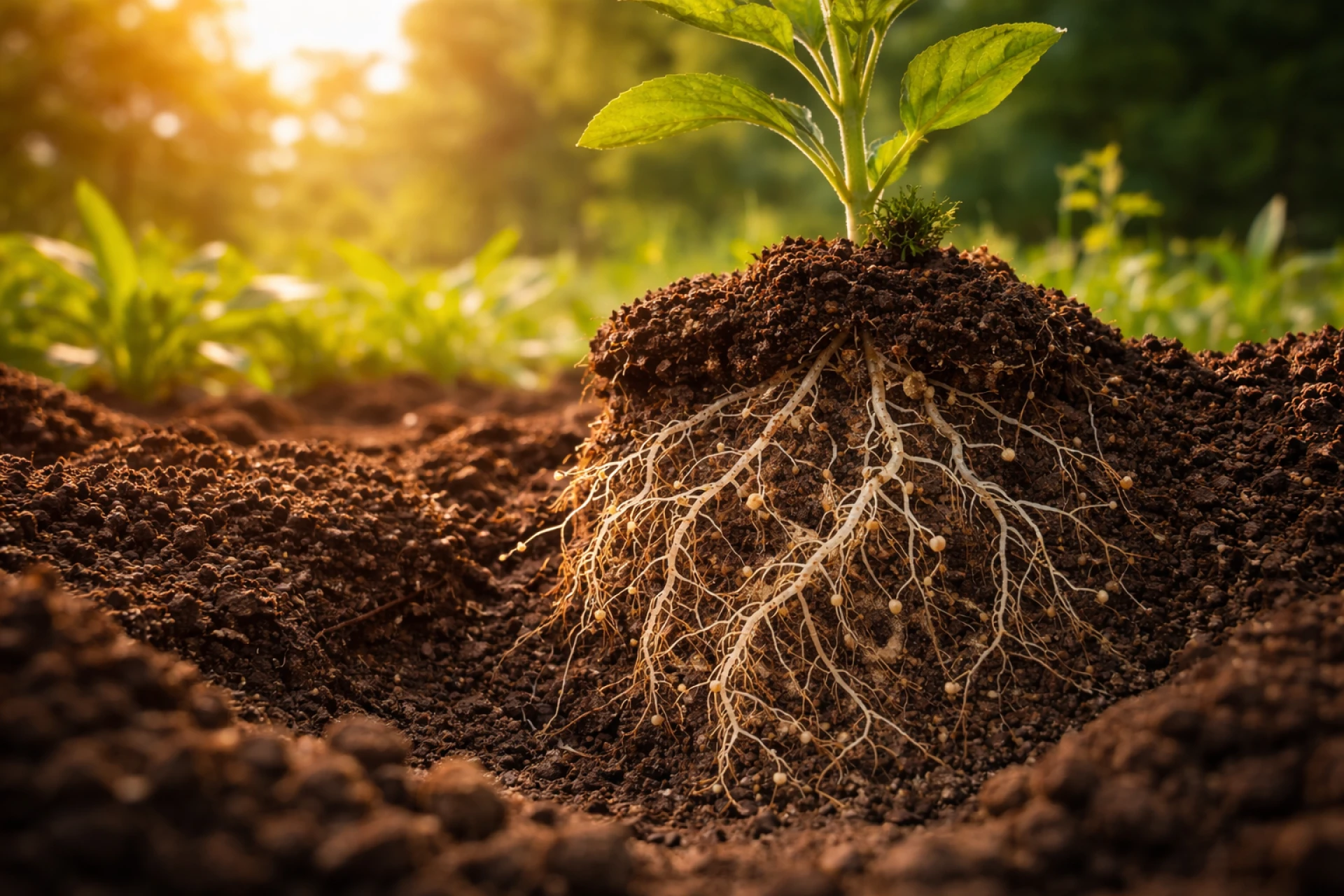
Nitrogen is an essential nutrient required for plant growth, and its deficiency can limit crop yields. Nitrogen fixing bacteria convert atmospheric nitrogen into a form that plants can use, hence increasing soil fertility. Rhizobium, Azotobacter, and Azospirillum are some examples of nitrogen-fixing bacteria. These bacteria form a symbiotic relationship with legumes and fix nitrogen in specialized structures called nodules, which are found in the roots of leguminous plants.
Phosphorous Solubilising Bacteria
Phosphorus is an essential nutrient for plant growth, but it is often present in soil in insoluble forms. Phosphorous solubilizing bacteria release phosphorus from these insoluble forms, making it available for plant uptake. Bacillus, Pseudomonas, and Rhizobium are examples of phosphorus-solubilizing bacteria.
Potassium is another essential nutrient required for plant growth, and its availability can limit crop yields. Potash-solubilizing bacteria release potassium from insoluble forms, making it available for plant uptake. Bacillus, Pseudomonas, and Rhizobium are examples of potash-solubilizing bacteria.
Sulphur is an essential nutrient required for plant growth, but it is often present in soil in insoluble forms. Sulphur-solubilizing bacteria release sulphur from these insoluble forms, making it available for plant uptake. Thiobacillus, Bacillus, and Pseudomonas are examples of sulphur-solubilizing bacteria.
Silicon is a micronutrient required for plant growth, and its deficiency can limit crop yields. Silicon is often present in soil in insoluble forms. Silica-solubilizing bacteria release silicon from these insoluble forms, making it available for plant uptake. Bacillus, Pseudomonas, and Rhizobium are examples of silica-solubilizing bacteria.
Manganese Solubilizing Bacteria
Manganese is an essential micronutrient required for plant growth, and its deficiency can limit crop yields. Manganese-solubilizing bacteria release manganese from insoluble forms, making it available for plant uptake. Bacillus, Pseudomonas, and Rhizobium are examples of manganese-solubilizing bacteria.
Iron is an essential micronutrient required for plant growth, and its deficiency can limit crop yields. Iron-solubilizing bacteria release iron from insoluble forms, making it available for plant uptake. Bacillus, Pseudomonas, and Rhizobium are examples of iron-solubilizing bacteria.
Microbial strains can also be used as natural pesticides and insecticides. Bacillus thuringiensis is a bacterium that produces proteins toxic to insects, and it is commonly used as an insecticide. Trichoderma, Beauveria, and Metarhizium are examples of fungi that can be used as natural pesticides.
Fungicides are chemical agents used to control or prevent the growth of fungi on plants or crops. These agents are commonly used in agriculture to protect crops from fungal diseases that can cause significant damage to yield and quality. Fungicides work by inhibiting or killing fungal spores, mycelia, or both. Some common examples of fungicides include copper-based fungicides, triazole fungicides, and strobilurin fungicides. Proper use and application of fungicides are essential to ensure that the crops are protected from fungal diseases without causing any harm to the environment or human health.
Larvicides are chemical agents used to kill or control the larvae of insects such as mosquitoes, flies, and other pests. These agents are commonly used in public health programs to control the spread of mosquito-borne diseases such as dengue fever, malaria, and Zika virus. Larvicides can be applied directly to the water where the larvae live, or they can be applied to the surrounding area to prevent the larvae from developing. Some common examples of larvicides include Bacillus thuringiensis israelensis (Bti), Methoprene, and Temephos.
Nematicides are chemical agents used to control or eliminate nematodes, which are microscopic worms that can cause significant damage to crops. These agents are commonly used in agriculture to protect crops from nematode infestation, which can lead to yield loss and reduced crop quality. Nematicides work by either killing the nematodes or inhibiting their development and reproduction. Some common examples of nematicides include carbamates, organophosphates, and fumigants.
Herbicides are chemical agents used to kill or control the growth of unwanted plants or weeds. These agents are commonly used in agriculture, forestry, and landscaping to protect crops and vegetation from weed infestation, which can cause significant damage to yield and quality. Herbicides work by inhibiting or killing the plant's ability to grow or reproduce. Some common examples of herbicides include glyphosate, 2,4-D, and dicamba.
Antifeedants are chemical agents that are used to prevent insects and other pests from feeding on plants or crops. These agents work by either making the plant or crop unpalatable to the pest or by inhibiting the pest's ability to digest the plant material. Antifeedants are commonly used in agriculture to protect crops from pest infestation, which can cause significant damage to yield and quality. Some common examples of antifeedants include azadirachtin, nicotine, and pyrethrins.
Post-harvest treatment refers to the various practices and techniques used to preserve the quality and shelf life of harvested crops. These practices include the use of chemical agents such as fungicides and insecticides, as well as physical methods such as temperature control and packaging. Proper post-harvest treatment is essential to ensure that the crops remain fresh and marketable for as long as possible.
Denitrification is a process in which nitrates are converted into nitrogen gas, which is released into the atmosphere. This process occurs naturally in soil and water systems and is carried out by certain bacteria. Denitrification plays an important role in the nitrogen cycle, as it helps to reduce the amount of nitrogen available to plants, which can prevent excessive growth and nutrient imbalance. However, excessive denitrification can also lead to environmental problems, such as eutrophication and air pollution.
Bio compost degrading refers to the process of breaking down organic waste materials, such as food scraps and yard waste, into nutrient-rich compost through the use of microorganisms. This process is a natural and sustainable way to recycle organic waste and produce a valuable resource for gardening and farming. During the bio compost degrading process, microorganisms such as bacteria, fungi, and worms break down the organic matter, transforming it into a nutrient-rich soil amendment that can be used to improve soil quality and plant growth.
Plant growth is the process by which plants increase in size and complexity over time. This process is influenced by a variety of factors, including genetics, environmental conditions, and nutrient availability. Nutrients such as nitrogen, phosphorus, and potassium are essential for plant growth, as they are used to build cell walls, produce chlorophyll, and carry out other vital functions. In addition to nutrients, environmental factors such as temperature, light, and moisture also play important roles in plant growth. Proper management of these factors is essential to ensure optimal plant growth and yield. Techniques such as crop rotation, soil testing, and fertilization can be used to optimize plant growth and improve crop quality.





















Sign in to leave a comment.