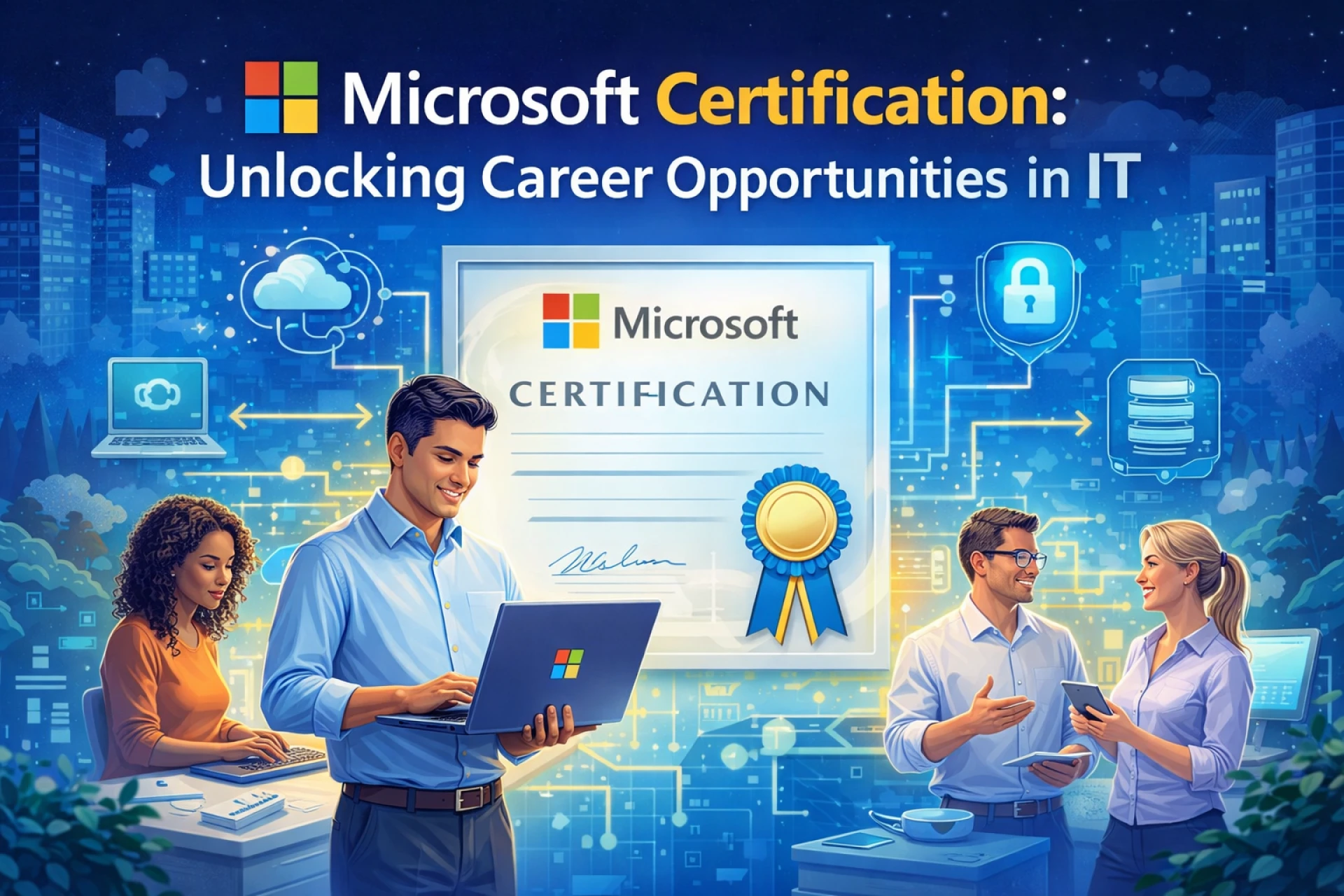

In today’s fast-paced digital world, Microsoft certifications have become a powerful way for IT professionals and business experts to validate their skills and knowledge. They are recognized globally and act as proof that a professional can handle complex technologies effectively. Microsoft certifications cover a wide range of areas including cloud computing, data management, cybersecurity, software development, and business applications. They are designed to equip professionals with the knowledge needed to succeed in competitive job markets and enhance career growth.
These certifications provide a structured learning path, combining theoretical knowledge with practical skills. Candidates not only gain technical expertise but also develop problem-solving abilities relevant to real-world business and IT environments. Whether you are just starting your career or aiming to reach advanced technical roles, Microsoft certifications offer a credible pathway to achieve your goals.
Microsoft Certification Levels
Microsoft certifications are divided into three primary levels: Fundamental, Associate, and Expert.
Fundamental Certifications are ideal for beginners or professionals new to technology. They focus on foundational concepts and provide an entry point for more advanced certifications. Examples include Microsoft Certified: Azure Fundamentals and Microsoft Certified: Power Platform Fundamentals.
Associate Certifications target individuals with some experience in technology roles. These certifications validate the ability to implement solutions and solve technical problems using Microsoft technologies. Examples include Microsoft Certified: Azure Administrator Associate and Microsoft Certified: Data Analyst Associate.
Expert Certifications are advanced-level certifications for professionals with extensive experience. They demonstrate the ability to design, implement, and manage complex solutions in various domains. Microsoft Certified: Azure Solutions Architect Expert and Microsoft Certified: Dynamics 365 Finance and Operations Apps Solution Architect Expert are common examples.
Additionally, Microsoft offers Specialty Certifications for professionals who want to showcase expertise in niche areas such as AI, cybersecurity, and data engineering. These are particularly useful for professionals looking to specialize in emerging technology trends.
Benefits of Microsoft Certification
Microsoft certifications offer multiple advantages. They enhance professional credibility and make certified candidates more attractive to employers. Certified professionals are often considered for promotions, high-responsibility projects, and leadership roles due to their verified skill sets.
Certifications also increase career flexibility. Professionals can explore roles across different industries, from IT services to finance, healthcare, and government. In many cases, certifications lead to higher salaries, improved job security, and global work opportunities.
Another key benefit is access to resources and communities. Microsoft provides official training modules, online labs, study guides, and forums for networking and professional development. Utilizing these resources helps candidates prepare effectively while connecting with peers and experts in the field.
Popular Microsoft Certification Exams
Microsoft offers certifications across several domains:
- Azure Certifications: Covering cloud infrastructure, security, and architecture.
- Microsoft 365 Certifications: Focused on productivity tools, collaboration, and enterprise solutions.
- Power Platform Certifications: Centered on app development, automation, and analytics.
- Data and AI Certifications: Covering data engineering, machine learning, and AI solutions.
One of the key certifications in data engineering is the DP-203: Data Engineering on Microsoft Azure exam. This exam evaluates the candidate’s ability to design and implement data solutions including storage, security, and processing best practices. Preparing for exams like DP-203 involves a mix of theoretical learning and practical experience in real-world scenarios.
Read more: http://www.prepaway.com
How to Prepare for Microsoft Certification Exams
Preparation is critical to passing Microsoft certification exams. Microsoft provides official learning paths, modules, and documentation to guide candidates. In addition to these, third-party platforms offer practice tests, study guides, and tips to boost readiness.
Successful exam preparation combines theoretical study and hands-on experience. Many exams feature scenario-based questions to assess how candidates apply concepts in real-world situations. Practice projects, virtual labs, and sandbox environments are essential for gaining practical skills.
Time management is also crucial. Candidates should create study plans, track progress, and focus on weaker areas. Joining online study groups and communities can provide additional support, encouragement, and insights into exam strategies.
Check more: https://www.prepaway.com/dp-203-exam.html
Career Advantages of Microsoft Certification
Microsoft certifications open doors to numerous career opportunities. Certified professionals are in high demand across industries such as IT services, finance, healthcare, education, and government. Common roles include:
- Azure Administrator: Managing cloud resources, infrastructure, and network security.
- Data Engineer: Building, managing, and analyzing data pipelines and solutions.
- Cloud Solutions Architect: Designing and implementing cloud-based applications and systems.
- Business Applications Consultant: Implementing Microsoft 365 and Dynamics 365 solutions for businesses.
Certified professionals typically enjoy higher salaries and better job security. They can also explore global opportunities, switch between roles, or specialize in emerging technologies. The credibility and recognition gained through Microsoft certifications make them a valuable asset for career advancement.
Visit website: https://prepaway.com/microsoft-certification-exams.html
Frequently Asked Questions (FAQ)
Q1: How long are Microsoft certifications valid?
Fundamental-level certifications typically last one year, while associate and expert certifications are valid for two years. Microsoft recommends staying current with technology updates and renewing certifications when needed.
Q2: Do I need prior experience to take Microsoft exams?
Fundamental exams require minimal experience, while associate and expert certifications assume some hands-on knowledge. Specialty exams may require prior experience in specific domains.
Q3: Can I prepare for Microsoft exams online?
Yes, Microsoft provides online learning paths, virtual labs, and study resources. Third-party platforms offer additional practice tests, video courses, and tips for exam success.
Q4: Are Microsoft certifications recognized internationally?
Yes, Microsoft certifications are recognized worldwide and are highly valued by employers in various industries. They serve as proof of skills, knowledge, and professional competency.
Q5: How many attempts can I make to pass a Microsoft exam?
Microsoft allows multiple attempts for exams if you do not pass initially. There is a mandatory waiting period before retaking, and it is recommended to prepare thoroughly before the next attempt.
Conclusion
Microsoft certifications are a vital tool for IT professionals seeking to validate their skills, improve career prospects, and gain global recognition. With certifications available at multiple levels and across diverse technology domains, there is a pathway for beginners, intermediates, and experts alike. Proper preparation using official and third-party resources, hands-on practice, and consistent study is essential for exam success. Achieving Microsoft certification boosts credibility, opens doors to high-demand roles, and provides opportunities for career growth and global employment. Whether your goal is cloud computing, data management, AI, or business applications, Microsoft certification offers a structured and recognized path to professional advancement.
































Sign in to leave a comment.