
In the vast landscape of metallurgy and industrial infrastructure, one material stands as the undisputed backbone of modern construction: mild steel. From the towering frameworks of commercial skyscrapers to the sprawling underground networks of water pipelines, mild steel is the go-to material for engineers balancing structural integrity with cost-efficiency.
For procurement managers and project engineers specifying materials for large-scale piling, structural, or fluid transmission projects, understanding the nuanced differences between various mild steel grades is critical. Selecting the wrong grade can lead to fabrication difficulties, budget overruns, or compromised structural safety.
This comprehensive guide will demystify what mild steel is, explore the most common mild steel grades used in the global piping industry (including ASTM, API, and EN standards), and explain why this material is perfectly suited for large-diameter welded pipe manufacturing at Allland Steel Pipe.
What is Mild Steel?
Steel is primarily an alloy of iron and carbon. The percentage of carbon directly dictates the metal’s hardness, tensile strength, and ductility.
Mild steel is technically classified as low carbon steel. To be categorized as mild steel, the carbon content typically ranges from 0.05% to 0.25% by weight. Because it lacks a high carbon footprint or large amounts of other alloying elements (like chromium or molybdenum found in stainless steel), mild steel does not possess extreme hardness.
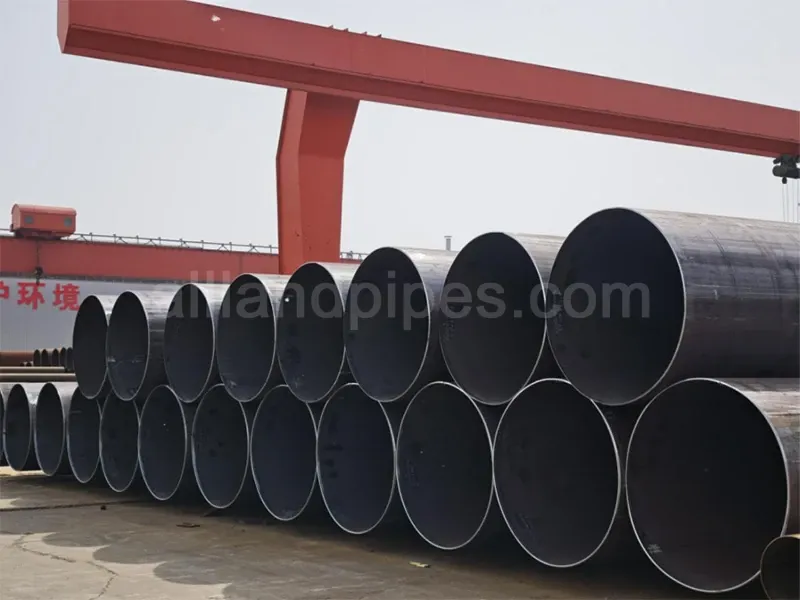
However, what it lacks in pure surface hardness, it more than makes up for in its extraordinary combination of high ductility, excellent machinability, and superior weldability. These characteristics make it the ultimate material for forming and welding massive industrial components, such as large-diameter LSAW steel pipes and SSAW steel pipes.
Common Mild Steel Piping Grades
Engineers do not simply order “mild steel”; they specify exact grades standardized by international organizations such as ASTM (American Society for Testing and Materials), API (American Petroleum Institute), and EN (European Norms). Here is a breakdown of the most crucial mild steel grades you will encounter in pipeline and structural engineering:
| Grade | Specification | Min Yield Strength | Primary Application |
| ASTM A36 | Structural Steel | 36,000 PSI | Piling, Bridges, Foundations |
| ASTM A53 B | Fluid Transport | 35,000 PSI | Water & HVAC Systems |
| API 5L B | Line Pipe | 35,500 PSI | Onshore Oil & Gas Pipelines |
| S235JR | EN 10025 | 235 MPa | European Civil Engineering |
1. ASTM A36: The Structural Standard
ASTM A36 is arguably the most famous mild steel grade in the world. It is the default material for general structural applications.
- Key Properties: It has a minimum yield strength of 36,000 PSI (250 MPa) and an ultimate tensile strength ranging from 58,000 to 80,000 PSI (400 – 550 MPa).
- Pipe Applications: Because of its excellent formability and welding characteristics, A36 is heavily used in manufacturing heavy-duty Structural Pipe and Piling Pipe for deep foundations, bridge supports, and port construction.
2. ASTM A53 (Grade A & Grade B): The Fluid Transport King
When it comes to transporting water, steam, or low-pressure air, ASTM A53 is the global standard for carbon steel pipe.
- Key Properties: ASTM A53 Grade B is the more robust variant, offering a minimum yield strength of 35,000 PSI (240 MPa). Its controlled chemical composition ensures it can endure the stresses of fluid pressure and temperature fluctuations.
- Pipe Applications: It is widely used for Drink Water Pipelines (when properly lined), HVAC systems, and Sprinkler Steel Pipes in fire protection networks.
3. API 5L Grade B: The Energy Pipeline Baseline
The API 5L specification is designed specifically for line pipe used in the oil and gas industry. While API 5L extends into high-yield carbon steels (like X65 or X80), its base level, API 5L Grade B, falls squarely within the mild steel category.
- Key Properties: With a minimum yield strength of 35,500 PSI (245 MPa), its specifications are very similar to ASTM A53 Grade B, but API 5L demands stricter testing protocols (such as precise non-destructive testing for weld seams).
- Pipe Applications: This is the foundational grade for low-to-medium pressure Onshore Pipelines and certain Offshore Pipelines where extreme high-yield strength is not mandatory, but absolute weld reliability is required.
4. EN 10025 (S235JR, S275JR, S355JR): The European Equivalents
In the European market, structural mild steels are designated by their yield strength in MPa.
- Key Properties: S235JR offers 235 MPa yield strength (similar to A36), while S355JR provides a robust 355 MPa yield strength.
- Pipe Applications: These grades are frequently specified in international tenders for heavy civil engineering projects, utilized extensively in massive SSAW pipes for port dredging and structural scaffolding.
Mild Steel Mechanical Properties & Benefits
Why do massive infrastructure projects rely so heavily on mild steel grades rather than high-carbon alternatives? The answer lies in how the material behaves on the manufacturing floor and in the field.
- Unmatched Weldability: As the carbon content in steel increases, the metal becomes prone to cracking during welding due to rapid cooling and hardening at the heat-affected zone (HAZ). Mild steel’s low carbon content prevents this. It accepts welding arcs beautifully, allowing manufacturers to create flawless, full-penetration submerged arc welds (SAW) on pipes with zero micro-fractures.
- High Ductility and Toughness: Mild steel can bend, twist, and deform under extreme stress before it actually breaks. In seismic zones or shifting soils, a pipeline made of mild steel will yield and absorb the geological energy, preventing a catastrophic brittle fracture.
- Cost-Effectiveness: Because it requires fewer expensive alloying elements and is easier to cast and roll, mild steel offers an unparalleled strength-to-cost ratio, making it financially viable for projects requiring thousands of tons of steel.
Mild Steel Anti-Corrosion Coatings
If mild steel has one flaw, it is its vulnerability to oxidation (rust). When exposed to moisture, aggressive soils, or marine environments, bare mild steel will rapidly corrode.
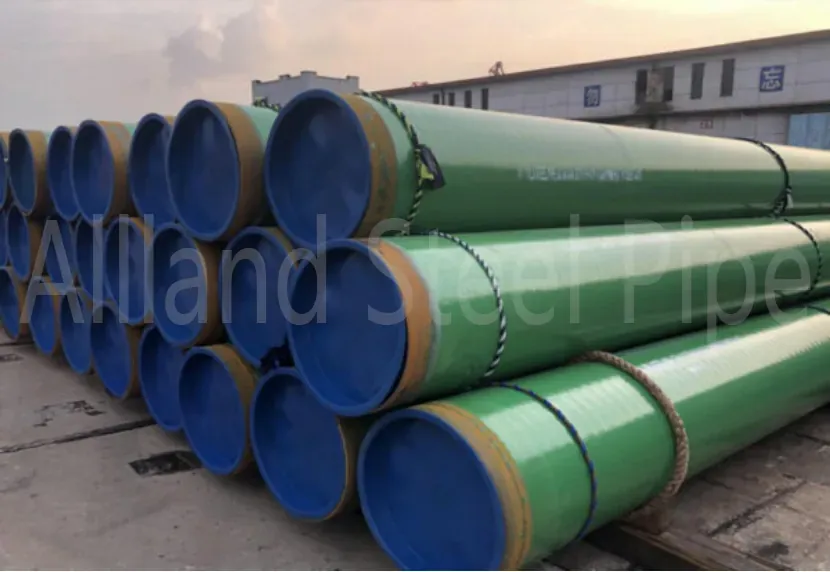
To utilize mild steel grades in buried pipelines or offshore platforms, the industry relies on advanced external coatings. Factory-applied systems such as FBE (Fusion Bonded Epoxy), 3LPE (Three-Layer Polyethylene), and 3LPP (Three-Layer Polypropylene) create an impenetrable barrier around the pipe. By pairing the mechanical strength and low cost of mild steel with a heavy-duty 3LPE coating, engineers can guarantee a pipeline lifespan exceeding 50 years, even in the harshest environments.



















Sign in to leave a comment.