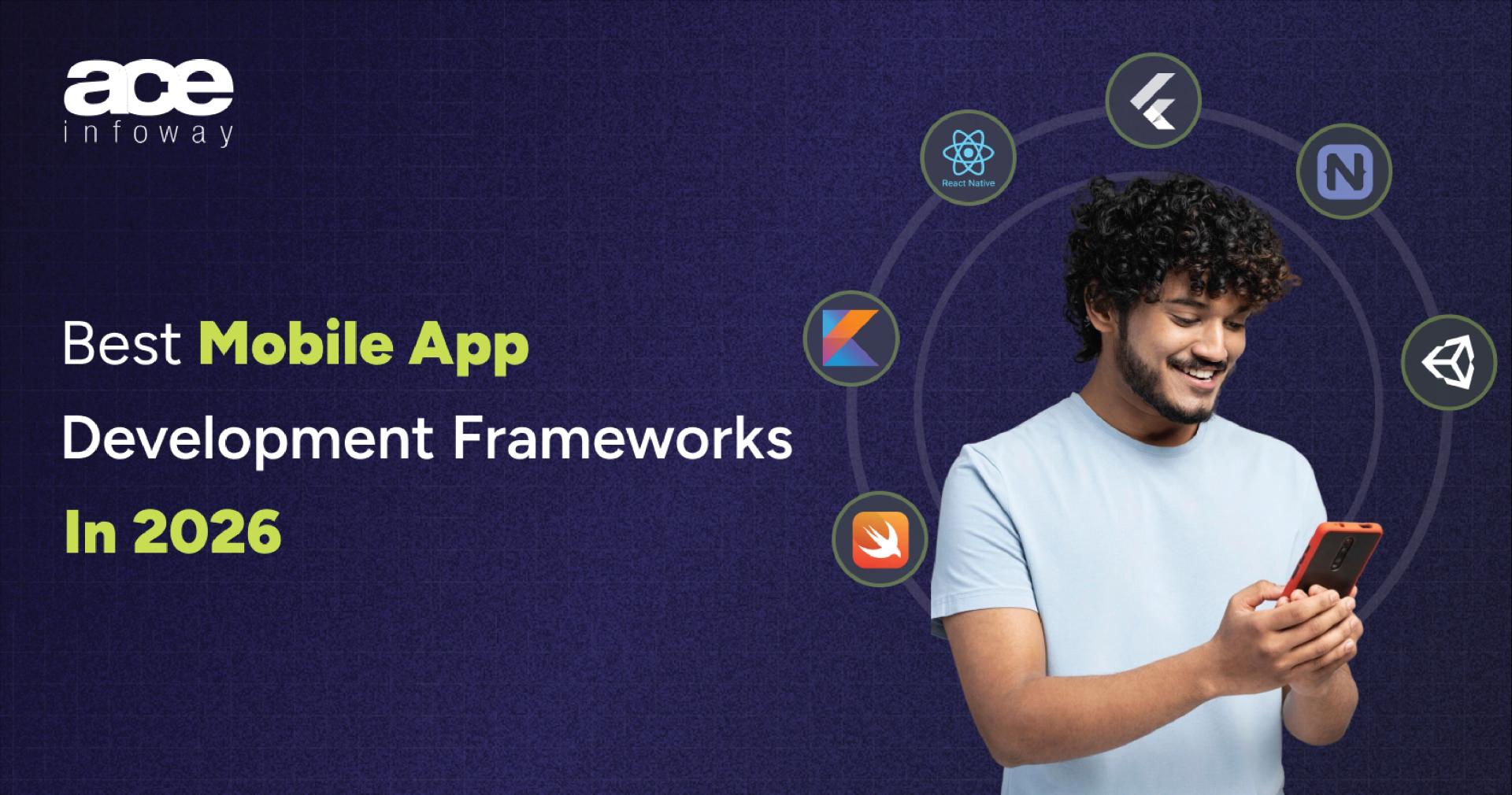

In an era where mobile apps drive business, community, and commerce, selecting the right mobile development app framework can make or break your project. Whether you’re building a consumer-facing application, an enterprise tool, or a multi-platform service, the framework you choose defines your speed to market, performance, maintainability, and cost.
In this article, we explore the top frameworks for 2026, weigh their strengths and trade-offs, present code snippets, highlight key trends, and offer tips for picking the right one.
📊 Why Framework Choice Matters More Than Ever
With over 4.88 billion smartphone users worldwide and mobile users spending upwards of 90 % of their time in apps rather than mobile browsers, the stakes are high. Mobile Infoworld+1
Frameworks shape:
- Development speed & cost (single codebase vs. native)
- App performance & responsiveness
- Cross-platform reach
- Developer hiring & ecosystem support
- Long-term maintenance & scalability
🧱 Top Mobile App Development Frameworks to Know in 2026
Here are six of the leading frameworks you'll want to evaluate:
1. React Native
Strengths: Mature JavaScript framework by Meta. Large ecosystem, many libraries. brandcit.com+1
Use case: Social apps, MVPs, start-ups.
Example code snippet:
import { View, Text } from 'react-native';

export default function App() {
  return (
    <View>
      <Text>Hello from React Native!</Text>
    </View>
  );
}
2. Flutter
Strengths: Developed by Google, uses Dart, great for expressive UIs and cross-platform (iOS, Android, web, desktop). certbolt.com+1
Use case: High-performance UI, brand apps with custom design.
Example:
import 'package:flutter/material.dart';

void main() => runApp(MaterialApp(home: MyApp()));

class MyApp extends StatelessWidget {
  @override
  Widget build(BuildContext context) {
    return Scaffold(
      body: Center(child: Text('Hello from Flutter!')),
    );
  }
}
3. Kotlin Multiplatform Mobile (KMM)
Strengths: Share business logic across Android & iOS while maintaining native UI. brandcit.com+1
Use case: Apps requiring near-native performance with shared core code.
Example:
// shared module
expect fun platformName(): String

fun sayHello() = "Hello from ${platformName()}"
4. SwiftUI
Strengths: Apple’s declarative UI framework for iOS/macOS/watchOS/tvOS. Simple syntax, tight ecosystem. brandcit.com
Use case: iOS-only apps with sleek UI and performance.
Example:
import SwiftUI

struct ContentView: View {
    var body: some View {
        Text("Hello from SwiftUI!")
    }
}
5. .NET MAUI / Xamarin
Strengths: Microsoft’s multi-platform solution (Android, iOS, Windows, macOS) using C#. Good for enterprises. Digital Technology Trends, 2023
Use case: Apps tied to Microsoft stack, corporate tools.
Example (C#):
public partial class MainPage : ContentPage {
  public MainPage() {
    InitializeComponent();
    Content = new Label { Text = "Hello from .NET MAUI!" };
  }
}
6. Ionic / NativeScript
Strengths: Hybrid or web-based technologies using HTML/CSS/JS; fast prototyping. Digital Technology Trends, 2023
Use case: Content-driven apps, internal business tools.
Example (Ionic – Angular):
import { Component } from '@angular/core';

@Component({
  selector: 'app-home',
  template: '<h1>Hello from Ionic!</h1>'
})
export class HomePage {}
🔍 Trends & Considerations for 2026
- 5G & IoT-enabled apps: With faster networks, apps can handle AR/VR, IoT devices, edge intelligence. Mobile Infoworld+1
- AI/ML integration: Frameworks increasingly support on-device ML or integrate easily with AI services.
- Low-code / no-code tools: Democratizing app development; faster time-to-market.
- Security & privacy by default: GDPR/CCPA compliance, on-device encryption.
- Single codebase vs native trade-off: Think about performance, device capability, team skills.
✅ Tips for Selecting the Right Framework
- Map your target platforms — iOS-only, Android-only, cross-platform?
- Evaluate performance needs — UI complexity, animations, native integrations.
- Consider your team’s skills — JS, Dart, Kotlin, C#.
- Review ecosystem & libraries — plugin maturity, community support.
- Plan for maintenance and future-proofing — updates, platform changes, code reuse.
- Build prototypes and benchmark key flows (load times, animation smoothness, size).
🎯 Why You Should Read the Full Guide
The full guide dives deeper into features, practical comparisons, cost implications, and how these frameworks align with business goals. Ideal for developers, startups, and enterprises planning their 2026 mobile-app strategy.
👉 Read the full article: “Mobile Development App Frameworks”























Sign in to leave a comment.