

Walk into any gaming cafe in Bengaluru on a weekend and you will still hear the familiar keyboard chatter of Valorant or Counter-Strike, but look closer and another market is quietly throwing around bigger money. A student waiting for a PC slot is clearing a limited-time event in Honkai: Star Rail. A working professional is checking a Clash of Clans war attack between coffee sips. Someone else is rolling for a character in Genshin Impact before heading home in Namma Metro. That is the real story of mobile gaming now: it is no longer the side hustle of the games business. In revenue terms, it has been the main stage for years.
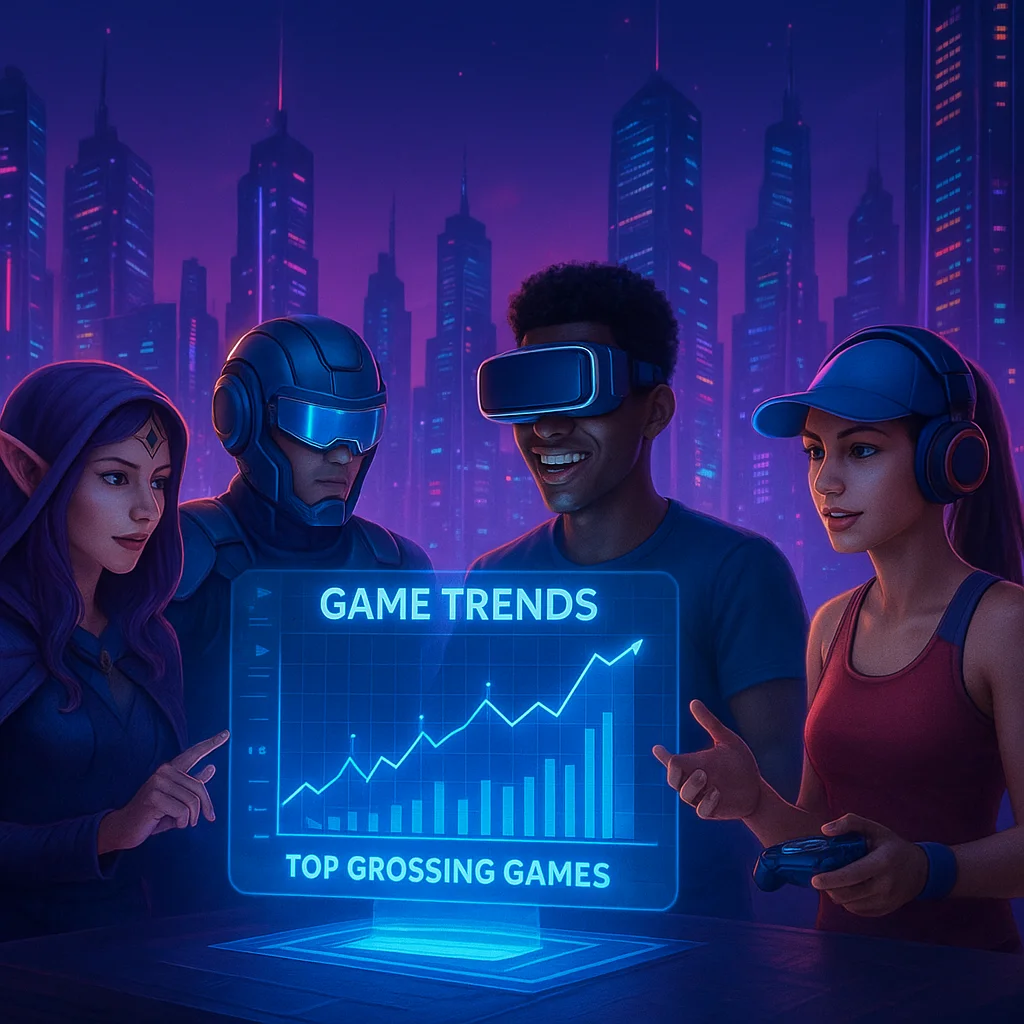
According to Sensor Tower, Appmagic, data.ai and company earnings reports, the highest-grossing mobile titles continue to come from a mix of gacha RPGs, strategy games, long-running puzzle hits and social casino products. The names change by territory and quarter, but the pattern is remarkably stable. Players do not simply pay for downloads; they pay for progression, identity, convenience, collection and community. That is why a game can be free to install and still generate astonishing lifetime revenue.
For readers who want a broader companion overview, WriteUpCafe has already published useful primers such as Top 5 Mobile Gaming Trends and the Highest-Grossing Games and Mobile Gaming Trends and Top Grossing Games Driving the Industry Forward. Here, I want to go deeper: what trends are actually shaping spending, which games sit near the top of the charts, what changed recently in 2026, and why the Indian mobile audience should pay very close attention.
Mobile gaming is not winning because phones are convenient alone. It is winning because developers have mastered retention loops, live events and monetisation systems that turn daily play into long-term spending.
The business is massive, but it is also nuanced. Top-grossing does not always mean most downloaded. Viral success does not always translate into durable revenue. And premium design polish does not guarantee chart dominance. The winners are usually the games that create habits first and then monetise those habits with precision.
How mobile gaming became the revenue engine of games
The rise of mobile gaming was never just about smartphone penetration, though that mattered enormously. Apple’s App Store and Google Play created global storefronts, low-friction payments and discoverability at a scale console and PC publishers could not easily match. Then free-to-play design matured. Instead of asking players for an upfront purchase, developers could build a funnel: acquire users cheaply or virally, retain them through daily rewards and social systems, then monetise the most committed portion over months and years.
By the late 2010s, this model had already produced giants. Supercell showed how elegant systems design could keep Clash of Clans and Brawl Stars relevant. King demonstrated the staying power of puzzle monetisation with Candy Crush Saga. Tencent and its partners proved that mobile could support competitive and social ecosystems at incredible scale in China and beyond. miHoYo, now HoYoverse, then pushed mobile presentation values into territory once associated with console RPGs, especially with Genshin Impact.
India followed a slightly different route. Here, affordable Android devices, low-cost mobile data and a deeply social gaming culture created a huge player base. Not every Indian player spends heavily, but engagement is enormous. That matters because ad-supported models, battle passes and low-ticket microtransactions all benefit from scale. Even after regulatory shifts affected some categories and some titles, mobile remained the most accessible entry point to gaming for millions.
Recent reports from Newzoo, Sensor Tower and data.ai have reinforced the same broad picture: while PC and console can dominate headlines with blockbuster launches, mobile remains the largest segment of the games market by consumer spending globally. The reasons are structural.
- Reach: billions of active smartphones create a larger addressable audience than dedicated gaming hardware.
- Habit: mobile titles fit into short sessions during commuting, study breaks and lunch hours.
- Payments: app stores and local payment methods reduce friction for repeat purchases.
- Live ops: events, seasonal passes and limited banners keep users returning daily.
- Social loops: guilds, clans, gifting and co-op systems turn games into communities.
That combination explains why older games often keep earning long after the industry has moved on to a newer visual trend. A top-grossing mobile game is less like a one-time product and more like a managed entertainment service.
What “top grossing” really means, and why the rankings can mislead
When people hear “top grossing,” they often imagine a simple leaderboard where the best game wins. In practice, the term hides several layers. Grossing charts on app stores are usually based on revenue generated over a recent period, not lifetime earnings. Third-party intelligence firms such as Sensor Tower, Appmagic and data.ai estimate revenue using sampling and market models, which means the exact numbers can differ. Publishers also report revenue differently across regions, platforms and business units. So any serious analysis should focus on patterns rather than pretend there is one perfect, universally agreed list.
There is also a crucial distinction between downloads and spending. A hypercasual game can explode on TikTok or YouTube Shorts, rack up millions of installs and still earn less than a mature RPG with a smaller but more committed paying base. A strategy title with long account lifecycles may monetise fewer users far more effectively than a trendy arcade game. This is why titles such as Candy Crush Saga, Royal Match, Clash of Clans, Monopoly GO!, PUBG Mobile in markets where it is available, and HoYoverse games keep appearing in revenue discussions even when they are not the most talked-about games in mainstream pop culture.
Another complication is geography. China, the United States, Japan, South Korea and parts of Europe can each produce very different top-grossing charts. A game that dominates Japan through character collection and event cadence may barely register in India. Meanwhile, a social casino game that prints money in North America may have almost no cultural footprint in Southeast Asia. For Indian readers, this matters because local popularity and global revenue leadership are not always the same thing.
The most downloaded mobile game is often not the most valuable business. Revenue follows retention, monetisation depth and audience willingness to pay, not pure install volume.
If you want a practical framework, look at top-grossing through four lenses:
- Monetisation model: gacha, battle pass, cosmetics, boosters, subscriptions or ads.
- Audience profile: casual mass market, mid-core strategy players, RPG collectors or competitive users.
- Regional strength: whether the title relies on one major market or has diversified revenue.
- Live-ops durability: how effectively the game turns updates into spending spikes.
That framework is far more useful than obsessing over a weekly chart screenshot.
The genres and games that keep printing money
Now to the heart of it. Which kinds of mobile games tend to dominate gross revenue? Across 2024, 2025 and into 2026, the strongest earners have generally clustered around a few proven categories: character-collecting RPGs, empire and team strategy games, puzzle titles with aggressive event design, social casino products, and licensed games with strong fandom hooks. Not every chart will show the same names, but the recurring heavyweights are familiar.
HoYoverse remains central to the conversation. Genshin Impact established the template for a premium-feeling cross-platform gacha RPG with huge event cadence, broad character appeal and strong global fandom. Honkai: Star Rail followed with turn-based design, faster daily loops and a monetisation structure that many players found easier to maintain. Both titles have repeatedly appeared near the top of monthly revenue estimates from Sensor Tower and Appmagic, especially around major banners and region expansions.
Supercell continues to show the power of mature live service design. Clash of Clans and Clash Royale may not dominate discourse every single month, but their monetisation systems are refined, their communities are sticky and their event frameworks are battle-tested. Brawl Stars has also demonstrated how a game can reinvent momentum through updates, modes and creator-driven visibility.
Scopely’s Monopoly GO! has been one of the most significant revenue stories of the decade. Industry observers, including data.ai and company commentary, have highlighted how effectively it combines recognisable IP, social mechanics, collection systems and event layering. It is a reminder that mobile’s biggest earners do not have to look like traditional “gamer” games.
King’s Candy Crush Saga is still the evergreen lesson. Many younger players underestimate it because it feels old next to the latest anime RPG, but revenue longevity like this is rare in any entertainment category. The game thrives on familiarity, segmentation and extraordinarily polished progression psychology.
Then there are regionally powerful titles and categories. PUBG Mobile, depending on market access and local versions, remains a major force in several territories. In China, titles from Tencent and NetEase continue to shape the upper end of spending charts. Japanese mobile revenue often leans heavily into character collection and established media franchises. That is why any “global top grossing” list must be read with caution.
- RPG/gacha leaders: Genshin Impact, Honkai: Star Rail and other banner-driven titles monetise through character desire, FOMO and event timing.
- Strategy staples: Clash of Clans and similar games monetise through progression speed, war readiness and social obligation.
- Puzzle giants: Candy Crush Saga and Royal Match benefit from broad demographics and event-heavy retention.
- Social/IP breakouts: Monopoly GO! shows how brand familiarity plus smart live ops can create huge revenue.
- Regional powerhouses: local tastes in China, Japan and Korea can lift games that are less visible elsewhere.
From an Indian perspective, this mix is important. Our gaming discourse often skews toward battle royale and esports, but the revenue crown globally is shared by several genres that many “core” players tend to underestimate.
The business trends driving spending in 2026
What changed recently? In 2026, mobile gaming is looking less like a gold rush and more like a mature, ruthlessly optimised entertainment economy. User acquisition costs remain challenging, privacy changes continue to affect ad targeting efficiency, and platform economics are under constant scrutiny. As a result, publishers are focusing even more on retention, cross-platform identity and high-value live operations rather than simply chasing raw installs.
One major shift is the growing importance of hybrid monetisation. Games are no longer relying on one revenue stream alone. A successful title may combine battle passes, cosmetic bundles, subscriptions, ad rewards, event packs and collaboration drops. This spreads risk and captures different spending behaviours without forcing every player into the same funnel. According to industry analysis from data.ai and Sensor Tower, titles that layer monetisation intelligently often outperform those that depend on a single spend trigger.
Another visible 2026 trend is event density. Developers are packing calendars with collaborations, anniversary campaigns, login streaks, mini-games and social milestones. The point is not only to keep DAU healthy; it is to create more reasons to spend at specific moments. In practical terms, a top-grossing game now behaves almost like a streaming platform with weekly programming. If a banner, event or crossover lands well, revenue spikes sharply.
Cross-platform play is also shaping spending. When a player can move seamlessly between mobile, PC and sometimes console, the account becomes more valuable. HoYoverse has been especially effective here. A commuter may do dailies on phone and play story content on PC at night. That flexibility supports retention, and retention supports monetisation. For Indian players balancing college, work and patchy schedules, this convenience matters a lot.
Meanwhile, the ad-supported side of mobile has become more selective. Hypercasual no longer feels like the unstoppable install machine it once was. Investors and publishers increasingly want stronger retention, deeper progression and better lifetime value. That has pushed more teams toward hybridcasual design, where simple onboarding leads into longer-term systems.
For a reader interested in tactical advice rather than just market observation, Expert Tips for Mobile Gaming Trends and Top Grossing Games in 2026 and How to Get Started with Mobile Gaming Trends and Top Grossing Games in 2026 are useful companion reads. They pair well with the bigger industry picture.
Case studies: why some games endure while others flame out
Consider Genshin Impact. Its success was never just about anime aesthetics or open-world scale. The real engine has been cadence. New regions, character banners, story quests, music, lore speculation and creator-friendly reveal cycles keep the community permanently engaged. The spending logic is tied to emotional investment. Players are not only buying power; they are buying attachment, identity and participation in a fandom moment. That is a very different proposition from a traditional premium RPG sold once at retail.
Now compare that with Candy Crush Saga. The emotional pitch is entirely different, but the commercial discipline is just as sharp. Sessions are short, failure states are calibrated, and event structures are designed to keep broad demographics active. The game does not need a cinematic trailer every month. It needs consistency, readability and low-friction re-entry. It monetises impatience and persistence rather than character desire.
Monopoly GO! is another fascinating case because it blends familiar board-game branding with highly tuned mobile retention loops. Scopely found a way to make a legacy IP feel native to modern mobile spending habits. Social gifting, sticker collection, event progression and fear of missing rewards all interact. This is why licensed games should never be dismissed as lazy cash-ins; when executed well, they can become category leaders.
Supercell’s Clash of Clans offers a different lesson: community durability. Few mobile games sustain relevance for this long without collapsing into mechanical bloat. Yet clan identity, war structures and periodic refreshes keep the game meaningful. For many players, quitting does not mean leaving a product. It means leaving a group. That social friction is commercially powerful.
There is a warning in all these examples. Flashy launch metrics mean very little if the game lacks a long-term reason to return. Plenty of mobile titles open strongly through paid acquisition or influencer attention, then fade when retention curves flatten. The top-grossing elite usually share three traits:
- They create rituals, such as dailies, clan tasks, energy loops or banner countdowns.
- They create identity, through collections, cosmetics, rankings or account progression.
- They create social pressure, whether through co-op, guilds, gifting or competitive ladders.
That trio is more valuable than novelty alone. In a market this crowded, habit beats hype almost every time.
What this means for Indian players, creators and publishers
India remains one of the most important mobile gaming audiences on the planet, but the local market has its own texture. Average revenue per user is lower than in the US, Japan or South Korea, yet the scale of engagement is extraordinary. This creates a split-screen reality. On one side, global top-grossing lists are driven heavily by high-spending markets. On the other, India influences culture, installs, esports viewership, creator ecosystems and the long-term strategic priorities of publishers looking for growth.
That is why publishers increasingly localise not only language but event messaging, payment options and creator partnerships. The Indian audience responds strongly to community validation. A game that gets traction through streamers, college circles, WhatsApp groups or local tournaments can build a very resilient base. We have seen this pattern in battle royale communities, in casual multiplayer titles and in strategy games that spread through friend networks rather than formal marketing.
For Indian creators and aspiring studios, the key lesson from top-grossing games is not “copy the biggest title.” Arre, that road usually ends in heartbreak! The better lesson is to study systems. How does a game onboard users? How does it structure day-one, day-seven and day-thirty retention? How does it price convenience without making non-spenders feel useless? How does it turn seasonal content into social conversation? These are design questions, not just marketing ones.
There is also a content opportunity. Indian gaming coverage still spends disproportionate time on a handful of competitive titles. But the biggest money globally is spread across puzzle, RPG, strategy and social products. Writers, streamers and analysts who understand those ecosystems are going to become more valuable. If you can explain why a banner underperformed, why a progression rework increased payer conversion, or why a puzzle event boosted retention, you are speaking the language of the industry’s revenue center.
For India, the next phase of mobile gaming growth will not be defined only by downloads. It will be defined by smarter monetisation, stronger communities and games built for long-term habit.
That matters whether you are a player trying not to overspend, a creator choosing what to cover, or a studio deciding what kind of game to build.
Where the market goes next
The next few years of mobile gaming will likely be less about dramatic disruption and more about refinement. Publishers already know the broad formulas that work. The competitive edge now comes from execution: better live ops, stronger analytics, cleaner onboarding, more culturally precise collaboration events and more efficient content pipelines. In other words, the winners will not always be the studios with the loudest trailers. They will be the ones with the sharpest operational discipline.
Expect cross-media IP to remain important. Games tied to recognizable brands, shows or fictional universes have an easier time breaking through crowded storefronts. But brand alone is not enough. If the progression loop is weak, players will churn. The lesson from Monopoly GO! and major anime RPGs is that IP works best when paired with systems that create repeat engagement.
Expect deeper segmentation too. Not every player wants the same value proposition. Some want cosmetic prestige. Some want convenience. Some want collection completion. Some will never pay but can still drive ad impressions and social momentum. The most sophisticated mobile games are now built to serve all of these cohorts simultaneously.
There is also likely to be more focus on account ecosystems. As players spread time across phone, tablet and PC, publishers benefit from making their account the center of identity. That increases switching costs and gives users more reasons to stay invested. For top-grossing games, account persistence is almost as important as content quality.
For players, the practical takeaway is simple. Follow the money, but understand what it represents. A top-grossing game is not automatically the best-designed or most generous title. It is the game that has most effectively converted attention into recurring spend. Sometimes that aligns with quality. Sometimes it aligns with compulsion. The smartest players enjoy the systems without becoming trapped by them.
If you want the shortest possible summary, here it is. Mobile gaming’s biggest trends in 2026 are hybrid monetisation, intense live-event scheduling, cross-platform retention and region-specific audience design. The top-grossing games are the ones that turn those trends into habit-forming ecosystems. Some do it with dragons and starships. Some do it with candy, stickers or village upgrades. Different skin, same business truth.
And from Bengaluru to Tokyo to Los Angeles, that truth is shaping the future of the games industry more than many flashy console showcases ever will. Mobile is not the side screen anymore. For revenue, for reach and for strategic importance, it is still the main event.
























Sign in to leave a comment.