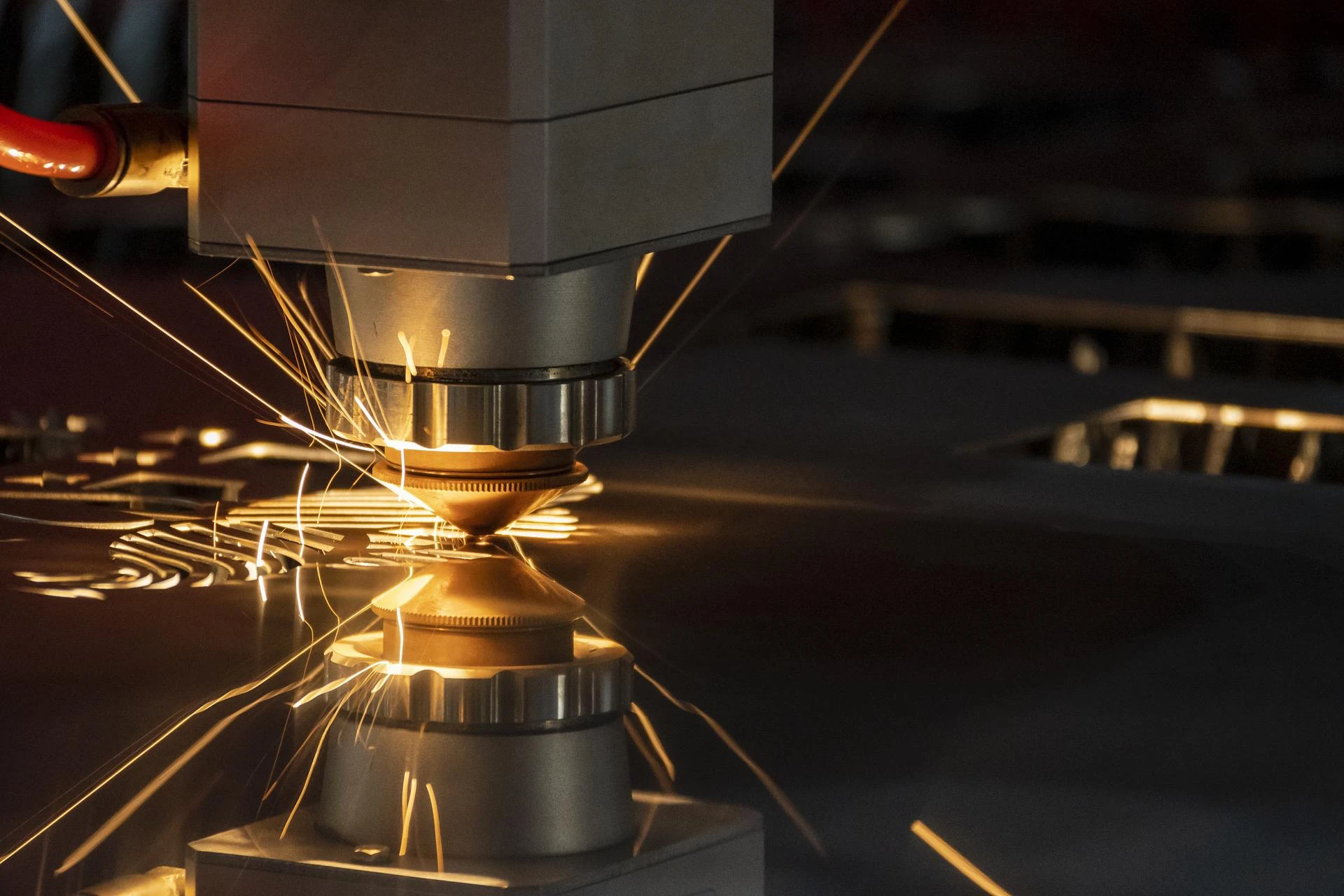

The landscape of industrial manufacturing has undergone a quiet but radical transformation over the last decade. For decades, mechanical shearing, turret punching, and plasma cutting were the standards for sheet metal fabrication. While effective, these methods often imposed strict limitations on geometry, edge quality, and material usage.
Today, the integration of high-powered fiber optics and automated material handling has redefined what is possible. Modern laser cutting services are no longer just about cutting shapes out of steel; they are about rewriting the rules of manufacturing efficiency, precision, and sustainability.
For industrial designers and procurement specialists, understanding these shifts is critical to staying competitive in a market that demands faster turnaround times and tighter tolerances.
The Shift from CO2 to Fiber Technology
To understand the current standard, we must look at the technological leap from CO2 lasers to Fiber lasers. For years, CO2 lasers were the workhorses of the industry. They relied on a gas mixture to create a beam, which was then directed through a complex system of mirrors. While they excelled at cutting thicker materials and non-metals like acrylics, they were maintenance-heavy and energy-hungry.
The revolution came with solid-state fiber laser technology. Unlike their predecessors, fiber lasers generate the beam inside an active fiber and transmit it through a flexible transport fiber. This seemingly subtle difference has profound implications for manufacturing standards:
- Reflective Material Capability: Traditional CO2 lasers struggled with reflective metals like copper, brass, and aluminum, as the beam could reflect back and damage the optics. Fiber lasers absorb into these materials far more efficiently, allowing manufacturers to process highly conductive metals without risk.
- Unmatched Speed on Thin Gauge: On mild steel and stainless steel under 6mm, a modern fiber laser can cut up to three times faster than a CO2 counterpart of the same wattage. This speed directly translates to lower part costs for high-volume runs.
- Energy Efficiency: Fiber lasers convert energy with approximately 30-50% efficiency, compared to the roughly 10% efficiency of CO2 systems. This reduction in power consumption is a key factor in the "green manufacturing" push seen across global supply chains.
Automation: The Era of the "Dark Factory"
Perhaps the most significant change in modern standards is not the cutting head itself, but the ecosystem surrounding the machine. The concept of the "dark factory"—where production continues unmanned through the night—is now a reality for top-tier fabrication providers.
In the past, a laser cutter was limited by how quickly an operator could manually load a sheet of steel and unload the cut parts. This manual handling was a bottleneck that capped productivity.
Modern systems utilize automated loading and unloading towers that can store tons of raw material. A robotic arm picks up a sheet, places it on the shuttle table, and once the cut is complete, removes the finished parts. This allows for:
- Consistent Cycle Times: Robots do not get fatigued, ensuring that the 100th sheet is loaded as quickly as the first.
- Surface Protection: Automated handling reduces scratches and surface damage often caused by manual handling of heavy sheets.
- Reduced Lead Times: By running "lights-out" shifts overnight, fabrication facilities can essentially double their capacity without doubling their workforce, allowing for tighter delivery schedules on large projects.
Tube Laser Cutting: Expanding Design Geometries
While flat sheet cutting is the backbone of fabrication, the standards for structural components are also evolving. Tube laser cutting has emerged as a game-changer for industries ranging from furniture design to automotive chassis manufacturing.
Traditionally, working with tube profiles (square, round, or rectangular hollow sections) involved multiple steps: sawing to length, drilling holes on a drill press, and perhaps milling out slots. Each step introduced a margin for error and added handling time.
Advanced tube laser systems consolidate these processes into a single operation. A tube laser can cut the tube to length, cut complex notches for assembly, and drill precise bolt holes all in one pass.
This capability allows engineers to design "self-fixturing" frames. By cutting slot-and-tab features into the tubes, a frame can be snapped together like a puzzle before welding. This drastically reduces the need for complex welding jigs and ensures the final assembly is square and true, elevating the overall quality standard of the finished product.
Optimizing Material Utilization with Nesting Software
In an era of fluctuating steel and aluminum prices, material utilization is a critical metric. Modern laser cutting services leverage sophisticated "nesting" software that uses algorithms to arrange parts on a sheet in the most efficient pattern possible.
This goes beyond simple Tetris-like arrangements. Advanced nesting can:
- Common Line Cutting: The laser cuts a single line that serves as the edge for two adjacent parts, reducing cutting time and gas consumption.
- Remnant Management: If a sheet is not fully used, the system tracks the "remnant" (the leftover piece) and stores it in the database for future small jobs, ensuring scrap is kept to an absolute minimum.
For the client, this means a lower cost per unit, as they are paying for less waste. For the environment, it means a significant reduction in the tonnage of scrap metal that needs to be recycled.
The Role of Assist Gases
The final piece of the modern standard puzzle is the use of assist gases. The gas used during the cutting process plays a vital role in edge quality.
- Oxygen: Typically used for mild steel. It creates an exothermic reaction that speeds up the cut but leaves an oxide layer on the edge that must be removed before painting.
- Nitrogen: The standard for stainless steel and aluminum. Nitrogen shields the cut from oxygen, preventing oxidation. This results in a clean, silver edge that is ready for welding or powder coating immediately, with no secondary grinding required.
High-pressure nitrogen cutting has become the industry standard for premium finishes, eliminating the labor-intensive step of edge cleaning and improving paint adhesion.
Conclusion
The evolution of metal fabrication is a story of converging technologies. It is the intersection of photonics (fiber lasers), robotics (automation), and software (nesting algorithms).
For manufacturers, architects, and engineers, these advancements mean that the constraints of yesterday no longer apply. We can now design lighter, stronger, and more complex assemblies, confident that modern fabrication partners have the technology to execute them with micron-level precision. As these technologies continue to mature, we can expect the standards for speed, quality, and sustainability to climb even higher, pushing the entire manufacturing sector toward a more efficient future.























Sign in to leave a comment.