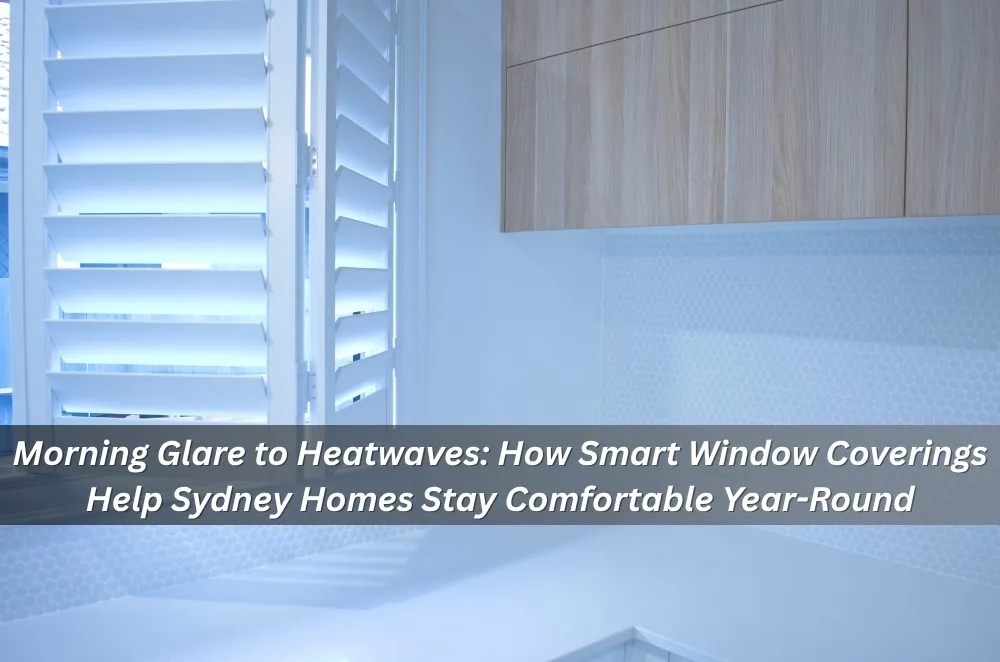

Sydney’s weather can be a study in contrasts. One week you’re squinting through a wall of morning glare, the next you’re closing every blind to fend off a nor-westerly heatwave, and by June you’re hunting for ways to keep the warmth in after sunset. HVAC systems do a lot of heavy lifting, but windows are still the first line of climate control. The good news? Thoughtful, adjustable window coverings can make a noticeable comfort difference before you even touch the thermostat.
Below, we unpack how heat and light move through glass, compare popular coverings, and explore why smart plantation shutters in particular have become a quiet hero for many Sydney households.
Understanding How Sun & Heat Enter a Sydney Home
Sydney sits in a temperate coastal zone, yet most suburbs clock more than 2,500 sunshine hours a year. Daylight is great, until it isn’t. Direct radiation pours through east-facing panes in the morning and west-facing panes in the afternoon, warming internal surfaces and spiking room temperatures long after the sun has moved on.
Orientation Matters More Than You Think
• North-facing windows receive gentle, fairly consistent sun, handy for passive winter heating.
• East-facing windows grab the first light of day, producing strong glare but not always extreme heat.
• West-facing windows cop low-angle afternoon rays that can turn living rooms into saunas right when families get home.
• South-facing windows rarely see direct sun; here, insulation trumps glare reduction.
Good design works with these angles rather than against them. Simple tweaks, like angling louvres up on a north window in winter, can harvest warmth. Many of the principles appear in the federal government’s practical guide to YourHome.gov.au passive cooling advice, which highlights shading, orientation and controllable openings as low-cost comfort solutions.
Common Window Coverings vs Smart Adjustable Options
Not all coverings tackle glare and heat with equal skill. The quick comparison below outlines how each major type performs on comfort factors that matter in Sydney’s climate.
Comparison Table , Covering Type vs Comfort Factors
| Covering Type | Daylight Control | Heat Reduction | Maintenance | Key Take-Away |
| Standard curtains | Moderate (full open or closed) | Low–moderate (depends on fabric & lining) | Wash or dry-clean periodically | Good for privacy but limited fine-tuning of light/heat. |
| Roller blinds | Moderate (up/down only) | Moderate when block-out fabric used | Dust and occasional spot-clean | Sleek look; struggle with partial glare scenarios. |
| Cellular (honeycomb) shades | Moderate | High insulation value | Vacuum occasionally | Excellent insulation; weaker on glare because movement is vertical only. |
| External awnings | High for specific windows | High for heat if correctly angled | Exposed to weather, regular checks needed | Block sun before it hits glass; less flexible for variable days. |
| Smart plantation shutters | High, louvre angle can be micro-adjusted | High, air gap plus material insulation | Wipe clean; repaint timber if desired | Fine control of glare, privacy & airflow year-round. |
Smart Plantation Shutters: Material & Control Choices
Plantation shutters have long been appreciated for their crisp lines, but the real win is their versatility. Tilt the louvres a few degrees to bounce glare upward, swing panels fully open for breezes, or close everything tight on a cold night to trap heat indoors. Today’s “smart” options simply add motorisation or app control so those adjustments happen with a tap.
Timber, PVC or Aluminium?
• Timber offers natural insulation and classic charm, ideal for heritage terraces in Paddington.
• PVC resists moisture and warping, a plus for humid coastal pockets such as Coogee or Cronulla.
• Aluminium handles high-bushfire-risk zones on Sydney’s fringes and looks at home in modern builds.
Each material can be teamed with hidden tilt rods, wide or narrow blades, and smart motors. When weighing up these choices, many homeowners browse quality plantation shutter options that let them compare materials side by side without feeling locked into one style.
Balancing Aesthetics with Performance
Window coverings shouldn’t force a style compromise. A case in point is the trend towards broader, cleaner louvre profiles. They match contemporary interiors yet still create deep shade when angled correctly. Readers wanting a deeper dive into style considerations may enjoy the previously published guide on design-led shutters for living spaces, which shows how visual impact and practicality can coexist.
In practice, you might see this balance play out in a Bondi apartment: wide white louvres echo coastal minimalism while allowing enough reflection to keep afternoon glare off the lounge without darkening the room entirely.
Seasonal Tips for Adjusting Louvres Like a Pro
Because louvre angles sit on a spectrum, not just open/closed, small tweaks can deliver comfort gains across the calendar.
Summer Settings , Blocking High-Angle Sun
• Tilt blades upwards on north-facing windows at midday so the top edge catches and reflects harsh light.
• Close west-facing shutters during the hottest late-arvo hours; reopen once exterior temperatures drop.
• Pair with ceiling fans set to “summer” mode (anti-clockwise) to push warm air up and out.
Winter Settings , Harvesting Low-Angle Warmth
• Open north-facing shutters fully on clear mid-winter days to let in sunrays that sit lower in the sky.
• Keep louvres slightly angled on east-facing windows for gentle morning light without cold drafts.
• Close all shutters soon after dusk to trap daytime warmth and cut heat loss through glass.
Common Mistakes Sydney Renovators Make (and How to Avoid Them)
- Choosing purely on looks. A spotless white PVC shutter may suit the décor but can warp if installed right against west-facing glass without adequate airflow. Check recommended clearance.
- Ignoring window orientation. Putting sheer curtains on a full-width west wall in Parramatta will invite afternoon heat; consider layered coverings or integrated shutters instead.
- Overlooking local conditions. Coastal salt spray can dull metal hardware; powder-coated aluminium or stainless fittings extend lifespan.
- Neglecting bushfire requirements. Homes near the fringes around Hornsby or the Sutherland Shire may sit in a Bushfire Attack Level (BAL) zone, ask suppliers whether the shutter design meets relevant standards.
- Forgetting maintenance reality. Deep louvre blades collect dust. If you dread weekly cleaning, wider blades (fewer slats per window) or motorised tilt can help.
Conclusion
Sydney’s sunshine is a gift, until glare, heat or winter draughts make living spaces uncomfortable. Smart, adjustable window coverings such as plantation shutters bridge the gap between blocking problem light and welcoming the brightness we love. By considering orientation, material and control features, and adjusting louvres seasonally, homeowners can enjoy steadier indoor temperatures, lower reliance on mechanical cooling and a home that still feels bright and open. A little forethought about daylight angles today means a more comfortable, energy-savvy home all year round.





























Sign in to leave a comment.