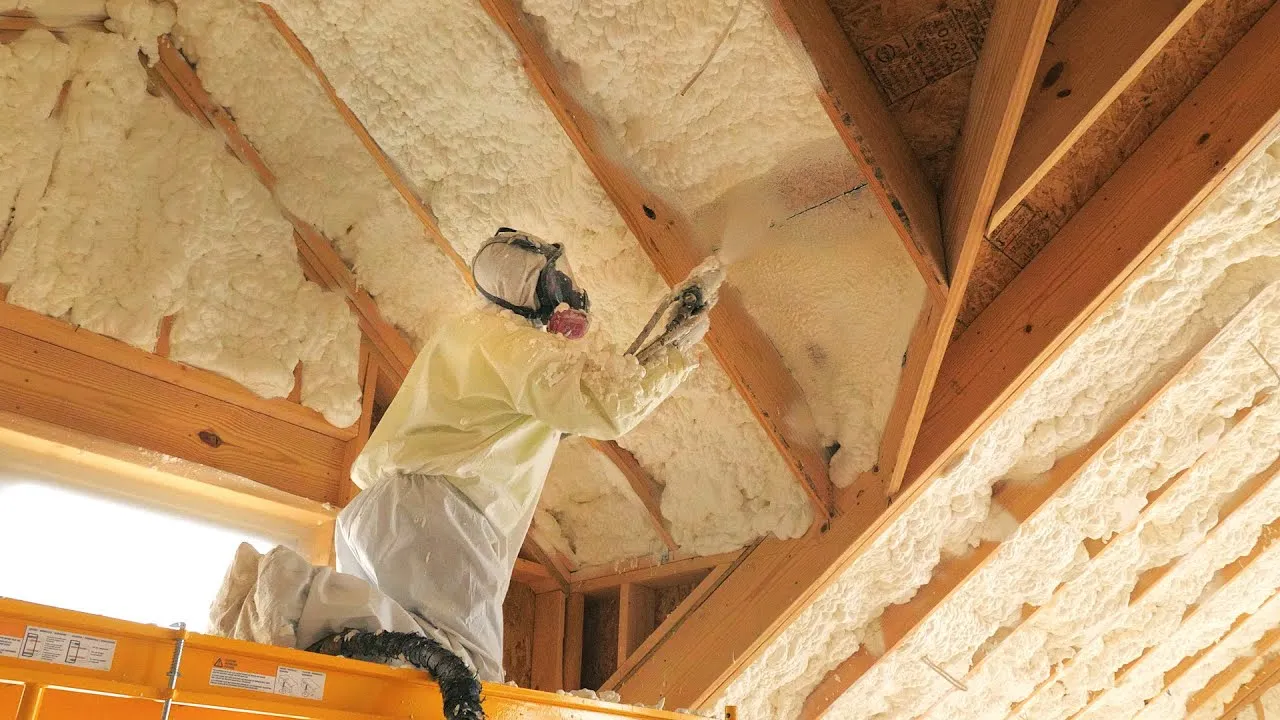

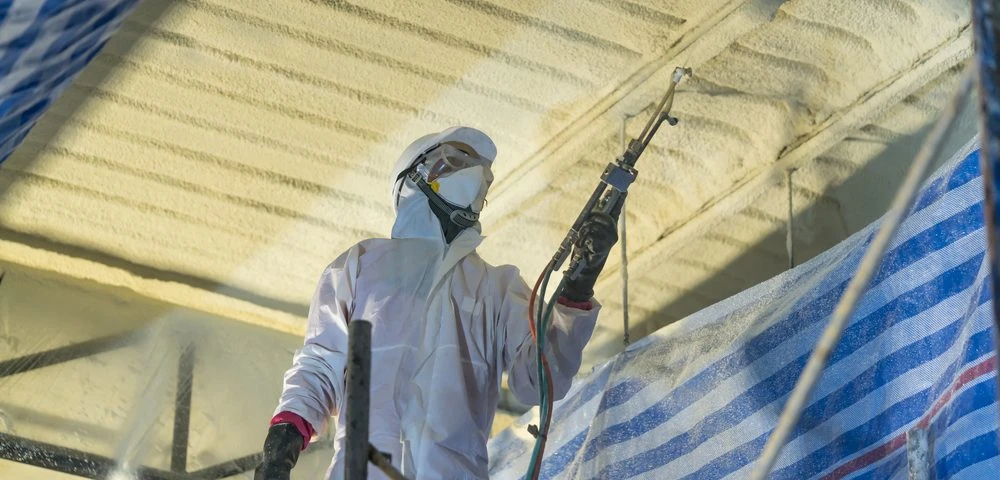
When you compare open-cell spray foam and Rockwool, the primary advantage lies in its ability to create a continuous expansion seal. While Rockwool is a dense mineral wool batt product that resists fire and sound, it cannot stop air movement through tiny gaps in your wall studs. Open-cell spray foam expands to over 30 times its liquid volume, filling every crack to stop drafts and moisture in a way that traditional batts simply cannot match. Professional open cell spray foam insulation services are designed to improve indoor comfort, energy efficiency, and long-term air sealing performance in residential and commercial properties.
This guide provides an objective look at these two popular insulation types to help you decide which fits your home best. You will learn about the thermal performance, air sealing capabilities, and long-term durability of each material. Experts in the building industry often recommend the expansion seal method for modern homes that require high energy efficiency and better indoor air quality.
How air sealing changes your home comfort
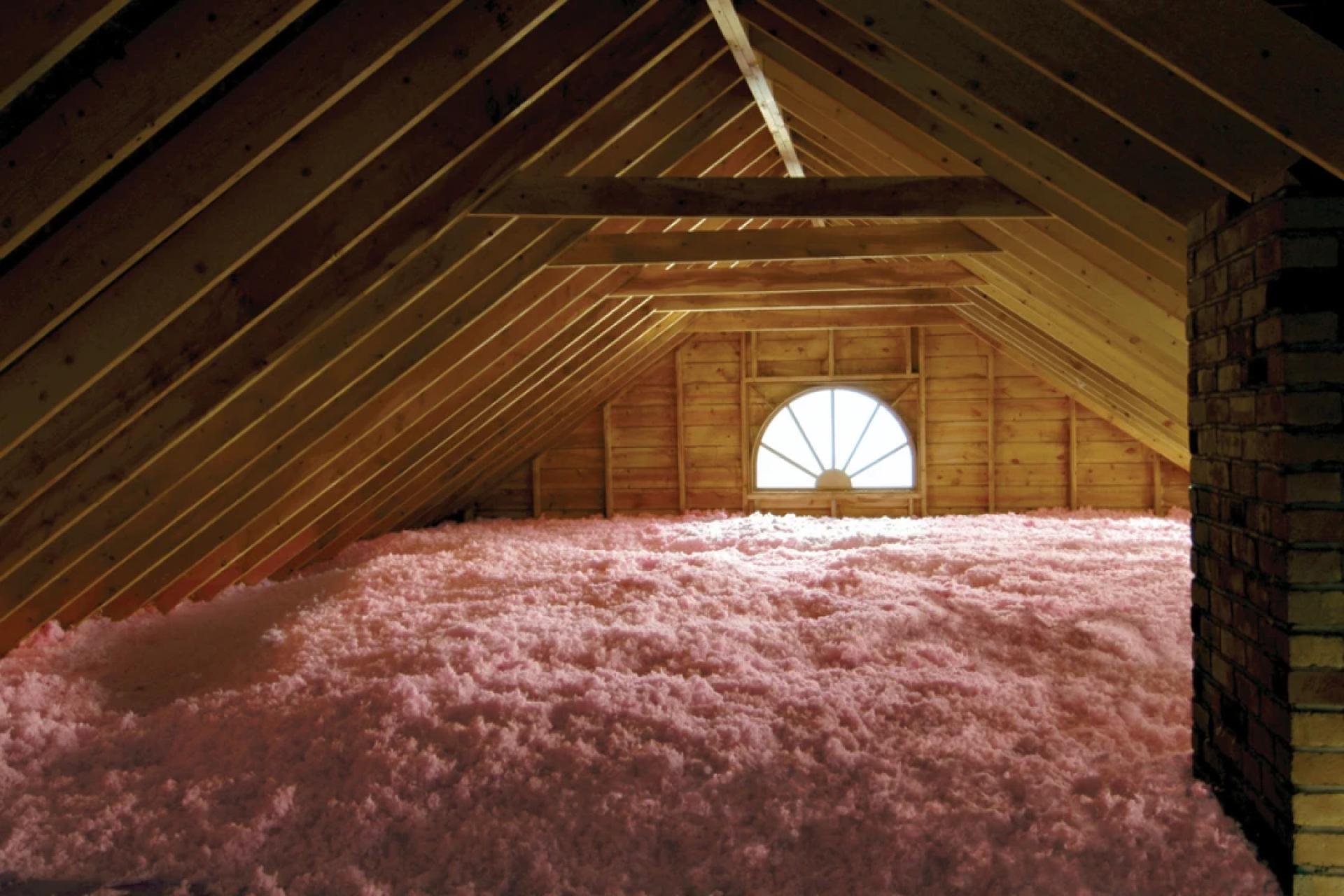
The most significant difference regarding home comfort is how these materials handle air infiltration. Rockwool is a fiber-based material that allows air to pass through it if a separate air barrier is not installed perfectly. Even a small gap between the batt and the wood stud allows heat to escape easily.
Open-cell spray foam acts as both insulation and an air barrier simultaneously. When the liquid hits the surface, it grows rapidly to fit the exact shape of the cavity. This creates a custom fit that prevents the "chimney effect," where warm air rises and escapes through your attic.
H5 Bonus Tip If you live in a windy area, the air-sealing properties of spray foam are even more beneficial. It keeps the wind from "washing" through your insulation, which preserves the stated R-value of your walls.
Comparing technical specifications and performance
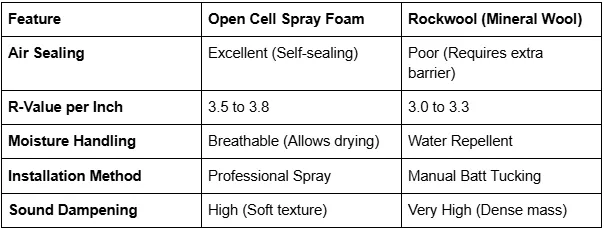
To understand why one might be better for your specific project, you need to look at the raw data. Both materials have strengths, but they function differently under various environmental pressures. The following table highlights how their specifications compare in real-world applications.
Why the expansion seal provides better coverage
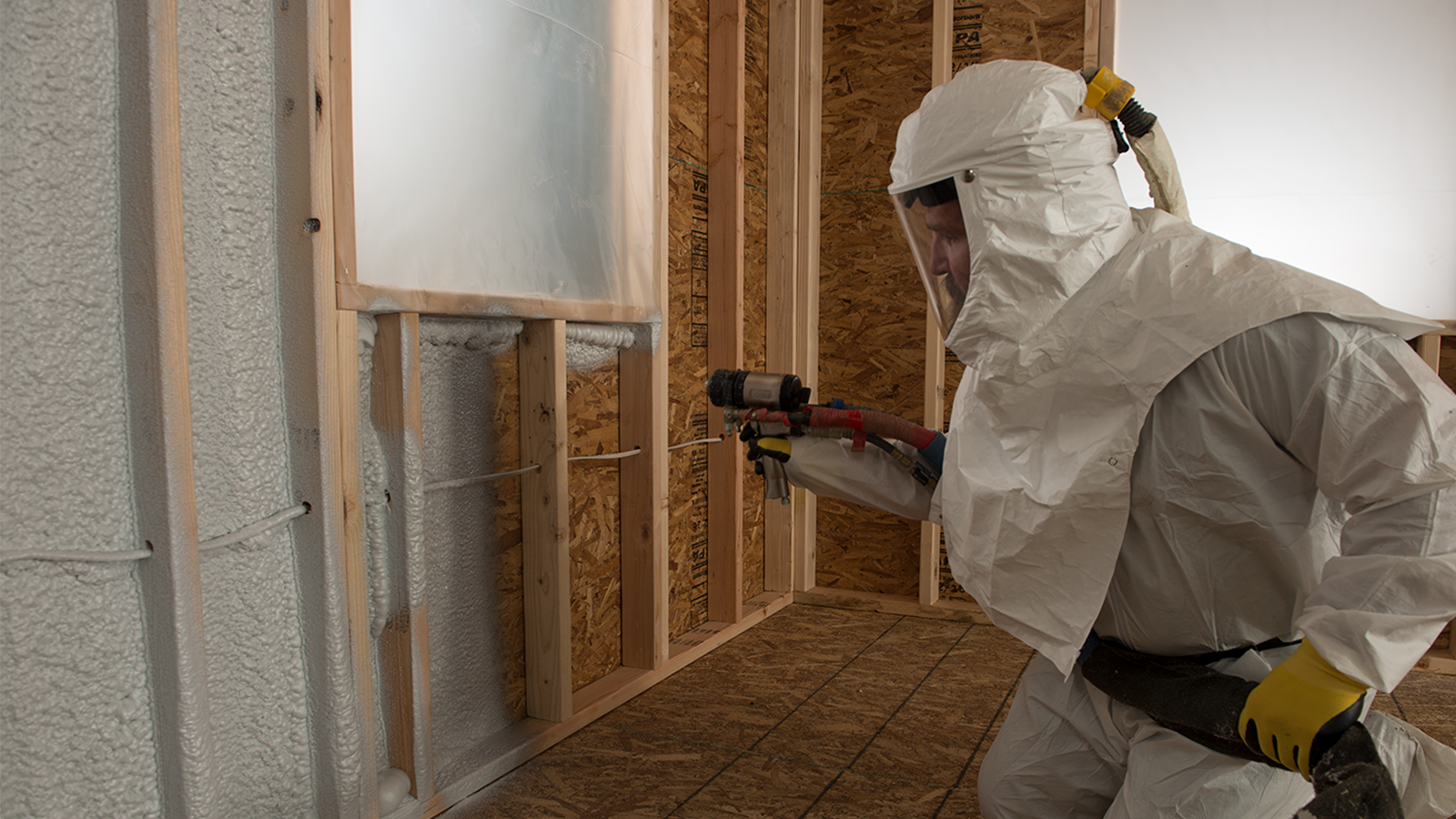
When you use residential foam insulation solutions, you are looking for a complete envelope. Rockwool batts must be cut by hand to fit around electrical boxes, wires, and plumbing pipes. Every time a human cuts a batt, there is a risk of leaving a small void.
H4 Small gaps lead to big losses Even a one percent gap in your insulation coverage can lead to a significant drop in overall thermal performance. Because spray foam is a liquid first, it flows behind wires and pipes before expanding. This ensures that the "expansion seal" covers the hidden areas that a knife cannot reach.
Benefits of expansion seal insulation for homeowners
Choosing the expansion seal over mineral wool offers several long-term advantages for your home. It does not sag or settle over time as fiber-based products can. If a Rockwool batt gets heavy or loses its friction fit, it can slide down the wall cavity, leaving the top of your wall uninsulated.
- Consistent thermal performance for the life of the building.
- Reduction in dust and pollen entering from the outside.
- Lower monthly utility bills due to reduced HVAC run times.
- Better humidity control within the living space.
- Reduction in noise from traffic or neighbors.
H5 Bonus Tip Pairing open-cell foam with a smart vapor retarder in cold climates helps the wall assembly dry out if moisture ever gets trapped. This keeps your wood framing healthy and rot-free for decades.
Is open-cell spray foam better for soundproofing
Many people choose Rockwool because it is known for being quiet. However, open-cell foam is also an excellent sound absorber. Its soft, sponge-like structure is designed to absorb sound waves rather than have them bounce around. While Rockwool is denser, the airtight nature of spray foam stops the "flanking" noise that travels through air gaps.
Which insulation provides better air sealing for your budget
While the initial cost of spray foam might be higher than buying batts at a big-box store, the ROI is often faster. You save money by not having to buy separate cans of sealant, rolls of house wrap, or specialized tapes to fix air leaks. The labor is also faster when performed by spray foam insulation comparison services.
Things to think about before choosing your insulation
Before you sign a contract, you should evaluate the specific needs. Not every house has the same requirements, and local climates—such as the environment in the Pacific Northwest—play a big role in material choice.
Professional installation requirements: You cannot install spray foam as a DIY project. It requires specialized equipment and protective gear. You should look for open-cell spray foam installation experts who understand how to manage temperatures and mix ratios.
Additional information on curing. Most spray foam products require the home to be vacant for 24 hours while the material cures. Rockwool allows you to stay in the home during the process, which might be a factor if you are doing a small renovation.
Are there specific climate considerations for Seattle homes
In damp climates like Seattle, how a wall "breathes" is vital. Open-cell foam is vapor-permeable. This means if your roof leaks or a pipe sweats, the moisture can eventually move through the foam and dry out. This prevents moisture from being trapped against your wood studs, which is a major cause of mold.
An expansion seal insulation company will typically check the moisture content of your wood before starting. This ensures the bond is permanent and the seal is tight. Using these services helps you avoid common mistakes associated with traditional insulation that often lead to drafts in older Seattle homes.

Summary of the difference between open-cell spray foam and Rockwool
The main takeaway is that Rockwool is a great heat-stopper but a poor air-stopper. Open-cell spray foam is both. By choosing the expansion seal, you eliminate the need for secondary air sealing work. This leads to a more comfortable home and a more efficient heating and cooling system.
You should always evaluate your project goals. If fire rating is your only concern, mineral wool is excellent. If you want a draft-free, energy-efficient home that stays quiet and dry, the expansion seal is the superior technology for modern construction.
Get a professional assessment for your home insulation needs
If you are ready to improve your home's comfort, reaching out to a specialist is the best next step. You can contact Cascadia Spray Foam Insulation of Seattle for a free quote on your project. They offer expert advice on how to best apply these materials to your specific attic or crawlspace. You can reach them via email at [email protected] or call (425) 386-3500 to speak with a representative. Their team is located at https://maps.app.goo.gl/axDkdWYaW2QvbU1h9, and they are ready to help you achieve a more efficient home.
Frequently asked questions about home insulation
Does open-cell spray foam attract pests?
No, the foam does not provide any food value to rodents or insects. Because it seals gaps, it actually makes it much harder for pests to get into your home.
Can I use Rockwool and spray foam together?
Yes, this is often called a "flash and batt" system. You use a thin layer of foam for the air seal and then fill the rest of the cavity with Rockwool for added R-value and fire protection.
How long does spray foam insulation last?
Spray foam is designed to last for the life of the structure. It does not settle, shrink, or degrade over time if it is protected from direct sunlight.
Is open-cell foam waterproof?
Open-cell foam is not waterproof; it is vapor-permeable. If it gets soaked, it can hold water, but it also allows that water to evaporate over time, unlike closed-cell foam.
Does Rockwool lose R-value when wet?
Rockwool is naturally water repellent and does not slump when damp, so it maintains its R-value better than fiberglass if a minor leak occurs. However, the air sealing issues remain.

























Sign in to leave a comment.