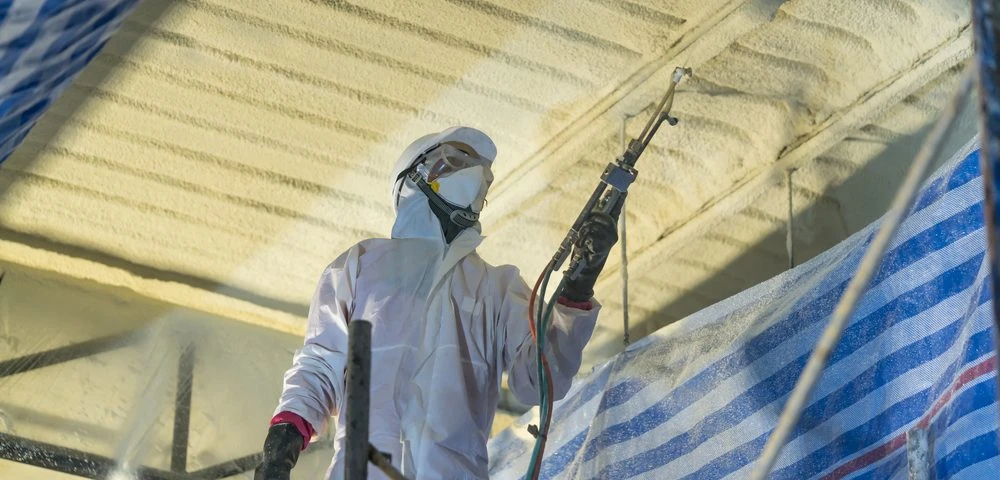

Commercial property owners in Shoreline frequently misunderstand the primary function of insulation, viewing it merely as a requirement for code compliance or a basic temperature regulator. The reality is that for commercial structures in the Pacific Northwest, insulation serves as the fundamental control layer for moisture management, structural integrity, and long-term asset preservation. A simple focus on R-value (thermal resistance) ignores the complex physics of air movement and vapor drive that compromise buildings in this damp, marine climate making high-performance commercial insulation in Shoreline, WA essential for protecting modern buildings.
When business owners overlook the importance of air sealing and moisture control, they expose their properties to accelerated degradation, higher equipment maintenance costs, and reduced worker productivity. This article corrects these common misconceptions, explaining why a comprehensive building envelope strategy is necessary for steel buildings, warehouses, and office complexes in the region.
The Myth of R-Value Supremacy
The most persistent error in commercial insulation planning is the exclusive focus on R-value. While this metric measures how well a material resists conductive heat flow, it fails to account for air leakage, which is the primary source of energy loss in commercial structures.
Why Air Barriers Matter More
In Shoreline, where the air is moisture-laden for much of the year, air leakage carries water vapor directly into the building assembly. Traditional batt insulation might have a high R-value on the label, but if air can pass through it/around it, that R-value is effectively nullified.
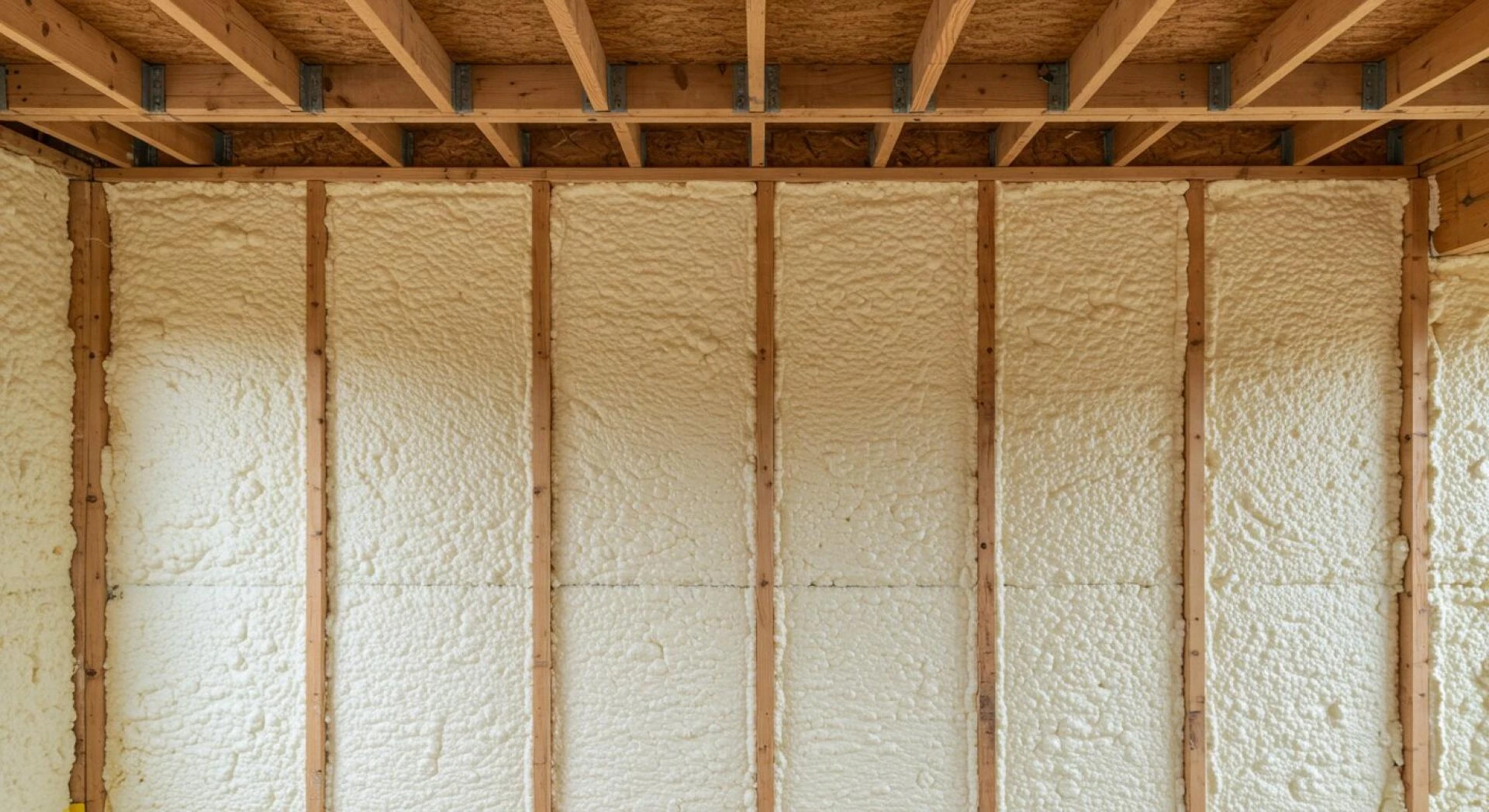
Heat moves with airflow. If a warehouse has gaps at the roof-to-wall interface or around utility penetrations, conditioned air escapes rapidly. A continuous air barrier, often achieved through spray foam application, stops this convective heat loss. This seal is often more valuable than the thickness of the insulation itself because it physically stops the transfer of conditioned air to the outside.
The Moisture Management Misunderstanding
Many building managers believe that if the roof doesn't leak, the building is dry. They fail to consider internal condensation. In the cooler months, warm interior air hits cold structural surfaces, causing moisture to condense.
Understanding Dew Point Dynamics
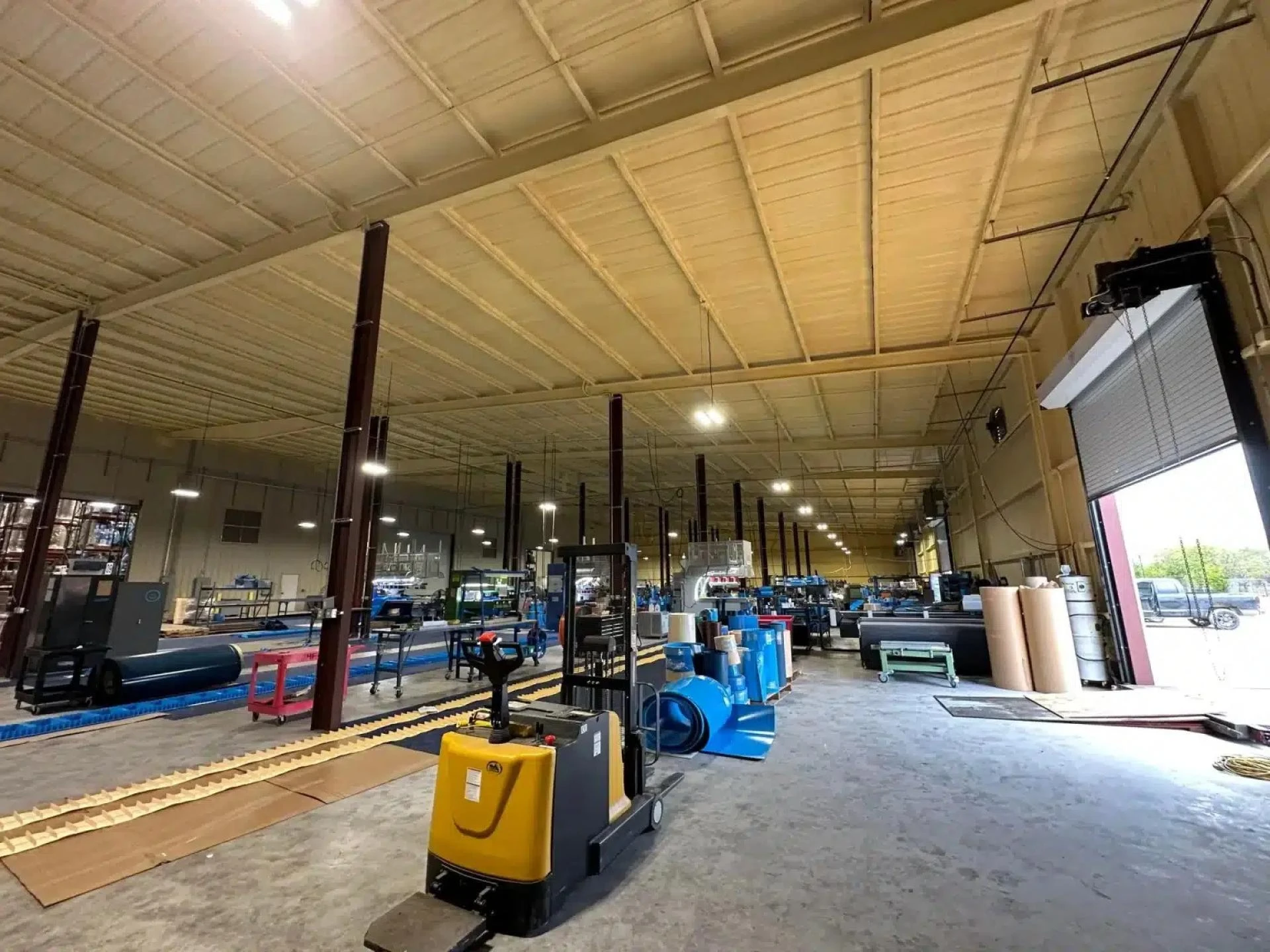
Commercial buildings with metal skins are particularly susceptible to this. Without a proper thermal break and vapor retarder, water droplets form on the interior steel. Over time, this "sweating" leads to corrosion, mold growth on interior finishes, and even "raining" inside the facility. Correctly specifying closed-cell insulation prevents the surface temperature from dropping below the dew point, eliminating this risk entirely.
Commercial Building Specifics: Metal vs. Wood
The material of the commercial structure dictates the insulation strategy. What works for a wood-framed office complex will often fail catastrophically in a steel-framed warehouse or distribution center.
Condensation in Metal Buildings
Steel conducts heat rapidly. In the winter, the steel frame is virtually the same temperature as the outside air. If fiberglass batts are used, they often sag over time, leaving gaps where moist indoor air contacts the cold steel.
Specialists recommend bonding insulation directly to the substrate in these scenarios. This method removes the air gap where condensation forms. It also adds structural rigidity to the metal panels, reducing the noise and movement caused by high winds or thermal expansion and contraction.
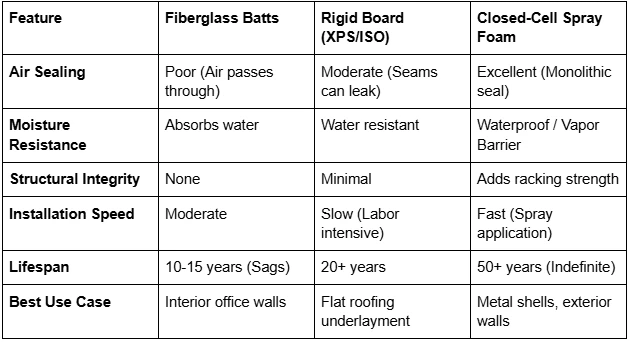
Comparison of Commercial Insulation Materials
The following table breaks down how different materials perform in commercial applications, specifically regarding the needs of the Puget Sound region.
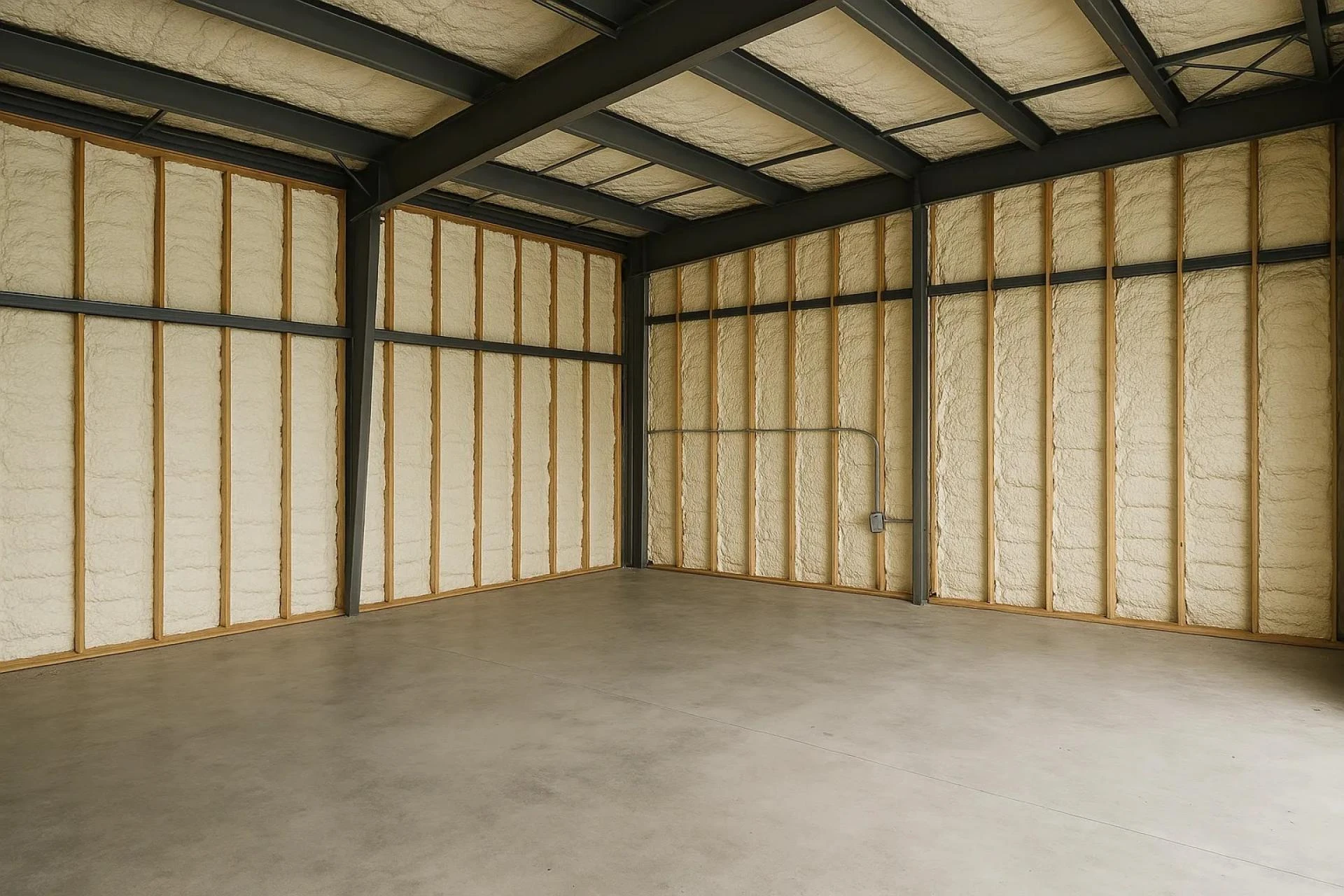
Commercial buildings often have strict fire codes. When spray foam is left exposed in occupied areas like warehouses, it typically requires an ignition barrier. Intumescent paint is a coating that expands when exposed to heat, protecting the foam. Ensure your project scope includes this critical safety layer if the foam will remain visible.
Operational Costs and ROI
Another common misconception is looking at insulation as a sunk construction cost rather than an operational investment. The initial price tag often deters owners from choosing high-performance systems, yet the long-term data suggests this is a financial miscalculation.
HVAC Sizing and Lifespan
When a building is sealed tightly, the heating and cooling load decreases significantly. Mechanical engineers can often specify smaller, less expensive HVAC units for well-insulated buildings.
Furthermore, because the system does not have to run constantly to maintain the set temperature, the equipment experiences less wear and tear. Market data indicates that HVAC systems in airtight commercial buildings can last 30% to 50% longer than those in leaky structures. This deferral of capital equipment replacement is a major financial benefit often missing from the initial budget analysis.
Worker Productivity and Comfort
Drafty, damp warehouses or offices with inconsistent temperatures affect the workforce. Studies in occupational health show that thermal discomfort distracts employees and lowers productivity. By maintaining a consistent internal climate, business owners invest in their workforce's efficiency.
 Things to Consider Before Making a Decision
Before signing a contract for insulation retrofits or new construction, commercial owners must evaluate regulatory and logistical factors.
Compliance with Washington State Energy Code (WSEC)
Washington State has some of the strictest energy codes in the country. Commercial projects must meet specific thermal envelope requirements. A "cheap" insulation job may fail inspection, leading to costly rework and delays. It is vital to verify that the proposed system meets the current continuous insulation requirements of the WSEC.
Business Continuity During Installation
For retrofit projects, downtime means lost revenue. Traditional insulation replacement can be invasive, requiring wall demolition or extensive access. Spray applied systems can often be installed more quickly and with less disruption to operations. Owners should ask potential contractors for a detailed logistical plan that minimizes impact on daily business activities.
Questions People Ask About Commercial Insulation
Here are five common questions regarding commercial insulation projects in the Seattle area.
Can insulation help with soundproofing between offices?
Yes, insulation is effective for acoustic control. Open-cell foam or dense-pack cellulose absorbs sound waves, significantly reducing noise transfer between conference rooms or industrial zones. This creates a more professional and focused work environment.
Is it possible to insulate a metal building without removing the skin?
Retrofitting a metal building from the interior is standard practice. Installers apply spray foam directly to the interior of the metal panels and structural beams. This creates a seamless blanket that insulates and seals without requiring any exterior demolition.
Does spray foam insulation cause metal roofs to rust?
Closed-cell spray foam does not cause rust; in fact, it often prevents it. By sealing the metal from the inside, it prevents moisture and corrosive agents from reaching the panel. However, the surface must be clean and dry before application to ensure a proper bond.
How long does the installation process take?
The timeline depends on the square footage and accessibility. However, spray foam application is generally faster than cutting and fitting rigid boards. A professional crew can typically cover several thousand square feet per day, allowing for rapid project turnaround.
What is the fire safety rating of exposed insulation?
Most foam insulation products are Class 1 fire rated, meaning they have a low flame spread index. However, building codes usually require a thermal barrier (like drywall) or an ignition barrier (like intumescent paint) depending on how the space is used.
Summary of Key Takeaways
Commercial insulation in Shoreline is not just about keeping the building warm; it is a critical defense against moisture intrusion, structural corrosion, and energy waste. By moving beyond the simple R-value metric and prioritizing air sealing, property owners protect their investment from the specific challenges of the Pacific Northwest climate.
Choosing a modern insulation system like closed-cell foam addresses condensation issues in metal buildings and meets strict state energy codes. This approach reduces load on mechanical systems and improves the working environment, delivering a return on investment that far exceeds the initial installation cost.
Taking the Next Step for Your Commercial Property
Property managers and building owners looking to optimize their facility's performance should seek a professional consultation. An expert evaluation of the building envelope can identify hidden air leaks and thermal bridges that drain profitability.
Cascadia Spray Foam Insulation of Seattle provides specialized services for the commercial sector, ranging from warehouse retrofits to new office construction. Their team understands the rigorous demands of the Washington State Energy Code and the unique moisture challenges of the region. To discuss a project or schedule a site assessment, contact them at [email protected] or call (425) 386-3500.
Reviewer: Olivia Thompson has spent 10 years working in spray foam insulation, helping companies grow their visibility. She reviewed this article and provided valuable suggestions on how to better align the content with the needs and expectations of customers, ensuring it resonates with the target audience.

























Sign in to leave a comment.