When planning a stylish home, storage is about more than keeping things organised. The way shelves are designed and positioned can completely change how a room feels. Whether you are renovating a kitchen, refreshing a living room or adding character to a home office, the choice often comes down to open shelving or floating shelves.
While both options offer practical storage and display space, they create very different visual effects. If your goal is to achieve a premium, designer-inspired interior, it is worth understanding how each style contributes to the overall look of your home.
What Is Open Shelving?
Open shelving refers to shelves that are supported by visible brackets, frames or structural components. They are commonly found in kitchens, laundries and utility spaces where accessibility is just as important as appearance.
Open shelving can make a room feel more relaxed and welcoming. It allows everyday items, decorative pieces and plants to become part of the interior design rather than being hidden behind cabinet doors.
This style suits farmhouse, industrial and coastal interiors, where exposed materials and practical design are key features.
What Are Floating Shelves?
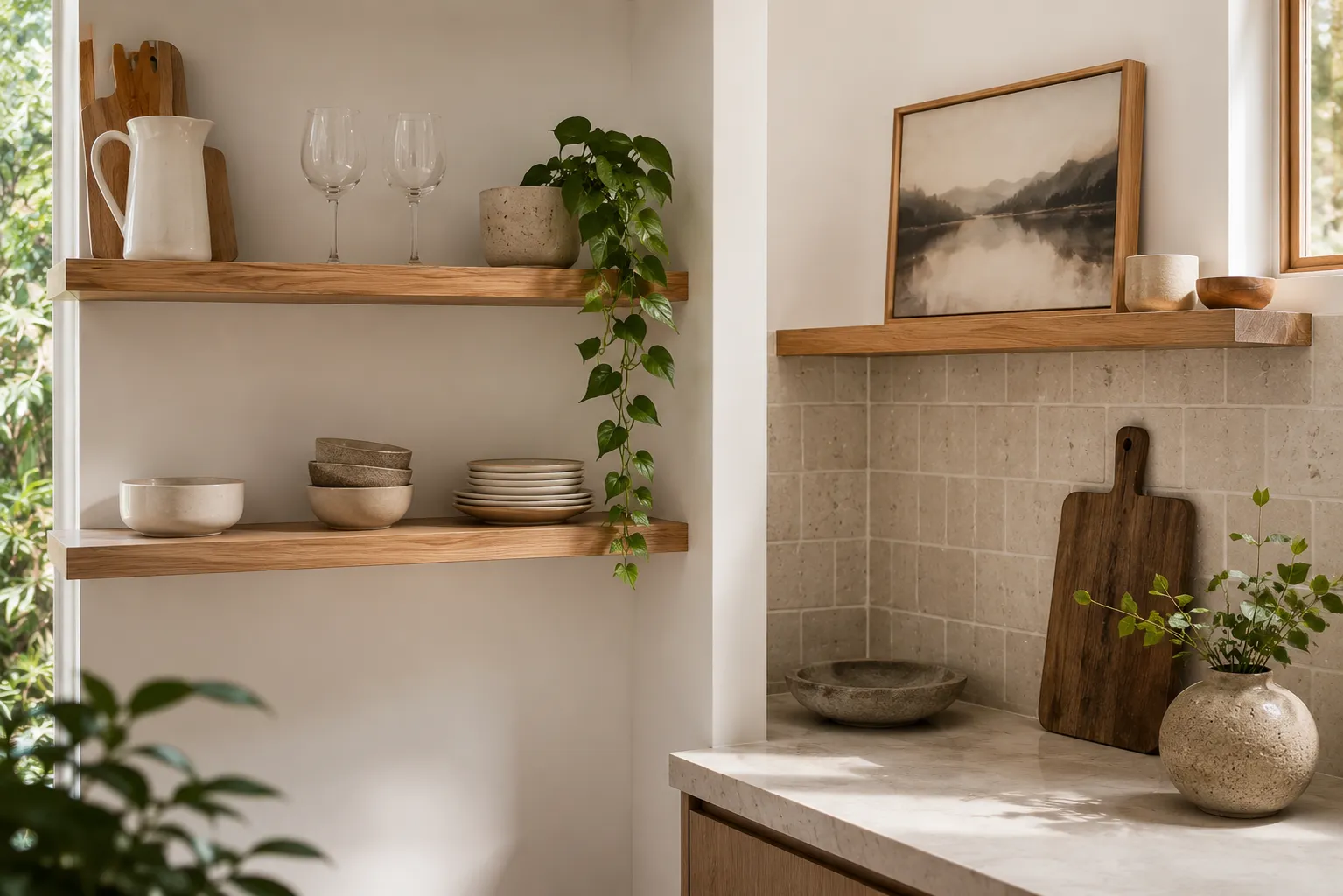
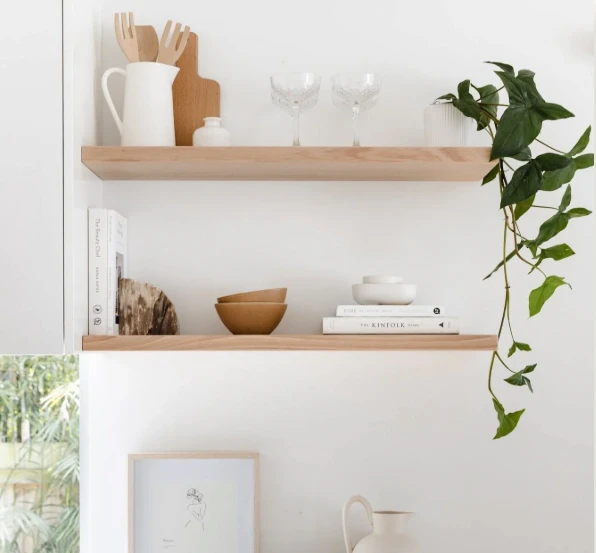
Floating shelves are designed with concealed fixings, creating the illusion that the shelf is attached directly to the wall. With no visible brackets, they offer a clean and refined appearance that complements contemporary interiors.
High-quality floating shelves create a seamless finish that draws attention to the timber itself and the carefully selected décor displayed on top.
Because the hardware remains hidden, floating shelves naturally create a more sophisticated visual impression.
Which Style Looks More Luxurious?
If luxury is your priority, floating shelves generally have the advantage.
Their uninterrupted design creates clean lines that are often associated with premium residential architecture. Luxury interiors rely on simplicity, balance and thoughtful detailing, and floating shelves fit perfectly within this approach.
Open shelving can certainly look attractive, but visible brackets and supports introduce additional visual elements that may make a space appear busier.
Floating shelves, by contrast, allow decorative objects to become the centre of attention while maintaining a calm and uncluttered appearance.
Design Versatility
Both shelving styles are versatile, but floating shelves adapt effortlessly to a wider range of interior styles.
They work beautifully with:
- Modern homes
- Scandinavian interiors
- Japandi design
- Contemporary coastal homes
- Luxury apartments
- Minimalist spaces
Open shelving is often better suited to:
- Farmhouse kitchens
- Industrial interiors
- Rustic homes
- Casual family spaces
If your home features clean architectural lines, floating shelves usually blend more naturally with the overall design.
Making Small Spaces Feel Larger
One of the biggest advantages of floating shelves is their ability to make rooms appear more spacious.
Without visible supports, the eye follows uninterrupted horizontal lines across the wall. This creates a lighter visual effect and reduces unnecessary clutter.
Open shelving can still work well in smaller rooms, but the added hardware may interrupt the flow of the space, particularly when multiple shelves are installed.
For apartments or compact Australian homes, floating shelves often provide a cleaner and more open look.
Styling Potential
The way shelves are styled has a significant impact on the overall atmosphere of a room.
Floating shelves encourage a curated display rather than simple storage.
Popular styling choices include:
- Ceramic vases
- Indoor plants
- Framed artwork
- Sculptural objects
- Coffee table books
- Candles
- Timber décor pieces
The hidden mounting system allows every decorative item to stand out without competing with shelf hardware.
Open shelving, especially in kitchens, often prioritises practicality by displaying plates, bowls, jars and cooking essentials.
Maintenance Considerations
Both shelving styles require occasional dusting and organisation.
Floating shelves often encourage homeowners to display fewer items, making maintenance easier and helping spaces remain uncluttered.
Open shelving tends to invite more everyday storage, which can quickly create visual clutter if not regularly organised.
A carefully styled shelf usually looks more luxurious than one filled with numerous everyday objects.
Which Option Adds More Value?
Interior designers often recommend features that create a custom-built appearance without major structural changes.
Floating shelves deliver exactly that.
They offer a premium look, complement natural timber finishes and suit a wide range of contemporary Australian homes. They also remain timeless, making them a worthwhile investment that is unlikely to feel outdated as design trends evolve.
Open shelving continues to have its place, particularly where convenience is important, but floating shelves generally provide a stronger visual impact in living areas, bedrooms, home offices and feature walls.
Final Thoughts
Both open shelving and floating shelves have their strengths, but they create very different impressions.
If you prefer a relaxed, practical and lived-in atmosphere, open shelving is an excellent choice.
If your goal is to achieve a refined, elegant and luxurious interior, floating shelves offer the cleaner finish. Their concealed fixings, timeless appearance and ability to elevate everyday spaces make them a favourite among homeowners, interior designers and architects alike.
When thoughtfully positioned and styled with quality décor, floating shelves become more than storage. They become an architectural feature that enhances the character and sophistication of your home.























Sign in to leave a comment.