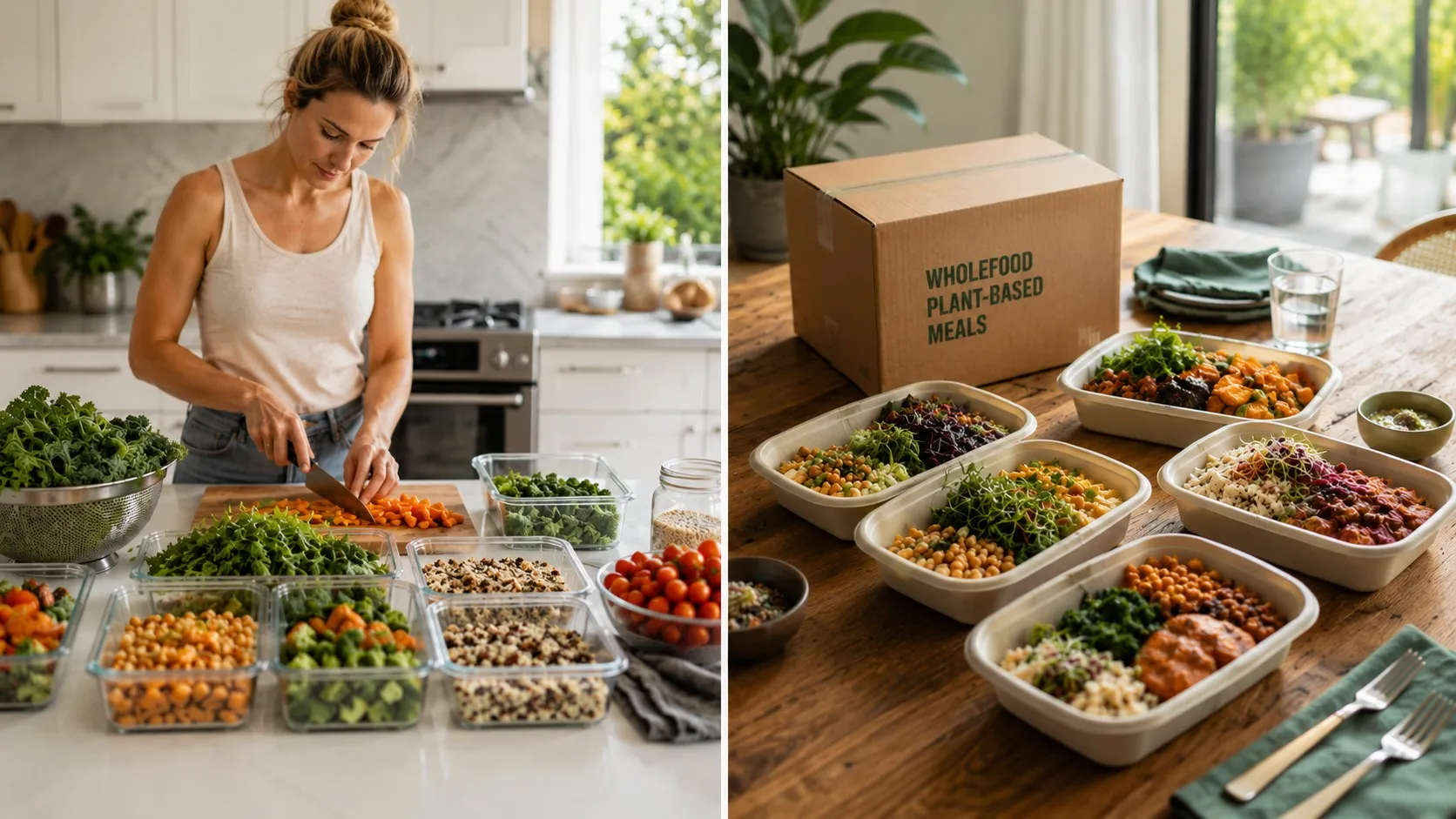

For many Australians, eating healthy sounds simple in theory.
In reality, balancing work, family commitments, social plans, exercise, and everyday responsibilities often leaves very little time for cooking. By the end of a busy day, even the most well-intentioned healthy eating plans can quickly be replaced by takeaway, convenience foods, or whatever happens to be available.
That’s why two approaches have become increasingly popular in recent years: meal prep and plant based meal delivery.
Both aim to solve the same problem, making healthy eating easier during a busy week. Yet they achieve that goal in very different ways.
Meal prep puts you in control of every ingredient and portion, while meal delivery services provide ready-made meals designed to save time and reduce effort.
But when it comes to the question most Australians are asking — which option actually saves more time?, the answer may not be as straightforward as it first appears.
What Exactly is Meal Prep?
Meal prep involves preparing meals or meal components in advance, usually for several days at a time.
For some people, this means cooking every Sunday and storing lunches and dinners for the week ahead. Others prepare ingredients such as grains, vegetables, and proteins separately and assemble meals as needed.
Meal prep has gained popularity because it can help people:
- stay organised during busy weeks
- reduce food waste
- maintain healthy eating habits
- avoid last-minute takeaway purchases
It can certainly be an effective strategy, particularly for people who enjoy cooking and have the time available to dedicate to preparation.
However, the amount of time required is often underestimated.
The Hidden Time Commitment Behind Meal Prep
Many meal prep guides focus on the final outcome: a fridge full of healthy meals ready to go.
What they don't always highlight is the amount of work that happens before those meals are ready.
A typical weekly meal prep routine often involves planning recipes, creating shopping lists, visiting supermarkets, preparing ingredients, cooking multiple dishes, portioning meals into containers, cleaning the kitchen, and storing everything safely.
While each task may seem relatively small on its own, together they can add up surprisingly quickly.
For many Australians, weekly meal prep can easily require several hours of dedicated time. And that's before factoring in the occasional forgotten ingredient, extra supermarket trip, or recipe that takes longer than expected.
Why Meal Prep Still Appeals to Many People
Despite the time commitment, meal prep continues to have plenty of advantages.
Many people enjoy the sense of control that comes from preparing their own food. It allows them to choose ingredients, experiment with recipes, and tailor meals to personal preferences.
Some of the key benefits include:
- complete control over ingredients
- flexibility to customise meals
- potential cost savings
- reduced reliance on takeaway
- improved portion management
For those who genuinely enjoy cooking, meal prep can even become an enjoyable weekend routine rather than a chore.
The challenge is that not everyone has the same amount of free time available.
What Is Plant-Based Meal Delivery?
A plant based meal delivery service takes a different approach.
Rather than spending hours planning and preparing meals yourself, ready-made meals are delivered directly to your door.
Most services provide meals that simply require reheating before eating, making them particularly attractive for people with demanding schedules.
The popularity of plant-based meal delivery has grown significantly across Australia as more people look for practical ways to eat healthier without sacrificing large portions of their weekend to meal preparation.
Services such as IKU have built their offering around this idea, providing ready-made plant-based meals that fit more easily into modern lifestyles.
Comparing the Real Time Investment
When people compare meal prep and meal delivery, they often focus solely on cooking time.
The reality is that meal prep involves much more than cooking.
Let's consider everything involved in a typical week.
Meal Prep Often Includes:
- meal planning
- recipe research
- grocery shopping
- ingredient preparation
- cooking
- portioning meals
- cleaning dishes
- food storage management
Plant-Based Meal Delivery Often Includes:
- selecting meals online
- receiving delivery
- reheating meals
- enjoying the food
The difference in overall time commitment can be substantial.
While meal prep may require several hours each week, meal delivery typically requires only a few minutes per meal.
Convenience Isn't Just About Time
One of the biggest misconceptions is that convenience is purely about saving hours.
In reality, convenience is also about reducing decision fatigue.
Many Australians spend their days making hundreds of decisions at work and home. By evening, deciding what to cook, checking ingredients, and preparing dinner can feel surprisingly draining.
Having meals ready to go removes much of that mental effort.
Instead of constantly asking:
"What should I cook tonight?"
The question becomes:
"What would I like to eat?"
That small shift can make healthy eating feel significantly easier to maintain.
The Challenge of Staying Consistent
One area where meal prep often struggles is consistency.
Most people start with good intentions.
A Sunday afternoon meal prep session sounds manageable. The first week goes well. The second week may be slightly less organised. By the third week, other commitments begin taking priority.
Before long, the routine becomes difficult to maintain.
This isn't because meal prep doesn't work.
It's because life rarely follows a perfect schedule.
Unexpected meetings, family commitments, travel, social events, and simple fatigue can all disrupt even the best meal-prepping plans.
Why Plant-Based Meal Delivery Fits Modern Lifestyles
For many Australians, convenience is no longer viewed as a luxury.
It's become a necessity.
Ready-made meal services help eliminate several of the biggest barriers to healthy eating:
- lack of time
- lack of meal inspiration
- inconsistent routines
- grocery shopping fatigue
- cooking burnout
Rather than requiring large blocks of preparation time, meals are available whenever they're needed.
That flexibility can be particularly valuable during demanding work weeks.
Cost Isn't Always As Simple As It Seems
A common assumption is that meal prep is always cheaper than meal delivery.
On paper, this can often be true.
However, many people forget to account for:
- food waste
- unused ingredients
- impulse purchases
- takeaway meals bought when meal prep fails
- the value of personal time
When these factors are considered, the gap may be smaller than many people expect.
The true cost often depends on individual habits and lifestyle circumstances.
Which Option Supports a Plant-Based Meal Plan More Easily?
Following a plant based meal plan requires consistency.
That consistency can sometimes be difficult when you're constantly planning, shopping, and cooking from scratch.
For people who enjoy food preparation, meal prep may provide enough structure to stay on track.
For others, having meals readily available can remove many of the obstacles that cause healthy eating habits to break down.
The easier a routine feels to maintain, the more likely it is to become a long-term habit.
And long-term habits are usually where meaningful health benefits come from.
The Answer Depends on Your Lifestyle
There isn't a single solution that works for everyone.
Meal prep may be ideal if you:
- enjoy cooking
- have flexible weekends
- like experimenting with recipes
- prefer complete ingredient control
Plant-based meal delivery may be ideal if you:
- have limited free time
- work long hours
- travel frequently
- want maximum convenience
- struggle to maintain meal prep routines
The best option is often the one that realistically fits into your everyday life.
A Hybrid Approach Is Becoming More Popular
Interestingly, many Australians aren't choosing one option exclusively.
Instead, they're combining both approaches.
Some people prepare meals when they have time and use meal delivery services during particularly busy weeks.
Others use ready-made meals for lunches while cooking dinners at home.
This flexible approach allows people to enjoy the benefits of both convenience and home cooking without feeling locked into a rigid system.
For many households, this balance proves to be the most sustainable solution.
Final Thoughts
When comparing meal prep and plant based meal delivery, the biggest difference usually comes down to time and effort.
Meal prep offers control and flexibility, but it also requires planning, shopping, cooking, and cleaning. For people who enjoy the process, that investment can be worthwhile.
However, if the goal is purely to save time, ready-made meal delivery generally comes out ahead.
By removing many of the tasks involved in preparing food from scratch, meal delivery allows healthy eating to fit more easily into busy schedules.
Ultimately, the best choice isn't necessarily the cheapest, trendiest, or most popular option.
It's the one that helps you eat well consistently while fitting naturally into your lifestyle.
For many Australians, that's exactly why services like IKU continue to grow in popularity. They make healthy plant-based eating feel achievable even when life gets busy.
Frequently Asked Questions
Is plant-based meal delivery cheaper than meal prep?
Meal prep is often cheaper on paper, but the difference can narrow when food waste, takeaway spending, and personal time are considered.
How much time does meal prep usually take?
Most people spend between two and five hours per week planning, shopping, cooking, and cleaning.
Is plant-based meal delivery healthy?
It can be, particularly when meals are made with whole-food ingredients and balanced nutrition.
Can I combine meal prep with meal delivery?
Yes. Many Australians use a hybrid approach, meal prepping when they have time and relying on ready-made meals during busy periods.
What's the biggest advantage of plant-based meal delivery?
Convenience. It removes much of the planning, shopping, cooking, and cleaning associated with healthy eating.



























Sign in to leave a comment.