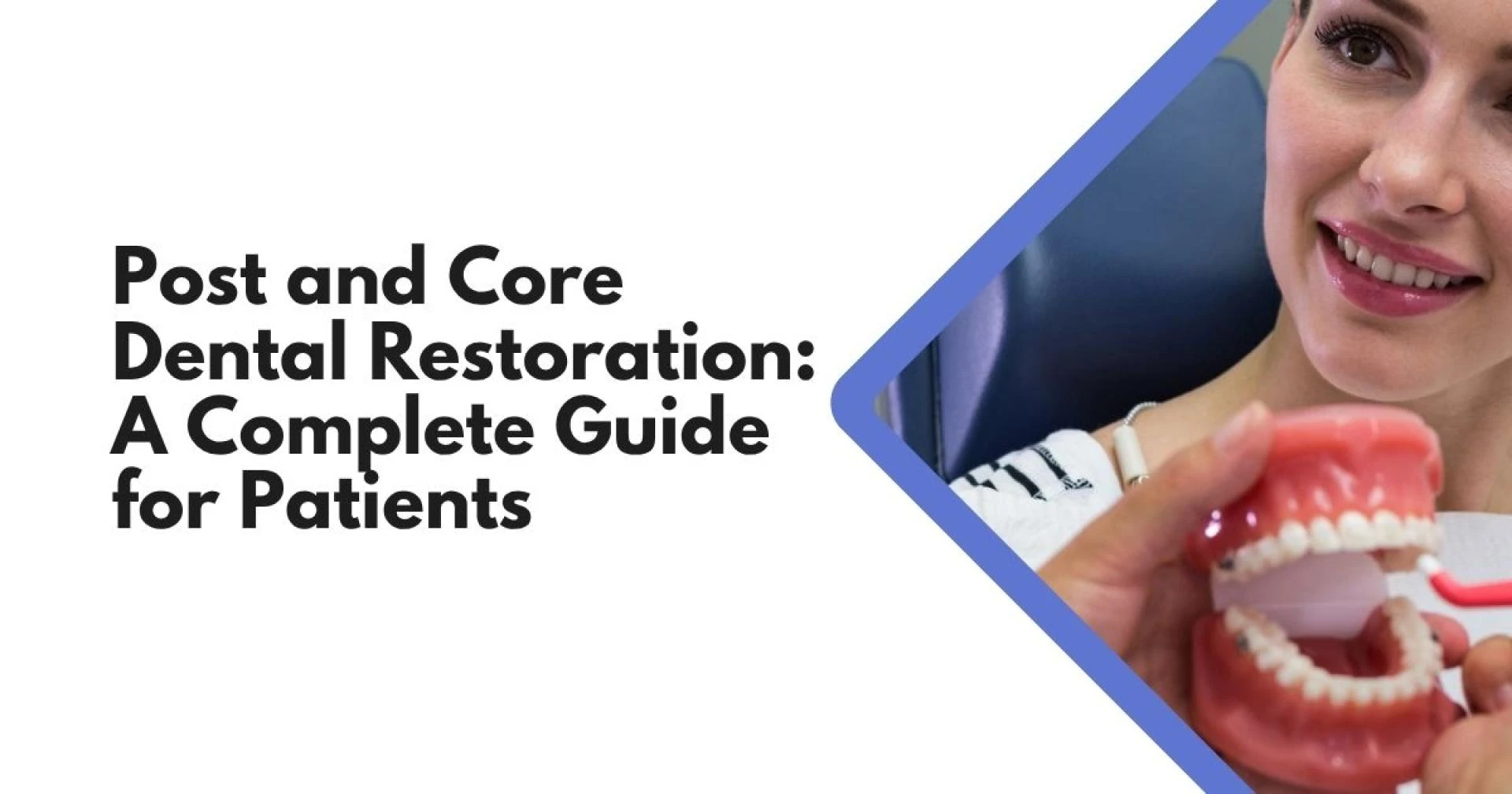
When a tooth becomes weak or fractured due to extensive decay, trauma, or root canal treatment, rebuilding its strength and structure is crucial for long-term oral health. This is where post and core dental restoration comes in. It serves as a foundation for dental crowns, providing stability and durability to teeth that have lost a significant portion of their natural structure. Post and core procedures not only strengthen the tooth internally but also enhance aesthetics and restore full functionality.
In this comprehensive guide, we’ll explain what post and core restoration is, when it’s needed, the different materials used, the procedure involved, and how it benefits your smile.
What Is Post and Core Dental Restoration?
Post and core dental restoration is a procedure used to rebuild a tooth that has lost much of its structure, usually after root canal therapy. It involves two main components:
- The Post: A post is a rod (metal, fiber, or ceramic) inserted into the tooth’s root canal to anchor the core material.
- The Core: The core is the material built around the post, replacing the missing part of the tooth and providing a base for the dental crown.
Together, the post and core form a strong foundation, ensuring the crown above remains stable and functional.
When Is a Post and Core Needed?
A post and core procedure is not necessary for every root canal-treated tooth. However, it becomes essential in the following cases:
- Significant Tooth Structure Loss: When a large portion of the tooth is missing due to decay or breakage.
- After Root Canal Treatment: Root canal-treated teeth often become brittle and need reinforcement for a crown.
- Insufficient Support for a Crown: If the remaining tooth structure is not strong enough to hold a crown by itself.
- Restoring Function and Appearance: When both the functionality and appearance of a tooth need to be restored.
In short, post and core restorations are ideal for saving teeth that would otherwise require extraction.
Step-by-Step Process of Post and Core Dental Restoration
A post and core procedure typically follows these steps:
- Evaluation: The dentist assesses the condition of the tooth and surrounding tissues to determine suitability for a post and core.
- Cleaning and Shaping the Root Canal: The treated canal is cleaned and shaped to fit the post securely.
- Placement of the Post: The dentist inserts the post (usually prefabricated or custom-made) into the canal using dental cement.
- Core Buildup: A core material, typically composite resin or amalgam, is built around the post to restore lost tooth structure.
- Crown Placement: Once the core hardens, a dental crown is placed to protect the restored tooth and provide a natural look.
This process helps create a strong, stable tooth capable of withstanding daily chewing forces.
Types of Post Materials Used in Dentistry
Dentists use different types of posts depending on the tooth’s condition, aesthetic requirements, and functional needs:
- Metal Posts: Made from stainless steel, titanium, or gold alloys; they are highly durable and ideal for back teeth.
- Fiber Posts: Made of carbon or glass fiber, these are flexible, lightweight, and blend well with natural teeth—perfect for front teeth.
- Ceramic Posts: Known for their excellent aesthetics, these posts are tooth-colored and ideal for highly visible areas.
Your dentist will choose the best material based on the location of the tooth and your personal needs.
Benefits of Post and Core Dental Restoration
Post and core restorations offer a range of functional and cosmetic benefits, including:
- Enhanced Tooth Strength: Rebuilds internal structure and prevents tooth fracture.
- Improved Crown Longevity: Provides a stable base for a dental crown, increasing its lifespan.
- Restored Functionality: Allows normal chewing, biting, and speaking without discomfort.
- Better Aesthetic Appearance: Restores the tooth’s natural shape, color, and symmetry.
- Cost-Effective Option: Helps preserve the natural tooth root, avoiding the need for costly implants.
This procedure ensures that patients can maintain a beautiful smile without compromising strength or stability.
Aftercare Tips for Post and Core Restoration
Proper aftercare is vital to ensure the durability of your restoration. Here are a few simple yet effective tips:
- Maintain Oral Hygiene: Brush and floss daily to prevent decay around the crown margins.
- Avoid Hard or Sticky Foods: Chewing hard items can damage the crown or loosen the post.
- Regular Dental Visits: Schedule routine checkups every six months for professional cleaning and inspection.
- Protect Against Teeth Grinding: Use a mouthguard if you suffer from bruxism (teeth grinding).
Consistent care will help your restoration last for many years without complications.
Possible Risks and Complications
While post and core procedures are highly successful, some potential complications can occur, such as:
- Post Loosening: If the post is not bonded properly or subjected to excessive force.
- Root Fracture: Rare, but possible if the tooth structure is too weak.
- Crown Displacement: Can occur if decay develops underneath or the core becomes compromised.
These risks are minimal when the procedure is performed by an experienced dental professional and followed by good oral care practices.
Longevity and Maintenance
A well-performed post and core restoration can last for 10–15 years or even longer with proper maintenance. The longevity depends on factors like oral hygiene, diet, and the material used. Patients who maintain good oral health and attend regular dental visits often enjoy long-term success with this treatment.
Conclusion
A post and core dental restoration is a reliable and effective way to rebuild teeth that have lost substantial structure after root canal therapy or damage. By providing essential support to crowns, it ensures strength, stability, and an improved smile. If you’re struggling with a severely weakened or fractured tooth, consulting an experienced dentist near me can help determine whether a post and core restoration is the right solution for you. With professional care and proper maintenance, your restored tooth can serve you comfortably and beautifully for many years.





























Sign in to leave a comment.