

Why Skin Allergies Spike After Monsoon
As the rains retreat and October begins, many people in Lucknow and across North India notice sudden flare-ups of skin allergies, fungal infections, and rashes. At Dr. Asma Skin Clinic (Chowk, Thakurganj, and Barabanki), we see a consistent rise in allergy cases during this period. The mix of lingering humidity, damp clothes, and increasing air pollution creates the perfect breeding ground for fungal overgrowth, irritation, and allergic reactions.
Understanding these seasonal triggers is key to preventing discomfort and protecting long-term skin health.
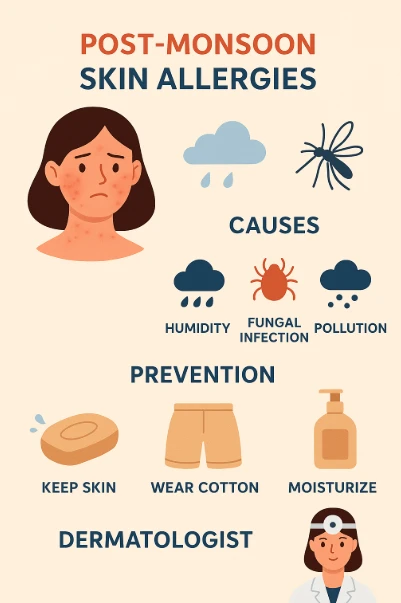
What Happens to Your Skin in Post-Monsoon Weather
The post-monsoon climate is tricky — neither fully humid nor fully dry. This unstable balance affects the skin barrier and immunity. Some of the common changes include:
- Moisture overload: Sweat and dampness allow fungi and bacteria to thrive.
- Pollution exposure: Crop burning and festive activities increase airborne allergens.
- Weakened barrier: After prolonged monsoon dampness, the outer skin layer becomes sensitive and reactive.
- Clothing habits: Wearing synthetic or damp clothes traps sweat, worsening infections.
Common Post-Monsoon Skin Problems
At Dr. Asma Skin Clinic, Lucknow, the most frequent conditions we treat during this season include:
- Fungal Infections (Ringworm, Yeast Overgrowth) — Itchy red patches that spread quickly.
- Contact Dermatitis — Rashes caused by soaps, detergents, or jewelry.
- Hives (Urticaria) — Raised itchy welts triggered by allergens or insect bites.
- Eczema Flare-Ups — Seasonal changes and pollution worsen pre-existing eczema.
- Seborrheic Dermatitis — Flaky, itchy scalp often mistaken for dandruff.
Dermatologist-Recommended Prevention Tips
To stay safe during the post-monsoon season, follow these practical steps:
- Keep skin dry: Pat dry after bathing, especially between toes and folds.
- Use antifungal powder if prone to infections (only after medical advice).
- Choose cotton fabrics over synthetics to allow breathability.
- Change socks/undergarments daily and avoid re-wearing damp clothes.
- Maintain hygiene: Use mild cleansers, avoid sharing towels or combs.
- Boost immunity: Eat Vitamin C-rich fruits, zinc, and probiotics.
- Avoid sugary, oily foods that fuel fungal infections.
When to Consult a Skin Doctor in Lucknow
If itching, rashes, or fungal patches persist for more than a week, or if infections spread rapidly, it’s best to consult a dermatologist. At Dr. Asma Skin Clinic, we provide:
- KOH tests and fungal cultures for accurate diagnosis.
- Customized antifungal/anti-inflammatory creams for localized infections.
- Oral medications for severe or recurring cases.
- Scalp and nail treatments with medicated shampoos and lacquers.
- Allergy management through antihistamines or targeted therapies.
Expert Care You Can Trust
Post-monsoon skin allergies are common but fully treatable. With over 14 years of dermatology expertise, Dr. Asma Parveen (MD, Dermatology) and her team ensure accurate diagnosis, evidence-based treatments, and prevention strategies.
📍 Visit Dr. Asma Skin Clinic — Lucknow & Barabanki
- Chowk, Thakurganj, Barabanki locations available
- Call/WhatsApp: +91–9335312242
- Book Online: Appointment slots open
Dr. Asma MD Skin Clinic — Chowk, Lucknow
Address: Subhash Chandra Bose Complex Mandi Crossing, Victoria St, Chowk, Lucknow, Uttar Pradesh 226003
Mobile: +91–9335312242
Find Us: Best Dermatologist in Lucknow
Take control of your skin health this season with trusted guidance from the best skin doctor in Lucknow.






















Sign in to leave a comment.