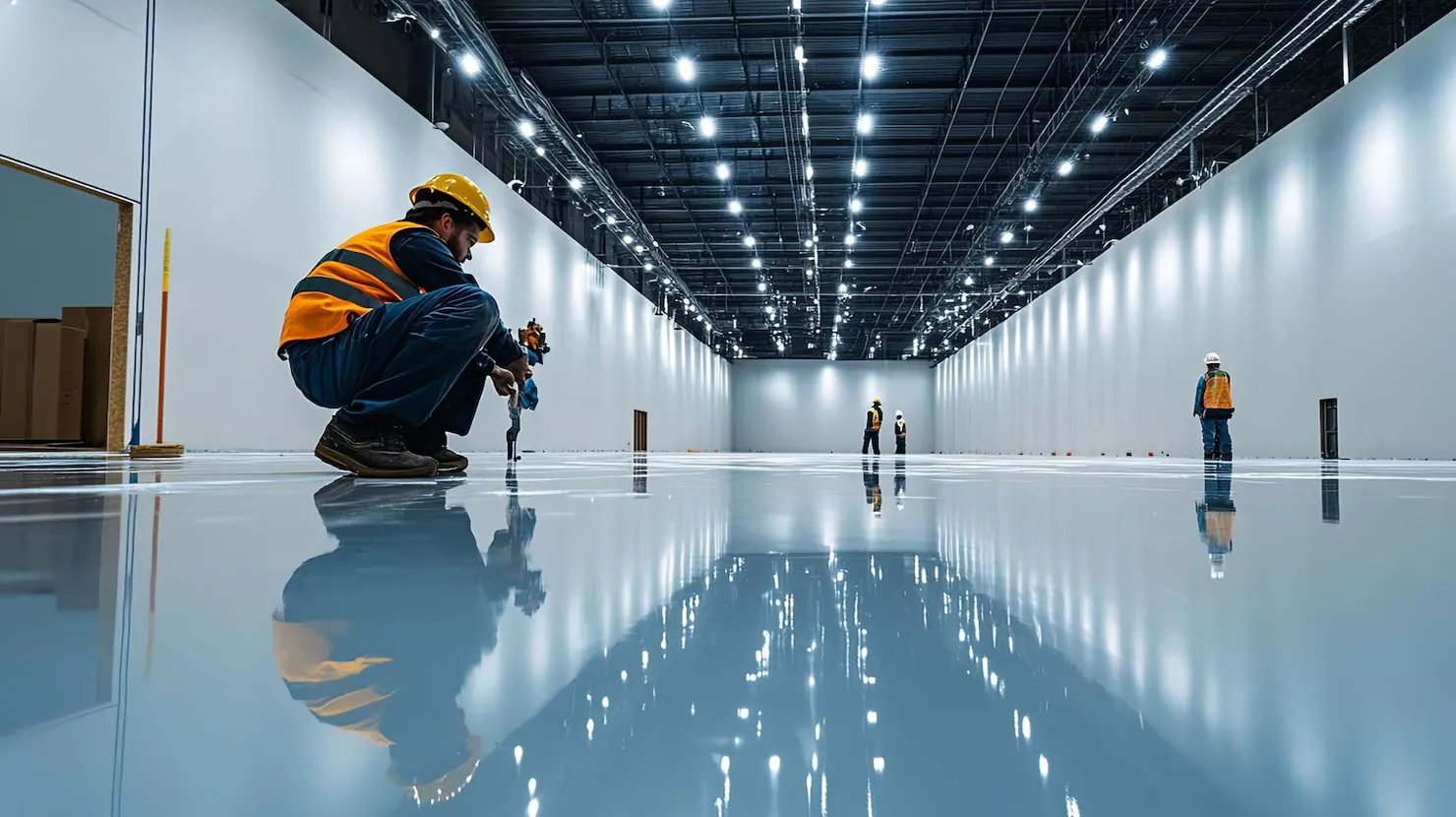

A DIY epoxy coating kit for a two-car garage costs hundreds of dollars at the hardware shop. Epoxy floor coating specialists will cost you more, which makes many Melbourne residents question the reason for the difference. After 15 years installing floors across Melbourne, we have seen both sides of this debate. Our team has also ground off more failed DIY coatings than we can count. This guide covers what the kits contain, what professionals do differently, and what each really costs. It ends with our honest take on when a kit is actually the smarter buy.
What You Actually Get in a DIY Epoxy Kit
The materials in a typical kit include the two-part resin, a little bag of flakes, a roller, and an etching compound. You can expect to spend around $200-$700 to get enough material to do a double garage. This seems like a great deal, and often it is.
Here is the catch. Kit epoxies are usually water-based with a low solids content, so the cured film is thin. You are often left with a coat well under half a millimetre thick.
The flake bag tells its own story. Kits include a light sprinkle for looks, not the heavy broadcast that gives a floor grip and hides wear.
How Professional Installers Do It Differently
The difference starts before any epoxy appears. A professional crew grinds the slab with diamond tooling to create a porous, open surface the coating can bite into. Cracks get repaired, oil spots get treated, and the slab gets checked properly.
Good epoxy flooring contractors will not coat a slab that fails a moisture test. Trapped vapour lifts coatings from below, and most bubbled floors we inspect trace back to exactly that.
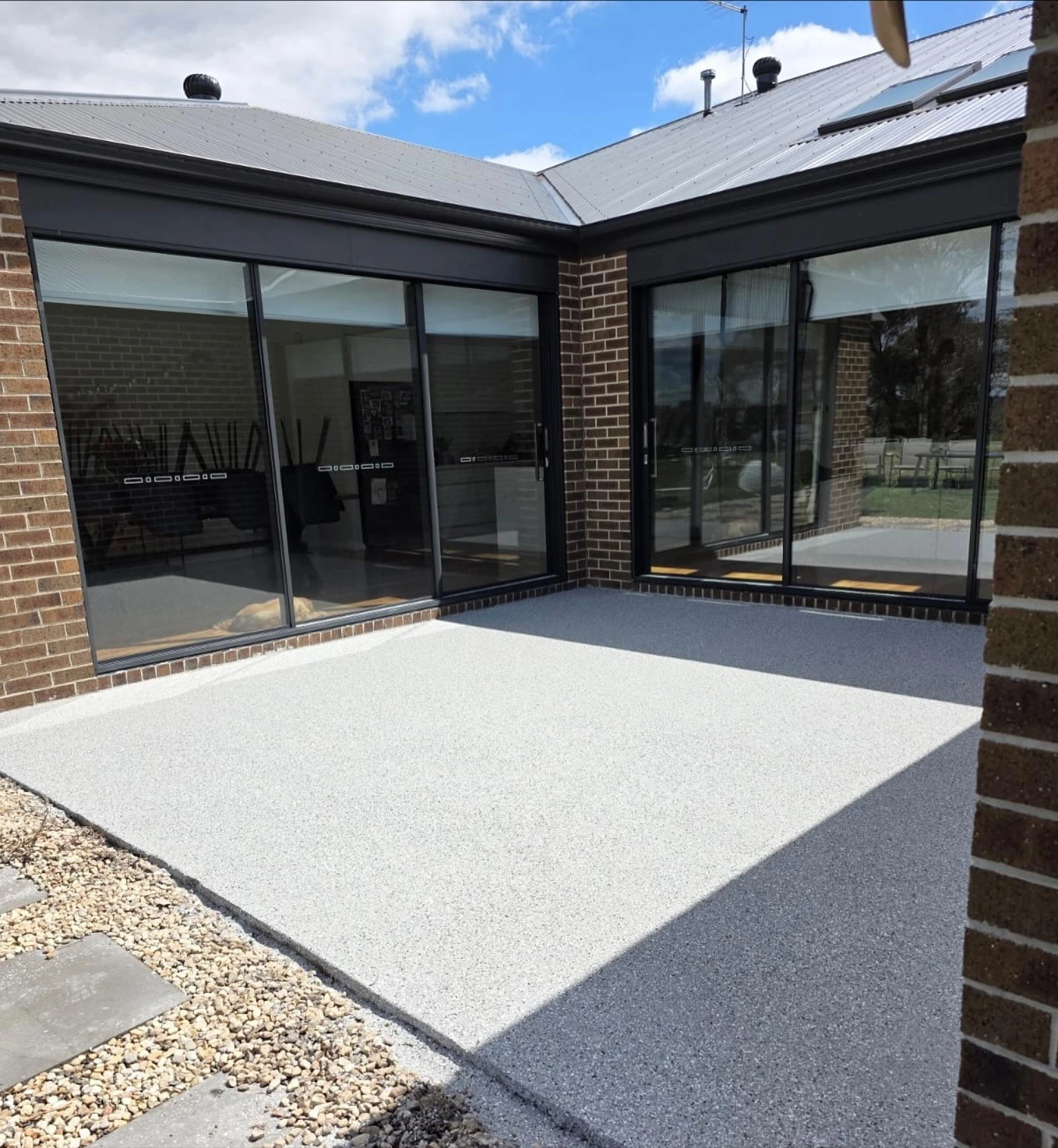
The materials differ too. Systems used professionally utilize 100% solids epoxy films with significantly thicker builds than any kit. The Urban Stone flake system has been topped by our UV resistant polyaspartic coating. This coating has not been used by any kit. This is the reason that kit floors turn yellowish and dull under sun exposure.
The Real Cost Gap (and the Hidden One)
On paper the kit wins easily. Add grinder hire, a decent respirator and a wasted weekend, and the gap narrows. Professional installation still costs more upfront, and we will not pretend otherwise.
Longevity flips the maths. A kit floor in a working garage commonly lasts three to seven years. A professionally installed system routinely runs ten to twenty years with basic care. Priced per year of service, the professional floor usually works out cheaper.
Then there is the hidden cost. If a kit fails, the old coating must be ground off completely before anything new goes down. Stripping a failed floor costs more than preparing bare concrete ever would. Before committing either way, search for epoxy floor installers near me and collect a couple of real quotes. Weigh those numbers against the kit price plus your own labour.
Why DIY Epoxy Floors Fail
Hot tyre pickup is the classic failure. A car comes home on warm tyres, the thin coating softens, and the epoxy peels away in tyre-shaped patches. Thin water-based films simply cannot handle that heat cycling.
Poor preparation causes the rest. Etch solutions leave dense slabs too smooth, so the coating never truly bonds. Moisture rising through the slab lifts it from underneath. Short pot life catches first-timers too, with mixed epoxy going off in the bucket halfway through the pour.
We wrote about the hidden risks of DIY epoxy and polyaspartic kits after repairing one too many of them. The pattern is always the same: the product gets blamed, but the preparation was the problem.
When a DIY Kit Makes Sense
We will be straight with you, because a kit really is the right call sometimes. A garden shed, a storage room or a rarely used surface does not justify a professional system. Light footsteps will not be so harsh on a thin layer as hot tyres are.
A kit is ideal for a quick cleaning before the sale or where money won’t go any further. You just need to make sure that you prepare the concrete slab properly.
When to Call in a Professional
Any garage that parks cars daily belongs with the professionals. The same goes for workshops, showrooms and commercial spaces where downtime, safety and presentation carry real money. Slabs with a history of damp or efflorescence need moisture testing before coating, full stop.
Reputable epoxy flooring contractors will inspect your slab, explain their recommended system and back the work with a warranty. Our epoxy garage floor service covers everything from grinding to the final topcoat. If you have been typing epoxy floor installers near me into Google, you are already halfway there. Come and see finished samples at our Thomastown showroom before you spend a cent.
Frequently Asked Questions
1. Is DIY epoxy floor worth it?
Sometimes. A kit suits sheds, storage rooms and light foot traffic. For garages holding daily-driven cars, kits commonly peel within a few years, and stripping a failed coating is expensive.
2. What is the best epoxy floor kit?
None of them thrill us. Hardware store kits mostly use similar water-based resins with thin builds. Premium two-pack kits perform better, yet still trail commercial-grade systems installed over ground concrete.
3. What's better than epoxy floors?
Flake systems finished with polyaspartic topcoats beat plain epoxy for UV stability and wear. Polished concrete suits interiors. The real question is which system matches your traffic, moisture and budget.


















Sign in to leave a comment.