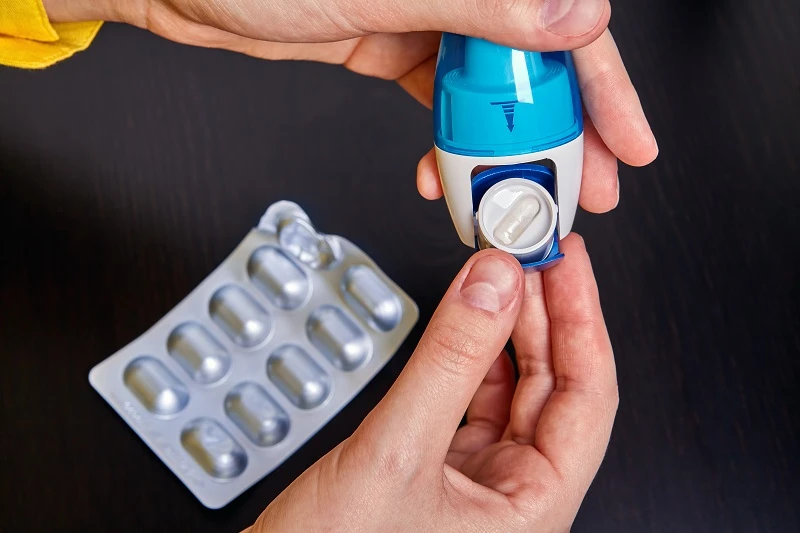

The global increase in respiratory diseases has driven the rapid advancement of inhalation drug delivery systems. Offering fast, efficient, and targeted therapy, these systems have outpaced many traditional delivery methods. This article reviews the current landscape, operational mechanisms, and future outlook for inhalation-based therapeutics.
The lungs’ high vascularity and expansive surface area allow for rapid drug absorption and minimal systemic metabolism. This translates into lower dosage requirements and faster therapeutic action.
For example, inhaled salbutamol requires only 0.2–0.4 mg for efficacy, compared to the 2–4 mg needed when taken orally. Additionally, inhalation delivers results within minutes, making it ideal for managing sudden respiratory symptoms.
Though pulmonary delivery efficiency may vary (12–40%), the direct targeting of affected tissues enables better outcomes with smaller doses, minimizing unwanted side effects.
Device Innovations and Market Trends
Modern inhalation devices include nebulisers, pMDIs, and DPIs. Nebulisers are best suited for clinical use due to their size and operational complexity. They remain a reliable choice for severe cases and pediatric or elderly patients.
pMDIs use propellants to aerosolize medication. However, their reliance on HFCs raises environmental issues. As a result, there's a push toward eco-friendly formulations and improved actuation techniques.
DPIs—particularly capsule-based models—have become the preferred device type in many settings. These systems use the patient’s breath to aerosolise powdered medication, eliminating the need for propellants and enhancing portability.
DPIs now dominate more than a third of the inhalation drug delivery market. Industry projections suggest growth to $1.3 billion by 2031, driven by a 7.2% CAGR and growing patient and provider preference.
Capsule Engineering for Effective Delivery
The effectiveness of capsule-based DPIs hinges on capsule design. Capsules must release their contents efficiently, requiring minimal residual lubricant and high puncture reliability. Because the lungs are highly susceptible to microbial contamination, inhalation capsules must meet more stringent cleanliness standards than oral capsules—less than 100 CFU/g.
Materials such as gelatin and HPMC are used, with HPMC capsules favored for their resistance to humidity and consistent puncture characteristics. Size 3 capsules are most common in commercial DPI products.
Formulation Science: The Role of Carriers and Particle Design
Micronised drug particles are mixed with carriers to improve handling and dosing precision. Ideal particle sizes (1–5 µm) are essential for effective lung deposition.
Critical formulation parameters include particle size distribution, surface characteristics, and electrostatic behavior. These influence deagglomeration and drug dispersal during inhalation.
Proper control of these properties ensures stable, reproducible doses that deliver consistent
therapeutic benefits.
Broadening Horizons and Breakthroughs
The successful launch of inhaled insulin has paved the way for pulmonary delivery of other systemic therapies. The appeal lies in its painless administration and faster absorption, leading to better adherence.
Future applications include not only respiratory disorders like cystic fibrosis and lung infections but also non-respiratory conditions such as diabetes, migraine, and cancer. Established drugs are also being re-engineered for inhalation, unlocking new possibilities for precision medicine.























Sign in to leave a comment.