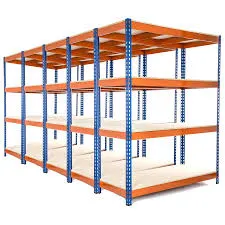

Every warehouse, distribution center, and industrial facility faces the same core challenge: how to store the maximum amount of inventory in the minimum amount of space, without sacrificing accessibility, safety, or efficiency. The answer lies in choosing the right Racking solution.
Racking systems are far more than steel frames and beams — they are the backbone of a warehouse's entire operational flow. The right system can cut retrieval times, reduce labor costs, prevent damage to stock, and free up floor space for growth. The wrong one can bottleneck operations for years. This guide breaks down the main types of racking solutions, how to evaluate which one fits your business, and the key factors that separate a well-designed storage system from a costly mistake.
What Is a Racking Solution?
A racking solution is a structured storage system — typically built from steel — designed to hold palletized or shelved goods in an organized, vertical arrangement. Instead of stacking goods directly on the floor (which wastes space, damages products, and slows down picking), racking systems use frames, beams, and levels to store inventory safely at height while keeping it accessible via forklifts, reach trucks, or manual picking.
Racking solutions are used across nearly every industry that handles physical goods: logistics and third-party warehousing, manufacturing, retail distribution, cold storage, e-commerce fulfillment, automotive, construction materials, and pharmaceuticals.
Why Racking Systems Matter for Warehouse Efficiency
- Maximized vertical space — Warehouses are priced and leased by the square meter, but racking lets you profit from cubic meters instead, storing goods upward rather than sprawling outward.
- Improved inventory accuracy — Organized, labeled storage locations make it easier to track stock levels and reduce picking errors.
- Faster order fulfillment — Well-planned racking layouts shorten travel time for forklifts and pickers, directly improving throughput.
- Reduced product damage — Proper racking keeps goods off the floor and away from forklift traffic, lowering breakage and loss.
- Regulatory and safety compliance — Engineered racking systems are load-rated and designed to meet safety standards, reducing the risk of structural failure or workplace accidents.
Main Types of Racking Solutions
Not every warehouse needs the same system. The right choice depends on inventory type, turnover rate, available space, and handling equipment. Here are the most common racking solutions used in modern facilities.
1. Selective Pallet Racking
The most widely used racking system, selective pallet racking gives direct access to every single pallet without needing to move other loads. It's ideal for operations with a wide variety of SKUs and moderate-to-high turnover, since any pallet can be picked at any time.
Best for: Businesses with diverse product ranges and frequent order picking.
2. Drive-In / Drive-Through Racking
This high-density system allows forklifts to drive directly into the racking structure to load and unload pallets, eliminating the need for multiple aisles. It follows a last-in-first-out (LIFO) or first-in-first-out (FIFO) storage method, making it ideal for storing large quantities of the same SKU.
Best for: Cold storage, food and beverage, and bulk storage operations with limited SKU variety.
3. Very Narrow Aisle (VNA) Racking
VNA racking compresses aisle widths to the minimum required for specialized narrow-aisle forklifts or automated guided vehicles, dramatically increasing storage density per square meter compared to standard selective racking.
Best for: High-volume warehouses where floor space is limited but storage capacity needs to scale.
4. Cantilever Racking
Designed without front columns, cantilever racking uses arms extending from a central column to support long, bulky, or irregularly shaped items such as timber, pipes, steel bars, and furniture.
Best for: Building materials, metal fabrication, and industries handling long or oversized loads.
5. Push-Back Racking
Push-back racking uses nested carts on rails, allowing multiple pallets to be stored deep in a single lane. New pallets push existing ones back, and picking works on a LIFO basis.
Best for: Operations needing higher density than selective racking but more flexibility than drive-in systems.
6. Mezzanine Floors & Shelving Systems
For businesses that need to add a second (or third) level of usable floor space without expanding the building footprint, mezzanine floors combined with shelving units offer a cost-effective way to multiply storage or working area.
Best for: Light-duty storage, office space above a warehouse floor, or small-parts picking areas.
How to Choose the Right Racking Solution
Selecting a racking system isn't a one-size-fits-all decision. Consider the following factors before committing to a layout:
- Inventory profile — How many SKUs do you handle, and how often does each one turn over?
- Pallet volume and weight — Heavier loads require heavier-duty steel and engineering.
- Available space — Ceiling height, floor load capacity, and aisle width all shape which systems are viable.
- Handling equipment — Standard forklifts, reach trucks, and narrow-aisle vehicles each require different racking configurations.
- Growth plans — A flexible, modular racking design allows for reconfiguration as your business scales.
- Budget and ROI — Higher-density systems (like VNA or drive-in) cost more upfront but can significantly cut long-term storage costs per pallet.
The Importance of Professional Design, Supply & Installation
Racking systems bear significant structural loads, so poor design or improper installation isn't just inefficient — it's dangerous. Working with an experienced racking provider ensures:
- Accurate load calculations and structural engineering
- Compliance with relevant safety standards
- Optimized layouts that balance density with accessibility
- Proper installation and ongoing inspection to prevent rack collapse or damage over time
A well-executed racking project typically follows three stages: design (site survey, layout planning, and engineering), supply (sourcing quality steel components), and installation (professional assembly and safety compliance checks).
Final Thoughts
Choosing the right racking solution is one of the highest-leverage decisions a warehouse operator can make. It affects everything from daily labor efficiency to long-term storage capacity and safety. Whether you need selective pallet racking for a fast-moving distribution center, drive-in racking for bulk cold storage, or cantilever racking for long industrial materials, the key is matching the system to your actual operational needs — not just the cheapest or most familiar option.
Investing in a properly designed, high-quality racking system pays for itself through better space utilization, safer operations, and a warehouse that can scale as your business grows.




























Sign in to leave a comment.