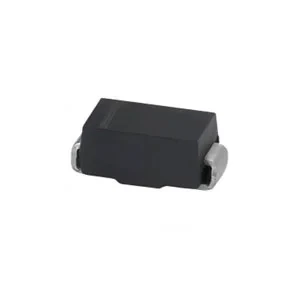

Rectifier Bridges are devices used to convert AC to DC in electronic circuits. These bridges are made up of four or more diodes arranged in a specific pattern, designed to effectively change the direction of the AC voltage in a circuit. Rectifier Bridges mainly come in three phase and single-phase forms, and they are widely used in power supplies, battery chargers, motor control circuits, and other applications where DC voltage is required.
Different Model Numbers Of The Bridge Rectifier
1N5408-E3/73, BY228GP-E3/73, BYG20G, BYS10-35-E3/TR, and GBJ15A are all the diode bridge rectifier models widely used in electronics for converting AC to DC. These rectifier bridges are designed to work in a variety of applications ranging from power supplies to motor control circuits. With their high voltage and current capacity, these rectifier bridges provide an efficient and reliable solution for DC voltage conversion.
1N5408-E3/73
BY228GP-E3/73
BYG20G
BYS10-35-E3/TR
GBJ15A
Rectifier Bridges: Essential Components for Converting AC to DC
Rectifier bridges are essential components in electronic circuits that are responsible for converting alternating current (AC) to direct current (DC). This process is necessary because most electronic devices operate on DC voltage. Rectifier bridges are typically made up of diodes that are arranged in a specific configuration to effectively change the direction of the AC voltage. By forcing the current to flow in one direction, rectifier bridges ensure a stable and constant DC voltage is supplied to the device, allowing it to function properly.
How Rectifier Bridges Work: A Simplified Explanation
Rectifier bridges work by using diodes to convert AC to DC voltage. When an AC voltage is applied, one set of diodes conducts during the positive half-cycle, and the other set conducts during the negative half-cycle. The conducting diodes allow the current to flow in one direction and prevent it from flowing in the opposite direction, effectively converting the AC voltage to a DC voltage. The resulting DC voltage is a pulsating voltage with a frequency of twice that of the input AC voltage. To obtain a smoother DC voltage, additional components such as resistors, capacitors, or voltage regulators are added to the circuit.
Three-Phase Rectifier Bridges: Advantages and Limitations
Three-phase rectifier bridges are used to convert three-phase AC power to DC power. They require at least six diodes arranged in a specific configuration to effectively change the direction of the AC voltage. Three-phase rectifier bridges have several advantages over single-phase rectifiers, such as higher power output and reduced ripple voltage. However, they can also be more expensive and complex to implement. Additionally, three-phase rectifier bridges can produce interharmonic distortion in certain applications, which can affect the performance of the connected electrical equipment. As such, it is important to consider the advantages and limitations of three-phase rectifiers when selecting the appropriate rectifier bridge for a specific application.
FAQ of a Bridge Rectifier
Can rectifier bridges be used for voltage regulation in a circuit?
Although rectifier bridges are not typically used for voltage regulation, additional components like capacitors and regulators can be added to smooth out the output voltage.
What is the maximum current rating for a typical electrical bridge rectifier?
The maximum current rating can range from a few amperes to hundreds of amperes, depending on the specific model and application.
How are rectifier bridges tested, and what are some common failure modes?
Rectifier bridges can be tested using a multimeter or oscilloscope, and common failures include diode failures or overheating due to excessive current flow.
Now the price of bridge rectifier buy is reasonable, anything you need, please contact us.
As an electronic components distributor, we will do our best to meet all the needs of customers.


















Sign in to leave a comment.