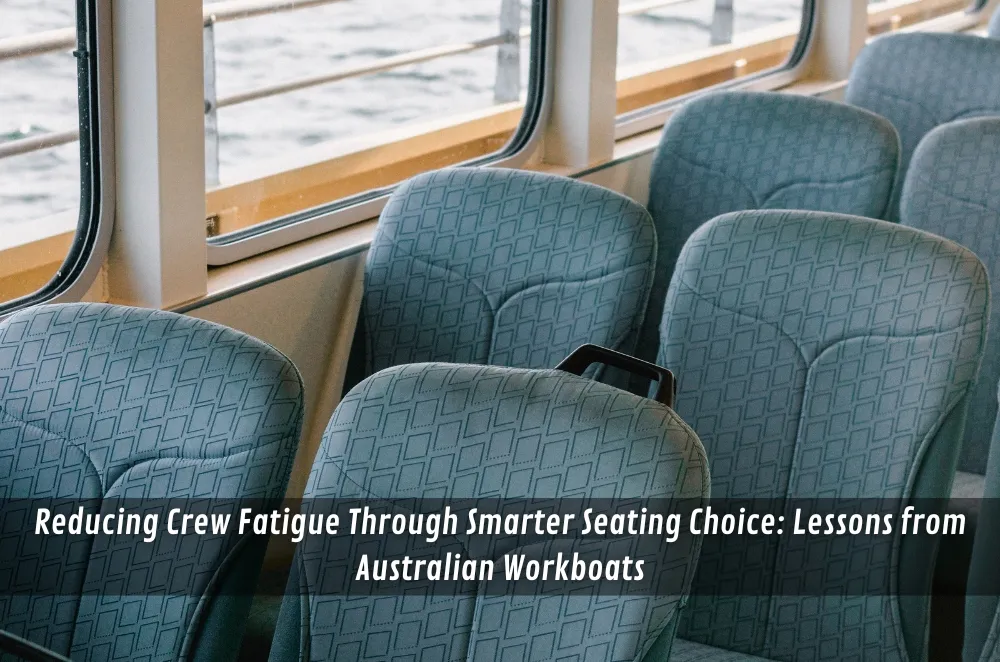

Commercial skippers often talk about fuel burn, turnaround times and maintenance windows. Yet one of the most stubborn costs on an Australian workboat is hidden in plain sight: crew fatigue. When operators push long coastal runs, ferry loops or offshore tenders, every extra swell and shock slowly chips away at concentration. Over a season, the wrong seat can leave teams sore, slow and more prone to errors.
This article explores how modern seating design helps tackle that problem. Drawing on local examples and official fatigue advice, we’ll break down the seat features that genuinely make a difference, compare common designs, and finish with a practical checklist for any operator planning an upgrade.
Why Fatigue Builds Up Faster on Australian Workboats
Australia’s coast delivers a mixed bag of challenges—fast tidal flows in Darwin harbour, slap-happy chop across Sydney Heads, and long, hot passages along the Great Barrier Reef. Three factors combine to accelerate fatigue:
Route conditions amplify shock
High-speed hulls hitting short, steep waves send repeated vertical impacts through the deck. Over a four-hour commercial whale-watching run, that vibration acts like low-level exercise—only in a static posture. Muscles tense without a break, blood circulation slows, and operators report noticeable energy dips before the final leg home.
Climate and shift length matter
Heat and humidity increase core temperature, which research links to faster mental fatigue. Many reef tour vessels run double half-day trips; crew may spend eight to ten hours on deck with limited air-conditioned relief.
Vehicle analogy traps
Some operators still buy fixed pedestal seats because “they work fine in trucks”. Road shock and marine slam differ wildly; what feels acceptable on bitumen can feel punishing at 25-knots in a head sea.
For a deeper dive into how comfort requirements evolve over a long day on the water, readers can refer to upgrading your boat seating comfort published earlier this year.
Importantly, fatigue isn’t just discomfort. The Australian Maritime Safety Authority notes that reduced alertness increases accident risk, and lists seating and vibration exposure among contributing factors in its AMSA fatigue guidelines.
Key Seat Features That Actively Reduce Fatigue
Not every boat needs a military-grade shock-mitigating bucket. But certain design details consistently correlate with happier, more alert crews.
Suspension mechanisms absorb vertical slam
A properly tuned suspension pedestal or integrated suspension module can soak up frequent small impacts and soften the occasional jolt. Modern units use adjustable dampers and corrosion-resistant springs, letting operators set stiffness to match vessel speed and crew weight.
Ergonomic shape keeps posture neutral
Seats moulded with lumbar support, waterfall front edges and adjustable armrests let crew maintain a mid-back curve and open hip angle. Less bracing = less muscle burn over time. Cold-cure foam retains its shape longer than cut foam, maintaining support into year two and beyond.
Breathable, quick-dry upholstery fights heat stress
Marine-grade vinyl with micro-perforations, or woven technical fabrics treated for UV stability, let sweat evaporate rather than pool. Combined with vented seat pans, crews stay cooler—critical in northern routes where 35 °C deck temperatures are common.
Operators comparing brands can find a concise overview of these and other premium boat seating options that integrate ergonomics, suspension and durable materials in a single platform. Choosing seats built for marine duty, rather than lightly adapted road models, is often the simplest way to remove a fatigue vector without redesigning the whole wheelhouse.
Seat Design vs Likely Fatigue Impact
The table below summarises how common seat configurations influence vibration exposure, posture and on-board upkeep.
| Seat Type | Typical Use | Fatigue Impact | Maintenance Considerations |
| Basic fixed pedestal with flat cushion | Low-speed barges, occasional use | High – minimal shock absorption; posture relies on crew muscle | Simple hardware but cushion wears quickly; foam compresses |
| Fixed pedestal with contoured foam | Tourist ferries, harbour pilots | Moderate – better posture but still transfers slam | Need regular re-upholstery in high UV areas |
| Suspension pedestal + ergonomic shell | Offshore transfers, patrol vessels | Low – absorbs vertical impact and supports lumbar curve | More moving parts; inspect dampers at service intervals |
| Full shock-mitigating jockey seat | Defence, rescue RIBs | Very low – designed for high-G events | Highest up-front cost; scheduled cartridge replacement |
While the last category offers unrivalled shock protection, many commercial operators report 60–70 % of the benefit simply by moving from row one to row three—often at a friendlier capital outlay.
Field Lessons from Operators Around the Coast
Reef tour boats (Queensland)
A Cairns-based operator running twin-hull fast cats replaced ageing fixed seats with mid-range suspension pedestals and breathable vinyl shells. Crews logged the same four-hour morning run. Within a month, absenteeism due to backache dropped from six shifts to two. The company also found cleaning times shortened because water drained through the seat base rather than pooling in fabric wrinkles.
Offshore crew transfers (Western Australia)
A contractor shuttling maintenance staff to LNG platforms faced a different issue—longer transits in 1-2 m swells. They trialled three seat types and recorded vibration exposure via smartphone accelerometers. Data showed a 25 % reduction in peak vertical acceleration with suspension seats versus fixed. Crew subjective fatigue scores aligned, with operators reporting “still fresh enough to finish paperwork” after docking.
These stories highlight two points: first, fatigue manifests differently depending on route; second, even incremental seating upgrades deliver measurable benefits.
Quick Checklist Before Ordering New Seats
- Map the vessel’s typical speed and sea-state profile—match suspension travel accordingly.
- Measure required seat height to maintain line of sight over console or bow.
- Check upholstery UV rating and mould resistance for planned climate.
- Confirm adjustability range covers smallest and tallest crew members.
- Request shock or vibration test data where available, not just marketing claims.
- Factor in serviceability: can dampers or slides be replaced without removing the whole pedestal?
- Budget for at least one spare seat to keep rotations and maintenance simple.
Final Thoughts – Designing for People, Not Just Vessels
No single upgrade eliminates fatigue, but seating is an often-overlooked lever that pays back in alert crews, reduced injury risk and smoother daily operations. By understanding how hull dynamics, climate and shift patterns intersect with ergonomics and suspension design, Australian operators can make evidence-based seating choices that support the people who keep their vessels moving.
When the next refit rolls around, weigh up the fatigue data as carefully as fuel efficiency tables. The crew—and your insurance premiums—will thank you.

























Sign in to leave a comment.