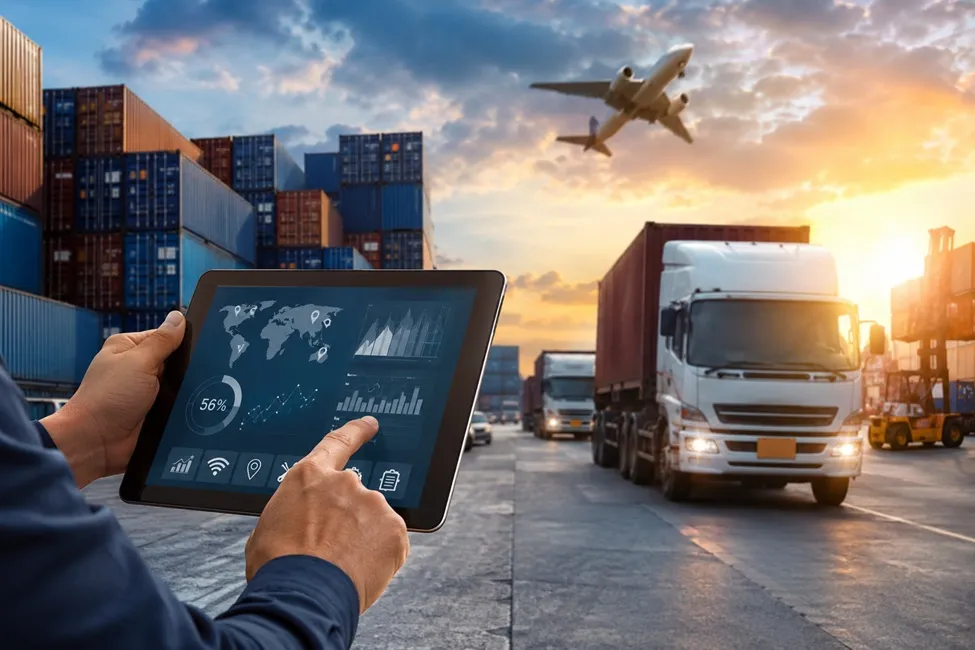

In today's fast-moving supply chain environment, delivery speed has become a major factor in customer satisfaction and business success. Companies across the world are looking for better ways to improve transportation performance, reduce disruptions, and meet customer expectations. One of the most effective solutions is the use of data intelligence. Combined with advances in the AI in logistics industry, organizations can analyze large amounts of operational data, identify patterns, and make smarter decisions that help reduce delivery delays.
Understanding the Impact of Delivery Delays
Delivery delays create challenges for businesses of all sizes. Late shipments can increase operational costs, damage customer trust, and reduce profitability. In industries such as retail, manufacturing, healthcare, and e-commerce, even a small delay can disrupt an entire supply chain.
Recent supply chain studies indicate that disruptions continue to affect businesses worldwide. Research from McKinsey found that many organizations experienced supply chain disruptions severe enough to require significant operational changes during the past year. At the same time, global transportation networks continue to face challenges related to labor shortages, weather events, rising demand, and geopolitical uncertainty.
As customer expectations continue to increase, businesses can no longer rely on traditional planning methods alone. They need real-time visibility and predictive insights to stay ahead of potential problems.
What Is Data Intelligence?
Data intelligence refers to the process of collecting, analyzing, and using data to support better decision-making. In logistics operations, data comes from multiple sources, including:
- Transportation management systems
- GPS tracking devices
- Warehouse management platforms
- Customer order systems
- Fleet telematics
- Weather and traffic data
When this information is combined and analyzed, businesses gain a clearer picture of their operations. Instead of reacting to delays after they happen, companies can predict issues before they impact deliveries.
Why Visibility Matters
One of the leading causes of delivery delays is limited visibility across the supply chain. When logistics teams cannot see where shipments are located or identify emerging risks, response times become slower.
Modern data intelligence platforms provide end-to-end visibility. Logistics managers can monitor shipments in real time, track vehicle locations, identify traffic congestion, and receive alerts when potential disruptions occur.
Industry experts increasingly emphasize visibility as a key priority. As supply chains become more complex, companies are investing heavily in technologies that provide a centralized view of transportation operations and shipment status.
With better visibility, businesses can make faster decisions and prevent minor issues from becoming major delays.
Predictive Analytics Improves Delivery Performance
Predictive analytics is one of the most valuable applications of data intelligence. By examining historical and real-time data, predictive models can forecast future events with greater accuracy.
For example, predictive systems can identify:
Traffic-Related Delays
Traffic congestion remains one of the most common causes of late deliveries. Predictive models analyze traffic patterns, road conditions, and historical travel times to recommend better routes before vehicles leave distribution centers.
Weather Disruptions
Severe weather can significantly affect transportation schedules. Data-driven forecasting allows logistics teams to adjust routes, modify delivery windows, and prepare contingency plans before storms impact operations.
Vehicle Maintenance Issues
Unexpected vehicle breakdowns often result in delayed shipments. By monitoring engine performance, fuel consumption, and equipment health, predictive maintenance systems can identify potential problems before they cause operational interruptions.
These capabilities help organizations improve reliability while reducing unnecessary transportation costs.
Smarter Route Optimization
Route planning has evolved significantly over the past decade. Traditional route planning methods often rely on static maps and fixed schedules. Data intelligence enables dynamic route optimization based on real-world conditions.
Advanced systems evaluate multiple variables simultaneously, including:
- Traffic conditions
- Delivery priorities
- Driver availability
- Fuel efficiency
- Road restrictions
- Customer delivery windows
This approach allows logistics teams to continuously optimize routes throughout the day. As conditions change, the system can recommend alternative routes that help drivers avoid delays.
According to industry research, data-driven route optimization can significantly improve delivery efficiency while reducing transportation expenses.
Improving Demand Forecasting
Many delivery delays begin long before a shipment reaches the road. Poor demand forecasting can lead to inventory shortages, warehouse congestion, and fulfillment bottlenecks.
Data intelligence helps businesses better understand customer demand patterns by analyzing historical sales data, seasonal trends, purchasing behavior, and market conditions.
Accurate forecasting provides several advantages:
Better Inventory Availability
Organizations can maintain appropriate stock levels and reduce the risk of stockouts that delay order fulfillment.
More Efficient Warehouse Operations
Warehouse teams can prepare for expected order volumes and allocate resources more effectively.
Improved Transportation Planning
Transportation managers gain better visibility into future shipment volumes, allowing them to secure capacity and avoid last-minute scheduling challenges.
As supply chains become more data-driven, forecasting accuracy continues to improve across many industries.
Real-Time Decision Making
One of the greatest strengths of data intelligence is the ability to support real-time decision making.
Research suggests that many supply chains struggle to respond quickly to changing conditions. While organizations may detect disruptions, they often lack the ability to act immediately.
Real-time data systems address this challenge by continuously monitoring logistics operations and generating actionable insights. When an issue occurs, managers receive immediate notifications and recommended actions.
For example, if a shipment encounters unexpected congestion, the system can automatically suggest an alternative route. If a warehouse experiences delays, transportation schedules can be adjusted before downstream operations are affected.
This proactive approach reduces response times and improves overall delivery performance.
Emerging Trends Shaping Logistics Operations
Several industry trends are accelerating the adoption of data intelligence across logistics networks.
Greater Investment in Advanced Analytics
Industry surveys show that organizations are increasing investments in analytics and decision-support technologies. Many supply chain leaders view advanced data capabilities as essential for improving operational efficiency and resilience.
Growth of Connected Transportation Systems
Transportation systems are becoming increasingly connected through sensors, telematics, and Internet of Things devices. These technologies generate continuous streams of operational data that support faster decision-making.
Increased Focus on Automation
Automation continues to play a growing role in logistics operations. From warehouse management to transportation planning, automated systems help reduce manual processes and improve consistency.
Demand for Supply Chain Resilience
Recent disruptions have highlighted the importance of resilience. Businesses are using data intelligence to identify risks earlier, develop contingency plans, and maintain service levels during periods of uncertainty.
The Future of Delivery Performance
The future of logistics will be increasingly driven by data. Organizations that effectively collect, analyze, and act on operational information will be better positioned to reduce delays and improve customer satisfaction.
As transportation networks become more complex, businesses need solutions that provide visibility, predictive insights, and real-time decision support. Data intelligence delivers these capabilities while helping companies operate more efficiently and respond more effectively to disruptions.
Reducing delivery delays is no longer simply a matter of working harder. It requires working smarter. By leveraging data-driven insights across transportation, warehousing, inventory management, and customer fulfillment, businesses can create faster, more reliable supply chains that meet the demands of a rapidly changing marketplace.


























Sign in to leave a comment.