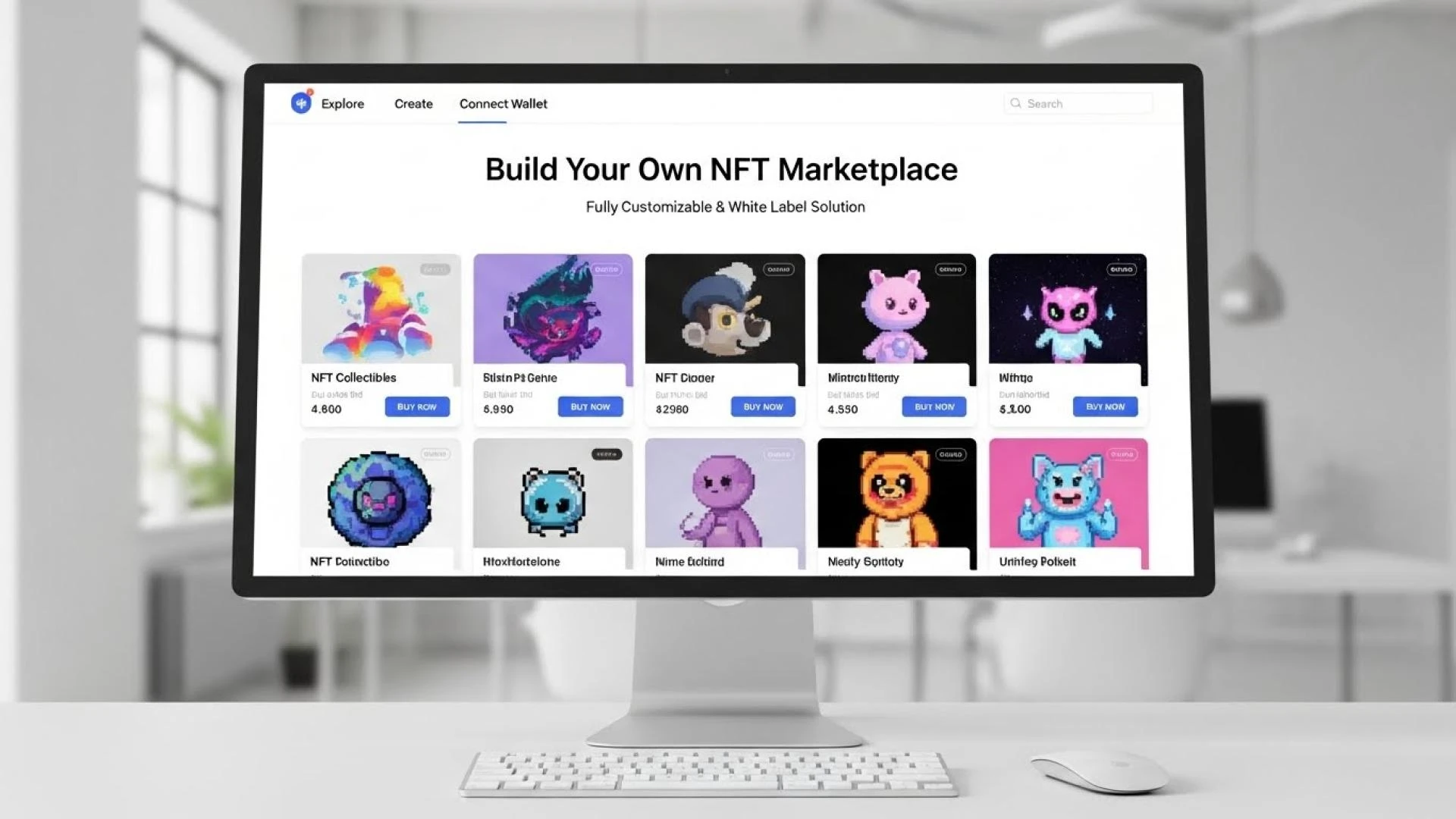

Security remains one of the most critical challenges facing NFT platforms as digital ownership gains mainstream adoption. With NFTs representing valuable assets, intellectual property, and financial investments, any vulnerability can result in significant losses and long-term reputational damage. Building a secure NFT marketplace requires expertise across blockchain development, smart contract auditing, wallet integration, and compliance management. Many businesses underestimate these complexities, leading to avoidable risks. A white label NFT marketplace offers a structured, security-focused approach that helps platforms reduce exposure to threats while maintaining operational control, scalability, and user trust.
Understanding the Core Security Challenges in NFT Marketplaces
NFT marketplaces face a unique combination of blockchain-specific risks and traditional web security threats. These platforms must manage decentralized transactions while maintaining centralized systems for user access, content moderation, and analytics. Without a clear understanding of these challenges, platforms may focus only on blockchain security while overlooking critical vulnerabilities elsewhere. Addressing these risks holistically is essential to protecting digital assets and ensuring uninterrupted marketplace operations.
- Smart contract exploitation risks: Errors in contract logic can enable unauthorized minting, asset duplication, or manipulation of transaction flows. Once deployed, flawed contracts are difficult to reverse, increasing potential losses.
- User wallet exposure and transaction fraud: Marketplaces interacting with external wallets are frequent targets for phishing, fake approvals, and malicious scripts that compromise user funds.
- Centralized infrastructure vulnerabilities: Databases, APIs, and admin dashboards can be exploited through weak authentication or insufficient monitoring, leading to data breaches or operational disruptions.
- Legal and compliance-related threats: Failure to align with jurisdictional regulations can expose platforms to enforcement actions, fines, or forced service suspension.
The Importance of Security-First Architecture in NFT Platforms
A secure NFT marketplace is not built by adding protective features after launch. Security must be embedded into the platform’s architecture from the earliest stages of development. Platforms that overlook this principle often struggle with scalability, user trust, and long-term sustainability. A security-first design ensures that every system component functions within a controlled and verifiable framework.
- Asset integrity and ownership protection
Strong architecture ensures NFTs cannot be altered, duplicated, or transferred without proper authorization. - Consistent trust across user interactions: Secure platforms encourage repeat engagement by demonstrating reliability in transactions and data handling.
- Minimized operational risk exposure: Proactive security design reduces the likelihood of emergency fixes, downtime, and financial loss.
- Scalable growth without security regression: Well-planned architecture supports expansion without introducing new vulnerabilities.
How White Label NFT Marketplaces Reduce Development-Stage Risks
Development is the phase where most security issues originate due to rushed timelines, limited expertise, or untested code. White label NFT marketplaces mitigate these risks by offering mature, production-ready frameworks that have been refined through repeated use. This approach allows businesses to launch confidently without sacrificing platform safety.
- Proven development frameworks: White label platforms rely on architectures that have already been tested across multiple deployments.
- Reduced coding errors and inconsistencies: Standardized components limit the chance of overlooked vulnerabilities common in custom builds.
- Accelerated deployment with controlled risk: Faster time-to-market is achieved without bypassing essential security processes.
- Predictable maintenance and upgrade cycles: Structured development enables safer long-term platform management.
Smart Contract Security and Transaction Integrity
Smart contracts govern every NFT action, from minting to resale and royalty distribution. Their security directly impacts asset ownership and marketplace credibility. A single vulnerability can compromise thousands of transactions, making contract integrity a top priority for any NFT platform.
- Pre-audited smart contract templates
White label solutions typically include contracts reviewed for known exploit patterns. - Protection against transaction manipulation: Safeguards prevent reentrancy attacks, unauthorized function calls, and logic abuse.
- Upgradeable contract mechanisms: Secure upgrade paths allow platforms to address issues without disrupting asset ownership.
- Transparent execution of marketplace rules: Clear logic ensures predictable outcomes for buyers, sellers, and creators.
Secure Wallet Integration and Payment Handling
Wallet integration is a critical interface between users and the blockchain. Any weakness in this connection can lead to asset theft or fraudulent approvals. White label NFT marketplaces prioritize secure wallet handling to protect users during every transaction.
- Trusted wallet connectivity standards: Integration follows established protocols that minimize unauthorized access.
- Multi-step transaction validation: Additional checks help prevent accidental or malicious approvals.
- User protection against spoofing attempts: Clear transaction prompts reduce confusion and approval errors.
- Support for multiple wallet providers: Diversification improves resilience and user accessibility.
Data Protection and Platform-Level Security Controls
While blockchain transactions are decentralized, NFT marketplaces rely on centralized systems for user management and operations. Protecting this layer is equally important to prevent leaks, manipulation, or unauthorized access.
- Encrypted storage of sensitive data: User credentials and platform records are protected using robust encryption.
- Controlled administrative access: Role-based permissions reduce internal misuse and accidental changes.
- API security and abuse prevention: Rate limits and authentication protect against automated attacks.
- Continuous monitoring and alert systems: Early detection enables rapid response to suspicious behavior.
Compliance, Governance, and Risk Management
Regulatory compliance has become a major concern for NFT platforms as authorities increase oversight of digital assets. Governance frameworks help platforms manage risk while maintaining transparency and accountability.
- Support for regulatory alignment: White label frameworks often accommodate KYC and AML requirements.
- Transparent transaction records: Immutable logs simplify audits and dispute resolution.
- Defined governance policies: Clear rules reduce internal conflicts and operational uncertainty.
- Adaptability to regulatory changes: Platforms can evolve without major structural redesigns.
Scalability and Future-Proof Security in White Label NFT Marketplaces
Security must remain effective as platforms grow in size and complexity. White label NFT marketplaces are designed with scalability in mind, ensuring protection mechanisms evolve alongside business expansion.
- High-performance infrastructure: Systems handle increasing transaction loads without exposing weaknesses.
- Modular feature expansion: New functionalities can be added without disrupting security layers.
- Adaptive threat response mechanisms: Platforms evolve to counter emerging attack vectors.
- Long-term stability and reduced maintenance risk: Predictable updates prevent sudden security breakdowns.
Conclusion
Reducing security risks in an NFT marketplace requires a comprehensive approach that extends beyond basic blockchain implementation. From smart contract integrity and wallet protection to data security and compliance readiness, every component plays a vital role in safeguarding the platform. A white label NFT marketplace offers businesses a reliable foundation built on proven security practices, allowing them to focus on growth and user engagement. By partnering with an experienced white label nft marketplace development company, platforms gain access to secure, scalable, and future-ready infrastructure that supports long-term success in the evolving NFT ecosystem.


























Sign in to leave a comment.