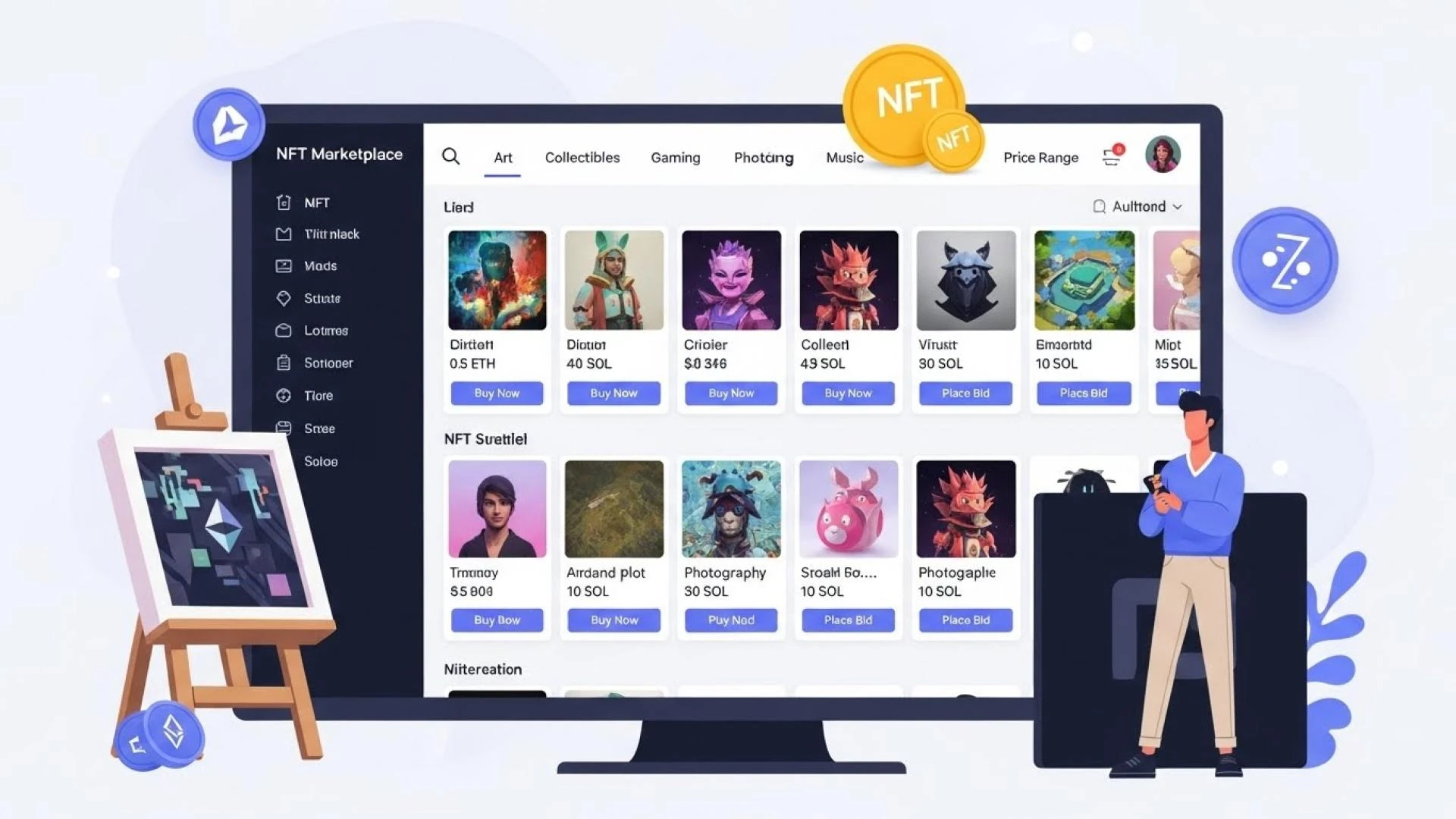

A white label NFT marketplace is far more than a digital storefront for tokenized assets. Its performance, reliability, and scalability depend heavily on the underlying technology stack that powers every interaction. From blockchain selection and smart contract execution to backend processing, frontend responsiveness, and infrastructure resilience, each layer plays a critical role in delivering a seamless experience. Businesses entering the NFT ecosystem must prioritize technical architecture to ensure secure transactions, uninterrupted operations, and long-term scalability. This blog explores how a well-structured tech stack enables high-performance outcomes in white label NFT marketplaces.
Blockchain Infrastructure as the Core of NFT Marketplace Performance
Blockchain infrastructure serves as the operational foundation of an NFT marketplace, governing asset creation, ownership verification, and transaction execution. The choice of blockchain directly affects transaction speed, network congestion, interoperability, and operational costs. A high-performance marketplace requires a blockchain environment capable of handling large transaction volumes while maintaining decentralization and security. Proper configuration ensures consistent performance, transparent asset tracking, and trust among users, making blockchain infrastructure a strategic decision rather than a technical afterthought.
- Blockchain Network Selection
Choosing the right blockchain impacts transaction throughput, confirmation time, and fee efficiency. Networks with scalability solutions help reduce congestion during high-demand events. Compatibility with smart contracts ensures feature flexibility. A well-aligned network supports long-term marketplace growth. - Transaction Validation Mechanisms
Efficient validation processes ensure transactions are processed accurately and securely. Faster validation improves user experience without compromising integrity. Optimized consensus models reduce delays during peak usage. Reliability in validation strengthens marketplace credibility. - Decentralized Asset Ownership
Blockchain ensures transparent and immutable ownership records. Users can verify authenticity without reliance on centralized authorities. This transparency builds trust among buyers and sellers. Clear ownership tracking supports marketplace legitimacy. - Interoperability Capabilities
Cross-chain compatibility allows assets to move between ecosystems. This expands user reach and asset utility. Interoperability enhances liquidity and marketplace appeal. It also supports future blockchain integrations.
Smart Contract Architecture for Secure and Automated Operations
Smart contracts automate critical marketplace functions such as minting, transfers, royalties, auctions, and access control. Their architecture determines how efficiently these processes execute without manual intervention. Well-designed smart contracts reduce operational risk, enforce predefined rules, and maintain transactional integrity. Modular and upgrade-friendly contract structures allow marketplaces to evolve without disrupting existing assets. Security-focused development and audit readiness further ensure that automation does not introduce vulnerabilities into the ecosystem.
- Automated Transaction Logic
Smart contracts execute predefined rules without intermediaries. Automation reduces errors and processing delays. Consistent execution ensures fair marketplace operations. This reliability strengthens user confidence. - Royalty and Revenue Distribution
Built-in royalty mechanisms ensure creators receive earnings automatically. Transparent distribution reduces disputes. Customizable royalty models support diverse business strategies. Automation simplifies long-term revenue management. - Upgradeable Contract Design
Modular contracts allow feature enhancements without redeployment. This flexibility supports platform evolution. Updates can be introduced with minimal disruption. Long-term maintainability is improved. - Security and Audit Readiness
Secure coding practices reduce vulnerabilities. Regular audits identify potential risks early. Strong contract security protects digital assets. Trust in automation is preserved.
Backend Technology Stack Supporting Scalability and Speed
The backend layer orchestrates data processing, user management, marketplace logic, and blockchain interactions. A scalable backend ensures that the platform remains responsive even during high-traffic events such as NFT drops or live auctions. Efficient APIs, optimized databases, and distributed service architecture contribute to faster response times and stable performance. When engineered correctly, the backend becomes the silent force that supports growth, minimizes downtime, and enables feature expansion without compromising system reliability.
- API-Driven Architecture
APIs connect frontend interfaces with blockchain and databases. Clean API design improves data flow efficiency. Scalability is enhanced through modular services. Integrations become faster and more reliable. - Database Optimization
Optimized databases handle metadata, user data, and transaction history. Proper indexing ensures quick data retrieval. Performance remains stable as data volume grows. Efficient storage supports long-term scalability. - Microservices Deployment
Independent services reduce system-wide failures. Components scale based on demand. Updates can be deployed without downtime. This architecture improves platform resilience. - Performance Monitoring Tools
Monitoring identifies bottlenecks in real time. Issues are resolved before impacting users. System health is continuously tracked. Reliability remains consistent.
Frontend Frameworks Delivering Seamless User Experiences
Frontend technologies define how users interact with the NFT marketplace and influence engagement, accessibility, and usability. High-performance frontend frameworks ensure smooth navigation, responsive design, and efficient rendering across devices. A well-structured interface simplifies complex blockchain interactions, making NFT trading accessible to a broader audience. Performance optimization techniques such as efficient state management and asset loading help reduce latency, creating a user experience that feels intuitive, fast, and dependable.
- Responsive Interface Design
Interfaces adapt seamlessly across devices. Mobile and desktop users receive consistent experiences. Accessibility standards improve usability. Broader reach is achieved. - Efficient Rendering Techniques
Optimized rendering reduces load times. Users experience faster interactions. Smooth transitions enhance engagement. Performance remains stable under load. - User-Friendly Navigation
Clear navigation simplifies NFT discovery. Intuitive layouts reduce learning curves. New users onboard easily. Engagement levels increase. - Optimized Media Handling
Efficient image and metadata loading improves speed. Reduced latency enhances browsing. Content delivery remains smooth. User satisfaction improves.
Wallet Integration and Payment Systems for Transaction Efficiency
Wallet integration bridges users with blockchain networks, enabling secure authentication and asset ownership verification. Supporting multiple wallets increases accessibility and user confidence while maintaining decentralization principles. Payment systems must handle crypto transactions seamlessly while supporting additional payment options where applicable. Efficient wallet connectivity ensures smooth transaction signing, clear confirmation flows, and transparent status updates. A well-integrated payment layer minimizes friction and strengthens trust throughout the buying and selling process.
- Multi-Wallet Support
Users can connect preferred wallets easily. Flexibility increases platform adoption. Decentralized access is maintained. User onboarding becomes smoother. - Secure Authentication Flow
Wallet-based login eliminates password risks. Private keys remain user-controlled. Security is strengthened. Trust is enhanced. - Transaction Confirmation Transparency
Clear transaction status updates reduce confusion. Users stay informed throughout the process. Failed transactions are easily identified. Confidence improves. - Payment Gateway Compatibility
Support for multiple payment methods broadens reach. Crypto-native and new users are accommodated. Flexibility supports growth. Transactions remain seamless.
Cloud Hosting and Infrastructure for High Availability
Cloud infrastructure ensures that NFT marketplaces remain accessible and performant regardless of traffic fluctuations. Scalable hosting environments support automatic resource allocation during peak demand while maintaining cost efficiency. Load balancing, redundancy, and global content delivery improve uptime and reduce latency for users across regions. Reliable infrastructure planning protects against service disruptions and enables continuous platform availability, which is essential for maintaining user trust and marketplace credibility.
- Scalable Hosting Environments
Resources scale automatically based on demand. Performance remains consistent during spikes. Cost efficiency is maintained. Growth is supported. - Load Balancing Systems
Traffic is distributed evenly across servers. System overload is prevented. Response times improve. Stability is enhanced. - Global Content Delivery
Assets are delivered closer to users. Latency is reduced across regions. Performance feels uniform. Global reach expands. - Infrastructure Redundancy
Backup systems prevent downtime. Failover mechanisms ensure continuity. Service reliability improves. Trust is preserved.
Security Frameworks and Compliance Standards in NFT Marketplaces
Security frameworks protect digital assets, user data, and transactional integrity within NFT marketplaces. Layered security approaches address risks at the smart contract, application, and network levels. Encryption, access controls, and monitoring systems help prevent unauthorized activities. Compliance with regulatory standards supports legitimacy and enterprise adoption. A robust security strategy reassures users that their assets and data are safeguarded, reinforcing confidence in the platform’s long-term viability.
- Smart Contract Security Audits
Audits identify vulnerabilities early. Risk exposure is minimized. Asset safety is improved. Platform trust increases. - Data Encryption Practices
Sensitive data remains protected. Encryption prevents unauthorized access. Privacy standards are upheld. User confidence grows. - Access Control Mechanisms
Role-based access limits internal risks. Permissions are clearly defined. Operational security improves. Breaches are reduced. - Regulatory Compliance Alignment
Compliance supports legal readiness. Enterprise users gain confidence. Platform legitimacy is strengthened. Expansion becomes easier.
Analytics, Monitoring, and Optimization for Sustained Performance
Analytics and monitoring tools provide visibility into marketplace activity, system performance, and user behavior. These insights enable data-driven decisions that improve operational efficiency and user engagement. Continuous monitoring helps identify performance bottlenecks, transaction anomalies, and usage trends. Optimization based on real-time data ensures the platform evolves alongside user expectations. A marketplace that adapts through analytics remains competitive and capable of sustaining long-term growth.
- User Behavior Insights
Interaction data reveals engagement patterns. UX improvements are guided by data. Retention strategies improve. Growth becomes measurable. - Transaction Performance Tracking
Monitoring ensures transaction efficiency. Bottlenecks are identified early. Reliability is maintained. Trust is reinforced. - System Health Monitoring
Resource usage is tracked continuously. Downtime risks are minimized. Performance issues are resolved quickly. Stability improves. - Continuous Optimization Strategy
Data-driven updates enhance functionality. Features evolve with demand. Performance remains competitive. Long-term success is supported.
Conclusion
A high-performance white label NFT marketplace is the result of a carefully aligned technology stack that balances scalability, security, usability, and operational efficiency. Each component from blockchain infrastructure to analytics plays a strategic role in delivering a reliable and future-ready platform. Businesses partnering with a capable white label NFT marketplace development company gain access to proven architectures and technical expertise that reduce risk and accelerate deployment. By investing in the right tech stack, organizations can build NFT marketplaces designed for consistent performance, trust, and sustainable growth.

























Sign in to leave a comment.