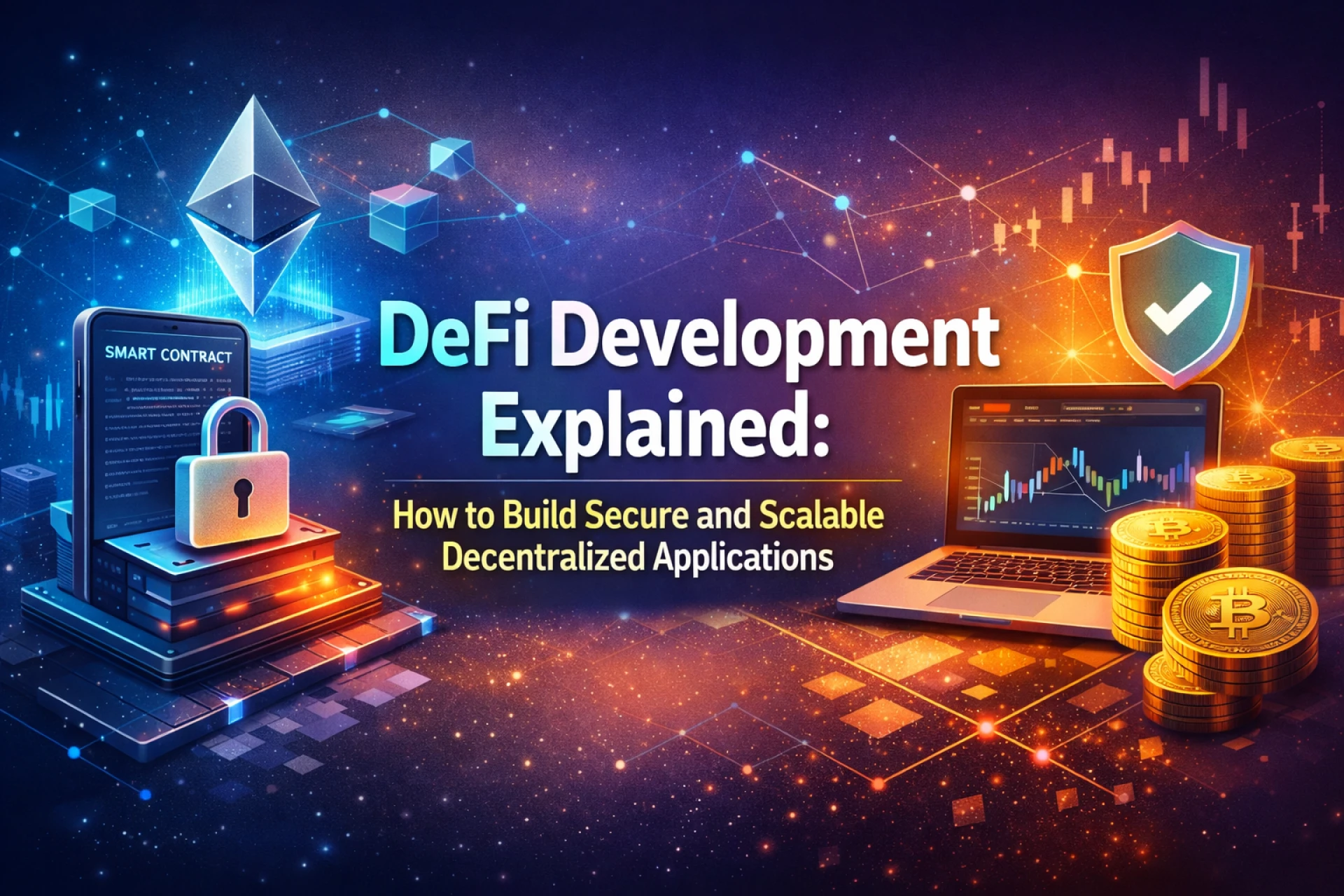

The rise of decentralized finance (DeFi) represents one of the most transformative shifts in the financial sector in recent decades. Unlike traditional finance, which relies on centralized institutions, DeFi leverages blockchain technology to create a trustless, permissionless financial ecosystem. At its core, DeFi removes intermediaries, allowing users to lend, borrow, trade, and earn yield directly through smart contractsautonomous programs that execute predefined rules without human intervention.
Since the launch of Ethereum and the proliferation of smart contracts, the DeFi ecosystem has grown exponentially. According to DeFiLlama, the total value locked (TVL) in DeFi protocols reached over $60 billion in late 2023, spanning lending platforms, decentralized exchanges (DEXs), derivatives markets, and more. This rapid expansion underscores both the opportunities and challenges inherent in building DeFi applications. The potential for financial inclusion, innovation, and efficiency is enormous, but so too is the risk of security vulnerabilities and scalability bottlenecks.
DeFi development is therefore not merely a technical exerciseit is a discipline that demands mastery of blockchain architecture, smart contract engineering, security best practices, and user-centric design. Developers must balance decentralization, performance, and regulatory compliance, all while creating seamless experiences that rival or surpass traditional financial services. In this context, understanding how to build secure and scalable DeFi applications is critical for both startups seeking to enter the space and established institutions exploring blockchain adoption.
Core Principles of DeFi Architecture
A successful DeFi application is underpinned by several architectural principles that distinguish it from traditional financial software. Understanding these principles is crucial for building solutions that are both secure and scalable.
1. Decentralization and Trustlessness
At the heart of DeFi is the concept of trustless interactions. Unlike centralized platforms, where users must trust a bank or brokerage to manage their assets, DeFi protocols rely on codesmart contractsthat automatically enforce rules. This architecture eliminates single points of failure, reduces operational friction, and allows for global participation without geographic or institutional restrictions.
However, achieving genuine decentralization is technically challenging. Network design must consider the consensus mechanism (proof-of-work, proof-of-stake, or hybrid models) and the distribution of nodes to prevent centralization of control. For instance, Ethereum's transition to proof-of-stake via Ethereum 2.0 aims to increase scalability while maintaining decentralization, allowing DeFi developers to build more resilient applications.
2. Composability and Modular Design
DeFi is often described as “money legos”protocols that can be combined, extended, and reused. Composability enables developers to integrate lending platforms with automated market makers (AMMs), or layer their own derivatives and yield-farming mechanisms on existing protocols. This modularity accelerates innovation but requires careful attention to inter-protocol dependencies, as vulnerabilities in one smart contract can propagate across multiple systems.
For example, the Yearn Finance ecosystem leverages composability to optimize yield strategies across multiple DeFi platforms. While this approach has driven significant adoption, it has also exposed systemic risks, as bugs or exploits in underlying protocols can lead to cascading losses. Developers must therefore conduct thorough audits and incorporate fail-safes when designing interconnected systems.
3. Transparency and On-Chain Governance
DeFi’s transparency is both a strength and a responsibility. Smart contracts, by default, are publicly accessible, allowing anyone to verify code and monitor transactions. Many protocols also integrate on-chain governance, where token holders can vote on changes to protocol parameters, fee structures, or upgrades.
While this fosters community involvement and democratizes decision-making, it introduces complexity. Governance models must be carefully structured to prevent manipulation by whales (large token holders) or external actors. Projects like Compound and MakerDAO have pioneered governance token models, demonstrating that decentralized decision-making can function effectively when paired with strong economic incentives and safeguards.
Building Secure Smart Contracts: The Foundation of Trust in DeFi
Security is the cornerstone of any DeFi application. Unlike traditional software, a vulnerability in a smart contract can result in irreversible financial losses, as these contracts often manage millions of dollars in user funds without intermediaries. According to CertiK’s 2023 DeFi Security Report, over $3.8 billion was lost in DeFi hacks in 2022 alone, highlighting the high stakes of insecure development.
Key Security Considerations
- Formal Verification and Auditing
Smart contracts should undergo rigorous auditing by reputable security firms to identify vulnerabilities such as reentrancy attacks, integer overflows, or logic flaws. Beyond audits, some high-value contracts benefit from formal verification, a mathematical approach to proving that code behaves exactly as intended. While more resource-intensive, formal verification significantly reduces the risk of catastrophic failures. - Use of Standardized Libraries and Frameworks
Leveraging trusted libraries such as OpenZeppelin for Ethereum development ensures that contracts implement battle-tested patterns for token standards, access control, and upgradeability. Reusing standardized modules reduces the likelihood of introducing new vulnerabilities, but developers must stay updated, as libraries themselves can evolve or occasionally contain critical bugs. - Access Control and Upgrade Mechanisms
Controlling who can interact with critical functions is essential. Many DeFi projects implement role-based access controls and multi-signature wallets for administrative functions. Upgradeable contractsoften implemented using proxy patternsallow for iterative improvements, but they must be carefully designed to avoid introducing backdoors or centralization risks. - Testing in Simulated Environments
Deploying contracts on testnets and using tools like Hardhat, Truffle, or Ganache enables developers to simulate real-world scenarios, including complex interactions and potential attack vectors. Automated testing for edge cases, stress conditions, and economic exploits is critical before moving to mainnet deployment. - Economic Security and Incentive Alignment
Smart contract security extends beyond code correctness to economic design. Protocols must consider flash loan attacks, oracle manipulation, and front-running. Designing incentive mechanisms that align with honest user behavior, such as time-locked staking or slippage limits, can mitigate exploit risks. The bZx exploit in 2020, which resulted from a flash loan attack, illustrates how economic vulnerabilities can have devastating effects even when the code appears secure.
By adhering to these security principles, developers can build trust in their DeFi applications, which is vital for adoption and long-term sustainability. Security is not a one-time effort but a continuous process of monitoring, testing, and upgrading as the ecosystem evolves.
Scalability Strategies for DeFi Applications
Security ensures that a DeFi application can be trusted, but scalability ensures it can function efficiently under heavy load and accommodate growth. Blockchain networks, particularly Ethereum, have historically struggled with throughput limitations, with gas fees skyrocketing during periods of high demand. Addressing scalability is therefore a core concern for DeFi developers.
Layer 1 Optimizations
While Ethereum remains the dominant DeFi platform, other Layer 1 blockchains such as Solana, Avalanche, and Binance Smart Chain offer higher transaction throughput and lower fees. Optimizing for Layer 1 involves:
- Efficient contract design: Minimizing on-chain storage and computation reduces gas costs and increases transaction efficiency.
- Batch processing: Grouping transactions where possible can reduce network congestion and save costs.
However, Layer 1 scaling alone often cannot keep pace with growing demand, making Layer 2 solutions essential.
Layer 2 Solutions
Layer 2 (L2) protocols process transactions off the main chain while maintaining Ethereum’s security guarantees. Popular solutions include Optimistic Rollups (Optimism, Arbitrum) and ZK-Rollups (zkSync, StarkNet). Benefits include:
- Dramatically reduced transaction fees
- Faster transaction finality
- Increased throughput, enabling applications to handle thousands of users simultaneously
For example, Uniswap V3 on Optimism allows traders to execute swaps with minimal latency and reduced costs, expanding accessibility to retail users who may otherwise be priced out by high Ethereum gas fees.
Cross-Chain and Interoperability Solutions
Scalability also extends to cross-chain interactions, where DeFi applications operate across multiple blockchain networks to leverage liquidity, reduce congestion, and expand user reach. Tools like Cosmos’ IBC protocol and Polygon’s bridges allow tokens and data to move seamlessly between chains. Designing for interoperability introduces additional complexity, requiring secure bridging mechanisms to prevent exploits such as the Ronin Bridge hack of 2022, where $620 million was stolen due to bridge vulnerabilities.
Data Management and Off-Chain Computation
For applications handling complex financial calculations or large datasets, fully on-chain computation can be cost-prohibitive. Developers increasingly adopt hybrid architectures, where critical verification occurs on-chain, but heavy computations are executed off-chain using oracles (e.g., Chainlink) or dedicated computation layers. This approach balances decentralization with performance, enabling sophisticated DeFi products like derivatives trading and automated portfolio management.
Great! Let’s continue with the next two segments, focusing on user experience and adoption in DeFi and real-world case studies with best practices for launching a successful DeFi project. These sections will connect the technical foundations of security and scalability to practical, real-world implementation.
Enhancing User Experience and Driving Adoption in DeFi
While robust architecture, secure smart contracts, and scalable infrastructure are essential, the success of any DeFi application ultimately depends on its ability to attract and retain users. Traditional finance has conditioned users to expect intuitive interfaces, responsive support, and seamless onboarding. DeFi must bridge the gap between cutting-edge blockchain technology and mainstream usability to achieve mass adoption.
Simplifying Onboarding and Wallet Management
One of the primary barriers to DeFi adoption is complex onboarding. Users often must create wallets, manage private keys, acquire native tokens for gas fees, and understand transaction mechanics. Simplifying these processes through integrated wallets, social logins, or meta-transactions can significantly lower the entry barrier.
For example, Argent Wallet eliminates the need for seed phrases with social recovery mechanisms while allowing users to interact with multiple DeFi protocols in one interface. Similarly, platforms that abstract gas fees or allow payments in stablecoins instead of native tokens make the ecosystem more approachable to non-technical users.
Designing Intuitive Interfaces
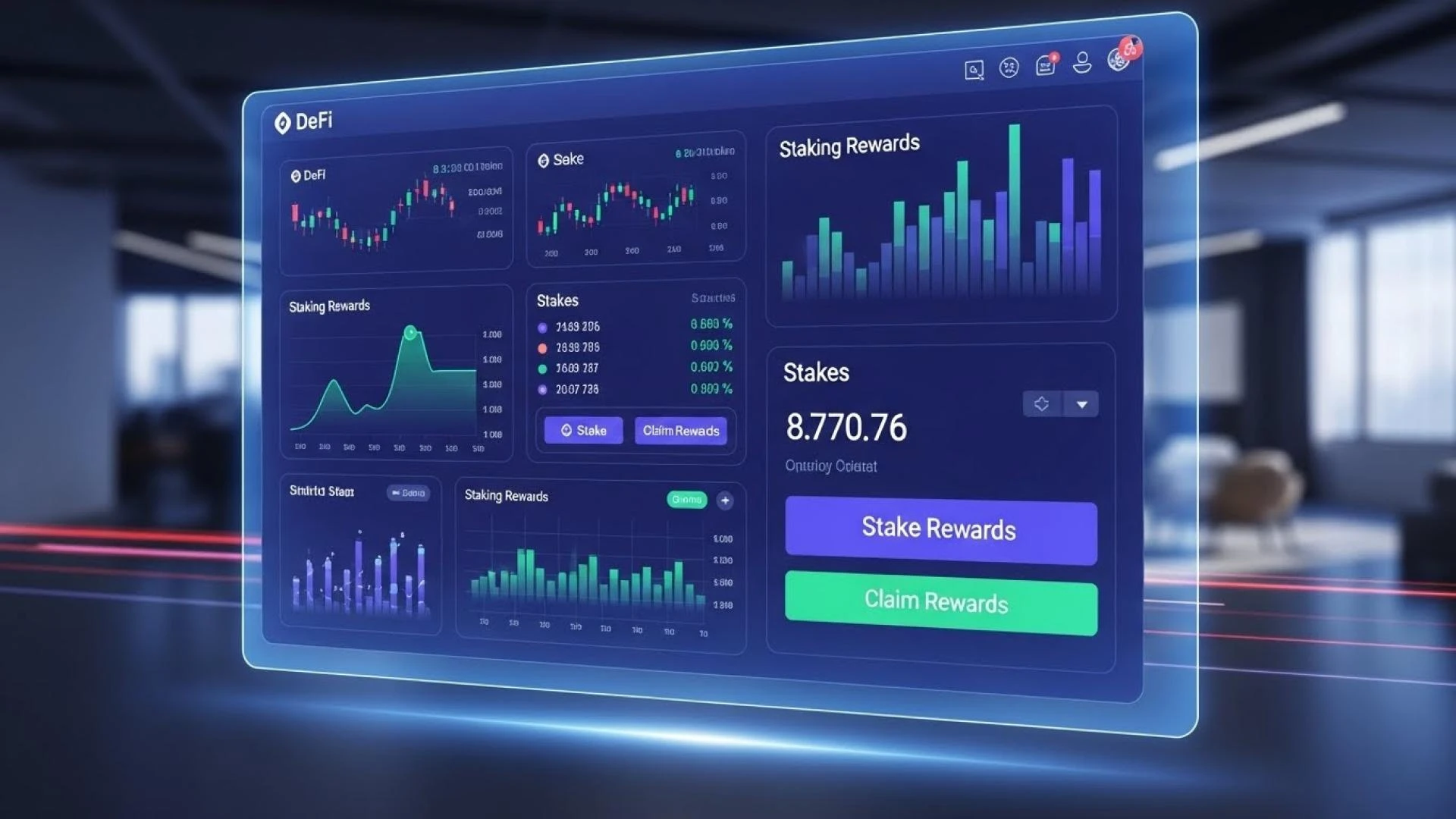
DeFi applications frequently struggle with complex dashboards that display metrics like TVL, APY, liquidity pools, and staking rewards. Presenting this data in an intuitive, visually digestible manner can enhance usability. Interactive analytics, clear explanations of risk, and contextual tooltips improve transparency, helping users make informed decisions without being overwhelmed by technical jargon.
Building Trust Through Transparency and Support
Trust is multifaceted in DeFiit is not only about secure code but also about transparency, responsiveness, and community engagement. Providing accessible documentation, real-time transaction visibility, and clear explanations of smart contract mechanics fosters confidence among users. Active community channels, governance participation, and responsive support teams further reinforce credibility.
Incentivizing Engagement and Retention
Economic incentives remain a core driver of adoption in DeFi. Yield farming, liquidity mining, staking rewards, and referral programs attract users, but these mechanisms must be sustainable to avoid short-term hype cycles. Projects that focus on long-term value creation, such as Compound’s COMP governance token model or Aave’s safety module staking, demonstrate that well-aligned incentives can drive consistent participation while maintaining protocol security and stability.
By prioritizing user experience alongside technical excellence, DeFi platforms can expand their reach beyond crypto-native audiences and move toward mainstream adoption.
Real-World Case Studies and Best Practices for Launching DeFi Projects
Examining successful DeFi protocols provides insight into practical strategies, common pitfalls, and lessons for developers aiming to launch secure and scalable applications.
Case Study 1: Uniswap – Simplicity and Composability
Uniswap, the leading decentralized exchange (DEX) on Ethereum, illustrates the power of simplicity, composability, and liquidity incentives. Its automated market maker (AMM) model replaced traditional order books with liquidity pools, allowing anyone to contribute assets and earn trading fees. Key takeaways include:
- Code simplicity: The core smart contract is relatively small, reducing attack surfaces.
- Composability: Other protocols can integrate Uniswap pools into yield strategies, lending platforms, and derivatives.
- Community-driven governance: UNI token holders participate in protocol decisions, aligning incentives with long-term ecosystem health.
Case Study 2: Aave – Security and Risk Management
Aave demonstrates the importance of robust security practices and risk modeling. As a lending protocol managing billions in assets, Aave incorporates:
- Modular contract architecture: Isolating components for lending, borrowing, and liquidation reduces systemic risk.
- Auditing and formal verification: Extensive audits by top security firms help prevent exploits.
- Economic risk management: Dynamic interest rates, collateralization ratios, and a safety module protect depositors and mitigate protocol insolvency.
Aave’s success emphasizes that careful planning around economic incentives, risk exposure, and security is as important as innovative features.
Case Study 3: Optimism – Layer 2 Scalability in Practice
Optimism, a Layer 2 scaling solution for Ethereum, demonstrates the benefits of integrating scalability solutions early in the development cycle. By leveraging Optimistic Rollups, applications like Uniswap V3 and Synthetix can offer fast, low-cost transactions while maintaining Ethereum’s security. Key lessons include:
- Early adoption of L2 solutions: Improves user experience during periods of high congestion.
- Cross-layer compatibility: Ensures seamless interaction with Layer 1 assets and protocols.
- Community and ecosystem incentives: Encourages developers to build and migrate applications to the L2 environment.
Best Practices for Launching a DeFi Project
From these examples, several actionable best practices emerge:
- Prioritize Security Early: Audits, formal verification, and secure contract patterns are non-negotiable.
- Design for Scalability from Day One: Consider Layer 2 solutions, cross-chain interoperability, and off-chain computation to handle user growth.
- Focus on User Experience: Intuitive interfaces, simplified onboarding, and clear documentation are essential for adoption.
- Align Economic Incentives: Design tokenomics and yield mechanisms that are sustainable and reward long-term participation.
- Engage the Community: Decentralized governance, transparency, and active support build trust and credibility.
- Monitor and Iterate Continuously: DeFi ecosystems evolve rapidly; continuous improvement, upgrades, and security monitoring are critical.
By combining these principles with careful architectural planning and risk-aware design, developers can create DeFi applications that are not only innovative but resilient, scalable, and user-friendly.
Conclusion
Decentralized finance is reshaping global financial systems, and building successful DeFi applications requires a DeFi development company to ensure security, scalability, and user-friendly design. By combining rigorous smart contract audits, Layer 2 scalability solutions, intuitive interfaces, and sustainable economic incentives, developers can create protocols that are secure, efficient, and widely adopted. Real-world examples like Uniswap and Aave demonstrate that careful risk management, composability, and community engagement are key to long-term success. The future of DeFi lies in creating an inclusive, trustworthy ecosystem that empowers users worldwide to engage with finance on their own terms.




















Sign in to leave a comment.