

Cryptocurrency development in 2026 has moved well beyond creating a token and deploying a smart contract. Modern crypto products often combine blockchain networks, smart contracts, wallets, decentralized applications, APIs, security systems, compliance controls, analytics, and conventional backend infrastructure. The development strategy therefore depends heavily on what the product is intended to accomplish.
The market is also becoming more technically diverse. Electric Capital's 2024 Developer Report analyzed 902 million code commits across 1.7 million repositories and found that one in three crypto developers worked across multiple chains. Established developers with at least two years of experience reached an all-time high and accounted for 70% of code commits.
For businesses considering cryptocurrency development in 2026, the important questions are no longer simply how much does a cryptocurrency cost? They include which blockchain should be used, which features are actually necessary, how security will be handled, and how the application will scale after launch.
What Cryptocurrency Development Means in 2026
Cryptocurrency development can refer to several different products. A business might need a simple fungible token, a blockchain-based payment system, a crypto wallet, a DeFi application, a tokenized real-world asset platform, or an entire blockchain network.
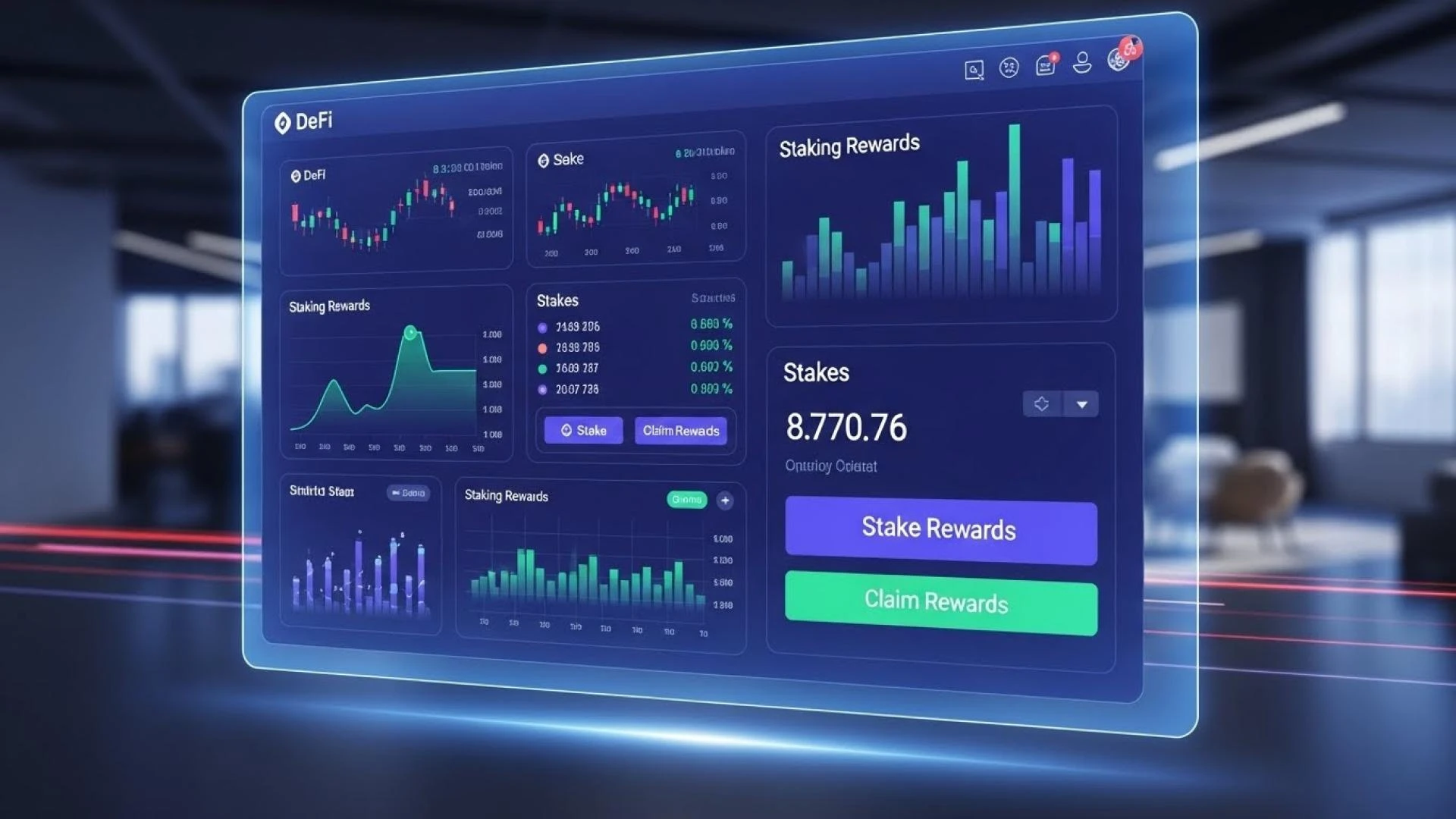
The Complete Cryptocurrency Development Guide begins with understanding that the technical requirements vary considerably between these products. A basic token may require a smart contract, token metadata, deployment, testing, and wallet integration. A DeFi platform can require several interacting contracts for liquidity pools, staking, governance, rewards, price feeds, and transaction management. A cryptocurrency exchange adds another layer involving trading engines, custody, authentication, liquidity, APIs, monitoring, and security.
This distinction is important when estimating development costs. The term "cryptocurrency development" describes a broad category rather than one standardized development project.
Key Features of a Modern Cryptocurrency Project
The feature set should be determined by the product's intended use rather than by adding every available blockchain function.
For a token, developers typically consider supply management, minting and burning, ownership or administrative controls, transfer restrictions where appropriate, metadata, and wallet compatibility. More advanced implementations may require vesting, staking, governance, or automated distribution mechanisms.
Wallet functionality is another major component. A production application may need wallet creation or connection, transaction signing, balance management, token transfers, transaction history, network switching, and security controls. Custodial wallets require considerably more infrastructure because private-key management becomes part of the application's security architecture.
DeFi applications require deeper on-chain functionality. Depending on the product, this may include automated market makers, liquidity pools, staking contracts, lending mechanisms, collateral management, oracle integration, liquidation systems, and governance.
Tokenization is also becoming more sophisticated. Solana's Token Extensions, for example, allow token issuers to add functions such as transfer fees, permanent delegates, pausability, and other controls directly through extensions. Some extensions must be planned when the mint or account is initialized, making architectural decisions particularly important at the beginning of development.
Technology Stack and Blockchain Selection
Blockchain selection is one of the most consequential decisions in cryptocurrency development.
Ethereum remains important because its EVM provides a standardized environment for executing smart contracts across the network. Ethereum's documentation describes the EVM as the decentralized environment responsible for executing code consistently across nodes.
However, Ethereum is not automatically the best choice for every application. Gas costs, transaction volume, user experience, application requirements, and the availability of Layer 2 infrastructure should all influence the decision. Ethereum's own documentation identifies Layer 2 networks as a major approach to improving scalability, transaction costs, and user experience.
Solana represents a different development model. Its architecture uses accounts and programs, with programs functioning as smart contracts while mutable state is stored in accounts. Its documentation also provides development examples using Rust and Anchor.
The technology stack may therefore include:
- Blockchain: Ethereum, an Ethereum Layer 2, Solana, BNB Chain, or another suitable network
- Smart contracts: Solidity, Rust, or chain-specific frameworks
- Frontend: React, Next.js, Vue, or similar frameworks
- Backend: Node.js, Go, Java, or other server technologies
- Database: PostgreSQL, MongoDB, Redis, or equivalent infrastructure
- Wallet integration: WalletConnect and chain-specific wallet providers
- Infrastructure: RPC providers, indexing systems, cloud services, monitoring, and analytics
The correct stack is the one that supports the product's transaction model, security requirements, expected activity, and future expansion.
Cryptocurrency Development Cost in 2026
There is no single fixed cryptocurrency development price because the scope can vary from a small token deployment to a complex financial platform.
A rough market-oriented estimate can be divided into several categories:
| Project Type | Approximate Development Cost |
|---|---|
| Basic cryptocurrency/token | $5,000–$15,000 |
| Advanced token with custom features | $15,000–$40,000 |
| Crypto wallet | $20,000–$60,000+ |
| DeFi application | $40,000–$120,000+ |
| Crypto exchange platform | $60,000–$200,000+ |
| Custom blockchain network | $100,000–$300,000+ |
These figures are indicative rather than universal quotations. Development location, team expertise, security requirements, blockchain choice, integrations, UI complexity, regulatory requirements, and post-launch support can substantially change the final budget.
Security deserves particular attention because it should not be treated as an optional add-on. Ethereum's documentation notes that smart-contract deployment itself consumes ETH because the compiled contract code must be stored on-chain, while more complex contracts can require significantly more gas.
Similarly, Solana's current fee structure consists of a base fee plus an optional prioritization fee. Its documentation lists a base fee of 5,000 lamports per signature, with priority fees determined by compute-unit pricing.
Therefore, development budgets should account for both initial development costs and ongoing blockchain operating costs.
The Cryptocurrency Development Process
A reliable development process begins with product definition rather than coding.
1. Business and Technical Planning
The first stage establishes the product's purpose, target users, supported assets, transaction model, revenue structure, blockchain requirements, and technical constraints. Developers then convert these requirements into a technical architecture.
This stage prevents a common mistake: choosing a blockchain first and attempting to force the product into its architecture afterward.
2. Blockchain and Token Architecture
The development team selects the network and determines how assets, transactions, permissions, and application logic will work.
For a token project, this can include supply, decimals, minting authority, burning rules, ownership controls, vesting, and distribution mechanisms. For a DeFi application, the architecture may involve multiple smart contracts and external data sources.
3. Smart Contract Development
Smart contracts are then written and tested according to the selected architecture. Developers should consider access control, input validation, reentrancy protection, arithmetic behavior, upgrade mechanisms, emergency controls, and interactions with external contracts.
On Solana, programs can interact with token functionality through Cross-Program Invocations, allowing one program to call instructions in another program. (Solana)
4. Frontend, Backend, and Wallet Integration
The blockchain is only one part of a usable cryptocurrency product. The frontend provides the user interface, while backend services may handle indexing, notifications, authentication, analytics, transaction tracking, and off-chain data.
Wallet integration connects users to the blockchain and enables transaction signing without exposing private keys to the application.
5. Testing and Security Audits
Testing should cover both normal and abnormal behavior. Developers need to test failed transactions, unauthorized access, unexpected inputs, contract interactions, high transaction volumes, and edge cases.
Independent smart-contract auditing is particularly valuable for applications that hold user assets. A functional contract is not necessarily a secure contract.
6. Deployment and Post-Launch Monitoring
After testing, contracts are deployed to the production network and the application is connected to the appropriate infrastructure. Monitoring then becomes an ongoing responsibility.
Developers should track contract activity, failed transactions, unusual behavior, infrastructure performance, wallet interactions, and security events. Cryptocurrency products require maintenance because blockchain networks, libraries, wallets, and external protocols continue to evolve.
Security Should Influence the Architecture From Day One
Security is one of the biggest differences between ordinary software development and cryptocurrency development.
A conventional application can often correct a database error through an administrative operation. Blockchain transactions and smart-contract state changes can be difficult or impossible to reverse. Poor access controls or flawed contract logic can therefore have direct financial consequences.
Security measures should include secure key management, role separation, multisignature administration where appropriate, contract testing, dependency reviews, monitoring, and independent audits for higher-risk systems.
The objective should not simply be to make a cryptocurrency application work. It should be to make its behavior predictable under normal conditions and resistant to unexpected or malicious activity.
What Will Matter Most in Cryptocurrency Development in 2026?
The strongest cryptocurrency projects are increasingly defined by utility, infrastructure quality, security, and user experience rather than token creation alone.
Multi-chain development is one important trend. Electric Capital reported that one in three crypto developers worked across multiple chains in 2024, demonstrating how development is increasingly distributed across ecosystems.
Tokenization is another important area. Solana's current tokenization documentation, for example, highlights Token-2022 extensions that can support controls such as transfer restrictions, pausability, confidential transfers, and permanent delegates.
At the same time, application designers are placing greater emphasis on reducing blockchain complexity for users. Fee abstraction on Solana illustrates this direction by allowing another account to sponsor transaction fees rather than requiring users to maintain SOL specifically for transaction costs.
These developments point toward a broader shift: users increasingly expect blockchain functionality to work like ordinary digital infrastructure. The technology can remain complex behind the scenes while the product interface becomes simpler.
Conclusion
Cryptocurrency development in 2026 requires a clear understanding of blockchain architecture, smart contracts, security, scalability, user experience, and long-term maintenance. The right approach starts with defining the product's purpose, selecting suitable technologies, prioritizing essential features, and following a structured development and testing process. As blockchain applications continue to support tokens, DeFi platforms, wallets, exchanges, and tokenized assets, businesses need development strategies that balance functionality with security and performance. Blockchain App Factory provides Cryptocurrency Development solutions designed to support different blockchain use cases, from token creation and smart contract development to advanced cryptocurrency platforms and blockchain-based applications.
























Sign in to leave a comment.