

Revenue management in healthcare has never been static — but 2026 represents something qualitatively different from previous years. Three structural forces are converging simultaneously: payers deploying AI to automate denial decisions at scale, patients carrying more financial responsibility than at any point in the history of employer-sponsored insurance, and value-based reimbursement reaching a tipping point where quality metrics directly determine revenue in ways that fee-for-service models never required. Nearly two-thirds of RCM leaders identified denials and underpayments as their single largest barrier to revenue growth in 2026 — and 66% named automated denial follow-up and resolution as the most important AI capability for their strategy this year. The global AI in healthcare revenue cycle management market is projected to expand from USD 25.7 billion in 2025 to approximately USD 180.33 billion by 2034, at a CAGR of 24.20%. The organizations that understand the six changes driving that market and responding with the right technology infrastructure will separate themselves from those still managing 2026's revenue challenges with 2019's tools.
Payer Behavior Has Become the Biggest Variable in Healthcare Revenue Performance
How Payers Are Using AI to Automate Denial Decisions — and Why Providers Without Matching Technology Are Losing
A 2025 survey by the National Association of Insurance Commissioners found that 71% of health insurers admitted to using AI for utilization management — meaning for prior authorization and concurrent authorization processes. From 2022 to 2024, denials triggered by requests for information increased by 9%, and some AI-driven insurer denial systems are alleged to drive automatic denials of between 50% and 75% of decisions with limited human review. The result is an asymmetry that is reshaping revenue management in healthcare: payers are bringing AI-powered denial engines to a fight that most provider-side billing teams are still approaching manual workflows and rule-based alert systems.
Despite 67% of providers believing AI can improve the claims process, only 14% have implemented AI tools — a gap that represents both the scale of the current exposure and the magnitude of the competitive advantage available to organizations that close it first. The arms race is real, and the side that wins it will be determined by which organizations build AI-powered pre-submission validation, predictive denial intelligence, and automated appeal generation before the gap becomes insurmountable.
How Leading Providers Are Fighting Back with Predictive Claims Validation
AI-driven platforms can now review clinical documentation in real time to flag missing elements, suggest proper coding, and ensure prior authorization requirements are met before a claim is submitted. Predictive analytics models trained on historical claims data can identify which claims are most likely to be denied and why — allowing staff to intervene proactively before a claim enters the submission queue. The results are measurable: Care New England, working with an AI vendor on prior authorization automation, achieved an 83% clean submission rate, reduced authorization turnaround times by 80%, decreased time spent on prior authorizations by 2,841 hours, and saved $644,000 in avoided write-offs within one year of deployment.
Prior Authorization in 2026 — How the CMS Mandate Is Rewiring Revenue Management
The CMS Interoperability and Prior Authorization Final Rule, operational from January 1, 2026, now requires impacted payers to respond to expedited authorization requests within 72 hours and standard requests within seven calendar days. CMS projects that this regulatory shift — combined with electronic processing requirements — will save approximately $15 billion over ten years by reducing administrative inefficiency across the prior authorization process. For providers, the mandate is simultaneously a compliance deadline and a strategic opportunity: organizations that deploy FHIR R4-compatible prior authorization systems will capture faster approvals and lower denial rates, while those still managing authorization manually will face growing payer leverage and audit exposure.
Patient Financial Responsibility Has Become Healthcare's Largest Unmanaged Revenue Risk
The Collections Crisis That Revenue Management Technology Must Now Solve
The patient financial responsibility environment in 2026 is the most demanding in the history of commercial insurance. ACA Marketplace bronze plan average deductibles have reached $7,476 in 2026, and catastrophic plans carry deductibles equal to the out-of-pocket maximum — $10,600 for an individual or $21,200 for a family. For employer-sponsored plans, the average annual deductible for single coverage reached $1,886 in 2025 — a 43% increase over the past decade — with nearly half of employer-sponsored plans now carrying out-of-pocket maximums above $5,000.
The collection consequences are direct. Patient collections are now the primary revenue concern for 71% of providers, with average collection times exceeding 30 days for most patient balances. Patients who owe more are slower to pay — not because they are unwilling, but because they are confused, surprised, and financially constrained. Revenue management in healthcare cannot treat patient collections as an afterthought when patients now represent the fastest-growing component of provider revenue exposure.
How Patient-Facing Revenue Management Platforms Are Reversing the Collections Decline
The evidence on what moves collection rates is consistent: financial clarity before service, digital payment options that meet patients where they are, and flexible payment plans that remove the all-or-nothing dynamic that causes patients to avoid their bills entirely. 62% of consumers now prefer to pay medical bills online — yet most practices still rely on paper statements and phone-based follow-up as their primary collection strategy. Revenue management platforms that provide real-time cost estimates at scheduling, collect patient portions at or before the point of service, and offer digital payment portals with self-service payment plan enrollment are generating collection rate improvements that manual billing processes structurally cannot match.
Personalized Payment Plans, Digital Billing, and Self-Service Portals — The Features That Drive Results
The patient financial experience is now a revenue management variable, not a patient satisfaction afterthought. Providers that present accurate cost estimates upfront, communicate balances clearly in patient-friendly language, and offer multiple payment pathways — online portals, text-to-pay, automated payment plans — are recovering significantly higher percentages of patient responsibility than those still issuing paper statements weeks after service. The technology to deliver this experience exists. The revenue management gap it closes is measurable in weeks in AR and percentage points in net collection rate.
Value-Based Care Is Rewriting the Rules of Revenue Management Performance
How STAR Ratings, HEDIS Scores, and Bundled Payment Performance Translate Directly Into Revenue
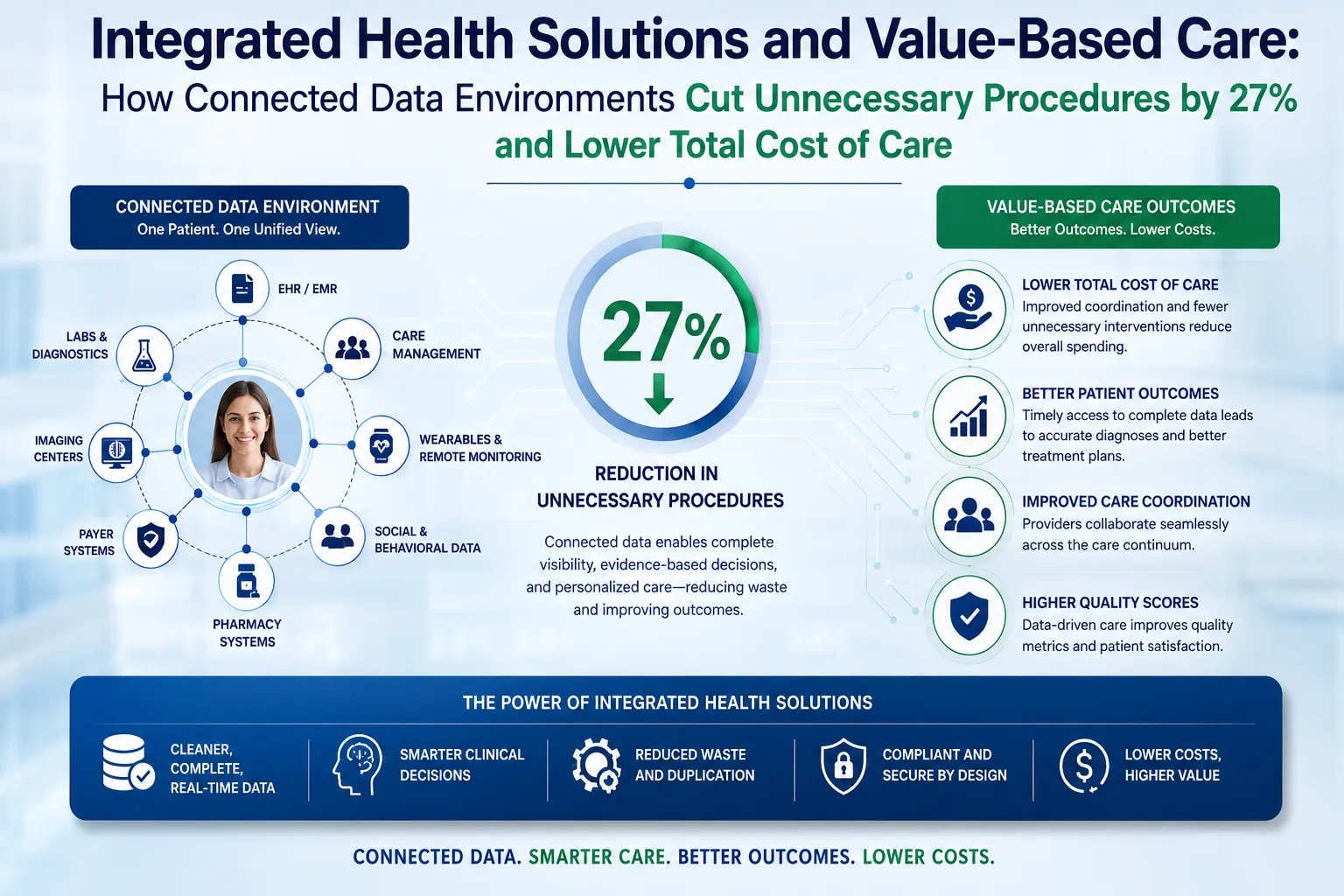
Over 235 million Americans are currently enrolled in plans that report HEDIS results, and HEDIS scores drive quality ratings, reimbursement, and public reporting. High HEDIS scores trigger higher reimbursements and quality bonuses, while even a one-star drop in Medicare Star Rating can cost plans hundreds of millions in lost bonuses. ACOs share in savings only if they achieve both cost and quality benchmarks. More than 50% of U.S. healthcare payments now depend on value-based care models. In 2024, 92% of payers and 81% of providers reported contract growth in VBC arrangements — and organizations expect revenue to shift further toward value-based reimbursement in 2026.
The financial stakes are concrete. One ACO using a predictive analytics-driven VBC platform reduced emergency department overutilization within six months, improved HEDIS quality scores, reached the top 5% of Medicare Shared Savings Program ACOs nationally, and generated $34 million in shared savings. Revenue management in a value-based environment is not just about clean claims — it is about population health performance, care gap closure, and chronic disease management at scale.
Risk Adjustment and Population Health Analytics — What Separates High-Performing ACOs
Predictive analytics allows health organizations to move from reactive care to proactive prevention — by analyzing EHR, claims, labs, and sociodemographic data, a predictive model can flag which patients are likely to develop complications or require hospitalization before those events occur. For HEDIS specifically, predictive models can identify patients most likely to miss preventive services — asthma patients skipping annual pulmonary visits, diabetics overdue for eye exams — enabling care managers to prioritize outreach that closes gaps and improves scores. Risk adjustment accuracy under HCC models is equally consequential: incomplete coding under CMS's V28 model is already reducing shared savings potential for ACOs and Medicare Advantage plans that haven't invested in AI-assisted risk capture.
Building Revenue Management Infrastructure That Performs Under Both Payment Models
The practical challenge facing most healthcare organizations in 2026 is not choosing between fee-for-service and value-based care — it is managing revenue performance under both simultaneously, often with different payers, different contract structures, and different quality metric requirements operating in parallel. The revenue management infrastructure that serves both environments requires real-time eligibility and authorization capability for FFS encounter-based billing, integrated quality measure tracking and care gap automation for VBC performance, and predictive analytics that can model revenue risk and opportunity across both payment streams from a single data environment. Organizations that build that infrastructure now will not need to retrofit their revenue management in healthcare architecture when value-based contract penetration reaches the tipping point their current FFS-weighted models are still treating as a future concern.




























Sign in to leave a comment.