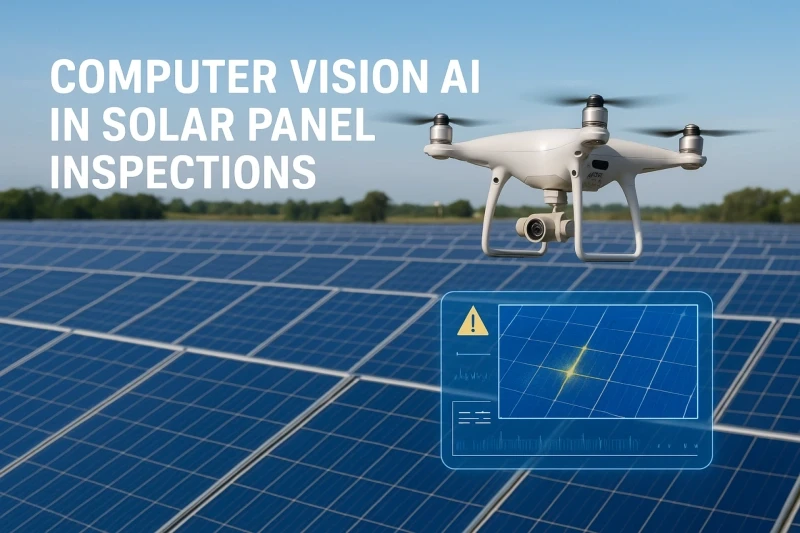

Global energy generated by solar power systems has emerged as a cornerstone of sustainable energy worldwide. The solar energy sector is rapidly evolving, with the maintenance of large-scale solar farms and optimization of infrastructure becoming increasingly critical. Traditionally, manual inspections of solar panels involved labor-intensive, time-consuming tasks that exposed workers to potential hazards and often resulted in inconsistent data due to human error. Additionally, environmental conditions, accessibility challenges, and defects caused by weather elements such as discoloration, microcracks, and extreme temperatures posed significant obstacles.
With the introduction of computer vision AI in solar panel inspections, solar farm operators now have access to precise, efficient, and safer inspection methods. AI-powered drones are at the forefront of this transformation, combining advanced imaging technology with intelligent analytics to identify defects, predict failures, and enhance overall operational efficiency.
The Challenges of Manual Solar Panel Inspections
Before understanding the benefits of AI-powered drones, it is crucial to examine why traditional inspection methods fall short:
1. Time-Intensive Process
Manual inspections require workers to visually examine each solar panel and record data, often taking days for large-scale farms. The extended timelines slow down maintenance and energy optimization.
2. Safety Risks
Inspecting solar panels on rooftops or elevated structures exposes workers to risks, including falls, electrical shocks, and extreme weather conditions.
3. Inconsistent Data Accuracy
Human inspections are prone to errors due to subjective judgment, lighting conditions, and varying experience levels. This variability can affect maintenance decisions and overall farm efficiency.
4. Labor-Intensive Nature
Manual inspections demand highly skilled personnel to identify panel issues, making the process costly and less scalable.
5. Environmental Limitations
Rain, extreme heat, or high humidity can delay inspections and compromise data quality, impacting solar farm operations.
6. Accessibility Challenges
Certain panels are located in difficult-to-reach areas, making thorough inspections challenging without specialized equipment.
How Computer Vision AI Enhances Solar Panel Inspections
AI-powered drones, integrated with AI Video analytics software, revolutionize the inspection process. These drones capture high-resolution images and videos of solar panels, while Vision AI algorithms analyze the data in real-time to detect anomalies with unprecedented precision.
Key advantages include:
1. Real-Time Defect Detection
Computer vision models can identify microcracks, hotspots, dirt accumulation, and wiring faults, providing instant insights into panel health.
2. Predictive Maintenance
AI systems analyze historical trends to forecast potential failures, allowing proactive maintenance that reduces downtime and operational costs.
3. Classification and Analysis
Deep learning algorithms classify defects based on severity, helping prioritize repairs and streamline maintenance schedules.
4. Automated Reporting
AI-powered drones generate detailed reports highlighting areas requiring attention, simplifying decision-making for solar farm operators.
5. Seamless Integration
The data collected by drones can integrate with broader maintenance systems, enabling automated scheduling of repairs and replacements.
Major Limitations in Solar Panels Detected by AI-Powered Drones
AI-powered drones address several critical challenges faced by solar farms:
- Humidity & Moisture Damage: Drones identify areas with high moisture content that may lead to corrosion or electrical faults.
- Dust Accumulation: High-resolution cameras detect dust and pollution buildup that can lower energy efficiency.
- Storm Damage: Drones quickly evaluate debris impact, cracks, and structural damage caused by extreme weather.
- Animal Interference: AI identifies scratches or bites caused by animals, ensuring timely corrective action.
- Defective Bypass Diodes: AI systems detect wiring faults and malfunctioning diodes, preventing electrical inefficiencies.
By autonomously detecting these issues, AI drones ensure timely interventions, minimizing energy loss and maintenance costs.
The AI Drone Inspection Process
The process followed by computer vision AI drones is systematic and precise:
- Capturing Images & Footage: Drones equipped with high-resolution cameras capture comprehensive visual data of solar panels across large areas.
- Data Gathering: Images and videos are processed to scan for defects such as cracks, hotspots, or dirt accumulation using computer vision algorithms.
- Defect Detection: AI models analyze patterns, edges, and textures to identify anomalies invisible to the naked eye.
- Classification & Analysis: Deep learning algorithms categorize defects and determine their severity, facilitating precise maintenance planning.
- Predictive Maintenance: Pattern recognition allows AI systems to forecast future issues, increasing panel lifespan and energy efficiency.
- Automated Reporting: Comprehensive reports generated by AI assist operators in prioritizing repairs and reducing downtime.
- Maintenance Integration: Data can feed directly into maintenance workflows, enabling automated scheduling and optimized resource allocation.
Real-Time Insights for Smarter Decisions
The combination of drones and Vision AI goes beyond defect detection. Operators gain actionable insights for real-time decision-making, including prioritizing repairs, scheduling predictive maintenance, and optimizing energy output. AI algorithms have become a crucial driver of digital transformation in the solar energy sector.
Why AI-Powered Drones Are Game-Changers
Compared to traditional manual inspections, AI-powered drones offer:
- Speed & Efficiency: Cover hundreds of acres within minutes.
- Accuracy: Detect hidden anomalies that manual inspections may overlook.
- Cost Savings: Reduce labor costs and avoid expensive panel replacements.
- Safety: Eliminate risks associated with manual inspections in hazardous environments.
- Scalability: Ideal for both rooftop installations and expansive solar farms.
The Future of Solar Panel Inspections
Integrating computer vision AI in solar panel inspections ushers in a new era of precision, cost-effectiveness, and data-driven decision-making. By leveraging AI-powered drones, solar farm operators can improve energy production efficiency, extend panel lifespan, and strengthen the resilience of energy infrastructure.
The fusion of drone agility and AI precision not only enhances inspection accuracy but also introduces predictive maintenance, preventing future defects and minimizing operational downtime.
Final Thoughts
The adoption of AI-powered drone inspections marks a pivotal shift in solar energy management. By combining the intelligence of computer vision with the speed of drones, operators gain unmatched efficiency, safety, and predictive insights.
Are you ready to harness the power of AI-powered drone inspections to boost your solar energy efficiency? Contact Nextbrain today to explore how our advanced solutions can help reduce costs, enhance performance, and contribute to a greener future.
FAQs
1. What is Vision AI drone-powered solar panel inspection?
Drones equipped with computer vision AI and AI Video analytics software scan solar farms to detect defects and anomalies in real-time.
2. What types of defects can Vision AI drones detect?
Hotspots, micro-cracks, dirt accumulation, wiring faults, thermal anomalies, and weather-related damages can all be identified efficiently.
3. Are drone inspections cost-effective?
Yes. AI-powered drones reduce labor costs, prevent expensive panel replacements, and improve overall energy output.
4. Why are AI drones preferred over traditional inspections?
They provide faster coverage, higher accuracy, cost savings, and safer inspections compared to manual processes.
5. What is the future of Vision AI in solar energy?
AI-powered computer vision, predictive analytics, and automation are transforming solar farm operations, ensuring maximum efficiency and minimal downtime.























Sign in to leave a comment.