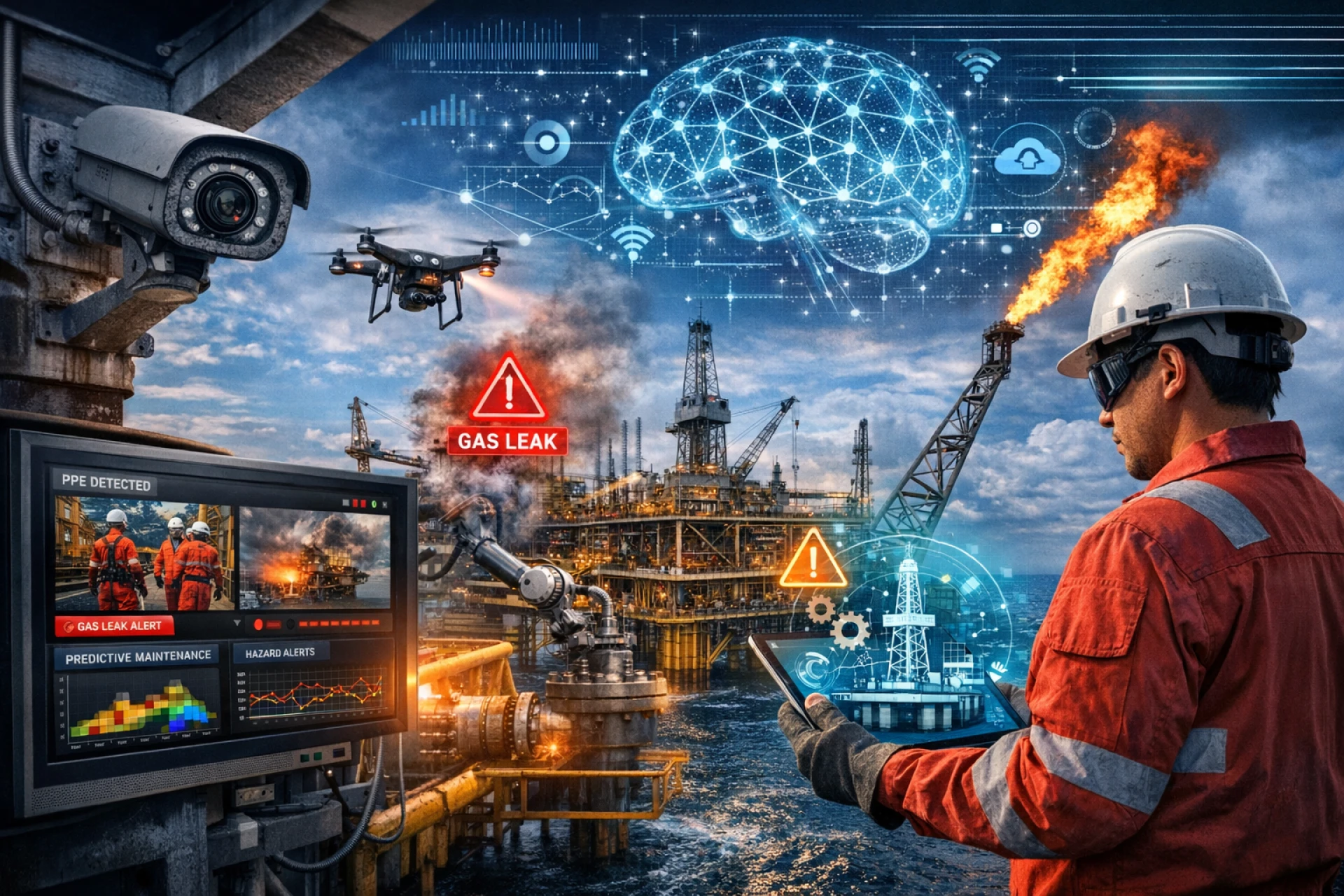

Offshore oil and gas operations are among the most complex and high-risk industrial environments in the world. Oil rigs operate under extreme conditions—harsh weather, remote locations, high-pressure systems, and heavy machinery—all of which pose significant safety challenges for workers and operators. From drilling systems and pumping equipment to pipelines and control mechanisms, every component must function with precision to avoid accidents, environmental damage, and costly downtime.
Despite strict safety regulations, oil rig workers continue to face risks related to equipment malfunctions, drilling anomalies, gas leaks, fires, and human error. According to data from the U.S. Bureau of Labor Statistics, the fatality rate in oil and gas extraction remains significantly higher than the average across all industries. This highlights the urgent need for advanced safety monitoring and risk mitigation technologies.
In this context, computer vision in the oil & gas industry is emerging as a game-changing solution. Powered by artificial intelligence, video analytics, and real-time data processing, computer vision is redefining how oil rigs monitor safety, maintain equipment, and ensure regulatory compliance.
This article explores how computer vision is improving oil rig safety—from real-time monitoring and predictive maintenance to automated hazard detection—helping operators create safer and more efficient offshore operations.
How Do Oil Rigs Operate?
Oil rigs are sophisticated engineering structures designed to extract oil and gas from deep beneath the Earth’s surface. At the core of every oil rig is a precision-engineered drilling system supported by multiple subsystems working together continuously.
One of the most critical processes is mud circulation, where specially formulated drilling fluid cools the drill bit, stabilizes the wellbore, and transports rock cuttings to the surface. Oil rigs also rely on extensive pipeline networks to regulate pressure, manage fluid flow, and ensure operational stability.
Managing these complex systems requires skilled workers and strict adherence to safety protocols. Any failure—whether due to equipment wear, pressure imbalance, or human oversight, can result in catastrophic incidents such as blowouts, fires, or environmental spills. This is why continuous, real-time monitoring using AI and computer vision is becoming essential for modern oil rig safety.
Core Benefits of Computer Vision Systems in Oil Rig Monitoring
1. Predictive Maintenance and Data-Driven Insights
Predictive maintenance is one of the most impactful applications of computer vision in oil rig operations. AI-powered vision systems analyze live video feeds to identify early signs of equipment degradation, such as corrosion, abnormal vibrations, leaks, or structural wear.
By combining visual data with analytics, these systems can:
- Predict potential equipment failures before they occur
- Schedule maintenance proactively rather than reactively
- Reduce unplanned downtime and costly shutdowns
- Extend the lifespan of critical assets
Advanced AI models, including supervised learning, anomaly detection, and recurrent neural networks, enable operators to make informed, data-driven decisions that improve reliability and operational continuity.
2. Strengthening Worker Safety Through Continuous Monitoring
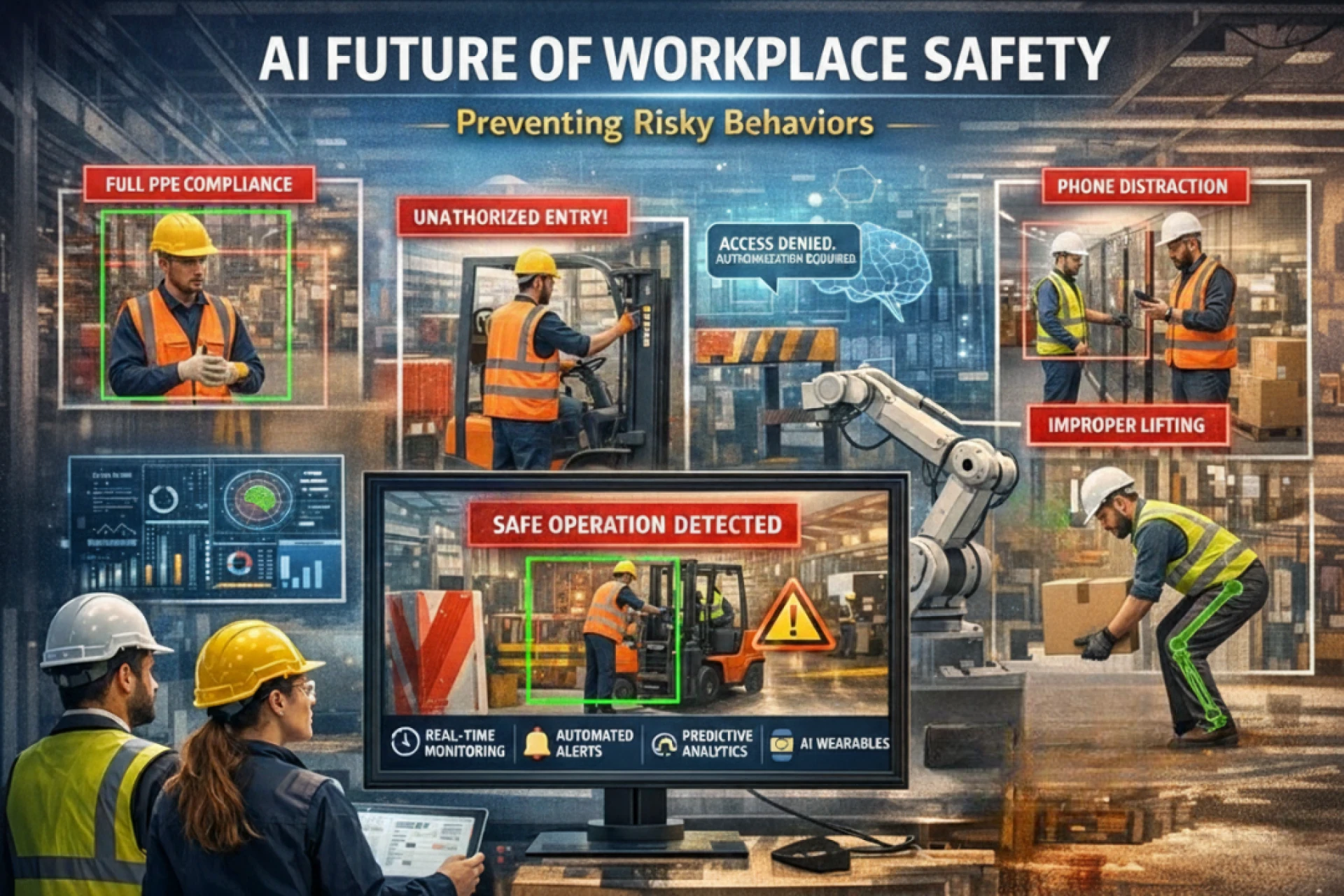
Oil rigs expose workers to hazardous materials, high-pressure systems, and moving machinery around the clock. Computer vision powered by AI significantly enhances worker safety by continuously monitoring activities and identifying unsafe conditions in real time.
Key safety capabilities include:
- Automatic detection of PPE compliance violations
- Monitoring unsafe worker behavior or restricted-zone entry
- Identifying slips, falls, or abnormal postures
- Real-time alerts to supervisors for immediate intervention
By reinforcing safety protocols automatically, computer vision helps reduce human error and ensures consistent compliance across offshore installations.
3. Integration with IoT Devices for Smarter Operations
When computer vision is integrated with IoT sensors, oil rig operations become far more intelligent and responsive. IoT devices collect data related to temperature, pressure, vibration, and equipment performance, while vision systems provide visual confirmation and contextual analysis.
This integration enables:
- Condition-based maintenance instead of scheduled maintenance
- Faster identification of root causes during anomalies
- Improved coordination between systems and teams
Together, AI, computer vision, and IoT create a connected safety ecosystem that empowers smarter, faster decision-making.
4. Advanced Hazard Detection Using Drones and Vision AI
Hazard detection is critical in offshore environments where certain areas are difficult or dangerous for human inspection. Vision AI-powered drones are increasingly being used to inspect oil rigs, pipelines, flare stacks, and underwater structures.
These systems can:
- Detect gas leaks, fires, and smoke in real time
- Inspect confined or high-risk areas safely
- Monitor structural integrity and corrosion
- Enable rapid response before minor issues escalate
By reducing the need for manual inspections, drone-based computer vision significantly improves safety while lowering inspection costs.
5. Automated Maintenance Scheduling
Computer vision systems do more than detect problems—they help automate responses. When visual analytics identify early signs of wear or malfunction, the system can automatically trigger maintenance alerts and schedule inspections.
This automation:
- Prevents unnecessary or premature repairs
- Ensures timely interventions when needed
- Improves equipment uptime and reliability
Automated maintenance scheduling ensures oil rigs operate efficiently without compromising safety.
Nextbrain: Advancing Oil Rig Safety with Computer Vision AI
At Nextbrain, a leading AI development company, we specialize in delivering advanced computer vision and artificial intelligence solutions tailored for high-risk industries such as oil and gas. Our intelligent safety monitoring systems are designed to enhance oil rig operations through real-time insights, predictive analytics, and automated alerts.
How Nextbrain supports oil rig safety:
- Real-time hazard detection for fires, gas leaks, and unsafe behavior
- AI-powered predictive maintenance to reduce downtime
- PPE compliance monitoring and restricted-area detection
- Integration with IoT devices and operational systems
- Actionable dashboards and real-time alerts for faster decision-making
By combining AI, computer vision, and advanced analytics, Nextbrain helps oil and gas companies build safer, smarter, and more resilient offshore operations.
Final Thoughts
The integration of AI-powered computer vision in oil rig operations marks a significant advancement in offshore safety and efficiency. From predictive maintenance and worker monitoring to automated hazard detection and drone inspections, computer vision is transforming how risks are identified and managed.
As offshore operations grow more complex, adopting intelligent safety systems is no longer optional, it is essential. Computer vision enables a proactive safety culture that minimizes risks, optimizes performance, and protects both workers and assets.
Get in touch with Nextbrain’s specialists today to learn how AI-driven computer vision can elevate oil rig safety and operational excellence.
Frequently Asked Questions (FAQs)
1. What is computer vision in oil rig safety?
Computer vision uses AI-powered cameras and video analytics to monitor operations, detect hazards, and analyze equipment conditions in real time, improving safety and compliance on oil rigs.
2. How does computer vision support predictive maintenance on oil rigs?
It analyzes visual patterns, wear indicators, and equipment behavior to detect early signs of failure, allowing maintenance teams to act proactively and prevent downtime.
3. How does computer vision enable data-driven decision-making?
By collecting and analyzing visual and operational data, computer vision provides insights into safety trends, equipment health, and workforce performance for smarter decisions.
4. What types of alerts can computer vision systems generate?
AI-powered systems can send real-time alerts through dashboards, alarms, and mobile notifications when hazards, PPE violations, or equipment anomalies are detected.
5. How does computer vision help with regulatory compliance?
Automated monitoring ensures adherence to safety protocols, generates audit-ready records, and supports compliance with OSHA and other industry regulations.
























Sign in to leave a comment.