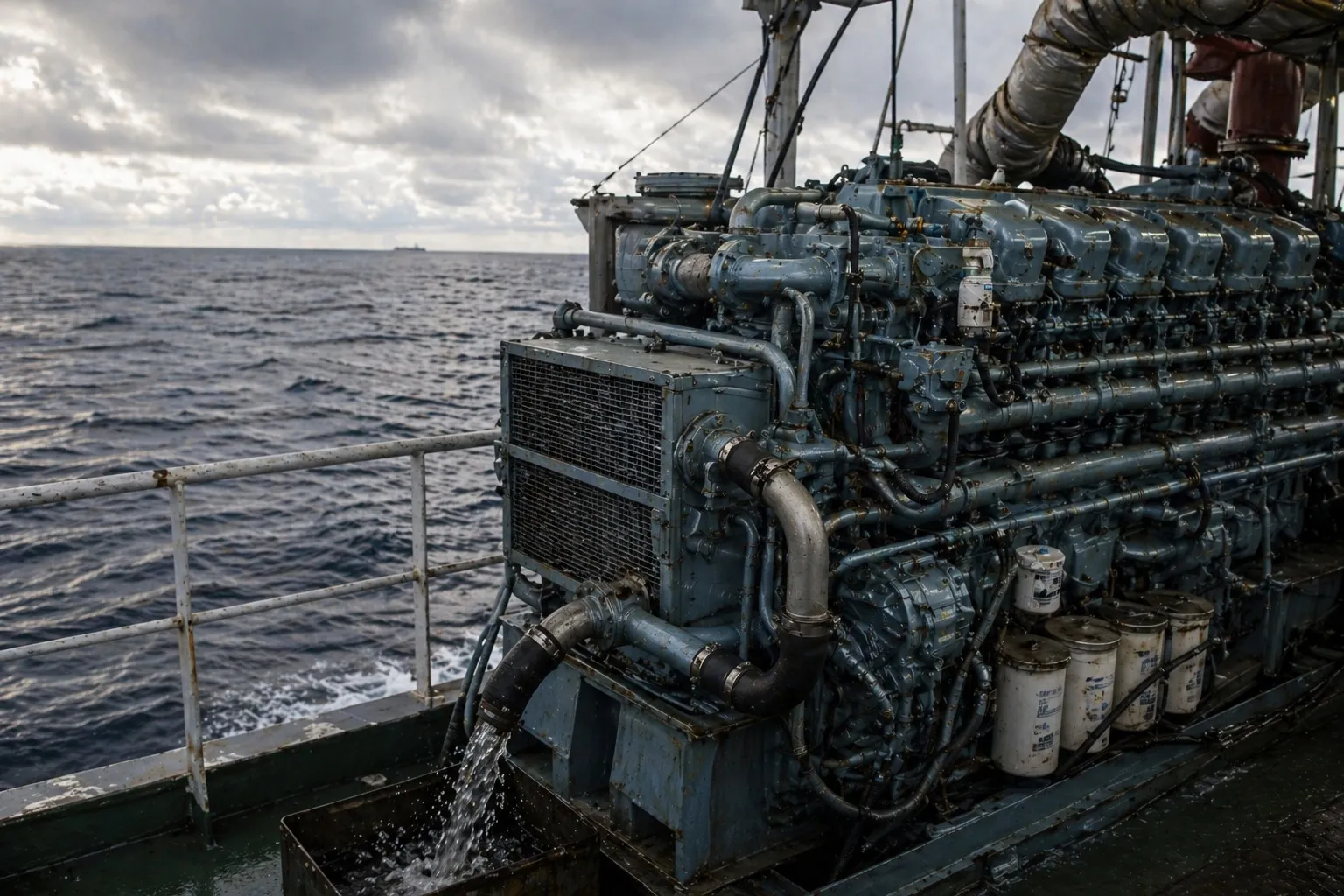

When a ship is operating at sea, the engine is continuously running under heavy load, generating a large amount of heat, and if this heat is not controlled properly, it can affect performance, damage components, and even lead to serious breakdowns, which makes cooling systems one of the most important parts of a marine engine.
Let’s understand this in a simple and practical way.
Why Do Marine Engines Need Cooling?
Marine engines burn fuel to produce power, and during this process, a significant amount of heat is generated inside the engine, especially in areas like the combustion chamber, cylinder liners, and exhaust system, which means that without proper cooling, temperatures can rise very quickly.
Now, if this heat is not managed properly, it can cause:
- Overheating of engine components
- Loss of lubrication due to oil breakdown
- Expansion and deformation of metal parts
- Increased wear and tear
This is why cooling systems are necessary to maintain a safe and stable operating temperature.
What Is a Marine Engine Cooling System?
A marine engine cooling system is designed to remove excess heat from the engine and maintain the correct operating temperature, because engines perform best within a specific temperature range and both overheating and overcooling can create problems.
In simple terms, the cooling system ensures that the engine stays neither too hot nor too cold, which helps maintain efficiency and reliability during operation.
Types of Cooling Systems Used in Ships
Different types of cooling systems are used in marine engines depending on the size of the engine and type of vessel, because each system is designed to handle heat in a specific way.
Common types include:
- Seawater cooling system, where seawater is directly used to absorb heat from the engine
- Freshwater cooling system, where treated freshwater circulates within the engine to control temperature
- Central cooling system, where a combination of freshwater and seawater systems is used for better efficiency and control
Each system has its own advantages, but all of them serve the same purpose—removing excess heat and protecting engine components.
How Cooling Systems Work
The working of a cooling system may sound technical, but it is quite simple when understood step by step, because the main goal is to transfer heat away from the engine and release it safely.
The process generally includes:
- Circulation of coolant through engine parts like cylinder liners and cylinder heads
- Absorption of heat from hot engine surfaces
- Transfer of heat to a heat exchanger
- Release of heat into seawater or the surrounding environment
This continuous process keeps the engine temperature under control and prevents overheating during operation.
Key Components of a Cooling System
A cooling system consists of several important components that work together to ensure proper heat management, because failure of even one component can affect the entire system.
Important components include:
- Pumps, which circulate coolant through the system
- Heat exchangers, which transfer heat from freshwater to seawater
- Thermostats, which control temperature levels
- Pipelines and valves, which manage flow and direction of coolant
All these components must work properly to maintain effective cooling.
Role of Cooling Systems in Engine Efficiency
Cooling systems play a direct role in engine efficiency, because an engine that operates at the correct temperature performs better and uses fuel more effectively.
Proper cooling helps in:
- Maintaining optimal combustion temperature
- Reducing energy losses due to overheating
- Improving fuel efficiency
- Ensuring consistent engine performance
If the engine becomes too hot, efficiency drops, and if it is too cold, combustion may not be complete, which is why maintaining the right balance is very important.
Impact of Poor Cooling
If the cooling system is not working properly, it can lead to serious problems that affect both performance and safety, because excess heat can damage critical engine parts.
Common problems include:
- Overheating and engine shutdown
- Damage to cylinder liners and pistons
- Increased fuel consumption
- Frequent maintenance and breakdowns
These issues not only increase costs but also affect the reliability of the vessel.
Importance of Maintenance in Cooling Systems
Cooling systems require regular maintenance to ensure they function properly, because deposits, corrosion, and wear can reduce their effectiveness over time.
Regular maintenance includes:
- Cleaning heat exchangers to remove scale and deposits
- Checking pumps for proper operation
- Inspecting pipelines for leaks or blockages
- Monitoring coolant quality and levels
This is where working with a reliable supplier like Labdhi Marine becomes important, because having access to genuine cooling system parts and components ensures long-term performance and reduces the risk of unexpected failures.
Challenges in Marine Cooling Systems
Managing cooling systems in marine environments is not always easy, because ships operate in different conditions and water quality can vary significantly.
Some common challenges include:
- Saltwater corrosion affecting system components
- Fouling and scaling in heat exchangers
- Variations in seawater temperature
- Blockages in pipelines due to debris
These challenges require proper design, maintenance, and monitoring to ensure efficient operation.
How to Improve Cooling System Performance
Improving cooling system performance is important for maintaining engine health and efficiency, and it can be achieved by following simple but effective practices.
Key steps include:
- Regular inspection and cleaning of system components
- Using proper coolant and maintaining its quality
- Ensuring pumps and valves are functioning correctly
- Replacing worn-out parts on time
These small steps can significantly improve overall engine performance and reliability.
Final Thought
Cooling systems are not just a supporting part of marine engines, but they are essential for maintaining performance, efficiency, and safety, because without proper temperature control, even the best engine cannot operate effectively.
By understanding how cooling systems work and maintaining them properly, ship operators can avoid breakdowns, reduce costs, and ensure smooth operations at sea.
At the end of the day, it all comes down to one simple idea—if the engine temperature is under control, the engine will perform better, last longer, and operate more reliably, which is exactly what every ship needs while sailing across long distances.













![The Benefits of Using a CNC Touch Probe [Infographic]](https://writeupcafe.com/data/post/1677697/bfdf3e040e67936848aa232d2dfe3d03.jpg.webp)









Sign in to leave a comment.