
Introduction
Taxes are an inevitable part of financial life, but strategic deductions can significantly reduce taxable income. Among the most discussed provisions in the American tax framework is the State And Local Tax Deductions system, commonly referred to as the SALT Deduction.
For homeowners, high-income earners, and individuals residing in states with elevated tax rates, this deduction plays a substantial role in overall tax planning. Understanding how it works is essential for optimizing financial efficiency and ensuring compliance within the broader framework of US Taxation.
Complex rules. Major financial impact.
What Are State And Local Tax Deductions?
State And Local Tax Deductions allow taxpayers who itemize deductions to deduct certain taxes paid to state and local governments from their federal taxable income.
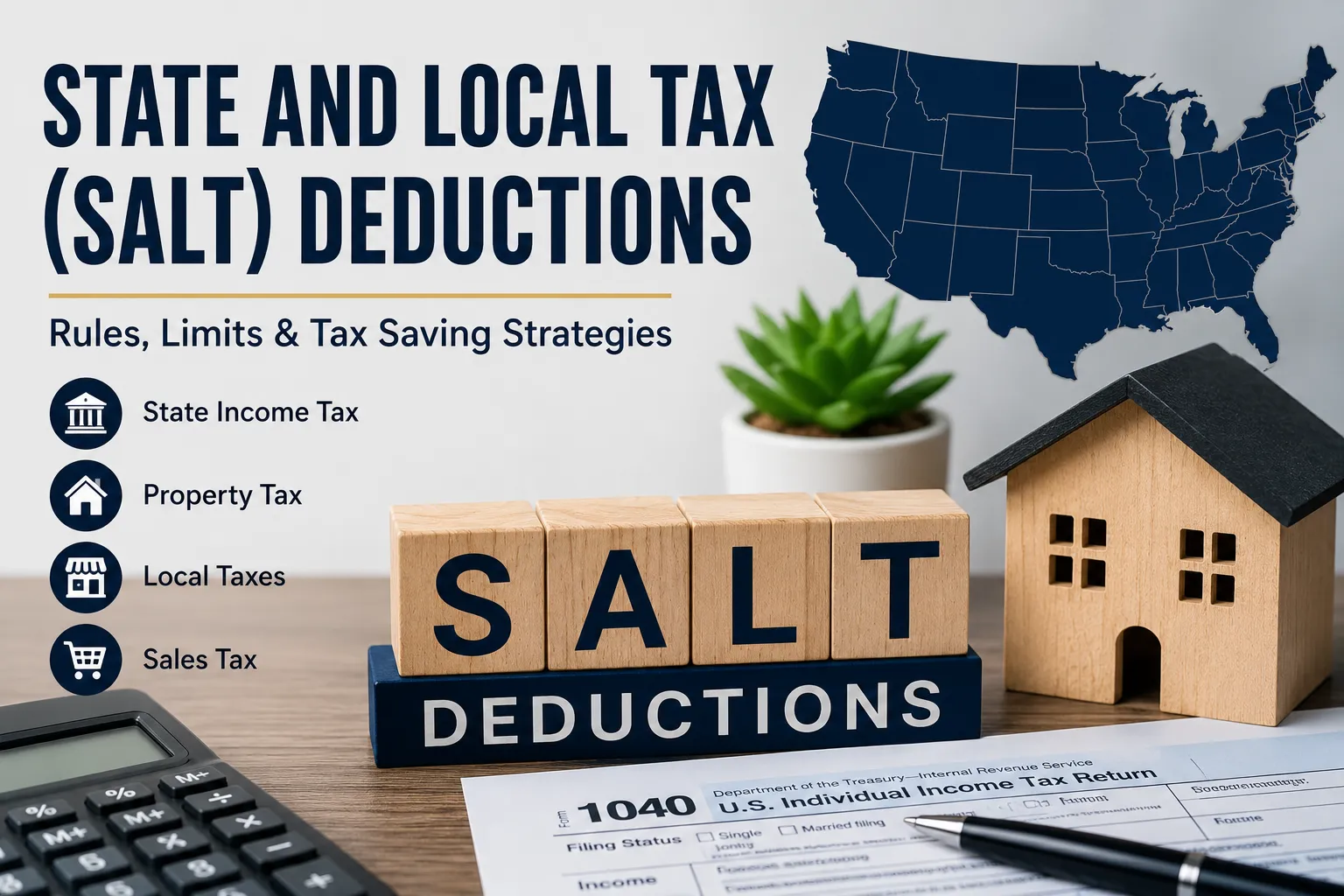
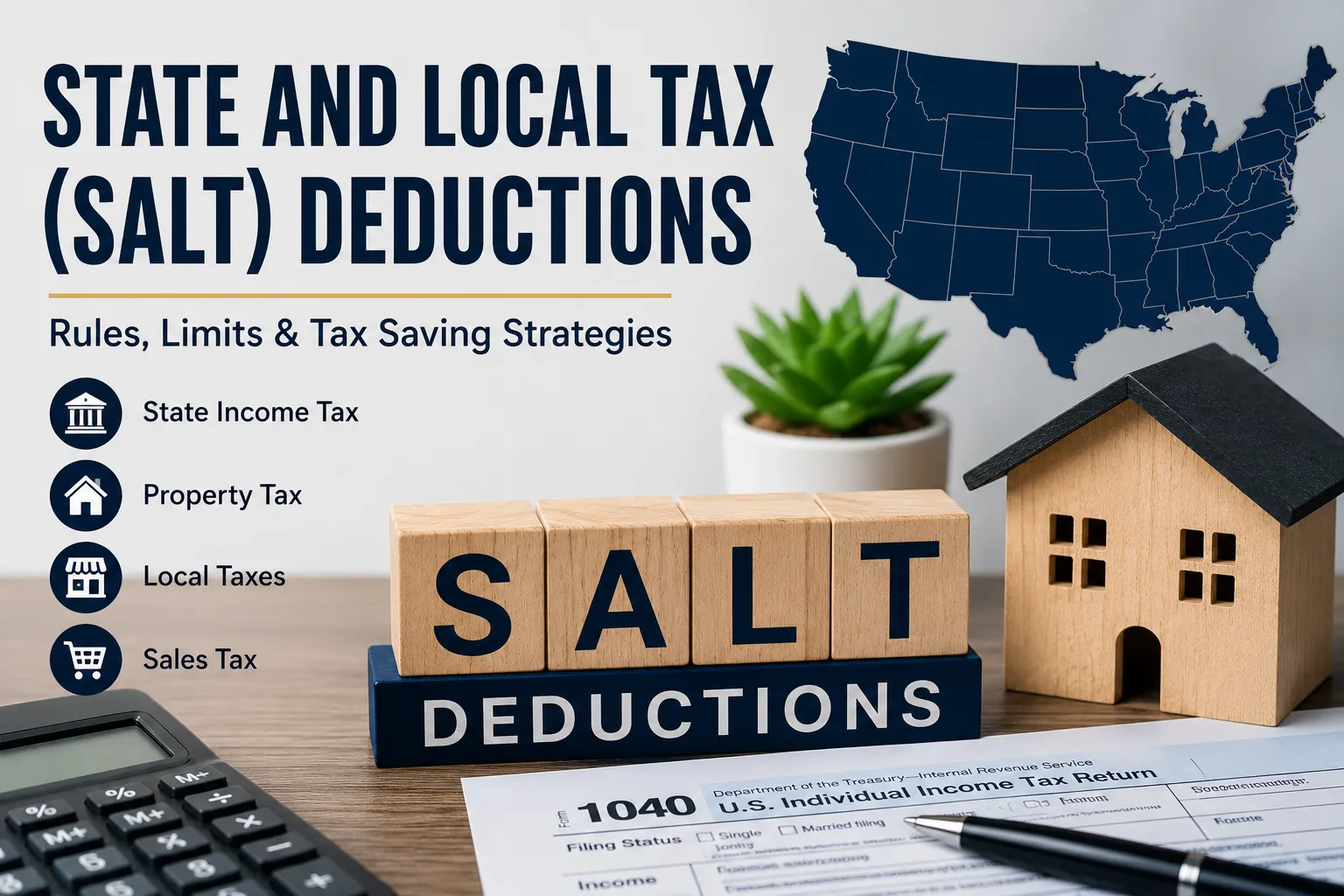
These deductions generally include:
- State income taxes
- Local income taxes
- Property taxes
- Sales taxes in certain situations
The purpose of the deduction is to prevent taxpayers from being taxed twice on the same income by different government entities.
It acts as a financial buffer within the broader tax structure.
Understanding the SALT Deduction
The SALT Deduction is part of itemized deductions available under federal tax law. Taxpayers may choose between deducting state income taxes or state sales taxes, depending on which provides greater benefit.
Property taxes paid on real estate may also qualify under specific limitations.
However, not every taxpayer benefits equally. The effectiveness of the deduction depends on income level, residency state, and overall deduction structure.
One rule. Different outcomes.
Why the SALT Deduction Matters
The SALT Deduction is especially important for taxpayers living in states with high income taxes and expensive real estate markets.
Without this deduction, taxpayers may face significantly higher federal tax liability because state-level taxes would effectively become part of taxable federal income.
This deduction helps reduce the burden created by overlapping tax systems.
Tax relief matters more in high-tax jurisdictions.
Types of Taxes Covered Under SALT
The State And Local Tax Deductions framework includes several categories of eligible taxes.
State Income Taxes
Taxpayers may deduct income taxes paid to their state government during the year.
Local Income Taxes
Certain cities and municipalities impose local taxes that may also qualify.
Property Taxes
Real estate taxes paid on residential or investment property may be deductible within applicable limits.
Sales Taxes
Taxpayers residing in states without income tax often choose to deduct sales taxes instead.
Flexibility exists. But limits apply.
SALT Deduction Limitations
One of the most significant changes in recent tax law was the introduction of deduction caps.
Currently, the SALT Deduction is subject to a maximum annual limit for combined state and local tax deductions. This limitation disproportionately impacts taxpayers in high-tax states.
For many households, especially homeowners and high earners, the cap reduced previously available deductions substantially.
Policy changes altered tax strategies nationwide.
SALT Deduction vs Standard Deduction
Taxpayers must choose between claiming the standard deduction or itemizing deductions.
The SALT Deduction only benefits individuals who itemize. If total itemized deductions do not exceed the standard deduction threshold, taxpayers may receive no practical advantage from SALT deductions.
This decision requires careful evaluation.
Bigger deduction wins.
Impact on Homeowners
Homeowners are among the most affected groups when it comes to State And Local Tax Deductions.
Property taxes can represent a substantial annual expense, particularly in metropolitan regions with high real estate values. The SALT cap limits how much of these taxes can reduce federal taxable income.
This creates increased tax pressure in many regions.
Property ownership and taxation are closely connected.
Impact on High-Income Taxpayers
High-income individuals often experience the greatest effect from SALT limitations because they generally pay higher state income taxes and property taxes.
In states with elevated tax rates, the inability to deduct the full amount significantly increases effective federal tax liability.
This has also influenced relocation trends and financial planning decisions.
Taxes influence geography more than many realize.
SALT Deduction and US Taxation
Within the broader structure of US Taxation, the SALT deduction remains one of the most debated policy areas.
Supporters argue that it prevents unfair double taxation and protects taxpayers in high-cost regions. Critics believe it disproportionately benefits higher-income households.
Regardless of political perspectives, the deduction remains financially significant for millions of taxpayers.
Tax policy is rarely neutral.
Strategies to Maximize SALT Benefits
Taxpayers often explore strategic approaches to optimize deductions under SALT rules.
Timing Property Tax Payments
Prepaying eligible property taxes in certain circumstances may provide advantages.
Evaluating Itemized Deductions
Careful comparison between itemized deductions and standard deductions is essential.
Managing Income Recognition
Adjusting the timing of bonuses, investments, or deductions may improve tax efficiency.
Consulting Tax Professionals
Professional planning helps taxpayers navigate evolving regulations and deduction limits effectively.
Planning reduces surprises.
Common Mistakes Taxpayers Make
Many individuals misunderstand how the SALT Deduction works.
Assuming Unlimited Deductions
Some taxpayers incorrectly believe all state and local taxes are fully deductible.
Ignoring Deduction Caps
Failure to account for SALT limits can distort tax planning.
Choosing the Wrong Deduction Method
Selecting standard deductions when itemizing would provide greater benefit—or vice versa—can increase tax liability unnecessarily.
Small calculation errors can become expensive.
SALT Deduction and Business Owners
Business owners may encounter additional considerations related to SALT rules.
Pass-through entities, partnerships, and self-employed individuals sometimes utilize state-level tax elections designed to mitigate SALT limitations.
These strategies require careful compliance and professional evaluation.
Advanced planning creates opportunities.
Future of SALT Deductions
The future of State And Local Tax Deductions remains uncertain because tax policies evolve with legislative priorities.
Debates continue regarding deduction caps, fairness, and economic impact. Future reforms could expand, reduce, or restructure SALT provisions entirely.
Taxpayers should remain informed about policy developments that may influence long-term financial planning.
Change is constant in taxation.
Importance of Professional Tax Guidance
Because SALT regulations involve multiple layers of federal and state interaction, professional guidance is often valuable.
Tax professionals help taxpayers:
- Evaluate deduction eligibility
- Optimize filing strategies
- Maintain compliance
- Reduce unnecessary liability
Within the broader framework of US Taxation, strategic planning can significantly influence financial outcomes.
Knowledge saves money.
Conclusion
State And Local Tax Deductions remain a critical component of federal tax planning for many Americans. The SALT Deduction helps reduce taxable income by allowing eligible taxpayers to deduct certain state and local taxes from federal returns.
However, deduction limits, evolving legislation, and varying state tax structures make the rules increasingly complex. Understanding how these deductions interact with overall Tax Deduction strategies and broader US Taxation principles is essential for effective financial planning.
Tax laws may change. Smart preparation should not.
























Sign in to leave a comment.