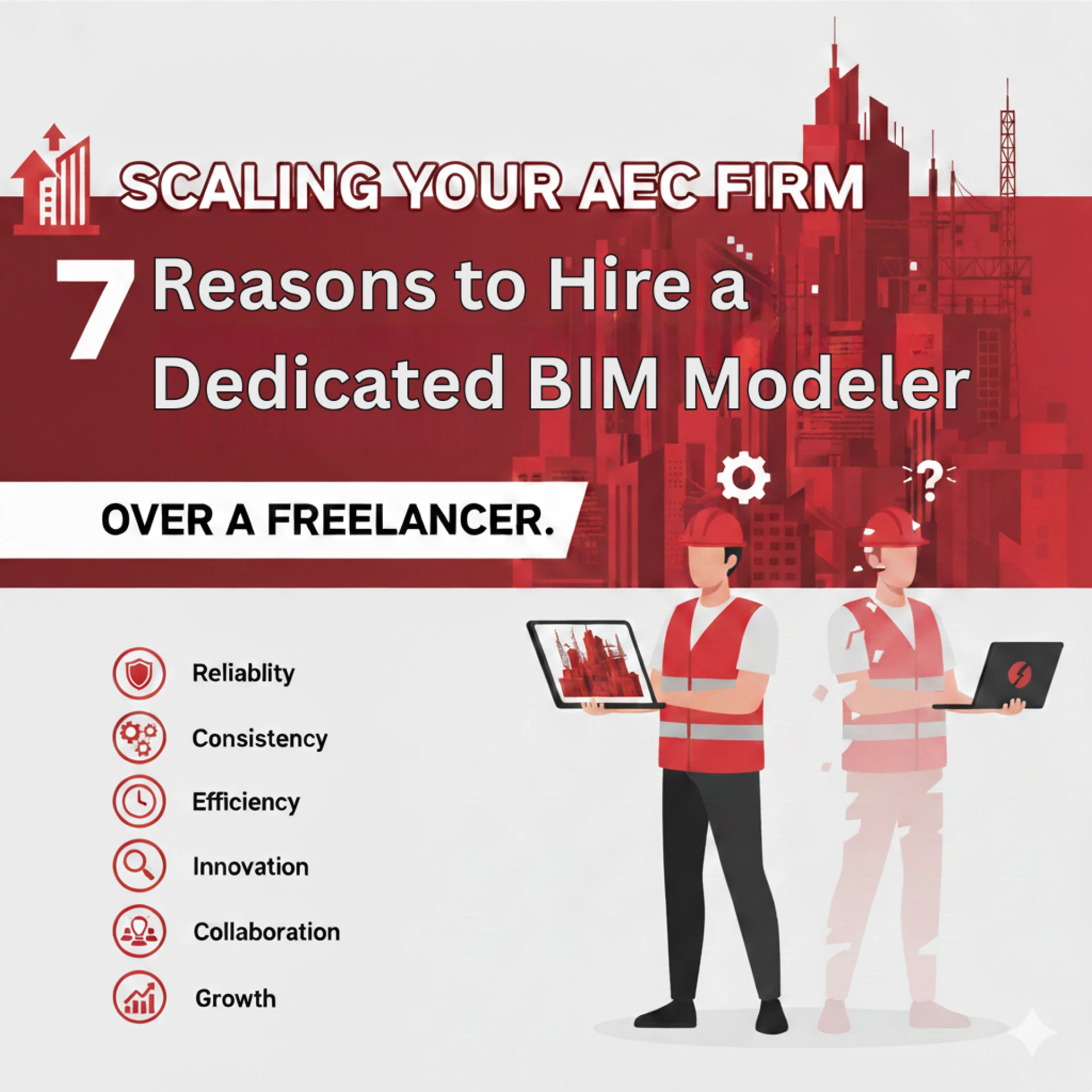

The $15.8 Trillion Opportunity: Why Your Scaling Strategy Needs Structural Integrity
The global construction market is projected to reach $15.8 trillion by 2030, yet McKinsey reports that the industry’s productivity growth has averaged only 1% annually over the past two decades. For Architecture, Engineering, and Construction (AEC) firms looking to scale in this high-stakes environment, the bottleneck is rarely a lack of projects; it is the capacity to execute them with precision. As firms transition from boutique operations to mid-sized powerhouses, the "gig economy" approach to Building Information Modelling (BIM) often hits a ceiling. While freelancers offer a quick fix for overflow, the shift toward a dedicated BIM modeller is becoming the definitive hallmark of firms that successfully bridge the gap between "getting by" and "scaling up."
The Digital Backbone: Moving Beyond the Transactional
Scaling an AEC firm requires more than just more hands on deck; it requires a digital backbone. In the current landscape, BIM is no longer a luxury; it is a regulatory and functional requirement. However, the complexity of ISO 19650 standards and the nuances of Level 2 and Level 3 BIM maturity demand a level of consistency that transactional freelance relationships struggle to provide.
When a firm chooses to hire a dedicated BIM modeller, they are not just buying hours; they are investing in institutional knowledge. This distinction is critical as project complexities rise and delivery timelines shrink.
1. Architectural Integrity and Standard Operating Procedures (SOPs)
Every firm has a "DNA," a specific way of handling families, layering, and annotation in Revit or ArchiCAD. Freelancers, who often juggle 3–5 clients simultaneously, naturally gravitate toward their own established workflows. This leads to "model drift," where every project file looks and behaves differently.
A dedicated modeller adopts your firm’s internal standards as their own. According to Dodge Data & Analytics, "standardisation of workflows" is one of the top three drivers of BIM ROI. By having a dedicated resource, you ensure that every clash detection report and COBie data drop follows the exact protocol required for your specific project lifecycle.
2. The Cost of "Context Switching" and Knowledge Retention
Research by the American Society of Civil Engineers (ASCE) highlights that information loss during project handoffs is a primary cause of rework. In a freelance model, the project knowledge exists outside the building the moment the invoice is paid.
When you scale with a dedicated resource, the modeller understands the "why" behind the design decisions made in the schematic phase, enabling them to make sense of them in the construction documentation phase. This longitudinal knowledge retention reduces RFI (Request for Information) cycles by an estimated 20–30%, as the modeller doesn't need to be "re-onboarded" for every new project phase.
3. Data Security and Intellectual Property Protection
In an era of rising cybersecurity threats to infrastructure, the AEC industry is a prime target. Hiring a dedicated modeller through a structured service provider offers a layer of security that independent freelancers cannot match.
Dedicated environments provide:
Encrypted Data Transfer: Secure VPNs and BIM 360/Autodesk Construction Cloud environments.
Legal Protections: Robust NDAs and IP ownership clauses that are enforceable.
Hardware Redundancy: Professional-grade workstations that ensure project files aren't sitting on a personal laptop in a coffee shop.
4. Seamless Integration into the Project Team (Common Data Environments)
High-growth firms rely on a Common Data Environment (CDE). Integration into a CDE isn't just about software access; it’s about culture. A dedicated BIM modeller functions as a virtual extension of your in-house team, participating in weekly coordination meetings and real-time troubleshooting.
This synchronisation is vital for "Just-in-Time" (JIT) modelling. When a structural change occurs, a dedicated resource can pivot instantly. A freelancer, conversely, may be unavailable for 48 hours due to other commitments, stalling the entire design-build chain.
5. Advanced Clash Detection and Pre-Construction Value
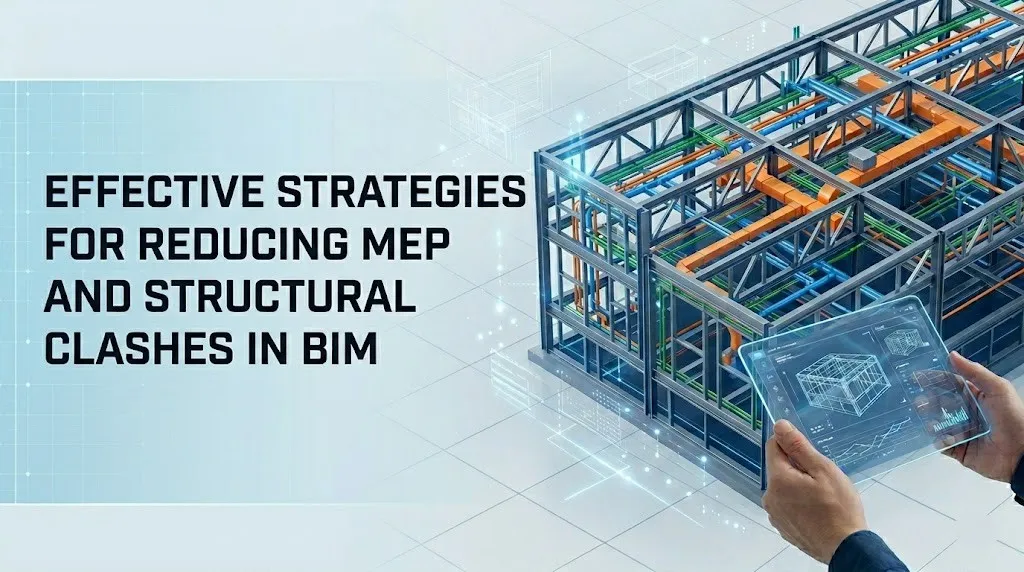
A study by the Centre for Integrated Facility Engineering (CIFE) at Stanford University found that using BIM can result in up to a 10% reduction in contract value through clash detection. However, effective clash detection requires a deep understanding of a firm's specific engineering constraints.
Dedicated modellers develop an intuitive sense of a firm’s engineering preferences. They don't just find clashes; they anticipate them based on previous projects. This proactive "Pre-BIM" thinking is a skill developed through long-term collaboration, not short-term tasks.
6. Scalability Without Overhead Volatility
The most significant business challenge for AEC firms is the "S-curve" of growth: having too much work for the current staff but not enough to justify a high-salary, local full-time hire with benefits and 401 (k) obligations.
The dedicated resource model provides a "middle path." It allows firms to scale their production capacity by 100% or 200% without the fixed overhead of local physical office space or the volatility of the freelance market. It provides a predictable monthly cost, making project bidding more accurate and competitive.
7. Global Compliance and Regional Expertise
As firms scale, they often take on projects in diverse geographical regions. This brings a minefield of varying building codes and BIM mandates (such as the UK’s Mandate or Singapore’s BCA guidelines).
A dedicated BIM partner often brings a wealth of experience across multiple jurisdictions. By hiring a dedicated resource, you gain access to a professional who is already versed in international standards, ensuring your models are compliant from day one, whether you are building in London, Dubai, or New York.
Actionable Strategy: Transitioning Your Firm
To move from a freelance-dependent model to a dedicated scaling model, AEC leaders should:
Audit Your "Rework" Hours: Track how much time is spent fixing freelancer files to meet your office standards.
Define Your Tech Stack: Ensure your dedicated partner uses identical software versions to prevent file corruption.
Start with a Pilot Project: Transition one complex project to a dedicated modeller to benchmark the speed and quality versus previous freelance efforts.
The Forward-Looking Conclusion
The future of AEC is not just digital; it is collaborative. As Digital Twins and AI-driven generative design become the industry standard, the need for a stable, dedicated digital workforce will only intensify. Firms that continue to rely on fragmented freelance talent will struggle with interoperability and data silos. Conversely, those that invest in dedicated BIM partnerships today are building the infrastructure necessary to dominate the complex, high-margin projects of tomorrow.
Ready to stabilise your scaling efforts? Discover how to hire a dedicated BIM modeler and transform your project delivery.



























Sign in to leave a comment.