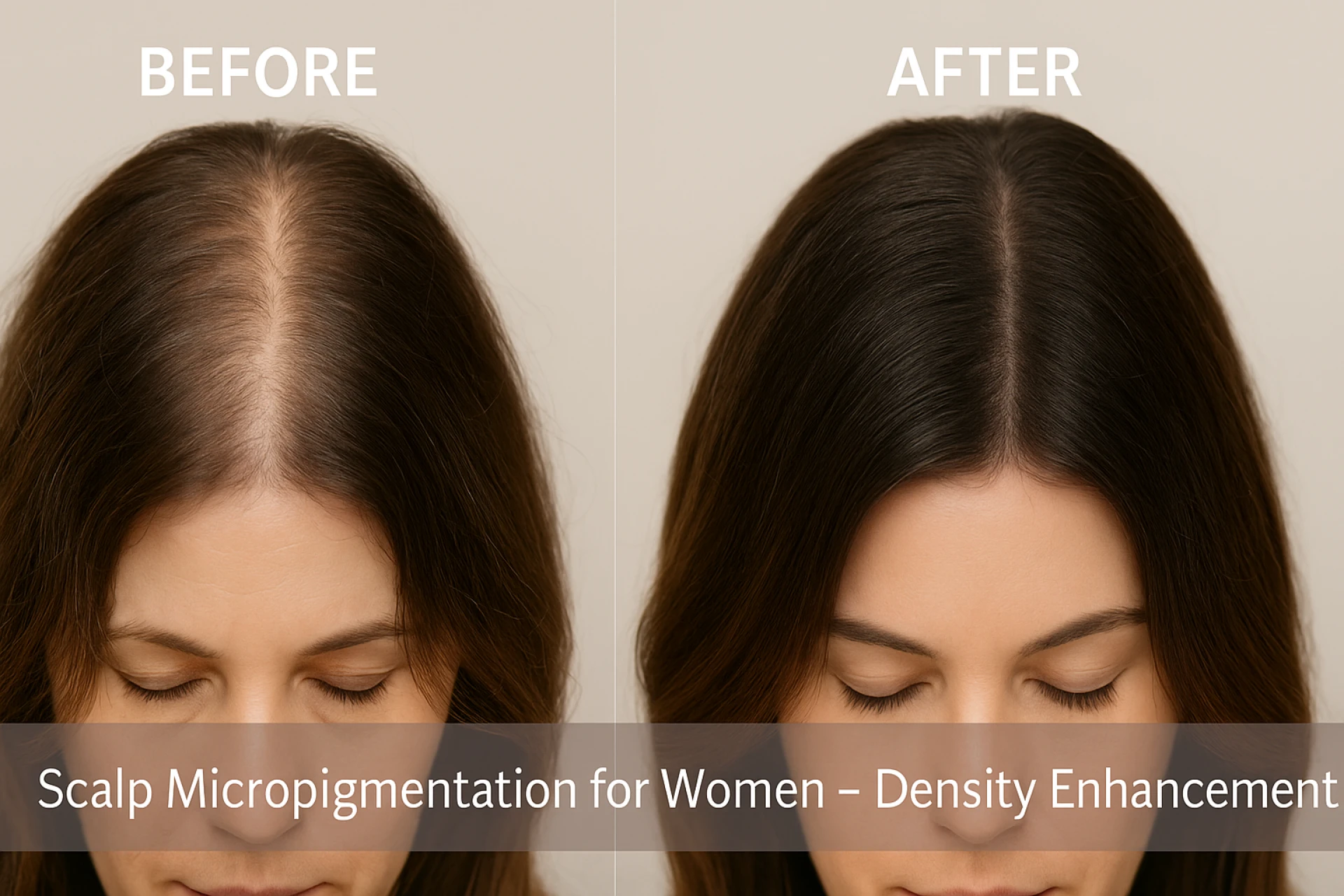
Thinning hair affects millions of women, but solutions often focus on regrowth alone. When density drops, the scalp starts to show—especially along the part line, temples, and crown—making styles harder to manage and confidence harder to maintain. Scalp micropigmentation for hair density gives women a non-surgical way to restore the visual look of fullness quickly and naturally, without wigs, toppers, or daily fibers.
In this guide, we’ll explain how scalp micropigmentation for thinning hair works, who it helps, and what to expect before, during, and after treatment—so you can decide whether scalp micropigmentation for women is right for you.
What Is Scalp Micropigmentation (SMP)?
Scalp micropigmentation (SMP) is a cosmetic pigmentation technique that places thousands of micro-dots into the scalp using ultra-fine needles and specialized pigments. These impressions replicate the look of hair follicles in the skin. For women who keep their hair at medium or long lengths, the dots are placed between existing strands to darken the scalp and reduce contrast—creating the appearance of thicker coverage.
Why women choose SMP
- Immediate visual density: You’ll notice a fuller look after the first session.
- Low maintenance: No daily powders or sprays to hide show-through.
- Versatile: Works with curly, coily, wavy, or straight hair and all skin tones.
- Non-surgical: No incisions, grafts, or extended downtime.
Who Is a Good Candidate?
SMP can help in many scenarios:
- Diffuse thinning from genetics, hormones, or stress (the most common female pattern).
- Postpartum or perimenopausal shedding, when parts widen or the crown looks sparse.
- Alopecia areata or traction alopecia where small gaps remain visible.
- Scalp scars from previous procedures or injuries.
If your goal is to keep your length but minimize see-through areas, scalp micropigmentation for hair density is often an excellent fit. If you plan to wear a short or buzzed style, SMP can also softly frame the hairline for a natural, face-flattering result.
How the Process Works
Most treatment plans include 2–4 sessions, typically spaced 7–14 days apart.
- Consultation & Design
- Your practitioner reviews goals, examines hair patterns, and chooses pigment tones that complement your complexion and natural hair color. For women, design focuses on the part, temples, and crown, fading gradually into surrounding hair.
- First Session: Foundation
- A light pass of micro-dots reduces scalp contrast and maps the coverage area. You’ll see an immediate softening effect.
- Build & Blend
- Subsequent sessions add density, vary dot size, and refine tone so results look dimensional—not flat or “colored in.”
- Final Polish
- The last session checks balance in multiple lighting conditions and adjusts the part line or hairline for realism.
Aftercare & Longevity
Keep the scalp dry and sweat-free for the first few days, avoid sun exposure while healing, and use SPF thereafter. With simple care, results typically last years, with small touch-ups as skin naturally exfoliates.
SMP vs. Other Density Options
- Fibers/Sprays: Helpful for short-term events but can transfer or clump. SMP is “always on,” even in wind, workouts, or rain.
- Topical/Oral Treatments: Minoxidil or other therapies may aid retention but require time and consistency. SMP delivers instant visual coverage regardless of regrowth rate.
- Hair Transplant: Effective for some candidates but limited by donor supply and cost. Many women aren’t ideal transplant candidates; SMP gives reliable cosmetic density without surgery.
- Toppers/Extensions: Can look great, yet some find maintenance challenging. SMP lives under your style and enhances every look.
The best plan often blends approaches: keep your chosen hair-health routine, then use scalp micropigmentation for thinning hair to perfect the finish.
What Makes Results Look Natural?
Natural SMP comes from artistry, not just equipment:
- Dot size & spacing: Follicle-sized impressions vary subtly to mimic organic patterns.
- Tone matching: Pigments are layered in soft shades that suit your undertone—cool, neutral, or warm.
- Feathered transitions: Along the hairline and part line, density tapers for a delicate, believable fade.
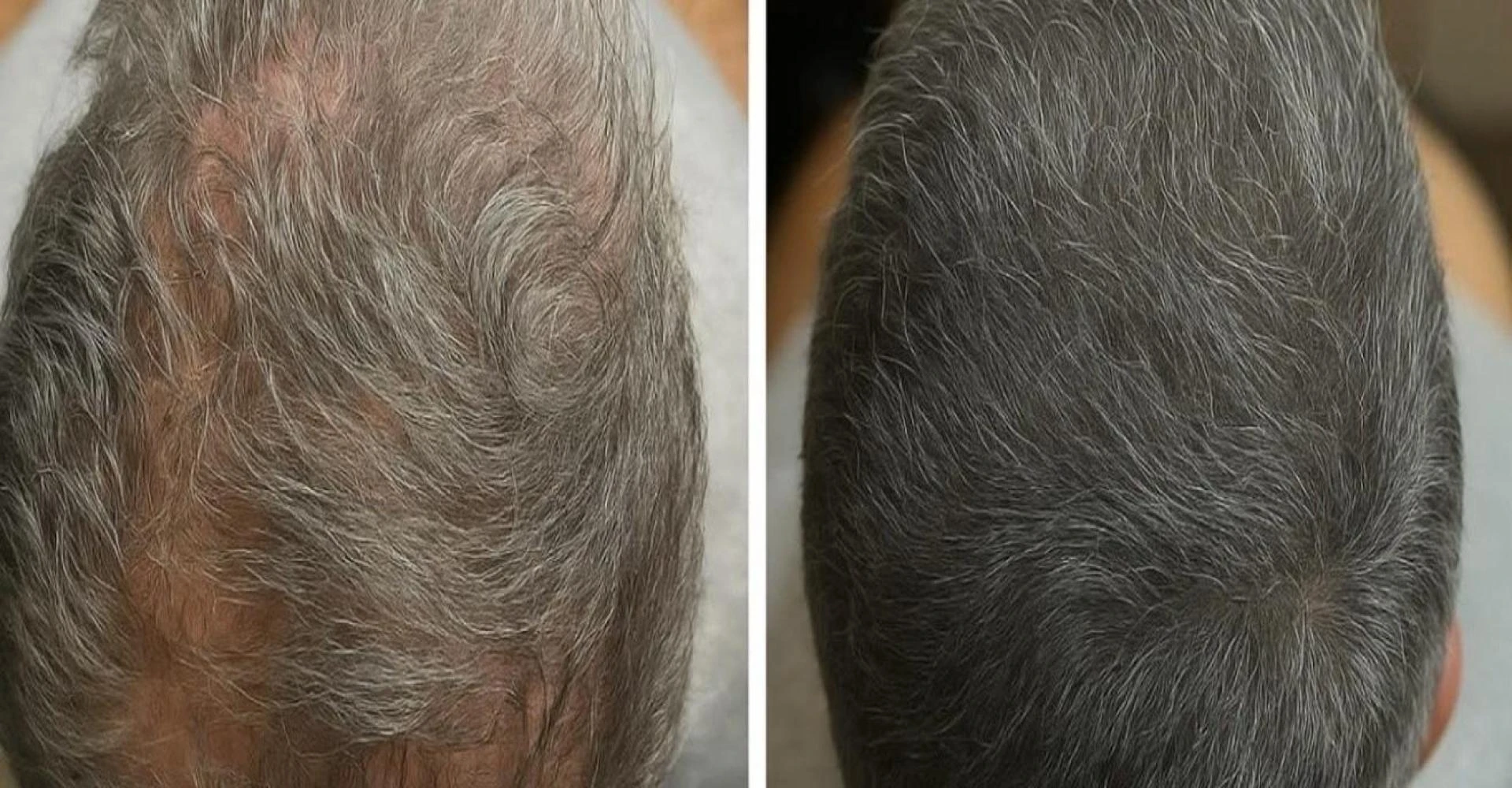
- Healed outcomes: Ask to see healed photos (not just same-day images) in indoor and outdoor light.
FAQs
Will people notice I had something done?
They’ll notice your hair looks fuller, not the treatment. Properly executed SMP reads as natural shadow, not makeup.
Does it hurt?
Most describe mild discomfort. Sessions last 2–4 hours, and many clinics offer topical numbing.
Will it damage my hair?
No. SMP sits in the skin’s upper layers and doesn’t affect follicles. It pairs well with routine trims, coloring, and styling.
What if my thinning progresses?
SMP is modular. Your practitioner can add density later or adjust the design to match new patterns.
Choosing the Right Practitioner
For the best scalp micropigmentation for women outcomes, look for:
- Extensive portfolio of female density work with healed results.
- Hygiene standards (single-use needles, aseptic protocols).
- Color expertise across diverse skin tones and hair colors.
- Clear consultation with realistic expectations and a written aftercare plan.
- Transparent pricing and touch-up policy.
The Bottom Line
If widening parts, crown show-through, or temple thinning are affecting how you feel, scalp micropigmentation for hair density offers a fast, dependable way to look fuller with minimal upkeep. Designed thoughtfully, scalp micropigmentation for women blends with your natural texture and style—so you can focus less on hiding your scalp and more on living your life.
Whether used alone or alongside other treatments, scalp micropigmentation for thinning hair delivers consistent, camera-ready confidence every day.



























Sign in to leave a comment.