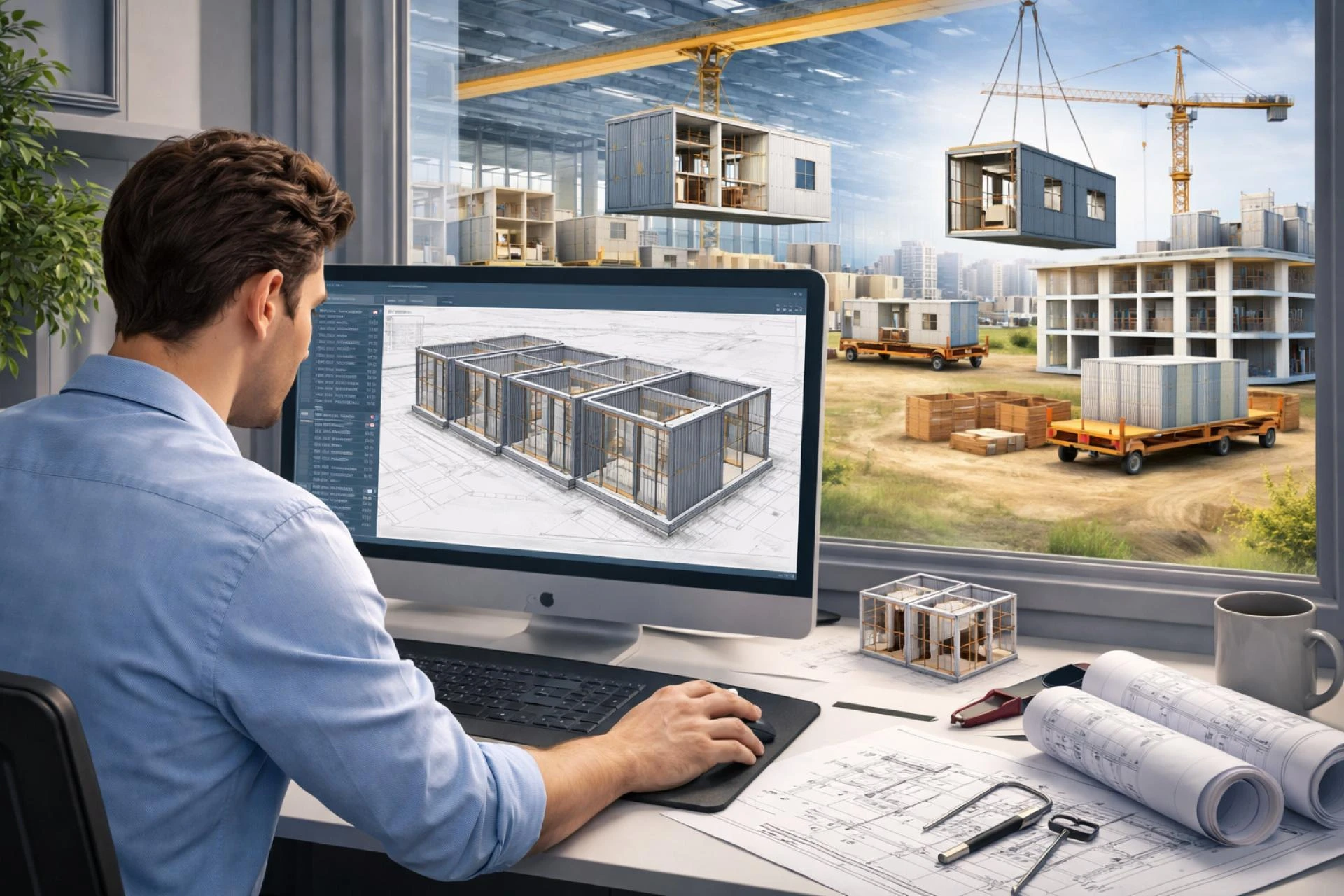

Seamless design to factory workflows
Prefabrication and offsite manufacturing are not simply construction methods. They are supply chain problems that begin in the model. When a BIM model contains fabrication level intent, the factory can plan, purchase, and produce with confidence. That confidence depends on a few practical things. Design teams must set clear expectations for model fidelity, hand over structured bills of materials, provide exportable fabrication geometry, and state tolerances and acceptance criteria in machine-readable form. This piece explains how to knit those elements together with BIM services, so projects move from digital intent to physical parts with fewer errors and quicker lead times.
Set LOD with manufacturing outcomes in mind
If the model is to become a manufacturing source, it must carry fabrication-level information at the right time. Avoid vague LOD statements that only speak to coordination. Instead, assign LOD targets linked to deliverables with BIM services. For example, LOD 300 for coordinated geometry and clash detection, LOD 350 for connection details and embed locations, and LOD 400 for fabrication-ready geometry and machining surfaces. Attach clear parameter requirements to each LOD such as material code, net thickness, edge finish, and part orientation. These expectations must be agreed at the project kickoff and recorded in a simple register that vendors can consult.
Make the BOM the single source of truth with BIM services
A reliable bill of materials is the spine of prefabrication. Convert modeled geometry into a structured BOM with BIM services that includes part ID, parent assembly, material code, net and gross quantities, mass, reference model GUID, and revision number. Ensure the BOM can be exported as CSV and also presented as a human-readable sheet for quick checking. Add metadata to each line item such as supplier preference, lead time, and whether a product-specific EPD exists. This connects procurement to the model and reduces surprises when orders are placed.
CNC exports and neutral geometry governance with BIM
Standardize file formats and naming conventions early. Use neutral interchange formats such as STEP or DXF for geometry preview and retain native CAM files or machine-specific G-code for production. Include a clear file header in every export that lists material, thickness, finish, compatible machines, and datum points. Keep a versioned archive of exports so vendors can roll back if a change introduces fabrication problems. Preserve datum and reference planes so jigs and fixtures can be reused without translation errors.
Define tolerances and fit strategies in the model with BIM
Tolerances belong in the data, not only in the drawings. Provide manufacturing tolerance attributes at the family level and allow overrides for critical joins. Distinguish manufacturing tolerance, which speaks to machine capability, from assembly tolerance, which addresses fit between parts on-site. Record datum references, shim allowances, and permissible adjustment ranges. For critical interfaces, specify gauge points and acceptance criteria so factory inspectors and site teams measure the same thing using a common method.
QA checkpoints that work with factory rhythms using BIM services
Embed quality assurance milestones into the production schedule rather than treating QA as an afterthought. Typical checkpoints include model approval, shop drawing submission, first-off sample acceptance, in-process inspections at predefined lot sizes, and final pre-dispatch inspection. Use digital checklists tied to part IDs and lot numbers. If vendors upload inspection records back to a shared folder or the BIM model itself, it creates a live digital thread between design, production, and site teams.
Vendor handoff package: what to include with BIM
A concise handoff package gets vendors into production faster. Include a cover sheet with project code, contact list, delivery windows, and stack limits. Provide a zipped folder for each assembly containing an exportable fabrication model, a CSV BOM, native CNC files, neutral geometry for preview, a QA checklist, and packing instructions. Add a short change control note that explains how late geometry changes will be handled and the associated cost and time impact.
On the ground realities in India
Indian sites introduce specific constraints that must be planned for. Road widths, height restrictions during transport, local crane capacities, and site storage often define maximum panel sizes. Engage transport and lifting specialists early so module dimensions are optimized for local logistics. Consider small pilot production runs to validate local machine capability and finish quality. Local machine shops may require minor tooling adjustments; budget a short window for this during early production so the full run does not stall.
Keep the digital thread alive with BIM services
Treat the model as the living record. When a vendor reports an as-built deviation, capture it in the model as a revision with a reason code. Link inspection records to part IDs and update the BOM with actual quantities shipped. This living digital thread supports commissioning, maintenance, and warranty claims and reduces the cost of future retrofits. It also creates a valuable dataset for continuous improvement in subsequent projects.
Governance and commercial alignment with BIM integration
Successful integration requires commercial clarity. Define the split of responsibility for errors between designer and fabricator in the contract. Agree on how variations in material availability are handled and include clauses for tooling costs and pilot runs. Build a simple governance process that requires signoff at model approval, shop drawing approval, and first-off sample acceptance, so commercial risk aligns with technical readiness.
Practical checklist for a first delivery with BIM
- Confirm LOD targets and parameter list.
- Produce and validate BOM against model takeoff.
- Export fabrication geometry with metadata headers.
- Send first-off sample and perform dimensional and finish checks.
- Run in-process QA at defined lot sizes.
- Capture as-built deviations and update the model.
Closing thought
Integration of BIM with prefabrication and offsite manufacturing is a practical discipline. It is not only about good geometry but about information that travels with the part from design to factory to site. When teams treat the BIM model as a manufacturing asset and invest in clear handoff processes, the result is fewer errors, shorter lead times, and better outcomes for clients and occupants. In markets across India and beyond, those gains are already shaping faster, more predictable construction.

























Sign in to leave a comment.