
A Future-Ready Roadmap for 5G Expansion
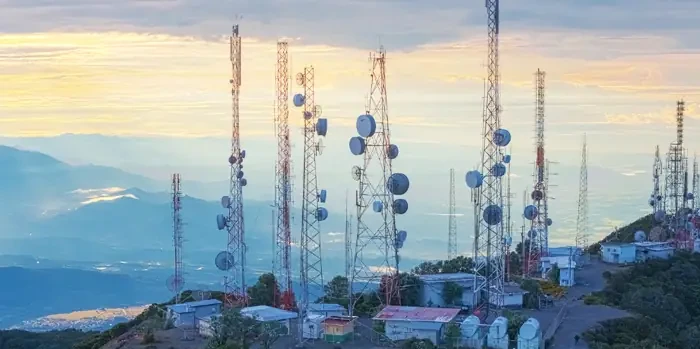
Rolling out 5G towers at scale requires more than replacing antennas. It demands a high-fidelity, data-rich understanding of every tower in your portfolio. Scan to BIM services for telecommunication towers, including monopoles and SST towers, enable faster upgrades, safer maintenance, and greater cost efficiency by transforming existing assets into intelligent 3D models.
By digitizing your installed base, each lattice or monopole structure becomes a living digital twin. Using high-resolution LiDAR and drone technology, millimeter-accurate point clouds are captured and converted into BIM objects enriched with metadata like equipment IDs, mount heights, and structural information. These models provide a unified, accurate reference that streamlines engineering assessments and asset management planning.
Engineers can simulate antenna load cases, verify structural clearances, and plan reinforcements virtually eliminating guesswork and minimizing on-site work. With maintenance histories, inspection photos, and sensor readings embedded into the model, condition-based work orders can be generated, significantly reducing the need for repeat visits. The result is a safer, smarter, and more efficient tower network, primed for the next generation of connectivity.
Why Scanning to 3D Models is Essential
Using Scan to 3D Model technology addresses critical inefficiencies in the lifecycle management of telecommunication infrastructure. Traditional documentation methods such as fragmented as-built records, outdated blueprints, and unverified redlines are prone to dimensional inaccuracies and often fail to reflect real-world conditions. Through high-resolution terrestrial LiDAR scanning or drone-based photogrammetry, existing towers are digitally captured. These scans are then converted into intelligent 3D representations that incorporate key structural elements such as antenna mounts, monopole shafts, bracing systems, foundation pads, anchor bolts, and platform assemblies. The resulting model serves as a spatially accurate digital replica, aligned with real-world coordinates and ready for analysis and integration.
A Streamlined Workflow in Four Clear Steps
This transformation follows a precise, four-step digitization process:
1. Reality Capture
High-definition LiDAR and drone photogrammetry collect millions of spatial data points—no tower climbing required.
2. Point Cloud Cleanup
Unwanted noise, vegetation, and stray points are removed to prepare a clean dataset for modeling.
3. BIM Authoring
Specialists develop LOD-100 to LOD-500 models of tower elements including shafts, frames, platforms, mounts, cable paths, shelters, and surrounding terrain.
4. Data Handoff
Final models are delivered in Revit, IFC, or any open format, and can be integrated with GIS dashboards, CMMS tools, or digital twin platforms.
Built for Telecom, Delivered with Precision
The service stands out with telecom-specific content libraries, including pre-modeled RRHs, microwave dishes, feeder cables, and structural components. Each model includes true-to-form geometry and material properties for rapid structural analysis and 5G planning.
Outputs are georeferenced to align with survey control points, helping streamline line-of-sight assessments and permit approvals. A global delivery model ensures rapid turnaround and supports urgent rollouts without compromising quality or accuracy.
The Business Case for Scan to BIM
The benefits of telecom tower digitization extend well beyond visualization:
· 50% faster upgrade studies by leveraging reusable BIM baselines.
· 30% reduction in site revisits thanks to complete, clash-free models.
· Improved climber safety by eliminating the need for manual inspections.
· Real-time portfolio visibility via dashboards that track tenancy, maintenance, and 5G readiness.
Your Network, Digitally Future-Ready
Whether managing aging infrastructure or building out a new fleet of 5G towers, the shift to intelligent modeling delivers measurable impact. With point cloud to 3D Modeling services, raw point clouds are transformed into rich digital assets enabling telecom engineers to streamline operations, enhance safety, and accelerate deployment timelines.




























Sign in to leave a comment.