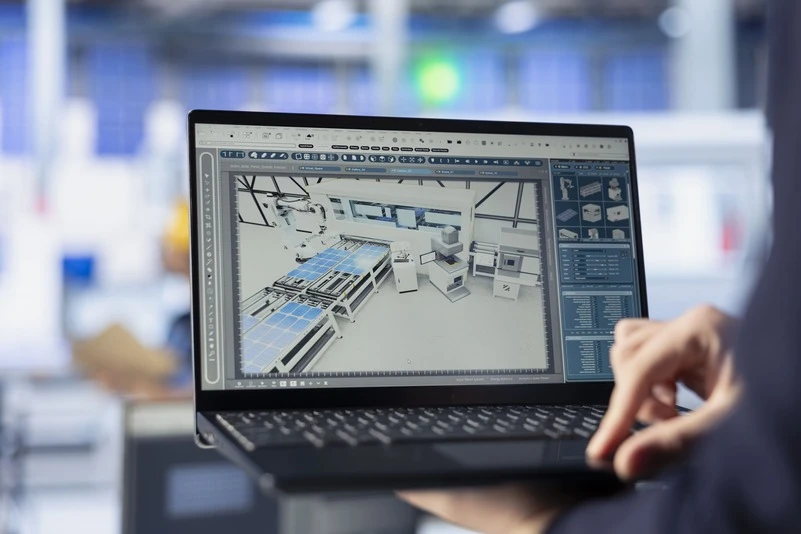

The construction industry has long relied on clash detection as a safeguard against costly errors. For years, BIM coordination has helped project teams identify conflicts between architectural, structural, and MEP systems before construction begins. However, as projects become more complex and timelines more compressed, traditional clash detection methods are reaching their limits. In 2026, artificial intelligence is reshaping BIM coordination, transforming it from a reactive problem-solving process into a predictive, intelligence-driven system.
AI-driven BIM coordination is not simply about running faster clash tests. It represents a fundamental shift in how design conflicts are analyzed, prioritized, and prevented. The focus is moving from identifying clashes to understanding why they occur and how they can be minimized from the outset.
The Evolution of Clash Detection in BIM
Traditional clash detection relies on federating discipline models within coordination environments and running rule-based conflict tests. Platforms such as Navisworks combine architectural, structural, and MEP models into a single digital space. The system flags intersections or clearance violations, generating lists of clashes for review.
While effective, this approach often produces hundreds or even thousands of conflicts. Coordination teams must manually filter these results, determine which issues are critical, assign responsibilities, track revisions, and re-test updated models. This iterative cycle can be time-consuming and heavily dependent on human interpretation.
Moreover, traditional clash detection treats every conflict as an isolated event. It does not inherently distinguish between a minor ceiling clearance issue and a clash affecting a critical chilled water loop in a data center. The responsibility for prioritization lies entirely with coordination teams.
AI as an Intelligence Layer in BIM Coordination
Artificial intelligence introduces a new dimension to this process. Instead of simply listing geometric conflicts, AI-driven systems analyze contextual data surrounding each clash. Machine learning algorithms can evaluate system importance, spatial density, construction sequencing, and historical coordination patterns to determine which conflicts pose the highest risk.
This shift transforms clash detection into a decision-support mechanism. Rather than overwhelming project teams with raw data, AI refines the output into prioritized insights. High-impact conflicts rise to the top, while minor issues are grouped or categorized efficiently.
Over time, AI systems learn from previous projects. They identify recurring congestion zones, such as mechanical penthouses, vertical shafts, or densely populated ceiling voids. By recognizing these patterns, AI-driven BIM coordination begins to anticipate potential conflict areas before they fully develop in the model.
From Reactive Conflict Resolution to Predictive Prevention
One of the most significant advancements introduced by AI is the move toward preventive modeling. In traditional workflows, clashes are detected after systems are fully modeled. In AI-enhanced environments, predictive analytics can flag routing strategies likely to cause congestion during the modeling phase itself.
For example, if a project involves high-density cable trays and ductwork in limited ceiling space, AI algorithms can analyze spatial constraints early and suggest alternative routing strategies. Designers receive proactive feedback, reducing the number of clashes generated in later coordination cycles.
This preventive approach shortens coordination timelines and strengthens project predictability. Instead of resolving hundreds of issues late in the design stage, teams refine system layouts from the beginning.
Enhancing Compliance and Safety Validation
Beyond geometry, AI-driven BIM coordination increasingly supports automated compliance validation. Building codes, fire safety standards, and clearance requirements can be embedded into digital checks. For projects in the United States, regulatory frameworks published by the International Code Council and fire protection standards from the National Fire Protection Association influence digital validation parameters.
AI-assisted systems can analyze egress paths, mechanical clearances, and fire-rated assemblies within the model, identifying potential non-compliance risks before inspections occur. This reduces regulatory uncertainty and strengthens documentation accuracy during permitting stages.
Integration with Modern BIM Ecosystems
AI-driven clash detection does not operate in isolation. It is integrated into comprehensive BIM platforms such as Autodesk Revit and cloud-based environments like Autodesk Construction Cloud. These integrations allow real-time data synchronization, automated issue tracking, and centralized coordination workflows.
Cloud collaboration enhances transparency by ensuring all stakeholders have access to updated models and clash reports. AI-driven analytics within these platforms provide insights that guide coordination meetings, reducing ambiguity and improving resolution efficiency.
As digital ecosystems evolve, AI capabilities are becoming embedded directly within modeling environments, offering continuous feedback rather than periodic review cycles.
The Impact on High-Complexity Projects
The value of AI-driven BIM coordination becomes particularly evident in high-density, mission-critical, or large-scale infrastructure projects. In hospitals, airports, data centers, and industrial facilities, system congestion is common and error tolerance is minimal.
In these environments, AI-driven prioritization reduces the risk of overlooking critical conflicts. Coordination teams can focus their attention on high-impact issues affecting primary systems, such as main power feeds, chilled water loops, or structural load paths.
This intelligent filtering strengthens schedule stability and minimizes the risk of costly field modifications.
Challenges and Human Oversight
Despite its transformative potential, AI-driven BIM coordination requires disciplined implementation. Data quality is essential. Inconsistent modeling standards or incomplete discipline submissions can reduce algorithm accuracy. Interoperability between platforms must also be maintained to ensure seamless data flow.
Importantly, artificial intelligence does not replace coordination professionals. Instead, it augments their expertise. Human judgment remains critical for validating automated recommendations, assessing constructability in real-world contexts, and ensuring practical feasibility.
AI serves as an analytical assistant, enhancing speed and precision, while experienced professionals guide strategic decision-making.
The Future of Clash Detection
The future of AI-driven BIM coordination extends beyond static model analysis. As digital twins and real-time construction data become integrated into BIM environments, clash detection may evolve into continuous digital monitoring. Sensor feedback from construction sites could inform model updates, while predictive systems simulate potential risks before installation occurs.
Over time, clash detection will likely become part of a broader digital risk management framework, combining geometry, compliance, scheduling, and cost data into a unified intelligence system.
Rather than simply preventing clashes, future systems may optimize entire coordination strategies based on project typology, density, and historical performance benchmarks.
Conclusion
AI-driven BIM coordination represents a significant evolution in clash detection. Moving beyond simple geometric identification, artificial intelligence introduces prioritization, predictive analytics, and preventive modeling into coordination workflows.
By integrating AI within BIM ecosystems, project teams gain improved visibility, reduced coordination cycles, and enhanced constructability assurance. As the construction industry continues to embrace digital transformation, AI-driven clash detection is becoming a central component of modern project delivery.
The presence of BIM coordination is intelligent and data-informed. The future promises even greater integration between predictive analytics and construction execution. In an industry where complexity continues to grow, AI-driven BIM coordination is not just an enhancement, it is the next logical step in delivering projects with precision and confidence.


























Sign in to leave a comment.