
In today’s rapidly evolving security landscape, communication is not just a support function, it is a mission-critical capability. For military and government organizations, secure, reliable, and intelligent communication systems determine operational success, situational awareness, and national security readiness. As threats become more complex and operations more technology-driven, advanced audio-visual (AV) solutions are emerging as the backbone of modern defense and public sector infrastructure.
Organizations like Unassailable Solutions LLC are helping transform how military and government agencies design, implement, and manage secure communication environments. From command and control centers to secure briefing rooms and multi-agency collaboration hubs, the future of AV solutions is focused on security, resilience, integration, and intelligence.
This blog explores how AV technology is shaping the future of military and government operations, and why secure, mission-ready systems are more important than ever.
The Strategic Role of Communication in Military and Government Operations
In military and government environments, communication is more than information sharing, it is decision-making, coordination, and command execution. Every briefing room, command center, and operations hub must support:
- Real-time data sharing
- Multi-location collaboration
- Secure transmission of sensitive information
- High-availability systems with zero tolerance for failure
- Interoperability between agencies and platforms
Unlike commercial AV environments, government and defense systems must meet strict compliance, cybersecurity, and operational standards. This is where specialized Government Audio Visual Solutions become essential, not as convenience tools, but as core infrastructure.
Why Traditional AV Systems Are No Longer Enough
Legacy AV systems were designed for basic presentations and local meetings. Modern military and government operations demand far more:
- Encrypted communications
- AV over IP networks
- Cross-domain information sharing
- Hybrid physical-digital operations
- Remote command coordination
- Multi-agency collaboration platforms
Traditional systems struggle with scalability, cybersecurity, and integration. The future lies in intelligent, network-based AV ecosystems that operate as secure digital infrastructure, not standalone tools.
The Evolution of Secure AV Technology
1. From Hardware to Integrated Systems
AV solutions are no longer isolated devices. Today’s systems integrate:
- Network infrastructure
- Cybersecurity protocols
- Data management systems
- Cloud platforms
- AI-assisted monitoring
- Secure access control
This shift transforms AV from “equipment” into mission systems.
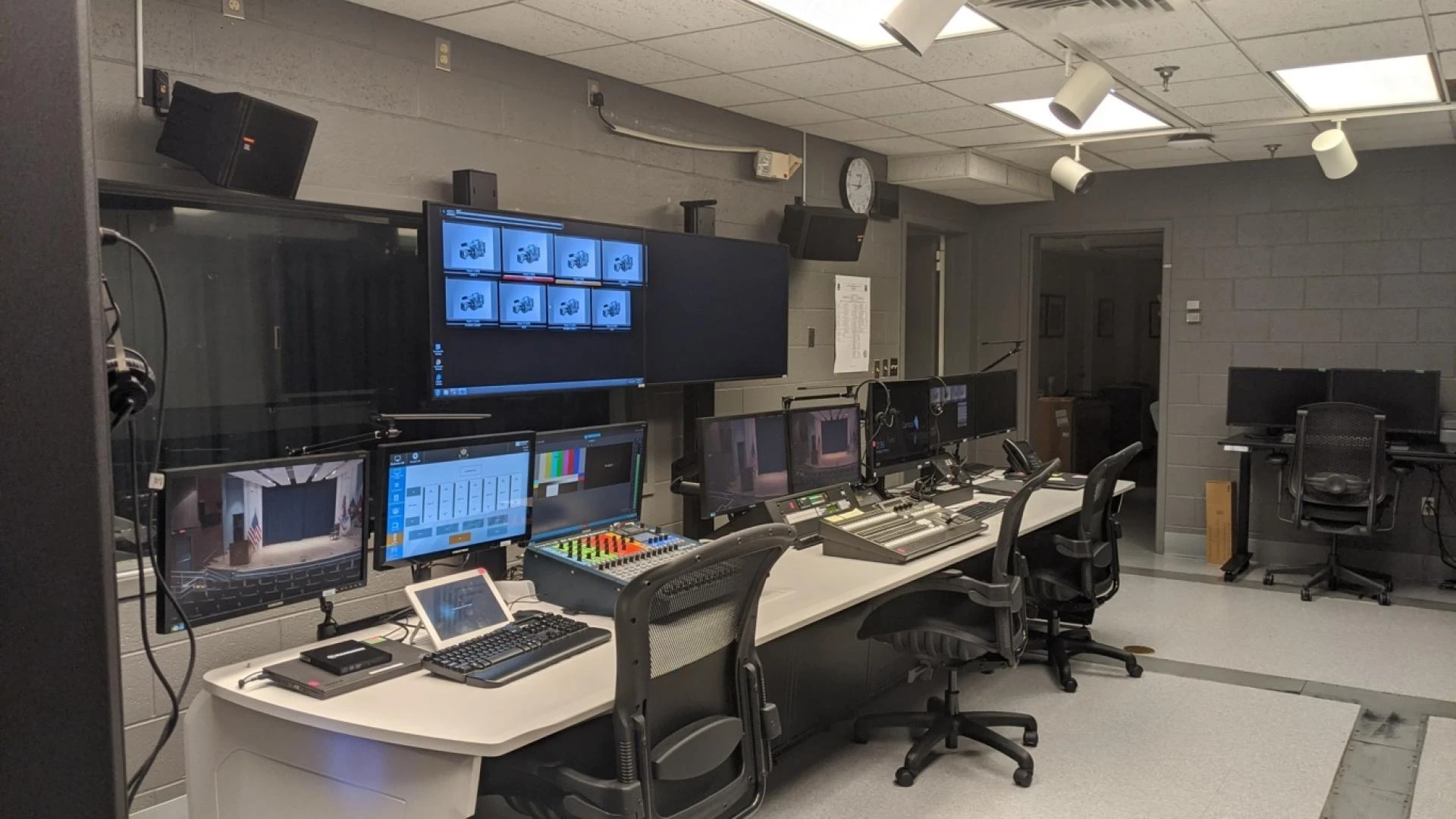
2. Command & Control Centers as Digital Nerve Hubs
Modern command and control centers rely on:
- Large-scale visualization walls
- Real-time data feeds
- Secure video conferencing
- Multi-source content routing
- Intelligent automation
These environments enable commanders and officials to make faster, more informed decisions with a unified operational picture.
3. Secure Collaboration Across Agencies
Future operations demand collaboration between:
- Military branches
- Intelligence agencies
- Federal departments
- Emergency response teams
- International partners
Advanced AV platforms enable secure multi-agency communication without compromising classified or sensitive data.
Cybersecurity: The Foundation of Future AV Systems
No matter how advanced the technology, security is the defining factor.
Modern AV systems must include:
- Encrypted data transmission
- Secure network segmentation
- Role-based access control
- Zero-trust architecture
- Continuous monitoring
- Secure firmware management
In military and government contexts, AV security is not optional, it is mission-critical.
AV Over IP: The Backbone of Modern Operations
AV over IP technology allows audio and video to travel securely over network infrastructure, enabling:
- Scalable deployments
- Remote operations
- Multi-site command structures
- Centralized system control
- Flexible reconfiguration
This architecture supports future-ready operations while maintaining strict security standards.
The Human Factor: Designing for Real-World Operations
Technology alone does not guarantee success. AV systems must be designed around human operators, not just technical specifications.
Key design principles include:
- Intuitive interfaces
- Fast response times
- Low-latency communication
- High reliability
- Redundancy planning
- Operational simplicity
In high-pressure environments, usability becomes a matter of safety and effectiveness.
The Role of Audio Visual Services For Military Operations
Specialized Audio Visual Services For Military environments go far beyond standard AV integration. They involve:
- Secure system architecture
- Classified environment compliance
- Mission-specific design
- Tactical communication needs
- Interoperability requirements
- Operational continuity planning
These services ensure that technology supports real mission demands, not just technical performance.
Training & Simulation Environments
Modern AV solutions are also transforming training through:
- Immersive simulation rooms
- Virtual command exercises
- Real-time scenario modeling
- Hybrid training environments
- Secure remote learning platforms
These systems improve readiness while reducing operational risk.
Crisis Response and Emergency Operations
Government agencies rely on AV systems during crises for:
- Disaster response coordination
- Emergency command centers
- Multi-agency operations
- Real-time intelligence sharing
- Public communication management
Reliable Government Audio Visual Solutions ensure continuity during critical moments.
Interoperability: The Future Standard
Future AV systems must support:
- Multiple platforms
- Diverse hardware vendors
- Different security classifications
- Cross-network integration
- Multi-protocol communication
Interoperability ensures flexibility, scalability, and long-term sustainability.
Sustainability and Resilient Infrastructure
The future of government AV also includes:
- Energy-efficient systems
- Modular designs
- Scalable infrastructure
- Long-term lifecycle planning
- Reduced maintenance complexity
This creates systems that are not only secure, but sustainable.
AI and Intelligent Automation in AV Systems
Artificial intelligence is shaping next-generation AV through:
- Automated system monitoring
- Predictive maintenance
- Intelligent content routing
- Smart room automation
- Behavioral analytics
These technologies improve reliability and operational efficiency.
The Future Vision of Secure AV Operations
The future of AV in military and government environments will be defined by:
- Security-first design
- Digital integration
- Network-centric architecture
- Human-centered usability
- Mission-driven engineering
- Long-term scalability
AV will no longer be considered support infrastructure, it will be recognized as strategic operational technology.
Why Specialized AV Integration Matters
General commercial AV providers often lack the expertise required for:
- Classified environments
- Government compliance
- Military operational needs
- Secure system architecture
- Mission-critical reliability
This is why working with specialized integrators is essential for success.
Building Trust Through Reliability
In defense and government operations, trust in technology equals trust in mission success. AV systems must perform flawlessly under pressure, without compromise.
Reliability is achieved through:
- Expert system design
- Secure engineering practices
- Rigorous testing
- Redundant infrastructure
- Continuous support
A Strategic Approach to Communication Infrastructure
Future-ready organizations treat AV as:
- Strategic infrastructure
- Operational backbone
- Digital command platforms
- Secure collaboration systems
- Decision-support technology
This mindset shift transforms how communication systems are designed and deployed.
The Role of Unassailable Solutions LLC in the Future of Secure AV
Organizations like Unassailable Solutions LLC are shaping this future by delivering mission-ready, secure, and intelligent AV environments that support modern military and government operations. By focusing on security, integration, and operational reliability, they help agencies build communication systems that are resilient, adaptable, and future-proof.
As digital transformation accelerates, Unassailable Solutions LLC continues to demonstrate how secure AV infrastructure can strengthen national security, operational efficiency, and strategic communication.
Conclusion: Communication as a Mission Asset
The future of military and government operations depends on secure, intelligent, and resilient communication systems. Advanced AV solutions are no longer optional, they are essential components of national security infrastructure.
From command centers to training environments, from crisis response to inter-agency collaboration, modern AV technology enables faster decisions, better coordination, and stronger mission outcomes.
By investing in advanced Audio Visual Services For Military and next-generation Government Audio Visual Solutions, organizations prepare not only for today’s challenges, but for the evolving demands of tomorrow’s operational landscape.


























Sign in to leave a comment.