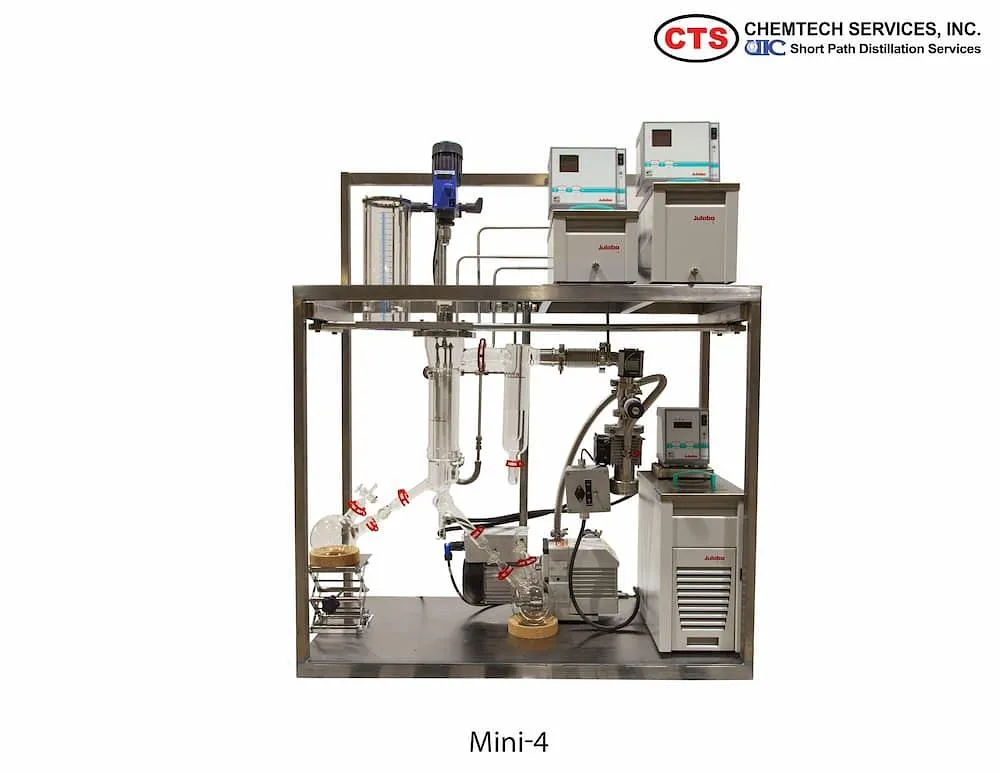

Industrial facilities often process materials with different levels of volatility, viscosity, thermal sensitivity, and purity requirements. Because of these variations, equipment selection should be based on the specific characteristics of each application rather than a standard approach. Short path technology can provide controlled separation when reduced pressure, efficient heat transfer, and limited vapor travel are important. Selecting short path distillation systems requires consideration of feed properties, production capacity, heating requirements, vacuum conditions, condensation, and collection. A carefully selected system can improve processing consistency, protect sensitive materials, reduce unnecessary energy use, and support dependable industrial production.
Understanding Short Path Distillation Systems
Short path distillation is a separation method designed to minimize the distance vapor travels between the evaporation surface and condenser. This configuration can be particularly useful for materials that require reduced pressure or controlled thermal exposure. During operation, the feed reaches a heated surface where selected components vaporize, while a nearby condenser captures the vapor. The resulting fractions can then be collected separately according to the system configuration. Equipment performance depends on temperature, pressure, feed rate, surface area, vapor movement, and condensation. Understanding these factors helps facilities determine whether short path processing suits their industrial requirements.
Reduced Pressure Operation
Reduced pressure can lower the temperature required for certain materials to vaporize. This characteristic may be valuable when processing compounds that are sensitive to heat or prone to degradation under conventional conditions. A dependable vacuum system should maintain stable pressure while limiting leaks and unnecessary fluctuations. Pumps, seals, valves, piping, and connections all contribute to vacuum performance. Facilities should determine their required operating pressure based on feed characteristics and separation objectives. Proper vacuum selection can help support efficient vaporization while reducing thermal exposure and improving the ability to control processing conditions throughout a production cycle.
Short Vapor Travel
A short distance between the evaporation and condensation areas can help reduce unnecessary vapor travel. This configuration may support efficient recovery of vaporized components and reduce opportunities for unwanted heat loss. The effectiveness of short vapor travel depends on equipment geometry, pressure, condenser design, and material characteristics. Facilities should therefore evaluate the complete system rather than focusing only on the distance between components. Appropriate vapor management can contribute to stable separation and improved material recovery. This is particularly relevant when processing valuable materials where efficient collection and reduced product loss are important production objectives.
Matching Systems With Material Characteristics
Material characteristics should be one of the first considerations during equipment selection. Viscosity, volatility, thermal sensitivity, concentration, composition, and flow behavior can affect how a material responds to heating and vacuum conditions. A system suitable for a low viscosity feed may not perform similarly with a highly viscous material. Facilities should provide accurate information about the feed when discussing equipment requirements. This allows technical teams to consider appropriate heating surfaces, feed arrangements, condenser capacity, and receiver design. Matching equipment to material characteristics can improve process stability and support more consistent results across production cycles.
Thermal Sensitivity
Temperature sensitive materials require careful control because excessive heat or prolonged exposure can influence their characteristics. Short path processing can provide an opportunity to use reduced pressure and controlled heating, depending on the application. Efficient heat transfer can also reduce the need for excessive heating temperatures. However, the actual operating conditions should always be established according to the material and desired separation. Facilities should monitor temperature and pressure throughout processing. A system that provides precise control can help operators balance vaporization requirements with material protection, supporting consistent quality and reliable separation performance.
Viscosity and Flow
Viscosity influences how easily material moves through a processing system and forms a consistent layer across the heating surface. Highly viscous feeds may require appropriate pumping and feed control arrangements to maintain stable movement. Temperature can also affect viscosity, making feed preheating an important consideration in some applications. Facilities should evaluate pump capacity, piping dimensions, valve selection, and feed control according to the material. Stable flow supports consistent heating and vapor generation. Proper feed handling can therefore reduce processing variations and help the system maintain predictable operating conditions during different production stages.
Selecting the Appropriate Capacity
System capacity should correspond to actual production requirements. An undersized unit may limit throughput and create processing bottlenecks, while excessive capacity can increase initial investment and utility requirements. Facilities should evaluate feed volume, desired output, batch frequency, operating schedule, and potential future growth. Capacity should also be considered alongside material characteristics because processing rates can vary according to viscosity, volatility, and required separation conditions. Selecting appropriate capacity allows the system to operate within practical ranges. It can also help facilities avoid unnecessary equipment limitations while maintaining efficient use of heating, cooling, and vacuum resources.
Planning for Future Production
Production requirements can change as demand increases, new products are introduced, or processing volumes become larger. Equipment selection should therefore consider possible future requirements without automatically choosing a system that is substantially oversized. Facilities can evaluate whether the system allows practical upgrades or modifications as production needs evolve. Additional receiver capacity, improved controls, feed adjustments, or other changes may be possible depending on the equipment design. Forward planning can protect the value of the investment and reduce the likelihood of replacing equipment prematurely. Flexible systems can provide useful support as industrial operations expand.
Evaluating Heating Performance
Heating performance is critical because the evaporation process depends on controlled thermal energy. Heating surfaces should distribute energy evenly while allowing operators to adjust temperature according to process requirements. Excessive heating can create unnecessary thermal stress, while insufficient heating may reduce vaporization and separation efficiency. Facilities should evaluate heating capacity, surface area, heating medium, insulation, and temperature monitoring. The appropriate configuration depends on the material and desired throughput. Efficient heat transfer can help reduce energy consumption while supporting stable vapor generation. Proper heating control can also improve repeatability between processing cycles.
Controlling Thermal Exposure
Thermal exposure should be managed carefully when materials are sensitive to elevated temperatures. Efficient heat transfer and reduced pressure can potentially support vaporization at lower temperatures, depending on the application. Residence conditions should also be considered because prolonged exposure can affect material quality. Equipment geometry, feed rate, heating intensity, and vacuum pressure all influence these factors. Facilities should establish operating conditions based on actual material behavior. Careful control can help maintain desired product characteristics while allowing effective separation. Monitoring systems can provide useful information and help operators respond to changes during processing.
Considering Condenser Design
The condenser is an important component because vaporized material must be recovered efficiently after leaving the heated surface. Condenser capacity should correspond to expected vapor volume, cooling requirements, temperature conditions, and operating pressure. If the condenser is inadequately sized, vapor recovery may become less efficient and product losses can increase. Properly designed condensation supports effective collection and can contribute to stable system operation. Facilities should therefore consider condenser design during equipment selection. Cooling utilities, surface area, material compatibility, and collection arrangements should all be reviewed to ensure that the condensation stage can meet processing requirements.
Receiver Capacity
Receivers collect condensed fractions and should provide sufficient capacity for expected production volumes. Their configuration can influence collection efficiency, material handling, cleaning, and process continuity. Facilities may require multiple receivers when different fractions need to be collected separately. Receiver connections should also be compatible with the vacuum and condensation systems. Proper sizing prevents unnecessary interruptions and reduces the need for frequent manual intervention. Facilities should evaluate receiver arrangements according to the material and production objectives. Effective collection helps protect valuable output and supports smoother operation from vaporization through final recovery.
Evaluating Vacuum System Requirements
Vacuum performance can directly influence separation conditions, particularly when lower processing temperatures are desired. The vacuum system should be capable of achieving and maintaining the required pressure throughout operation. Pump selection should reflect system volume, expected vapor load, operating pressure, and material characteristics. Seals, valves, piping, and connections should also be designed to maintain vacuum integrity. Facilities should monitor pressure continuously or at appropriate intervals. Stable vacuum conditions can improve process repeatability and help operators maintain suitable temperatures. Reliable vacuum equipment is therefore an important consideration when selecting a short path configuration.
Maintaining Vacuum Integrity
Vacuum integrity can deteriorate over time because of worn seals, damaged connections, valve problems, or pump performance issues. Preventive maintenance can help identify these problems before they significantly affect production. Operators should inspect vacuum related components regularly and monitor pressure behavior during operation. Replacement seals and other common components should be readily available when possible. Maintaining vacuum integrity can reduce process fluctuations and improve separation reliability. It also helps operators maintain lower operating temperatures where appropriate. Facilities should therefore consider both initial vacuum system quality and long term maintenance requirements when evaluating equipment.
Considering Equipment Construction
Equipment construction affects durability, cleanliness, maintenance, and overall service life. Components exposed to chemicals, elevated temperatures, vacuum conditions, and repeated cleaning should be made from suitable materials. Proper fabrication can reduce leakage and contamination risks while supporting mechanical reliability. Internal surfaces should also be practical to clean and inspect. Facilities should evaluate vessels, heating surfaces, condensers, piping, seals, valves, pumps, and receivers as parts of the complete system. Durable construction can reduce unexpected maintenance and help equipment withstand repeated production cycles. This contributes to stable operation and protects the long term value of the investment.
Maintenance Accessibility
Routine maintenance is essential for preserving equipment performance. Operators may need to inspect seals, pumps, valves, heating surfaces, vacuum components, condensers, and receivers regularly. Equipment that provides convenient access to these components can make maintenance faster and safer. Cleaning procedures should also be considered during system selection. Difficult maintenance can increase downtime and discourage preventive inspections. Facilities should therefore assess how easily important components can be serviced or replaced. Good maintenance accessibility supports equipment longevity and helps prevent minor problems from developing into significant production interruptions.
Supporting Process Monitoring
Effective process monitoring provides operators with information about important operating conditions. Temperature, pressure, feed rate, and other variables can be measured using suitable instruments. Monitoring helps process teams identify deviations and make appropriate adjustments when necessary. Automated controls may improve consistency by maintaining selected parameters within defined ranges. However, skilled supervision remains important because materials and processes can behave differently under changing conditions. Facilities should select instrumentation according to the complexity of their application. Reliable monitoring can improve process understanding, support repeatability, and provide useful information for future optimization.
Improving Repeatability
Repeatability is important when facilities need to achieve similar results across multiple production cycles. Consistent feed quality, stable temperature, reliable vacuum, controlled flow, and effective condensation all contribute to repeatable processing. Standard operating procedures can help operators maintain established conditions. Recording key process parameters can also help identify trends and opportunities for improvement. If variations occur, historical information can assist with troubleshooting. A properly selected system provides the foundation for these practices by offering stable operating conditions and suitable control capabilities. Improved repeatability can support product quality, production planning, and overall operational efficiency.
Comparing Equipment Options
Facilities should compare potential equipment options according to their specific requirements rather than relying solely on price or general capacity. Important factors include feed characteristics, throughput, heating design, vacuum performance, condenser capacity, receiver configuration, construction materials, maintenance access, and technical support. Future expansion requirements should also be considered. A complete evaluation can help decision makers identify systems that provide practical long term value. Manufacturer engineering capabilities and availability of replacement components can further influence the decision. Comparing these factors together provides a stronger basis for selecting equipment that supports reliable and efficient industrial processing.
Considering Total Ownership Value
The initial equipment cost does not represent the entire investment. Utilities, maintenance, spare parts, downtime, installation, operator training, and future modifications can all affect total ownership costs. A system that costs less initially may become more expensive if it consumes more energy or requires frequent repairs. Conversely, a well designed system may provide stronger long term value through reliable operation and efficient processing. Facilities should therefore evaluate expected performance over the equipment's working life. Considering total ownership value encourages decisions based on productivity, reliability, efficiency, and sustainability rather than short term purchasing cost alone.
Conclusion
Selecting the appropriate system requires careful consideration of material properties, production capacity, heating requirements, vacuum performance, vapor travel, condensation, collection, construction quality, maintenance, and monitoring. Different industrial applications may require different configurations, making a detailed technical evaluation essential before purchasing equipment. A system that matches the actual process can support consistent results, efficient energy use, reliable operation, and better material recovery. Facilities should also consider future production needs and total ownership value when comparing options. For organizations evaluating specialized separation solutions, Chemtech Services, Inc can be considered when exploring equipment suited to different industrial processing applications.























Sign in to leave a comment.