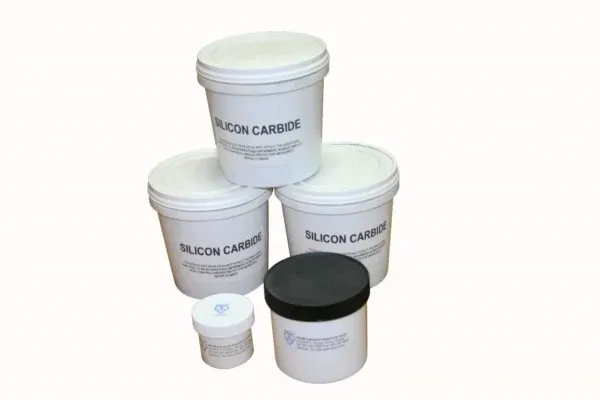
When precision finishing matters, silicon carbide polishing powder stands out as one of the most trusted abrasives used across scientific, industrial, and semiconductor applications. Whether you're lapping optical lenses, polishing ceramics, or preparing compound semiconductor wafers, silicon carbide (SiC) polishing powder delivers consistent, repeatable results that few abrasives can match. In this comprehensive guide, we'll explore everything you need to know — from how SiC abrasive powder works, to its grades, applications, and how to choose the right product for your needs.
What Is Silicon Carbide Polishing Powder?
Silicon carbide polishing powder is a synthetic abrasive material made by fusing silica sand and carbon at extremely high temperatures — a process known as the Acheson process. The result is a hard, sharp, and chemically stable crystalline compound with a Mohs hardness of 9 to 9.5, making it second only to diamond and boron carbide among commercially available abrasives.
The powder is produced in various grit sizes — from coarse grades used in material removal to ultra-fine sub-micron grades used in final surface polishing. Its sharp angular particles fracture during use, continuously exposing fresh cutting edges, which makes it exceptionally efficient for lapping and stock removal.
Key Physical Properties of SiC Polishing Powder
- Hardness: 9–9.5 Mohs (2550–2800 Knoop)
- Crystal structure: Hexagonal (alpha-SiC) or cubic (beta-SiC)
- Color: Black or green depending on purity
- Density: ~3.21 g/cm³
- Thermal conductivity: High — ideal for heat-sensitive applications
- Chemical resistance: Excellent against acids and alkalis
Types of Silicon Carbide Abrasive Powder
Not all SiC polishing powders are created equal. Understanding the types will help you select the right one for your application.
Black Silicon Carbide Powder
Black SiC is the most commonly used variant. It contains slightly more impurities than green SiC but is highly effective for general-purpose lapping, polishing ceramics, stones, glass, and non-ferrous metals. It offers excellent toughness and is cost-effective for high-volume applications.
Green Silicon Carbide Powder
Green SiC is of higher purity (typically 99%+) and is harder and more friable than black SiC. It is preferred for precision polishing of hard materials like cemented carbides, ceramics, optical components, and semiconductor substrates. Its sharper fracture characteristics produce a finer, more uniform surface finish.
Sub-Micron and Nano-Grade SiC Powder
For the most demanding applications — such as final-stage polishing of semiconductor wafers, optical flats, and precision optics — sub-micron SiC powders (0.05 µm to 0.5 µm) are used. These ultra-fine grades enable surface finishes in the nanometer range and are critical in semiconductor manufacturing.
Primary Applications of Silicon Carbide Polishing Powder
Semiconductor Wafer Preparation
One of the most critical uses of SiC polishing powder is in the preparation of compound semiconductor wafers. Substrates such as silicon, germanium, gallium arsenide (GaAs), indium phosphide (InP), and silicon carbide itself all require precisely controlled lapping and polishing before device fabrication can begin.
During the wafering and preparation process, different grades of SiC polishing powders are used in sequence — from coarser grades for stock removal to ultra-fine grades for surface planarization.
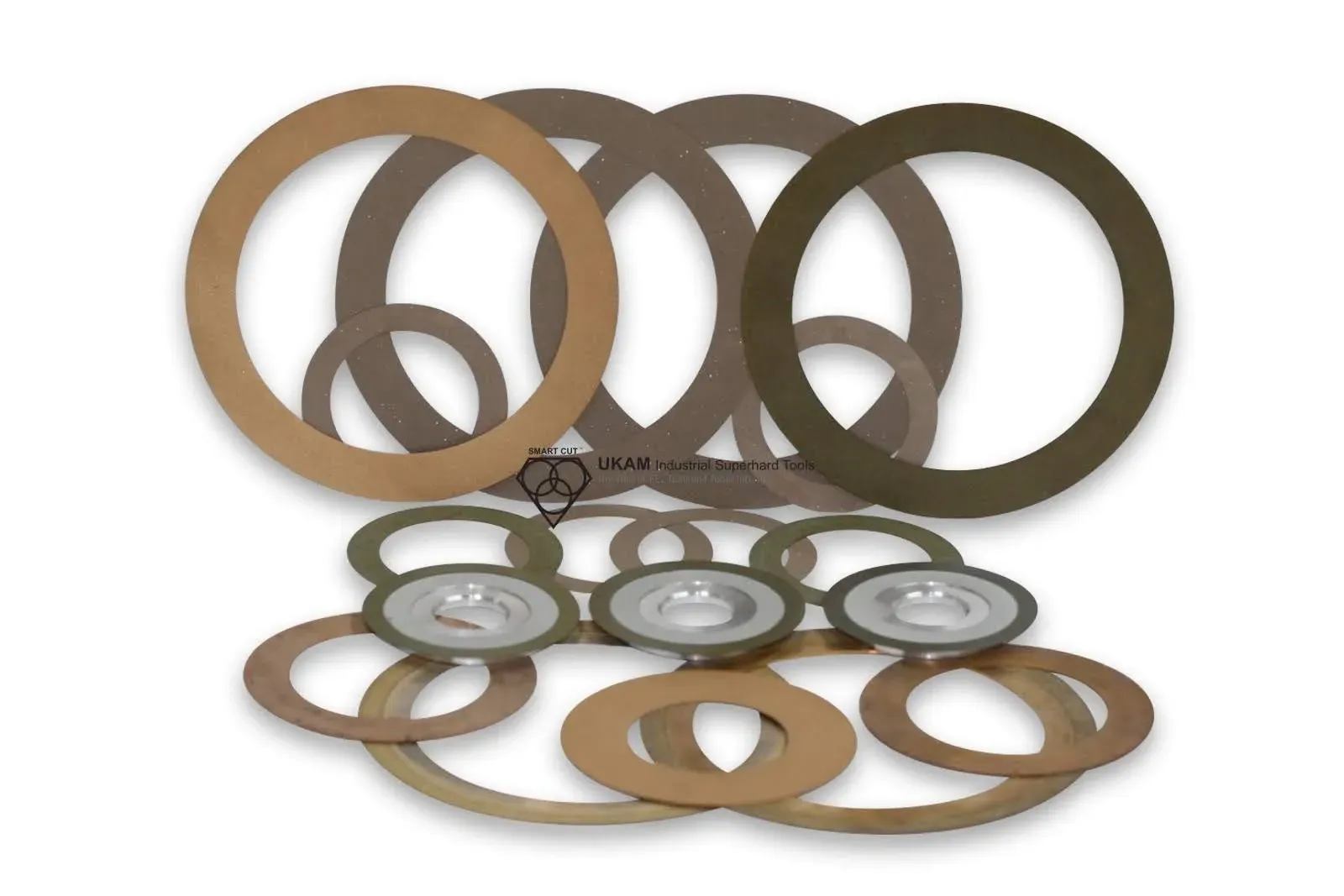
For applications involving delicate compound semiconductor materials, the cutting tools used upstream in the process matter just as much as the polishing media. For instance, when slicing GaAs boules, precision tooling like a diamond cutting wheel for gallium arsenide is critical to minimize subsurface damage before polishing begins — directly reducing the total polishing time and material loss.
Optical and Precision Lapping
Silicon carbide lapping powder is widely used in optical manufacturing — for grinding and lapping glass lenses, prisms, flats, and mirrors. The controlled particle size distribution ensures uniform material removal and prevents deep scratching, which is essential before transitioning to diamond or cerium oxide for final polishing.
Ceramic and Hard Material Polishing
Advanced ceramics such as alumina (Al₂O₃), zirconia (ZrO₂), silicon nitride (Si₃N₄), and boron carbide are notoriously difficult to polish. SiC abrasive powder's superior hardness makes it one of the few materials capable of efficiently lapping and polishing these substrates.
Metallographic Sample Preparation
In materials science laboratories, SiC polishing powder — usually in the form of coated papers or loose powder suspensions — is used to prepare metallographic specimens for microscopic examination. Sequential grinding with increasingly fine SiC grits produces a scratch-free cross-section for analysis.
Stone and Lapidary Polishing
Hobbyists and professionals working with gemstones, fossils, and decorative stones rely on silicon carbide grit powder for tumbling, grinding, and pre-polish stages. Its cost-effectiveness and wide availability in grit sizes (60 to 1200+) make it a staple in lapidary work.
SiC Polishing Powder Grit Size Chart
Choosing the correct grit is essential for achieving your target surface finish efficiently.
| Grit Size | Particle Size (µm) | Typical Use |
|---|---|---|
| 60–120 | 250–125 µm | Coarse stock removal, shaping |
| 220–400 | 68–35 µm | Intermediate lapping, rough polishing |
| 600–1200 | 26–15 µm | Fine lapping, pre-polish |
| 1500–2500 | 8–5 µm | Precision polishing |
| Sub-micron | 0.05–1 µm | Final semiconductor / optical polishing |
How to Use Silicon Carbide Polishing Powder
Step 1 — Surface Preparation
Before beginning, clean the workpiece thoroughly to remove contaminants. Any debris can cause uneven polishing or deep scratches.
Step 2 — Choose the Right Grit Sequence
Always start with a coarser grit to remove existing surface damage or saw marks, then work progressively through finer grits. Skipping grits leads to longer polishing times in subsequent steps.
Step 3 — Create a Slurry
Mix SiC powder with water, oil, or a compatible polishing fluid to form a slurry. The concentration and viscosity of the slurry affect the cutting rate and surface finish. A typical starting ratio is 1 part powder to 3–5 parts fluid.
Step 4 — Apply and Lap
Apply the slurry evenly on a lapping plate (cast iron, glass, or composite) or polishing cloth. Use a figure-eight or rotational motion to ensure uniform material removal.
Step 5 — Clean Between Grits
Thoroughly clean the workpiece, fixture, and polishing surface between grit changes. Cross-contamination of coarse particles into a fine polishing step is one of the most common causes of poor final surface finish.
Step 6 — Inspect and Repeat
After each stage, inspect the surface under appropriate magnification. Only proceed to the next finer grit when the previous stage's scratch pattern is fully replaced.
Silicon Carbide vs. Other Polishing Abrasives
| Abrasive | Hardness (Mohs) | Best For | Limitations |
|---|---|---|---|
| Silicon Carbide | 9–9.5 | Ceramics, semiconductors, optics | Not ideal for ferrous metals |
| Aluminum Oxide | 9 | Ferrous metals, general lapping | Lower cutting efficiency on hard ceramics |
| Diamond | 10 | Hardest materials, precision finish | High cost |
| Cerium Oxide | ~6 | Final polish of glass/optics | Low material removal rate |
| Boron Carbide | 9.5 | Ultra-hard ceramics | Very expensive |
Silicon carbide strikes the best balance between hardness, cost, availability, and performance across a wide range of materials — which is why it remains the dominant general-purpose lapping abrasive in both industrial and research settings.
Choosing a High-Quality SiC Polishing Powder Supplier
When selecting a supplier for silicon carbide polishing powder, consider the following factors:
Particle Size Consistency: Look for FEPA (Federation of European Producers of Abrasives) or ANSI-certified grading. A tight particle size distribution is critical for reproducible results in precision applications.
Purity Level: For semiconductor and optical applications, seek powders with certified purity above 98.5% (green SiC) or 97%+ (black SiC).
Contamination Control: Leading suppliers provide powders screened for metallic contamination, which can cause surface defects on sensitive substrates.
Application-Specific Formulations: Some advanced suppliers offer SiC powders pre-mixed with dispersants, pH buffers, or lubricants optimized for specific substrate types.
Technical Support: Precision polishing often requires application expertise. A good supplier should be able to recommend the right grade, concentration, and process parameters for your specific material.
Secondary Keywords: Related Products and Processes
- SiC lapping powder for optical flat and prism preparation
- Silicon carbide grit for tumbling and lapidary applications
- Abrasive polishing powder for ceramic and metal surface finishing
- Semiconductor substrate polishing using fine SiC media
- Silicon carbide slurry for CMP (Chemical Mechanical Planarization)
- Hard material lapping compound for cemented carbide finishing
- Precision abrasive media for metallographic specimen preparation
- Boule slicing and wafer lapping consumables for compound semiconductor production
Frequently Asked Questions (FAQs)
Q: What is silicon carbide polishing powder used for?
A: It is used for lapping, polishing, and finishing hard materials, including ceramics, optical glass, semiconductors, metals, and stones.
Q: What is the hardness of silicon carbide abrasive powder?
A: Silicon carbide has a Mohs hardness of 9 to 9.5, making it one of the hardest synthetic abrasives commercially available.
Q: What is the difference between black and green silicon carbide powder?
A: Green SiC is purer and harder, preferred for precision semiconductor and optical polishing; black SiC is tougher and more economical for general-purpose lapping.
Q: Can silicon carbide powder be used on semiconductor wafers?
A: Yes — SiC polishing powder is widely used for lapping GaAs, InP, SiC, and silicon substrates before final CMP processing.
Q: What grit size should I use for final polishing?
A: For final polishing of precision surfaces, sub-micron grades (0.05–1 µm) are recommended to achieve nanometer-level surface roughness.
Q: How do I mix silicon carbide polishing powder into a slurry?
A: Mix it with deionized water or a compatible oil-based carrier at a 1:3 to 1:5 ratio by weight, and stir thoroughly before application.
Q: Is silicon carbide safe to handle?
A: SiC powder should be handled with appropriate PPE, including gloves, eye protection, and a dust mask to avoid inhalation of fine particles.
Q: How does SiC compare to diamond polishing powder?
A: Diamond is harder and delivers finer finishes, but SiC is far more economical and sufficient for most industrial and research lapping applications.
Q: What lapping plate material works best with SiC powder?
A: Cast iron is the most common lapping plate for SiC slurries; glass and composite plates are used for finer grit stages.
Q: Where can I buy high-quality silicon carbide polishing powder?
A: Specialty precision abrasives suppliers offer application-specific SiC powders in a range of grit sizes and purity levels suited for semiconductor, optical, and industrial finishing needs.
Conclusion
Silicon carbide polishing powder remains one of the most versatile, reliable, and cost-effective abrasives available for precision material finishing. From coarse lapping of ceramics and metals to ultra-fine polishing of compound semiconductor wafers and optical surfaces, SiC delivers performance across the full spectrum of surface finishing needs. Selecting the right grade, using proper slurry preparation techniques, and sourcing from a certified, precision-grade supplier are the keys to achieving consistent, high-quality results in any application. As material science advances and tolerances continue to tighten, the role of high-purity silicon carbide abrasive powder in enabling next-generation devices and components will only grow more critical.





















Sign in to leave a comment.