
As we move further into the decade, the cargo drone industry is rapidly transforming the global logistics landscape. With advancements in automation, AI-driven flight systems, and increasing demand for faster, cost-effective deliveries, cargo drones are positioning themselves as the future of freight transportation. However, this growth brings both opportunities and challenges that key industry players must navigate.
Market Analysis: The Current State of the Cargo Drone Industry
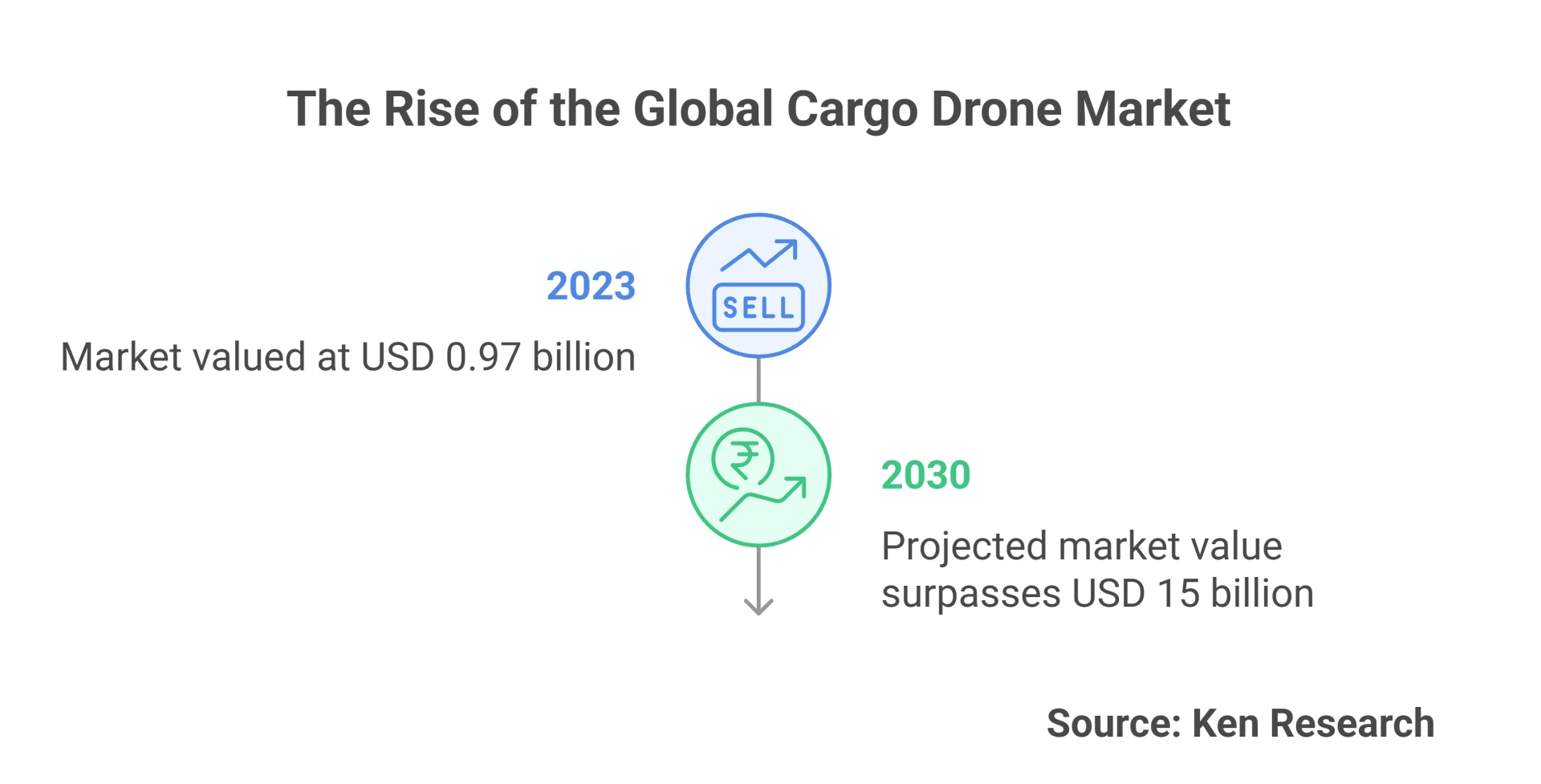
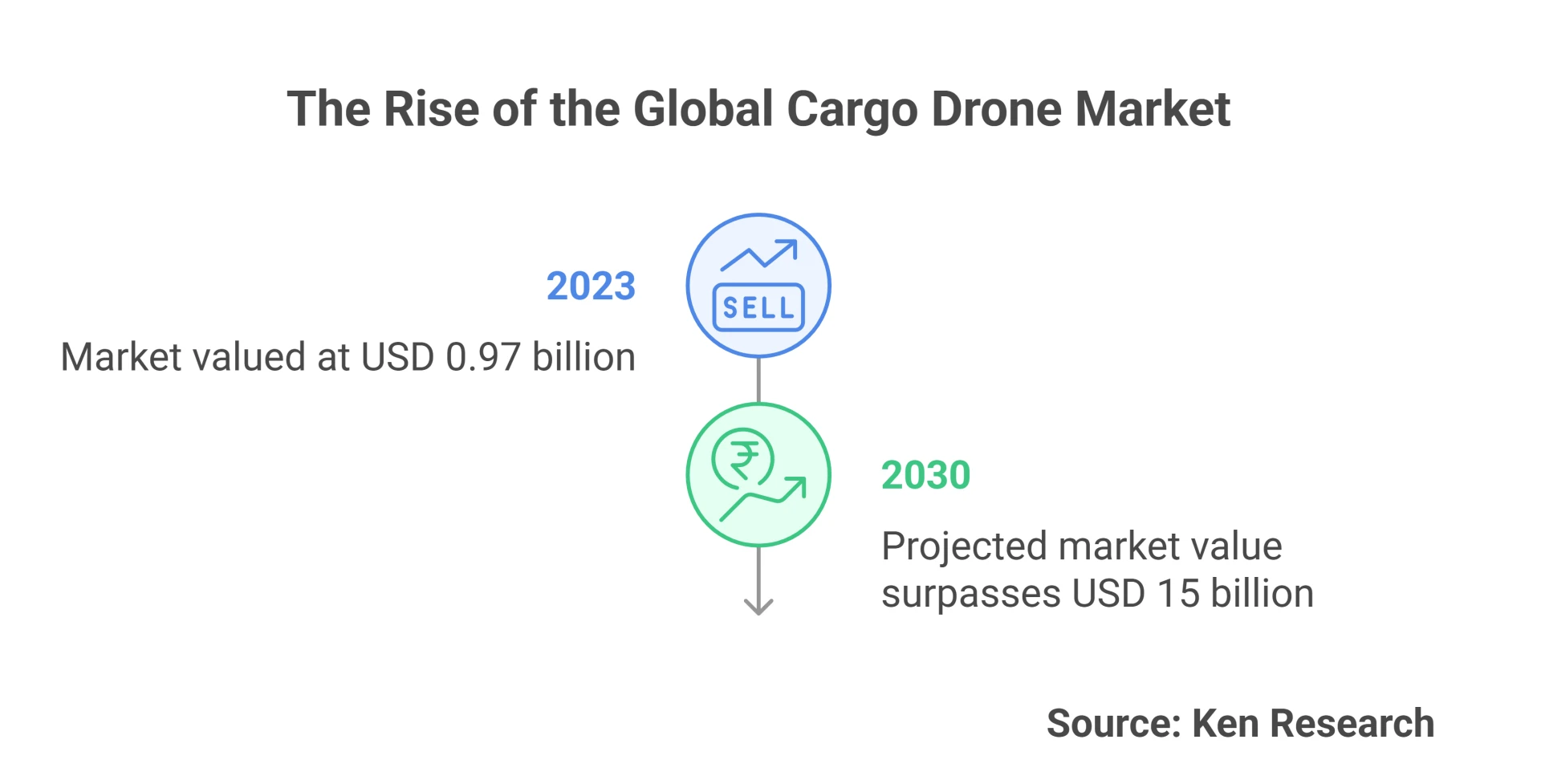
The global cargo drone market is valued at USD 0.97 billion and is projected to surpass USD 15 billion by 2030, growing at a CAGR of 20% due to increasing e-commerce, rising fuel costs, and the need for efficient supply chain solutions.
Several key trends are shaping this growth:
- Expansion of Autonomous Logistics – AI and IoT are driving the development of self-operating cargo drones, reducing the need for human intervention.
- Regulatory Challenges – Governments worldwide are implementing drone operation regulations that affect commercialization and air traffic management.
- Demand for Sustainable Freight Solutions – As businesses seek to reduce their carbon footprint, cargo drones offer an eco-friendly alternative to traditional trucking and air freight.
- Integration with 5G and AI Networks – Advanced connectivity is enhancing real-time monitoring and drone fleet management.
Download the full report by Ken Research.
Case Study: How Zipline is Revolutionizing Last-Mile Delivery
1. Speeding Up Logistics in Remote Areas
One of the biggest advantages of cargo drones is their ability to deliver goods quickly to remote locations where traditional logistics networks struggle. Zipline, a leading drone logistics company, has successfully deployed its drone fleet to deliver medical supplies in Africa and beyond.
By leveraging AI-powered flight navigation and an autonomous distribution network, Zipline has reduced medical delivery times from hours to minutes, demonstrating the potential for cargo drones in humanitarian and commercial supply chains.
Case Study: Amazon Prime Air’s Struggle with Regulatory Compliance
2. Navigating Regulatory Barriers
Despite the enthusiasm for drone-based delivery systems, stringent aviation laws continue to pose significant hurdles. Amazon Prime Air, Amazon’s ambitious cargo drone program, has faced repeated delays due to compliance issues with the Federal Aviation Administration (FAA) and other regulatory bodies.
To address these challenges, Amazon is working closely with authorities to develop safer, scalable drone solutions that meet legal requirements while maintaining efficiency. Their experience underscores the need for harmonized global regulations to facilitate seamless cargo drone adoption.
Case Study: UPS Flight Forward’s Push for Commercialization
3. The Path to Scalable Cargo Drone Operations
While many companies remain in the research phase, UPS Flight Forward has successfully obtained regulatory approvals to operate drone-based cargo deliveries in the U.S. Through strategic partnerships with healthcare providers, UPS has demonstrated the feasibility of using drones for commercial cargo transport at scale.
Their progress highlights the importance of regulatory collaboration, safety innovations, and the integration of drones into existing logistics infrastructures.
Opportunities for Growth and Expansion
1. Enhancing AI and Autonomous Navigation
Advancements in machine learning and AI-driven flight control systems are making drones smarter, allowing for real-time route optimization and safer navigation. Companies investing in AI-powered drones are poised to lead the market.
2. Investing in Infrastructure and Public-Private Partnerships
Governments and private firms must collaborate to develop drone-friendly infrastructure, including designated air corridors, landing stations, and advanced traffic management systems to ensure seamless integration into existing supply chains.
3. Sustainability and Carbon Reduction Initiatives
As companies focus on carbon neutrality, cargo drones offer a promising alternative to traditional delivery methods. Investing in electric-powered drones and renewable energy solutions can help businesses achieve their sustainability goals while reducing operational costs.
Looking Ahead: The Future of the Cargo Drone Industry
The cargo drone market is at a pivotal moment, where regulatory advancements, AI-driven innovations, and sustainability efforts will determine its trajectory. Companies that can effectively balance compliance with technological progress stand to revolutionize logistics as we know it.
Will cargo drones soon dominate global freight transport? How do you see the industry evolving in the next decade? Let's discuss! 💬






















Sign in to leave a comment.