
In a rapidly evolving security landscape, deploying a future-proof Access Control System is no longer optional for UAE businesses — it is a boardroom priority. From reducing unauthorised entry incidents to meeting regulatory mandates set by Dubai's Electronic Security Center (DESC) and Abu Dhabi Digital Authority (ADDA), organisations across the Emirates are investing in intelligent, scalable, and integrated physical security infrastructure that protects people, property, and sensitive data for years to come.
The Evolving Physical Security Landscape in the UAE
The UAE's ambition to be the world's safest and most digitally connected nation is driving unprecedented demand for enterprise-grade Security Access Control infrastructure. Commercial towers, government ministries, healthcare facilities, logistics hubs, schools, and hospitality venues are all moving away from legacy PIN-pad and proximity-card systems toward multi-layered platforms that combine biometric authentication, AI-powered surveillance integration, and cloud management.
Key market drivers shaping this shift include:
- UAE National Cybersecurity Strategy 2031 mandating converged physical and digital identity management
- Expo legacy infrastructure upgrades creating new benchmarks for smart building security
- Rise in insider threat incidents highlighting the inadequacy of single-factor authentication
- RERA and Dubai Municipality compliance requirements for residential and commercial access systems
- Widespread adoption of PropTech and smart city platforms requiring seamless API-driven security integration
What Is an Access Control System and Why Does It Matter?
At its core, an Access Control System is a security framework that regulates who can enter or exit a defined physical space, when they can do so, and what level of credential is required to gain passage. Unlike a simple lock and key, a modern system creates a digital audit trail of every entry event, enables zone-based permission management, and can be administered remotely from a central dashboard or mobile application.
Three foundational principles define every effective deployment: identification (who are you?), authentication (prove it), and authorisation (are you permitted here, right now?). When these principles are executed through an Advanced Access Control System, the result is a zero-trust physical security model that dramatically reduces the attack surface for both physical intrusions and credential-based breaches.
Types of Access Control Models
Understanding the right model for your organisation is the first step toward a future-proof deployment:
- Discretionary Access Control (DAC): Resource owners assign permissions — flexible but difficult to govern at scale
- Mandatory Access Control (MAC): Central policy engine governs access based on classification levels — standard in government and defence
- Role-Based Access Control (RBAC): Permissions tied to job function — ideal for corporate and multi-tenant environments
- Attribute-Based Access Control (ABAC): Dynamic rules combining user, resource, and environmental attributes — the gold standard for smart buildings
Key Components of a Future-Ready Access Control Solution
A comprehensive Access Control Solutions deployment is not a single product — it is an ecosystem of hardware, software, and integration layers working in concert. Tektronix Technologies designs end-to-end systems that include the following mission-critical components:
The Access Control Device: Your First Line of Defence
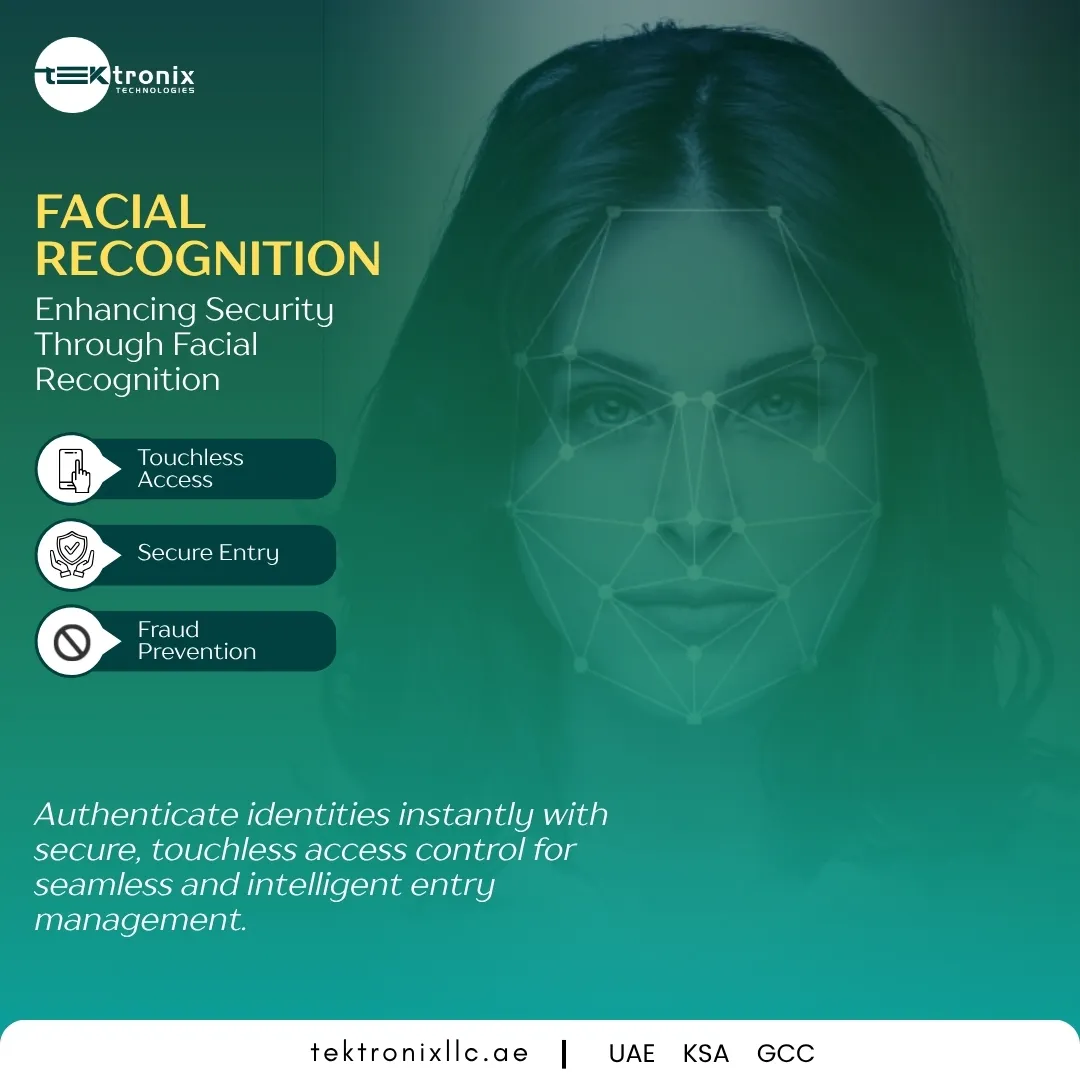
The Access Control Device is the physical reader or terminal at the point of entry — the tangible interface between a person and a secure zone. Modern devices support a layered credential hierarchy including RFID smart cards, mobile NFC credentials, QR codes, fingerprint biometrics, palm vein recognition, facial identification, and iris scanning. Ruggedized IP65-rated enclosures ensure reliable operation in the UAE's extreme heat and humidity, while tamper-detection sensors trigger instant alerts if a device is physically attacked.
Door Access Control: Hardware That Holds the Line
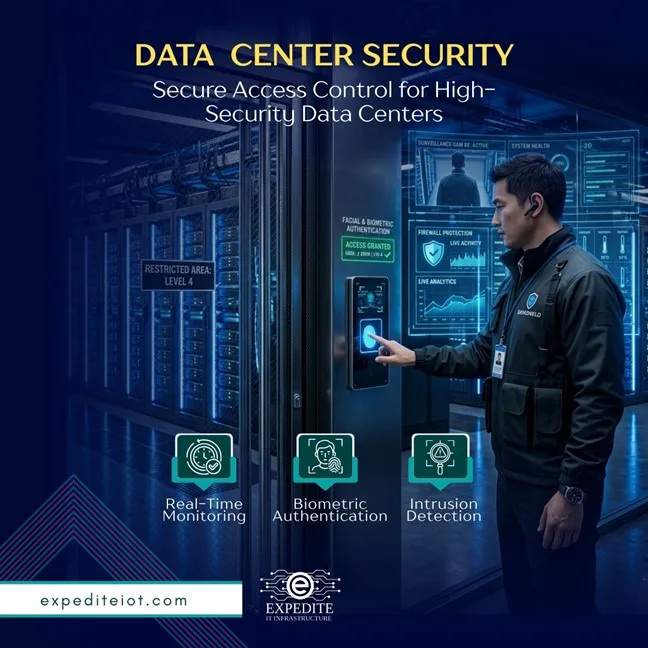
Effective Door Access Control hardware encompasses electromagnetic locks (mag-locks), electric strikes, mortise lock sets, automatic sliding door controllers, and high-security turnstiles and speed lanes. Each locking mechanism is selected based on door weight, fire egress compliance, and the security tier of the protected zone. For server rooms, cash vaults, and executive suites, multi-factor authentication — biometric plus card, or card plus PIN — is enforced as standard. Fail-safe and fail-secure configurations are engineered to meet UAE Civil Defence codes for emergency egress.
The Software Platform: Intelligence Behind Every Door
The software layer of an Advanced Access Control System is where raw hardware events are transformed into actionable security intelligence. Feature expectations for a 2025–2026 enterprise platform include real-time dashboard monitoring, automated cardholder lifecycle management, anti-passback enforcement, time-and-attendance reporting, VIP escort mode, visitor pre-authorisation, and deep integration with HR, payroll, and identity provider platforms such as Microsoft Active Directory, Okta, and Azure AD. Cloud-hosted software-as-a-service (SaaS) models offer UAE organisations zero on-premise server overhead while maintaining local data residency.
City-Specific Deployments: UAE, Dubai, Abu Dhabi, and Sharjah
As a specialist Access Control System UAE integrator, Tektronix Technologies maintains dedicated engineering teams, certified installers, and after-sales support centres across the three major Emirates, ensuring every deployment is aligned with local regulatory requirements, building codes, and operational realities.
Access Control System Dubai
Dubai's built environment — spanning free zones, mixed-use mega-developments, data centres, healthcare city, media city, and hospitality clusters — demands enterprise-class reliability and design versatility. An Access Control System Dubai deployment must integrate seamlessly with Bosch, Honeywell, Lenel, and Genetec VMS platforms already prevalent in the market, support Arabic and English interfaces, and comply with DESC Smart Infrastructure Security Standards. Tektronix Technologies has delivered systems across Business Bay, DIFC, JLT, Dubai Silicon Oasis, and DAFZA, bringing deep familiarity with the emirate's diverse building management ecosystem.
Access Control System Abu Dhabi
Federal government offices, national oil and energy facilities, defence-adjacent campuses, and premium hospitality assets in the capital require the highest tier of credential assurance and regulatory alignment. An Access Control System Abu Dhabi solution from Tektronix is designed to align with ADDA digital infrastructure guidelines, support PIV/CAC smart card compatibility for government users, and integrate with the TAMM e-services platform where required. Classified zones are protected with multi-factor biometric authentication and mantraps — interlocked double-door airlocks that prevent tailgating.
Access Control System Sharjah
Industrial zones, manufacturing plants, logistics warehouses, and educational institutions in Sharjah present unique challenges including large perimeters, shift-based workforce management, and demanding environmental conditions. An Access Control System Sharjah deployment by Tektronix leverages ruggedized outdoor readers, vehicle access barriers with ANPR (automatic number plate recognition) integration, and shift-scheduling modules embedded within the access software. Offline-capable controllers ensure uninterrupted access governance even during wide-area network disruptions.
How to Future-Proof Your Security Access Control Investment
Technology cycles in physical security are accelerating. A system installed today must be capable of incorporating tomorrow's credential standards, AI integrations, and compliance requirements without a forklift upgrade. Here is the Tektronix framework for building lasting security access control infrastructure:
- Open Architecture: Choose platforms built on OSDP v2, REST APIs, and ONVIF standards so hardware and software components can evolve independently without vendor lock-in
- Mobile Credentials: Deploy Bluetooth Low Energy (BLE) and NFC-based mobile access to eliminate physical cards — the fastest-growing credential format in the GCC
- Cloud-Ready Controllers: On-premise control panels with cloud management capability offer the best of both worlds — local processing resilience and remote administration flexibility
- AI Video Integration: Link access events to AI-powered CCTV analytics for automatic mismatch detection when a card is used but the face does not match the enrolled cardholder
- Cybersecurity Hardening: Encrypt all controller-to-reader communications (AES-128 minimum), disable unused ports, and enforce firmware update policies to prevent credential cloning and relay attacks
- Scalable Licensing: Opt for per-door or per-user SaaS pricing models that grow with your headcount without requiring hardware replacement
Why Tektronix Technologies Is the UAE's Trusted Access Control Partner
Tektronix Technologies has spent over a decade engineering, installing, and maintaining enterprise access control solutions across the UAE and the wider GCC.
- Experience: 700+ completed access control projects across commercial, government, healthcare, education, and industrial verticals in the UAE
- Expertise: ASIS-certified Physical Security Professionals (PSPs) on staff, with manufacturer-certified engineers for ZKTeco, Suprema, HID Global, Genetec, and Lenel S2
- Authoritativeness: Approved vendor on the Dubai Municipality, DEWA, and Mubadala preferred supplier lists; named partner of HID Global and Suprema for the UAE market
- Trustworthiness: ISO 9001:2015 certified quality management; 24/7 NOC support with SLA-guaranteed 4-hour on-site response in Dubai, Abu Dhabi, and Sharjah
Essential Features Checklist for UAE Enterprise Deployments
Before selecting any vendor for your next-door access control or enterprise system upgrade, verify these capabilities are covered:
- Multi-factor authentication: biometric + card, card + PIN, or mobile + face
- Anti-passback and anti-tailgating enforcement with alarm triggers
- Real-time cardholder monitoring and instant remote lock/unlock capability
- Automated access expiry for contractors, temporary staff, and visitors
- Comprehensive audit trail exportable in CSV, PDF, or via API for SIEM integration
- Emergency lockdown mode operable from a single click or physical panic button
- Integration with fire alarm systems for automatic fail-safe door release
- UAE PDPL-compliant biometric data storage with encryption and right-to-erasure support
- Offline fallback mode ensuring access continuity during cloud or LAN outages
- Mobile management app for iOS and Android with push-notification alerting
The Business Case: ROI of Investing in Advanced Access Control
Decision-makers evaluating an Advanced Access Control System upgrade consistently report returns that extend well beyond reduced security incidents. Quantifiable benefits include:
- 40–70% reduction in security staffing costs through automated entry and remote monitoring
- Near-elimination of buddy-punching and time fraud with biometric time-and-attendance integration
- Insurance premium reductions of 10–20% for organisations that can demonstrate ISO 27001-aligned physical security controls
- Audit-readiness: compliance reports generated in minutes rather than days, reducing exposure during ADDA, DESC, or external auditor reviews
- Faster incident response: real-time access event data correlating with CCTV footage cuts mean-time-to-investigate from hours to minutes
Conclusion
The UAE's ambition to lead the world in smart city infrastructure, digital government, and sustainable urban development demands a physical security foundation that is equally forward-thinking. A purpose-built Access Control System UAE — engineered by specialists who understand the region's regulatory environment, climate, and cultural context — is the cornerstone of that foundation.
From the intelligent Access Control Device at your front gate to the cloud-managed software platform governing permissions for thousands of cardholders across dozens of sites, Tektronix Technologies delivers Access Control Solutions that are robust today and architected for tomorrow. Whether you require Door Access Control for a single-floor office in Dubai or a multi-site Security Access Control rollout spanning Abu Dhabi's industrial estates and Sharjah's free zones, our team has the certification, experience, and local presence to deliver on time, on budget, and fully compliant.
FAQs
1. What is the difference between a standard and an Advanced Access Control System?
A standard system typically uses single-factor authentication — a PIN or proximity card — and offers basic event logging with limited integration capability. An Advanced Access Control System layers multiple credential types (biometric, mobile, smart card), enforces context-aware access policies (time, location, threat level), integrates with HR and identity platforms, and provides AI-driven anomaly detection. For UAE enterprises facing regulatory scrutiny and sophisticated insider threats, the advanced tier is the appropriate baseline, not an upgrade.
2. Which Access Control Device types are best suited to the UAE's climate?
Outdoor Access Control Device units installed in the UAE must carry an IP65 or higher ingress protection rating to withstand sand ingress and humidity, an operating temperature tolerance of -10°C to +60°C, and UV-resistant housing to prevent plastics yellowing under direct sunlight. Tektronix recommends stainless-steel fascia readers with anti-glare displays for outdoor applications in Dubai, Abu Dhabi, and Sharjah environments. All recommended devices are tested to IEC 60068 environmental standards before deployment.
3. How does Door Access Control integrate with fire safety systems in UAE buildings?
Door Access Control systems in UAE buildings must comply with UAE Fire and Life Safety Code of Practice, which mandates fail-safe operation on fire egress routes. This means electromagnetic locks and electric strikes on emergency exit doors automatically release when the fire alarm panel triggers, allowing free egress without any credential. Tektronix engineers all fire-door integrations with dedicated dry-contact relay inputs on the access controller so the fire alarm system directly commands door release, independent of the access control software — a critical redundancy requirement audited during Dubai Civil Defence inspections.
4. Are biometric-based Access Control Solutions compliant with UAE data protection law?
Yes, provided the Access Control Solutions vendor follows UAE Personal Data Protection Law (PDPL) requirements. Biometric data — fingerprints, facial geometry, iris patterns — is classified as sensitive personal data under the PDPL, requiring explicit informed consent, purpose limitation, proportionality, and the right to erasure. Tektronix Technologies stores biometric templates in AES-256 encrypted format on UAE-resident servers, implements role-based access to biometric databases, and provides a data subject request workflow for organisations to honour erasure requests within the legally mandated timeframe.
5. How long does it take to deploy a full Access Control System across multiple UAE sites?
Deployment timelines depend on site complexity, the number of doors, integration requirements, and whether civil works (cable routing, conduit installation) are required. A single-floor office installation of an Access Control System Dubai, Abu Dhabi, or Sharjah typically takes five to ten business days from survey to commissioning. A multi-site enterprise rollout — such as a 20-building corporate campus or a distributed retail network — is managed in phased sprints of four to six weeks per batch of locations. Tektronix provides a dedicated project manager, pre-cut and labelled cable bundles, and factory-pre-configured controllers to minimise on-site installation time and disruption to business operations.



























Sign in to leave a comment.