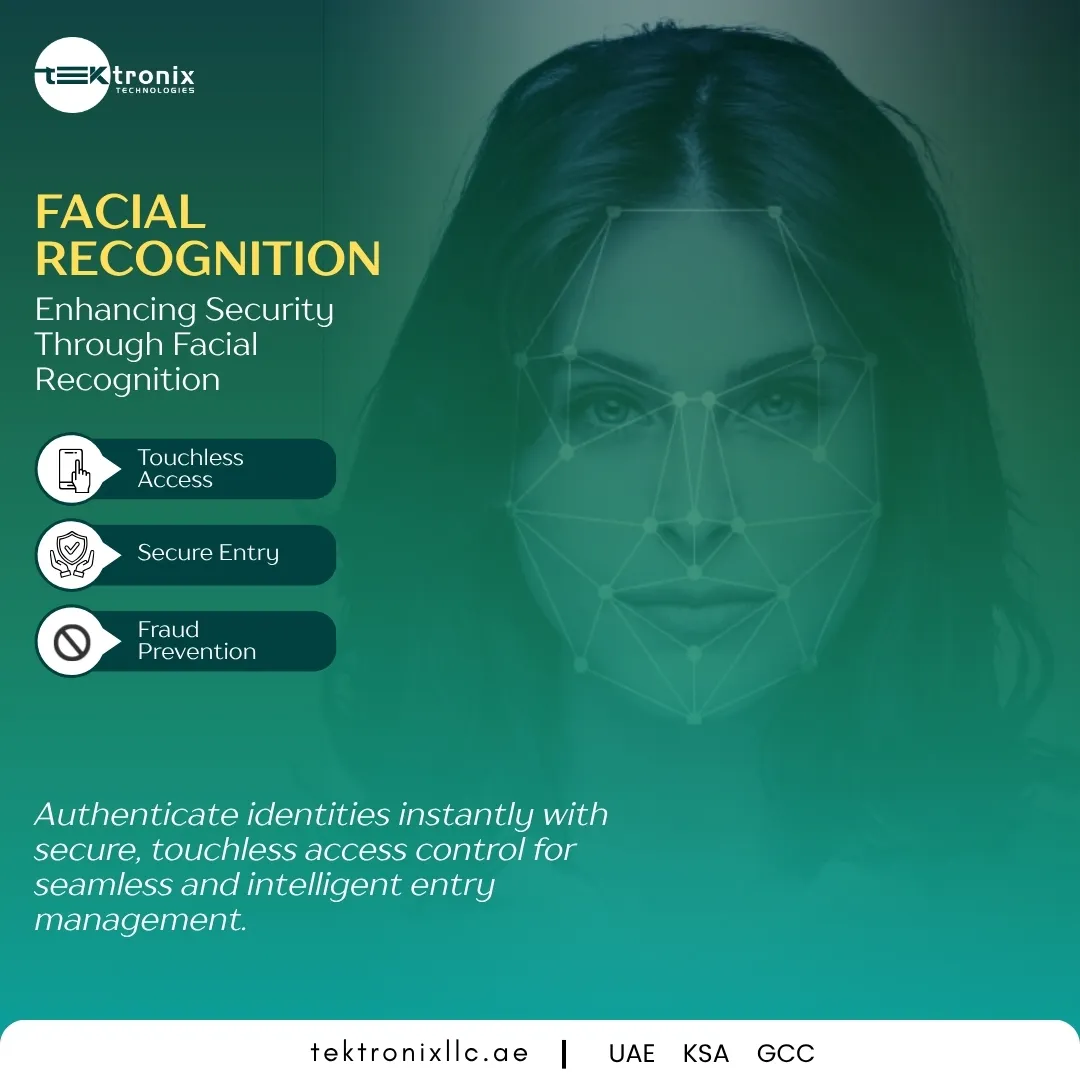

Across the UAE, Facial Recognition is rewriting the rules of identity verification and physical access. From the soaring terminals of Dubai International Airport to the corporate towers of Abu Dhabi's business districts, a single glance is now enough to open doors, clear checkpoints, and authenticate identities in milliseconds. This shift is not a distant vision — it is happening right now, reshaping security infrastructure in the region's most critical environments. Businesses and government entities that adopt a robust Facial Recognition System are not only gaining a competitive edge but also setting a new benchmark for seamless, secure, and touchless access control across the Emirates. 
The Rise of Biometric Identity Verification in the UAE
The UAE has emerged as one of the world's foremost adopters of intelligent biometric infrastructure. Guided by the UAE Vision 2031 and smart city initiatives across Dubai, Abu Dhabi, and Sharjah, government agencies and private enterprises alike are integrating advanced biometric solutions into their day-to-day operations. At the heart of this transformation is Face Detection technology — the ability of a system to locate and analyse a human face in real time, regardless of lighting conditions, angle, or crowd density. This foundational capability has evolved into sophisticated end-to-end solutions that cover enrolment, verification, and audit trail management, all within a unified platform.
The region's investment in smart infrastructure has created an ideal environment for Facial Identification systems to flourish. These solutions are no longer confined to high-security government zones. Today, they power attendance management in corporate offices, visitor registration in luxury hotels, patient authentication in hospitals, and resident access in smart residential communities. The versatility of modern biometric technology means every sector in the UAE stands to benefit from more intelligent access management.
Understanding the Technology: How a Facial Recognition System Works
A modern Facial Recognition System operates through a multi-stage pipeline that translates a person's face into a verifiable digital identity. The process begins with Face Detection, where the system's camera module isolates facial regions from a live video feed. Deep learning algorithms then map unique geometric features — the distance between the eyes, the contour of the jawline, the curve of the cheekbones — to generate a mathematical "faceprint" unique to each individual.
Once a faceprint is generated, the system performs Facial Authentication by comparing it against a pre-enrolled database. If the match score exceeds the configured confidence threshold, access is granted or the identity is confirmed — typically within 0.3 to 1 second. This speed and accuracy make the technology superior to legacy methods such as PIN codes, proximity cards, or even fingerprint scanners in high-throughput environments like airports, metro stations, and office lobbies.
Core Components of an Enterprise-Grade Facial Recognition Solution
- Facial Recognition Software: The AI and machine learning engine that trains on face data, identifies liveness (anti-spoofing), and manages identity databases.
- Facial Recognition Device: The physical terminal — typically a wall-mounted or turnstile-integrated camera unit — that captures face images and interfaces with the software backend.
- Cloud or on-premise server infrastructure for real-time data processing.
- Integration middleware for connecting with HR, ERP, visitor management, or CCTV platforms.
- Admin dashboard for enrolment, reporting, alerts, and audit logs.
Facial Recognition UAE: A Nationwide Security Revolution
The deployment of Facial Recognition UAE-wide is advancing at an unprecedented pace. From federal border control to municipality smart services, UAE authorities have integrated biometric identity layers into public infrastructure with remarkable efficiency. The General Directorate of Residency and Foreigners Affairs (GDRFA) uses facial biometrics at immigration counters to process thousands of travellers daily. Smart police stations, courthouses, and government service centres across the Emirates now offer touchless check-in powered by automated Facial Identification systems.
For private enterprises operating in the region, this nationwide embrace of biometric infrastructure sends a clear signal: digital-first, face-based identity verification is the new standard. Companies that delay adoption risk falling behind regulatory expectations and missing the operational efficiencies that competitors are already realising.
Facial Recognition Dubai: Smart City Security at Scale
Dubai has established itself as the global benchmark for smart city innovation, and Facial Recognition Dubai deployments are central to that achievement. Dubai Airports, operated by Dubai Airports Corporation, uses automated biometric gates at immigration — a fully touchless corridor that reads a traveller's face without requiring them to stop or present a document. Dubai Metro stations and public venues have trialled real-time crowd monitoring using facial analytics. Dubai Police have implemented predictive security systems that leverage face-based identification to flag persons of interest in real time.
For corporates headquartered in the emirate, leading Facial Recognition Software providers have delivered enterprise-grade solutions for DIFC financial institutions, JLT office towers, free zone authorities, and retail mega-complexes. These systems integrate directly with building management systems (BMS), enabling tailored access policies — time-of-day restrictions, zone-based permissions, and multi-factor biometric authentication for high-security areas.
Facial Recognition Abu Dhabi: Capital Intelligence
As the UAE's capital and home to the nation's critical energy, government, and financial institutions, Abu Dhabi has deployed Facial Recognition Abu Dhabi solutions at some of the most sensitive facilities in the region. Abu Dhabi International Airport's biometric corridor is among the most advanced in the world, enabling travellers to move from check-in to gate using only their face. ADNOC, Mubadala, and Abu Dhabi Global Market (ADGM) entities have invested in Facial Recognition Device infrastructure that governs employee access to restricted zones, data centres, and executive floors.
Government service centres under TAMM and the Abu Dhabi Digital Authority (ADDA) are also rolling out biometric enrolment and verification services, enabling residents to authenticate their identities digitally. This creates a seamless ecosystem where the same biometric credential works across government, private sector, and travel environments — a true single identity framework.
Facial Recognition Sharjah: Expanding Biometric Access Beyond Major Metros
The third-largest emirate is rapidly closing the gap with its neighbours in terms of smart security adoption. Facial Recognition Sharjah deployments are growing across educational institutions, manufacturing facilities, logistics hubs, and commercial districts. Sharjah Airport has implemented biometric processing at border control, while the Sharjah Economic Development Department (SEDD) supports businesses in the emirate to upgrade their workforce management systems with AI-driven biometric attendance solutions.
Industrial zones such as SAIF Zone and Hamriyah Free Zone are deploying Facial Recognition Device terminals at entry gates to eliminate buddy-punching, reduce security personnel overhead, and maintain precise records of who is on site at any given moment — a critical compliance requirement for health, safety, and insurance purposes.
Sector-by-Sector Applications: Where Facial Authentication Is Making an Impact
Aviation & Border Control
Airports across the UAE use Facial Authentication to power e-gates that replace manual passport checks. Travellers are matched against visa and watch-list databases in under a second, dramatically reducing queue times while elevating security accuracy beyond human capability.
Corporate Offices & Free Zones
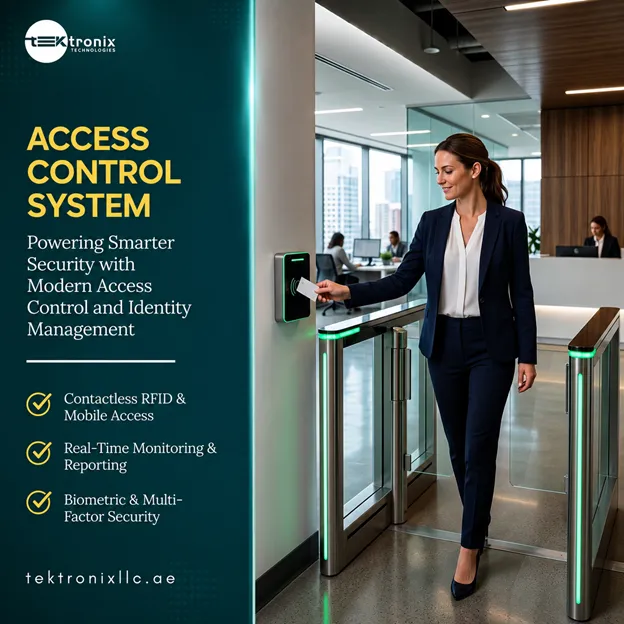
Enterprises replace traditional access cards with a Facial Recognition Device at lobby entrances and server rooms. Role-based access policies ensure employees can only enter zones permitted for their designation — with every access event logged for compliance and HR analytics.
Healthcare Facilities
Hospitals and clinics use Facial Identification to authenticate patients at reception, reducing identity fraud and ensuring medical records are associated with the correct individual — particularly important in emergency settings where the patient cannot present documentation.
Retail & Hospitality
Luxury hotels and high-end retail precincts use Facial Recognition Software to deliver VIP recognition — identifying returning guests or high-value customers as they enter, alerting staff to greet them personally and surface their preferences. This transforms security technology into a customer experience tool.
Education & Campus Security
Universities and schools across the UAE have replaced manual roll calls and swipe-card systems with real-time Face Detection-based attendance, providing parents, administrators, and safety officers with accurate, live visibility into campus presence.
Choosing the Right Facial Recognition Software and Hardware for Your Business
Selecting the ideal Facial Recognition Software and accompanying Facial Recognition Device requires a systematic evaluation of your organisation's unique requirements. Here are the critical decision criteria:
- Accuracy & Liveness Detection: Look for solutions with (Presentation Attack Detection) certification and accuracy rates above 99.5% for matching in your expected user volumes.
- Integration Depth: The system should offer APIs or native connectors to your HR, payroll, visitor management, and CCTV platforms.
- Data Residency & PDPL Compliance: For UAE deployments, ensure biometric data storage meets the UAE Personal Data Protection Law (Federal Decree Law No. 45 of 2021) requirements.
- Scalability: Enterprise solutions should support databases from hundreds to tens of millions of faces without degrading recognition speed or accuracy.
- Environmental Resilience: UAE's high-heat, high-humidity outdoor environments require IP65+ rated hardware that performs reliably across diverse lighting — from harsh midday sun to dim indoor lobbies.
- Vendor Support & SLA: Mission-critical access systems require guaranteed uptime, on-site support capability, and a provider with established presence in the UAE market.
Why Tektronix Technologies Is the UAE's Trusted Biometric Security Partner
Tektronix Technologies has been delivering intelligent security and access control solutions across the UAE for over a decade. As a UAE-based systems integrator with deep expertise in biometric deployments, the company understands the operational realities, regulatory landscape, and environmental challenges unique to the Emirates. Tektronix's Facial Recognition Dubai portfolio covers the full project lifecycle — from site survey and system design, through installation, staff training, and long-term support — ensuring that clients receive not just a product but a complete, working solution.
The company's engineering team holds hands-on experience deploying Facial Recognition UAE solutions across airports, free zones, data centres, corporate campuses, and residential communities throughout Dubai, Abu Dhabi, and Sharjah. This depth of regional expertise translates directly into faster deployments, fewer integration challenges, and systems that perform reliably from day one.
Tektronix Technologies is a certified partner of globally recognised biometric hardware and software manufacturers, holds relevant UAE trade licences, and has completed security deployments for clients in regulated sectors including banking, healthcare, aviation, and critical national infrastructure. The company's project portfolio, client testimonials, and technical certifications are available on request — evidence that backs every claim with real-world delivery.
Conclusion
The UAE's journey from traditional ID checks to intelligent, real-time Facial Recognition is one of the most significant infrastructure transformations of the past decade. From the immigration e-gates of Dubai and Abu Dhabi airports to the attendance terminals of Sharjah's free zone factories, Facial Authentication has proven itself as faster, more accurate, and more scalable than every legacy alternative. The technology is no longer a luxury for only the largest organisations — it is an accessible, cost-effective solution for any UAE business that takes access security, workforce management, and operational efficiency seriously.
Whether you are evaluating your first Facial Recognition Device deployment or looking to upgrade an existing Facial Recognition System across multiple sites, partnering with an experienced regional integrator makes all the difference.
FAQs
1. Is Facial Recognition legally permitted for commercial use across the UAE?
Yes. Commercial deployment of Facial Recognition UAE-wide is permitted under UAE federal law, provided operators comply with the UAE Personal Data Protection Law (Federal Decree Law No. 45 of 2021). This requires informed consent for biometric data collection, secure data storage, defined retention periods, and the right for individuals to request deletion. Sector-specific regulations — such as those issued by the Central Bank, MOHAP, or KHDA — may impose additional requirements. Working with a knowledgeable local integrator ensures your deployment remains fully compliant.
2. How accurate is modern Facial Identification technology in real-world UAE environments?
Enterprise-grade Facial Identification platforms routinely achieve accuracy rates exceeding 99.7% in controlled indoor environments. In demanding outdoor conditions — bright sunlight, varying angles, masks, or glasses — performance depends on the quality of the Facial Recognition Software and camera hardware. Leading solutions use infrared imaging and multi-frame analysis to maintain high accuracy regardless of ambient lighting, making them suitable for UAE's challenging climate. Systems should always be validated with a pilot deployment in your specific environment before full rollout.
3. What is the difference between Face Detection, Facial Identification, and Facial Authentication?
These three terms describe successive stages in a biometric pipeline. Face Detection is the process of locating a human face within an image or video frame — it does not yet know who the person is. Facial Identification compares the detected face against a large database to find the closest match — used in law enforcement watch-list screening or access control where the user does not declare identity. Facial Authentication (1:1 matching) verifies a claimed identity by comparing the live face against a single stored template — used in attendance, login, and access scenarios where the individual first states who they are.
4. How long does it take to implement a Facial Recognition System in a UAE office or facility?
Implementation timelines for a Facial Recognition System vary by scope. A single-site office deployment with up to 500 enrolled users can typically be completed within 2 to 4 weeks, including site survey, hardware installation, software configuration, network integration, and user enrolment. Multi-site or high-volume enterprise projects — such as those in Facial Recognition Dubai free zones or Facial Recognition Abu Dhabi campus environments — may require 6 to 12 weeks depending on integration complexity, network readiness, and the number of Facial Recognition Device terminals required.
5. Can a Facial Recognition Device be integrated with existing CCTV and access control systems?
Yes. Modern Facial Recognition Device terminals and their associated Facial Recognition Software backends are designed for open integration. Standard protocols — including Wiegand, OSDP, ONVIF, REST API, and SDK-based connectors — allow seamless connection with existing IP CCTV systems, electrified door hardware, turnstile controllers, and enterprise platforms such as Microsoft Active Directory, SAP HR, or custom ERP solutions. For Facial Recognition Sharjah industrial deployments, integration with time-and-attendance and payroll systems is particularly common, enabling automated report generation without manual data transfer.































Sign in to leave a comment.