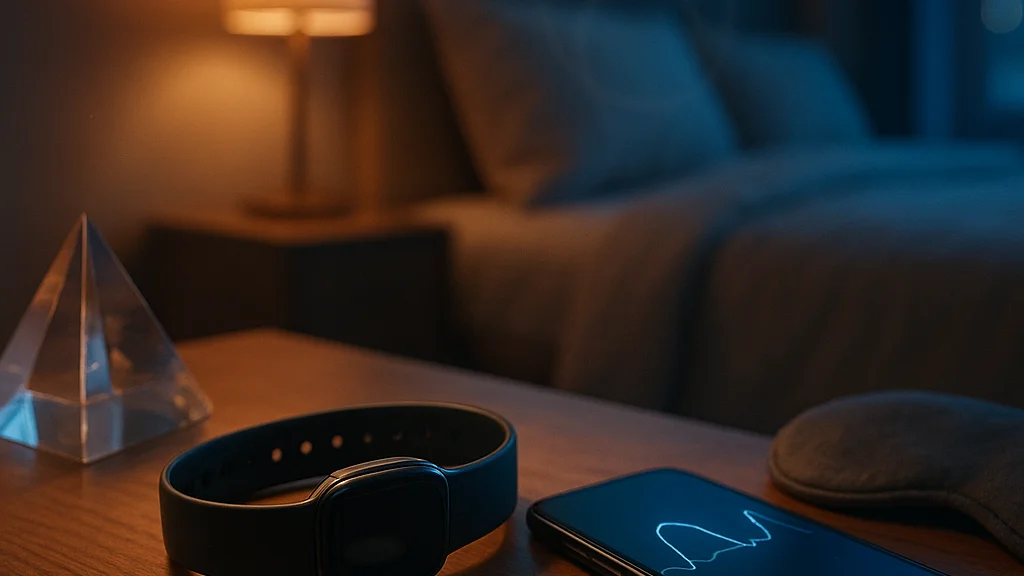

The glow on the nightstand
At 2:14 a.m., a room can feel like a held breath. The phone is face down, the watch is still warm from the wrist, and somewhere beneath the mattress a sensor is quietly translating movement, pulse shifts, and breath rhythm into a morning report card. That is the strange intimacy of sleep tracking technology: it watches us during the one part of life we cannot observe ourselves. By breakfast, the night has become a set of colored bars, readiness scores, sleep stages, and gentle reprimands. For millions of people, that data is no longer a curiosity. It is part of the architecture of daily life, sitting beside coffee, calendars, and step counts.
The attraction is obvious. Sleep has become the missing hinge on which mood, exercise, appetite, concentration, and long-term health all seem to swing. The CDC has long warned that insufficient sleep is common among adults in the United States, and clinical sleep researchers have tied poor sleep to cardiovascular risk, metabolic problems, depression, and impaired cognitive performance. In that climate, wearables and bedside systems promise something seductive: not just awareness, but leverage. If you can measure the night, perhaps you can improve the day.
Yet the story is not as simple as a cleaner chart leading to cleaner sleep. Consumer sleep technology now spans smartwatches, rings, under-mattress mats, headbands, smart beds, and app ecosystems that blend coaching with alarms, temperature cues, and behavioral prompts. Apple, Samsung, Google Fitbit, Oura, Garmin, Withings, Eight Sleep and others have turned the bedroom into a quiet laboratory. The question, in 2026, is no longer whether sleep tracking exists. It is whether these tools actually help people build better habits, and where measurement ends and obsession begins.
That tension matters. Read enough sleep data and you begin to hear two melodies at once, like a late jazz record in a dim apartment. One is hopeful, empirical, practical. The other is anxious, perfectionist, a little haunted. The best use of sleep technology sits somewhere between them, where data becomes a mirror rather than a judge. For readers wanting a broader companion piece, How Sleep Tracking Technology Shapes Better Sleep Habits in 2026 also maps the consumer side of this shift.
Sleep trackers are most useful when they reveal patterns over time, not when a single bad night becomes a verdict on your health.
How sleep tracking moved from sleep labs to bedrooms
For decades, serious sleep measurement belonged to clinics. Polysomnography, the gold standard used in sleep labs, records brain waves, eye movement, muscle tone, breathing, oxygen levels, and heart rhythm. It is precise, expensive, and deeply impractical for ordinary nights. Consumer sleep tracking emerged by offering a compromise: less clinical certainty, far more convenience. Early devices leaned heavily on actigraphy, inferring sleep from movement. If your wrist stayed still for long enough, the device assumed you were asleep. That was useful, but blunt. Quiet wakefulness could look like sleep, and restless sleep could be interpreted as wakefulness.
The last decade changed the picture. Modern wearables combine accelerometers with optical heart-rate sensors, skin temperature trends, blood oxygen estimates in some devices, and increasingly sophisticated algorithms trained on larger data sets. Rings and watches now infer sleep stages by blending motion with heart-rate variability, resting pulse changes, and timing patterns. Smart mattresses and under-mattress strips add respiratory rate and body movement without requiring anything on the body. According to Engadget’s guide to sleep tracking in Apple Health, the ecosystem has also matured on the software side, where users can centralize data from multiple devices and compare trends over weeks or months.
What made this shift culturally powerful was not just the hardware. It was the merger of sleep science with consumer design. Sleep stopped being framed as passive downtime and became a trainable behavior, something to optimize with routines, coaching, and environmental controls. That same logic has transformed adjacent parts of health technology, a change echoed in WriteUpCafe’s look at how telehealth platforms are redefining patient care delivery, where continuous digital feedback is also reshaping expectations.
By 2026, sleep tracking has become a layered market:
- Wrist wearables such as Apple Watch, Fitbit, Garmin, and Samsung Galaxy Watch offer broad health integration and convenience.
- Smart rings, led by Oura and joined by newer entrants, appeal to users who dislike sleeping in a watch.
- Non-wearable sensors under the mattress or embedded in beds reduce friction and may improve long-term adherence.
- Climate-focused systems such as smart mattress covers target temperature regulation, a crucial but often neglected variable in sleep quality.
This expansion matters because adherence is the hidden variable in all health technology. The most accurate tracker is useless if it ends up in a drawer after ten nights.
What the devices can measure, and where they still struggle
Consumer sleep trackers are good at some things, decent at others, and still shaky in places where marketing often sounds most confident. Most devices can estimate total sleep time with reasonable usefulness for healthy adults under ordinary conditions. They can often detect broad patterns in bedtime consistency, sleep duration, overnight awakenings, resting heart rate trends, and in some cases respiratory rate changes that may signal stress, illness, alcohol effects, or recovery strain. If your sleep has been shortening for three weeks, if your bedtime has drifted by ninety minutes, or if your resting pulse is elevated after travel, many trackers can spot that drift before you consciously name it.
Sleep staging is more complicated. To determine light, deep, and REM sleep in a lab, clinicians rely heavily on EEG brain-wave data. Consumer devices do not have that level of access unless they use specialized head-worn sensors, which remain niche. Instead, they infer stages from indirect signals. That means stage estimates can be informative in aggregate but should not be treated like a medical transcript of the night. Researchers and sleep physicians have repeatedly warned against overinterpreting exact percentages of deep or REM sleep from consumer gadgets.
According to talkandroid.com’s 2026 survey of sleep tech, the latest generation of devices is improving through better sensor fusion and machine-learning models, especially when paired with longitudinal user data. Even so, the article underscores a central truth: many products are excellent at trend detection and less reliable as diagnostic tools. That distinction should shape how consumers use them.
Here is the practical hierarchy of what sleep trackers do best:
- Trend spotting: bedtime consistency, sleep duration, chronic short sleep, recovery changes after exercise, travel, or alcohol.
- Behavior feedback: showing how late meals, screen time, caffeine timing, room temperature, and irregular schedules affect the night.
- Environmental integration: linking sleep to temperature control, alarms, soundscapes, and bedtime reminders.
- Medical diagnosis: limited. Consumer devices may flag concerns, but they do not replace a sleep study for apnea, narcolepsy, parasomnias, or other disorders.
The strongest consumer use case, then, is not perfect measurement. It is pattern recognition. A tracker can show that your “fine” sleep is actually six fragmented hours, that your best nights come after morning exercise, or that two glasses of wine flatten recovery. Those are not glamorous insights, but they are actionable, and action is where better habits begin.
Data becomes valuable when it changes behavior. A sleep score that produces no adjustment is only decoration.
The habit loop: when numbers improve nights
The real promise of sleep tracking technology is behavioral, not cinematic. Most people do not need a device to tell them that sleep matters. They need a nudge strong enough to make bedtime feel as concrete as a work meeting. Trackers can provide that nudge by turning vague intentions into visible patterns. A person who says, “I usually sleep enough,” may think differently after seeing five nights under six and a half hours. The chart can be blunt in a way memory is not.
Several habit mechanisms explain why these tools can help. First, they create feedback loops. If a user sees that a consistent 10:45 p.m. bedtime produces better energy and lower resting heart rate than midnight doomscrolling, the reward becomes legible. Second, they reduce recall bias. We are poor historians of our own fatigue. Third, they encourage regularity, and regularity is one of the strongest predictors of better sleep quality outside clinical treatment. Sleep medicine specialists often emphasize that a stable wake time matters at least as much as a perfect bedtime.
The best consumer advice pieces make this point well. The MSN article on sleep tracking tools that support better rest highlights a practical mix of device data and environmental changes, rather than treating the gadget as a magic object. That is exactly right. Technology works best when it reinforces basic sleep hygiene instead of trying to replace it.
For most users, the habits that benefit most from tracking are simple and stubborn:
- Fixed wake times: the anchor that stabilizes circadian rhythm, even after a poor night.
- Caffeine timing: many users discover that afternoon intake lingers longer than expected.
- Alcohol awareness: trackers often reveal lower overnight recovery and more fragmented sleep after drinking.
- Exercise timing: morning and afternoon activity can help, while very late intense sessions may backfire for some people.
- Bedroom climate: cooler environments often correlate with better sleep continuity.
- Screen boundaries: not because every screen minute is fatal, but because device use often pushes bedtime later.
There is also a motivational dimension. Some people respond well to scores, streaks, and readiness metrics. Others find them infantilizing. The difference is personal. A tracker is most effective when it acts like a patient notebook, not a stern schoolmaster. If it helps you notice, adjust, and repeat, it is doing its job.
The dark side of optimization: anxiety, orthosomnia, and false certainty
Sleep technology carries a paradox tucked inside it like a note in a coat pocket. The more we monitor sleep, the easier it becomes to worry about sleep, and worry itself is one of the cleanest ways to ruin a night. Clinicians have a term for this pattern: orthosomnia, an unhealthy fixation on achieving perfect sleep metrics. The phenomenon has been discussed for years in sleep medicine, and it remains highly relevant as consumer devices grow more persuasive and more omnipresent.
The cultural pressure around wellness amplifies the problem. When every morning begins with a score, a yellow warning, or a missed target, rest can start to feel like an exam. The Seattle Times addressed this directly in its caution against letting sleep trackers fuel nighttime anxiety. That warning is not anti-technology. It is anti-misuse. A rough estimate of REM sleep should not trigger panic. A single poor score after a stressful day should not be treated like a diagnosis.
Gamification makes the issue sharper. SheKnows explored this in its piece on what happens when sleep is gamified, asking whether badges, streaks, and rewards improve behavior or simply turn the bed into another productivity arena. The answer is mixed. For some users, gamification builds consistency. For others, it creates a brittle relationship with sleep, where any deviation feels like failure.
There are three common traps to avoid:
- Mistaking estimates for diagnoses: consumer alerts can be useful prompts, but persistent snoring, gasping, severe daytime sleepiness, or insomnia symptoms warrant medical evaluation.
- Reacting to nightly noise: one bad night means little. Trends matter more than isolated readings.
- Chasing idealized stage numbers: deep and REM percentages vary naturally with age, stress, illness, and timing.
A calmer approach works better. Check weekly patterns, not every metric every morning. Focus on habits you can control. Use the device to ask questions rather than to deliver verdicts. If the tracker makes you more attentive and less anxious, keep it. If it turns the pillow into a performance stage, step back.
What has changed recently in 2026
The 2026 sleep-tech market feels more mature than the gadget boom of a few years ago. The novelty phase is fading, replaced by integration, ecosystem lock-in, and a stronger emphasis on recovery, temperature, and personalized coaching. The broad shift is from passive measurement toward adaptive intervention. Devices are not only reporting what happened overnight, they are increasingly trying to shape what happens next.
One visible change is software convergence. Apple Health, Google Fitbit, Samsung Health, Garmin Connect, Oura, and other platforms continue to position sleep as a central health signal rather than a side feature. Sleep data is now routinely linked to exercise load, menstrual cycle tracking in some ecosystems, stress scores, readiness estimates, and heart metrics. That matters because sleep rarely exists in isolation. A late meal, a hard workout, a long-haul flight, or a stressful week leaves fingerprints across multiple signals. The richer the context, the more useful the interpretation.
Another development is the rise of non-wearable and low-friction systems. Smart mattress covers, climate-controlled beds, and under-mattress sensors have gained traction among users who dislike sleeping with hardware on the body. Temperature regulation, in particular, has moved closer to center stage. Sleep scientists have long known that the body’s thermal rhythm influences sleep onset and continuity. Companies that can cool or warm the sleep surface dynamically are betting that comfort and physiology can be nudged together.
Reports in 2026 also suggest more emphasis on AI-generated coaching, though consumers should treat such advice as guidance rather than gospel. Pattern summaries like “your sleep shortens after late workouts” or “your best recovery follows earlier meals” can be useful if the underlying data is consistent. The risk is that generic coaching may sound authoritative even when individual variation is large.
The market is also becoming more realistic. Coverage from Reuters and major tech publications over the past year has reflected a more tempered tone around wearable health claims. That is healthy. A mature category does not need to promise miracles. It needs to help users make better decisions with less friction. Readers interested in how digital systems are changing behavior beyond sleep might also enjoy WriteUpCafe’s broader look at global food trends reshaping restaurant industry dynamics, another example of data and habit colliding in everyday life.
Choosing the right tracker, and using it without losing the plot
Buying sleep technology is less about finding the “best” device than finding the device you will actually use, trust, and tolerate. A runner already wearing a Garmin may gain enough insight from an existing watch. An office worker who hates wrist devices might prefer a ring. A couple dealing with overheating may get more benefit from a climate-controlled sleep system than from another app. The right tool depends on friction, budget, and the problem you are trying to solve.
Start with the question, not the gadget. Are you trying to confirm whether you are chronically undersleeping? Improve schedule consistency? Understand how alcohol or training affects recovery? Reduce wake-ups caused by heat? A tracker is a flashlight, and flashlights are only useful when pointed somewhere specific.
For practical selection, these criteria matter most:
- Comfort: if you remove it at night, accuracy does not matter.
- Battery life: frequent charging often collides with nighttime wear.
- Trend reporting: look for weekly and monthly views, not just daily scores.
- Ecosystem fit: health platforms are more useful when they connect sleep with activity and heart data.
- Actionability: the device should help you change behavior, not merely admire charts.
- Privacy: sleep data is intimate health data. Read policies before committing.
Once you have a device, the smartest routine is almost boring. Set a fixed wake time. Track for at least two weeks before drawing conclusions. Change one variable at a time, such as caffeine cutoff, room temperature, or bedtime. Review trends weekly. If a pattern persists and symptoms are significant, speak with a clinician. If the tracker increases stress, mute the score-heavy features or stop using it altogether.
Some people will discover that the best sleep technology is the one that fades into the background, quietly confirming that simpler habits work. Others will use richer metrics to fine-tune training, travel recovery, or shift-work adaptation. Both approaches are valid. The point is not to become a curator of graphs. It is to wake up clearer, steadier, less frayed around the edges.
Where better sleep habits really come from
Technology can illuminate the road, but it cannot walk it for you. Better sleep habits still come from ordinary acts repeated with enough patience to become texture: dimmer lights, steadier wake times, cooler rooms, fewer late stimulants, less alcohol close to bed, some daylight in the morning, some movement in the day, and a gentler relationship with the night when it goes badly. The devices are useful because they make these truths harder to ignore. They are limited because they cannot perform them on our behalf.
That is the enduring value of sleep tracking in 2026. Not perfection. Not certainty. Not a flawless reconstruction of every minute spent in REM. Its value lies in pattern literacy. A good tracker can teach you the shape of your own sleep, the way a familiar train route teaches you where the light changes and where the tracks bend. You begin to notice what your body has been saying in quieter language all along.
For people with suspected sleep disorders, persistent insomnia, loud snoring, choking awakenings, or major daytime impairment, the next step should not be another consumer subscription. It should be medical care. But for the far larger group living with modern sleep erosion, too much light, too much stress, too much inconsistency, the right technology can help turn abstract advice into visible consequence.
Use the numbers lightly. Respect trends more than scores. Treat the best nights as clues, not trophies. If sleep tracking technology helps you build rituals that feel less like punishment and more like shelter, then it is doing something rare in consumer tech. It is not merely quantifying life. It is helping restore one of its quiet foundations, one ordinary night at a time, while the room darkens, the screen goes black, and the body remembers how to let go.


























Sign in to leave a comment.