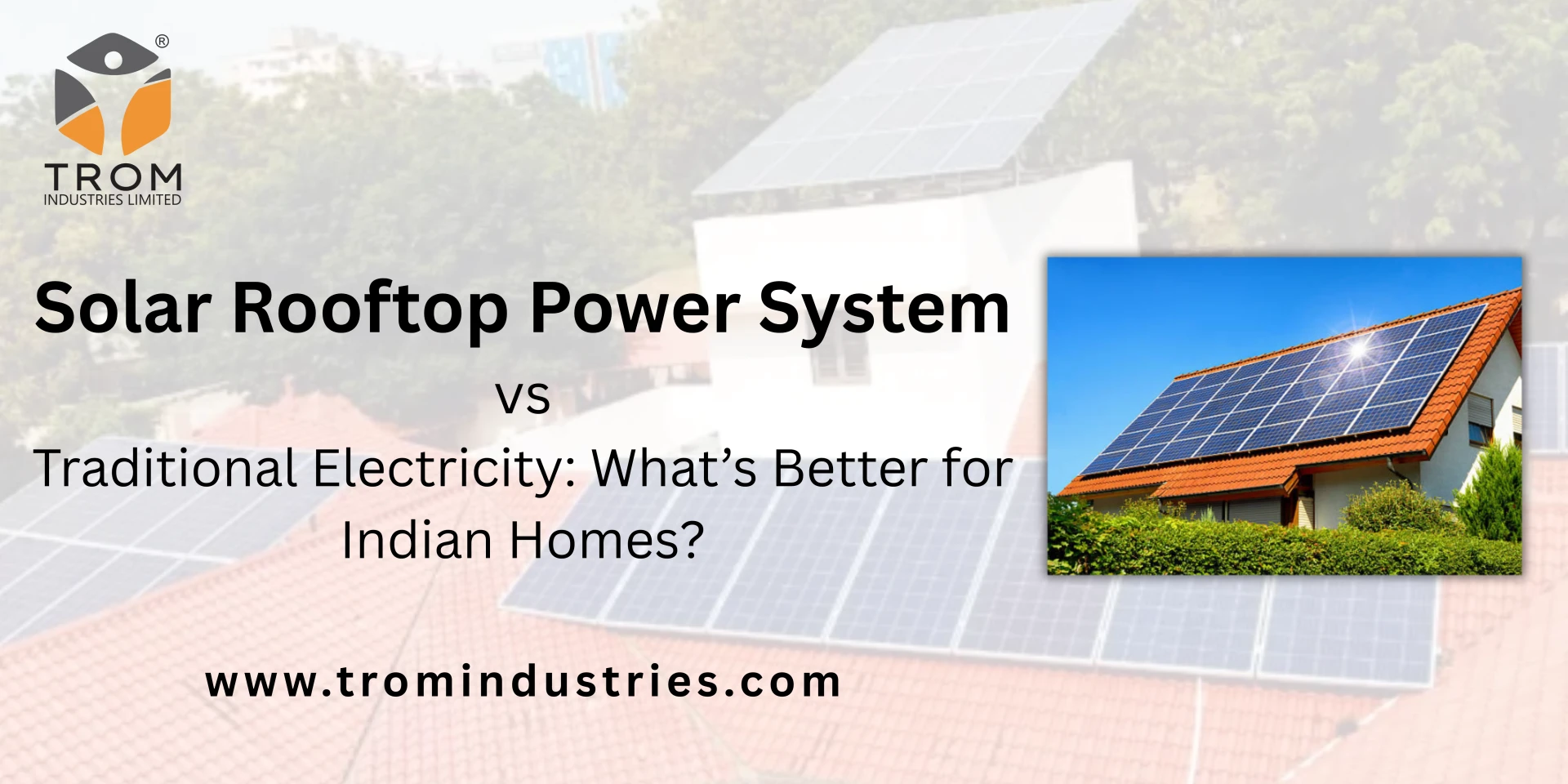

As energy costs continue to rise across India and concerns about environmental sustainability grow, many homeowners are asking the same question: Should I stick with traditional electricity or switch to a solar rooftop power system? This comparison is more relevant than ever, especially with the Indian government’s push for clean energy through initiatives like the Solar Panel Rooftop Yojana and Rooftop Yojana.
In this detailed guide, we’ll explore both options, compare their advantages, and help you decide what’s truly better for Indian homes.
What is a Solar Rooftop Power System?
A Solar Rooftop Power System is a setup where solar panels are installed on your home’s roof to capture sunlight and convert it into electricity. These systems can be grid-tied (on-grid) or off-grid, with the solar rooftop on-grid system being the most popular among Indian homeowners. It lets you harness solar energy during daylight hours while drawing electricity from the main grid at night or when solar output is low.
Companies like Trom Industries Limited, one of the top rooftop solar companies in India, offer cutting-edge EPC solutions to help households and businesses adopt this technology seamlessly.
Traditional Electricity: The Current Reality
Traditional electricity in India comes from power stations that burn coal, gas, or use hydroelectricity. Households are charged based on usage (kWh), and tariffs are often unpredictable. Additionally, India’s electricity infrastructure is still developing in many regions, resulting in frequent outages and voltage fluctuations.
Let’s now compare both options under key performance indicators:
1. Cost Comparison: Short-Term vs Long-Term
Traditional Electricity:
- Upfront investment: Usually zero, excluding the basic connection or installation charges.
- Monthly bill: ₹1,500–₹5,000+ depending on usage.
- Cost trend: Increasing due to rising fossil fuel prices.
Solar Rooftop Power System:
- Initial cost: Higher (₹60,000 to ₹1.5 lakh for a residential 2kW–5kW system).
- Monthly bill: Almost zero if system capacity meets usage.
- Long-term savings: ₹10–₹15 lakh over 25 years.
💡 Thanks to schemes like the Roof Top Solar Subsidy and Solar Power Rooftop Yojana, Indian homeowners can receive up to 40% subsidy on solar rooftop installations under the government’s MNRE program.
Verdict: Solar may seem expensive initially, but the return on investment (ROI) over time is significantly better.
2. Environmental Impact: Clean Energy vs Fossil Fuels
Traditional Electricity:
- Mainly generated using coal and gas.
- Leads to carbon emissions, pollution, and climate change.
Solar Rooftop:
- 100% clean energy.
- Reduces your carbon footprint by approx. 1.5 tons per year per kW installed.
For eco-conscious families, switching to the best solar rooftop residentials system is one of the most impactful decisions you can make.
3. Energy Independence and Reliability
Traditional Grid Power:
- Subject to load shedding, power cuts, and fluctuating tariffs.
- Dependent on external supply.
Solar Rooftop Power System:
- Offers energy independence.
- Can be paired with batteries for uninterrupted power supply.
This is especially useful in tier-2 and tier-3 Indian cities where power cuts are common. Solar rooftop systems provide more consistent and reliable electricity, even during grid failures.
4. Property Value and Resale Benefits
Multiple studies indicate that homes with solar systems attract higher resale value. Modern homebuyers are increasingly choosing properties that offer energy efficiency, lower utility bills, and eco-friendly certifications.
If you install the best rooftop solar system in India, you're not just saving money—you're also making a long-term investment in your property.
5. Government Support and Incentives
The Indian government actively supports solar adoption:
- Solar Panel Rooftop Scheme (PM-Surya Ghar: Free Electricity for Every Home)
- Subsidies of 20% to 40% for residential solar systems.
- Net Metering: Contribute surplus solar power to the grid and receive energy credits in return.
Trom Industries Limited assists homeowners with these processes as part of their end-to-end rooftop solar installation services.
6. Installation and Maintenance
Traditional Electricity:
- Set-it-and-forget-it, but bills and outages continue.
Rooftop Solar Systems:
- One-time installation with low maintenance.
- Just need cleaning panels twice a month and an annual checkup.
Companies like Trom Industries Limited, one of the best solar rooftop companies in India, offer full EPC support—engineering, procurement, construction, and even maintenance.
Why Indian Homeowners Are Choosing Solar
Let’s take an example:
Case Study:
Mrs. Sharma, a homeowner in Ahmedabad, installed a 3kW rooftop solar system last year. Her investment of ₹1.2 lakh (post-subsidy) brought down her ₹3,000/month electricity bill to just ₹300. Within 3.5 years, she’ll recover her investment—and continue to enjoy free power for 20+ years after that.
Multiply this across millions of homes, and you’ll see why rooftop solar systems are booming across Indian cities like Surat, Jaipur, Pune, and Bengaluru.
Best Rooftop Solar Options in India
There are many options in the market, but selecting the right one depends on:
- Your electricity usage
- Roof size and direction
- Budget
- Desired ROI
Trom Industries Limited offers the best rooftop solar system industrial, residential, and commercial solutions. With a focus on innovation, they install high-efficiency solar rooftop on-grid systems tailored to every client’s need.
From solar power plant on rooftop setups for large factories to rooftop solar installation commercial units for malls, Trom covers it all.
Things to Consider Before Making the Switch
- Required Rooftop Area – At least 100 sq. ft
- Sunlight Availability – South-facing rooftops are ideal.
- Load Requirements – Know your daily kWh usage.
- Budget – Factor in subsidies.
- Company Track Record – Work with the best solar rooftop provider with solid experience and service.
Rising Popularity of Solar in India
According to MNRE reports, India crossed 13 GW of rooftop solar capacity in 2024. With initiatives like Top 10 rooftop solar companies in India list and aggressive state policies, this number is expected to triple by 2030.
From Delhi to Kerala, more Indians are realizing that the solar rooftop system price is worth the long-term freedom it offers.
Final Verdict: What’s Better for Indian Homes?
If you're still debating between solar and traditional electricity, here’s the answer:
✅ For lower bills
✅ For cleaner air
✅ For higher property value
✅ For energy freedom
✅ For long-term savings
Solar wins hands down.
While the initial installation cost might seem like a hurdle, with the roof top solar subsidy, falling panel prices, and the option to finance through EMIs, solar is now more affordable than ever.
So, if you’re serious about saving money and the planet, investing in a solar rooftop power system is the smartest decision you can make today.
Ready to Go Solar?
Join the clean energy movement with Trom Industries Limited, where solar innovation meets excellence. As one of the top rooftop solar companies in India, we offer tailor-made, high-efficiency solar grid tied rooftop systems designed to power your home, business, or industry sustainably.
From consultation to rooftop solar plant design, installation, and after-sales support—we handle everything so you can sit back and watch your power bills disappear.
📞 Contact Trom Industries Limited today and take the first step toward a brighter, greener, and more independent energy future.
























Sign in to leave a comment.