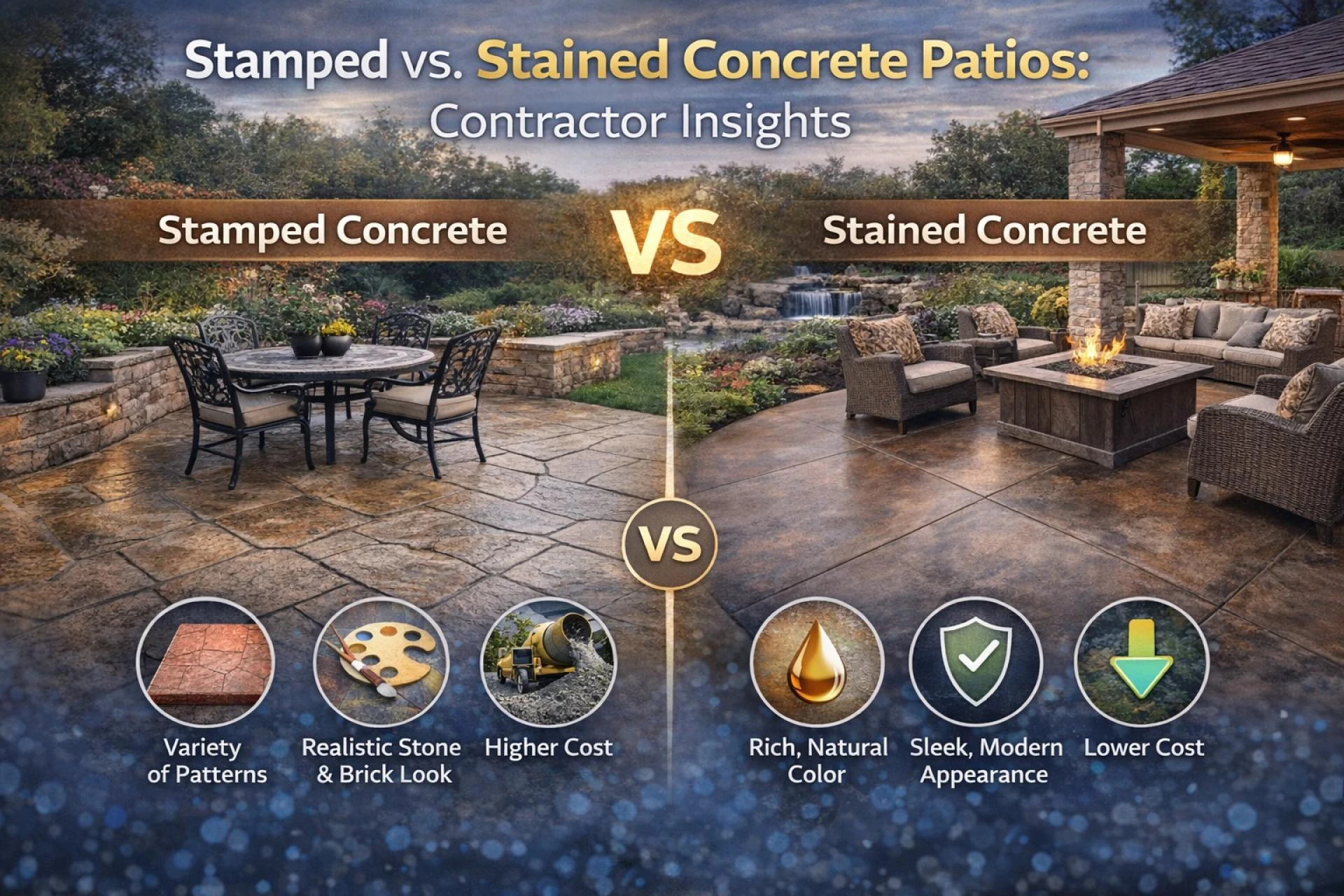

When it comes to creating a beautiful and lasting outdoor space, choosing between stamped and stained concrete patios is one of the most important decisions homeowners face. Both options bring unique character and charm to your backyard, with impressive durability and style. Whether you're dreaming of a cozy outdoor hangout or a bold entertainment space, understanding these two decorative concrete techniques can make all the difference in turning your vision into a reality.
Stamped and stained concrete are both popular choices for patios, and it’s easy to see why. They offer the same foundational strength of traditional concrete but add a layer of beauty that blends aesthetics with functionality. With the right design, either option can completely transform a dull backyard into a personalized oasis. The choice really comes down to the look you’re going for, how much maintenance you’re willing to put in, and the kind of long-term performance you expect.
The team at Concrete Patio Contractor Houston has years of experience helping homeowners decide which finish best suits their outdoor living needs. From a contractor’s perspective, the decision often comes down to texture versus tone. Stamped concrete is about texture—it mimics the look of natural stone, brick, tile, or even wood. It adds dimension and depth, creating a surface that feels rich and luxurious underfoot. On the other hand, stained concrete is all about color. With a stained finish, the concrete absorbs the stain and develops a more natural, variegated tone that looks like it belongs in a high-end design magazine. Both styles can be customized to fit any theme, whether it’s rustic, modern, or somewhere in between.
Stamped concrete is a favorite among homeowners who want the visual appeal of materials like flagstone or slate but without the high cost or complicated installation. The stamping process involves pressing molds into freshly poured concrete, followed by color application to enhance the pattern and make it pop. When done professionally, the final result can be so realistic that most people won’t even know it’s concrete unless they touch it. Its durability is one of its biggest perks. Stamped concrete holds up well in different weather conditions and offers a long-lasting finish with proper care.
Stained concrete, by contrast, delivers a subtler, more earthy look. Acid-based stains react chemically with the concrete to create deep, translucent tones, while water-based stains offer more vibrant, uniform hues. This process creates a surface that’s visually interesting and one-of-a-kind. No two stained patios ever look exactly the same. That uniqueness is what draws many homeowners to this finish. It’s like giving your patio its own personality. Whether you go with a soft tan, a rich mocha, or a bold charcoal, stained concrete provides a refined and elegant backdrop for outdoor furniture, fire pits, or garden accents.
From the maintenance side, both stamped and stained concrete require a little upkeep to stay looking their best. Sealing is key. With stamped concrete, resealing every couple of years helps preserve the color and protect against surface wear. For stained concrete, sealing maintains the vibrancy of the stain and shields the surface from moisture and UV rays. The good news? With regular maintenance, both types can last for decades while still looking fantastic.
One thing contractors always point out to clients is that weather conditions and sunlight exposure can influence how these finishes age. Stamped concrete may experience surface fading over time if not properly sealed, especially in areas with intense sunlight. Similarly, some stained finishes may lighten with prolonged exposure. But with modern sealants and expert installation, these concerns are easy to manage. Plus, having an experienced concrete contractor means these potential issues are addressed from day one.
Installation timelines are also a consideration. Stamped concrete can take a bit longer because of the additional steps involved—pouring, stamping, coloring, and sealing. It’s a meticulous process, and getting the pattern just right takes precision. Stained concrete, while also detail-oriented, often takes less time because it’s applied to an existing slab. If you already have a concrete patio, staining might be the quicker and more cost-effective route to an upgrade.
In the end, the right choice depends on your personal taste, budget, and how you plan to use your patio. If you’re leaning toward a textured, high-end look that mimics natural stone or pavers, stamped concrete is likely your best bet. If you want a more minimalistic, artistic, and low-profile finish with rich color and variation, stained concrete could be your perfect match.
Whichever option you choose, both stamped and stained concrete offer a blend of beauty and strength that few materials can match. They’re customizable, durable, and capable of turning an average outdoor space into something truly special. Working with a trusted and skilled contractor makes all the difference in achieving a finish that not only meets your expectations but exceeds them.
If you’re ready to elevate your outdoor living space, don’t hesitate to explore your options and consult with a professional. They’ll help you weigh the pros and cons based on your specific needs and the layout of your backyard. A concrete patio isn’t just a surface—it’s an investment in your home’s comfort, value, and curb appeal. Make it count by choosing the finish that feels right for you and your family.
To get started on your own custom concrete patio, visit https://1stconcretecontractor.com/.
































Sign in to leave a comment.